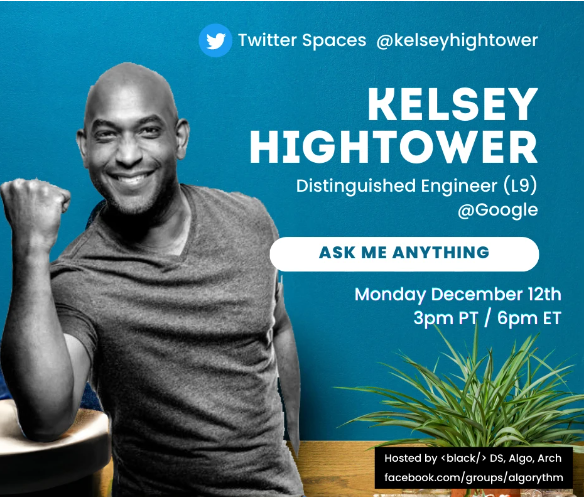
Join us today for an AMA with one of the most respected engineers in the industry who recently gained the legendary "Distinguished Engineer" title at Google! @kelseyhightower on Twitter spaces 👉🏿 https://t.co/nu2ApjGOrb
Today, we share a breakthrough on the planar unit distance problem, a famous open question first posed by Paul Erdős in 1946.
For nearly 80 years, mathematicians believed the best possible solutions looked roughly like square grids.
An OpenAI model has now disproved that belief, discovering an entirely new family of constructions that performs better.
This marks the first time AI has autonomously solved a prominent open problem central to a field of mathematics.
Never heard so many standout infra engineers + AI infra eng actively wanting to leave Meta than now.
A month ago they were building cutting-edge infra and then got assigned to AI data labelling
Most of them went “WTH” and now I’m the middle of interviewing
Madness from Meta
Personal update: I've joined Anthropic. I think the next few years at the frontier of LLMs will be especially formative. I am very excited to join the team here and get back to R&D. I remain deeply passionate about education and plan to resume my work on it in time.
@8bit5_0@demishassabis That DARPA AI is an Amazing example 💯. If it can’t help you develop against a new paradigm do we go back to manual coding for a while? New paradigms take a while to go mainstream which means there won’t be many example or even open source to train on until heavy adoption starts.
Today’s LLMs would destroy the early 2000s web dev market. But Zuck would get laughed off stage if he presented this version of Facebook in 2026.
Back then, top engineers could make six figures building simple HTML websites.
If LLMs showed up in 2004 trained on 2004-style web pages, you could generate the same sites instantly and for 99.99% cheaper.
Would we still be stuck with simple HTML and basic JavaScript forever?
How would LLMs have brought us from HTML sites to real-time rich single page web applications and large scale distributed systems in 2026?
Who would be working to improve the web stack and innovate throughout those decades?
What about iPhone and Android apps? No LLM would ever invent or even know how to build those based on data from 2004. How about Kubernetes? 🙃
Think about how this applies to the future of software beyond 2026.
There's no reason to think LLMs will ever take your job. They are just a tool for humans to use.
Us humans use tools to push into the next frontier
You think “snail mail” is slow?
For huge datasets, the bottleneck is often bandwidth, not distance.
A 20 TB drive shipped overnight can beat many internet connections:
At 100 Mbps, transferring 20 TB takes about 18.5 days in a best-case, non-stop transfer.
At 1 Gbps, it still takes about 1.85 days.
And for a more realistic consumer example: many home connections have much slower upload than download. At 20 Mbps upload, sending 20 TB would take roughly 93 days.
An overnight courier can move the same data in about a day, assuming you can also copy the data on and off the drive fast enough. In practice, the drive speed, USB port, encryption, verification, and lots of small files can become the next bottleneck.
🚨 PSA: Plain-text passwords should be hashed. Hashes produce fixed length outputs. A 10-char cap doesn’t save space, it just weakens security.
The stored hash always takes the same amount of space no matter if the length of the password is 1 or 1,000 characters
Examples:
• SHA-256 → 64 chars
• SHA-512 → 128 chars
• bcrypt → ~60 chars
• Argon2 → defaults to 64 (configurable)
Especially in the age of password managers this is a terrible limit to have.
Please tell your developer friends.
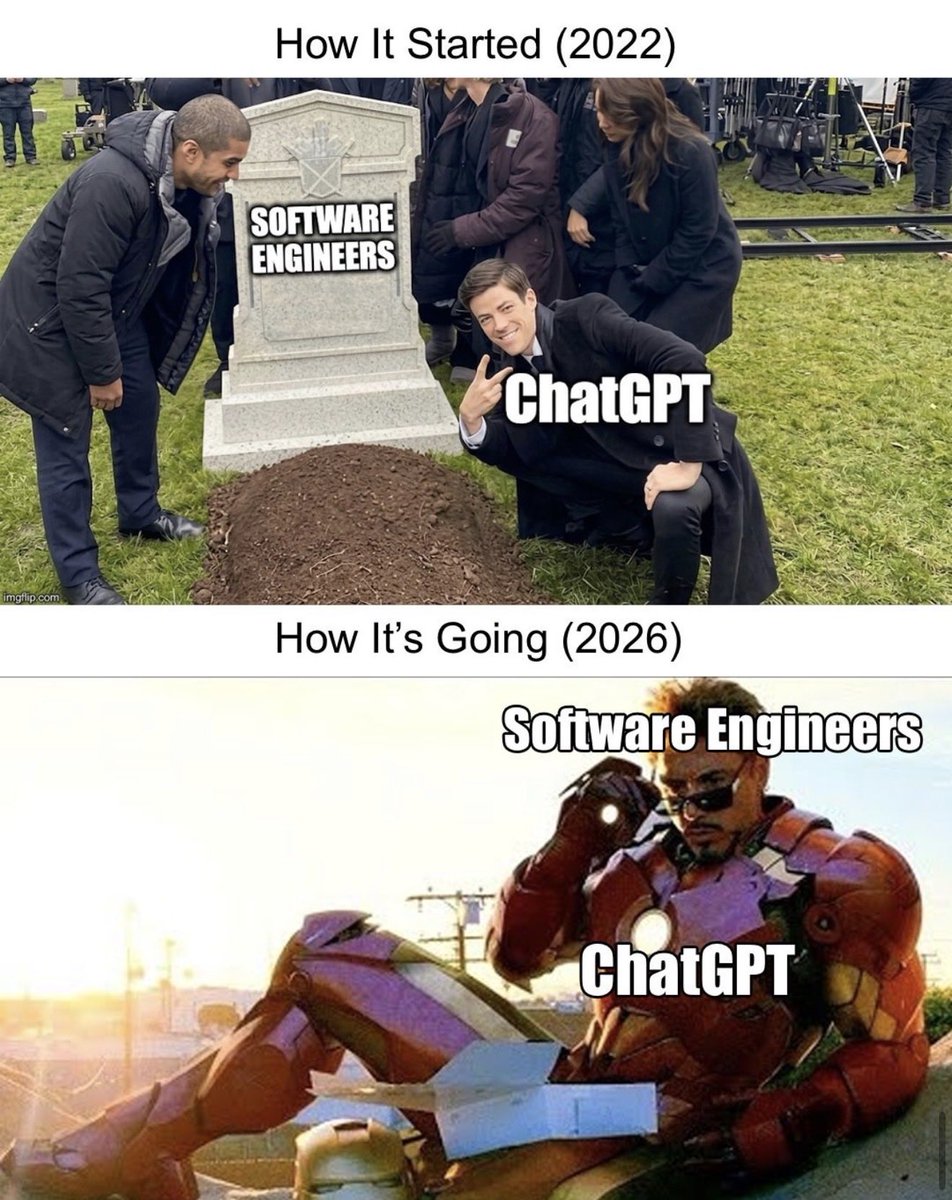
I was excited when I discovered ChatGPT. Then when I realized it could code I legit got scared and felt a sense of dread. But AI is a tool not a replacement.
Today, it can code significantly better, but instead of being scared, I'm frequently encouraging developers to adopt it. I use it for 99% of my production code.
I've gotten a few DMs thanking me for the article I wrote showing how to get high quality code from LLMs. It has 498 likes on LinkedIn and 198 likes on Substack. Over 33,800 people have read it.
I'm less worried about AI taking my job and more worried about not being able to compete in a world where software engineers are expected to produce higher quality and in depth work using AI as a tool.
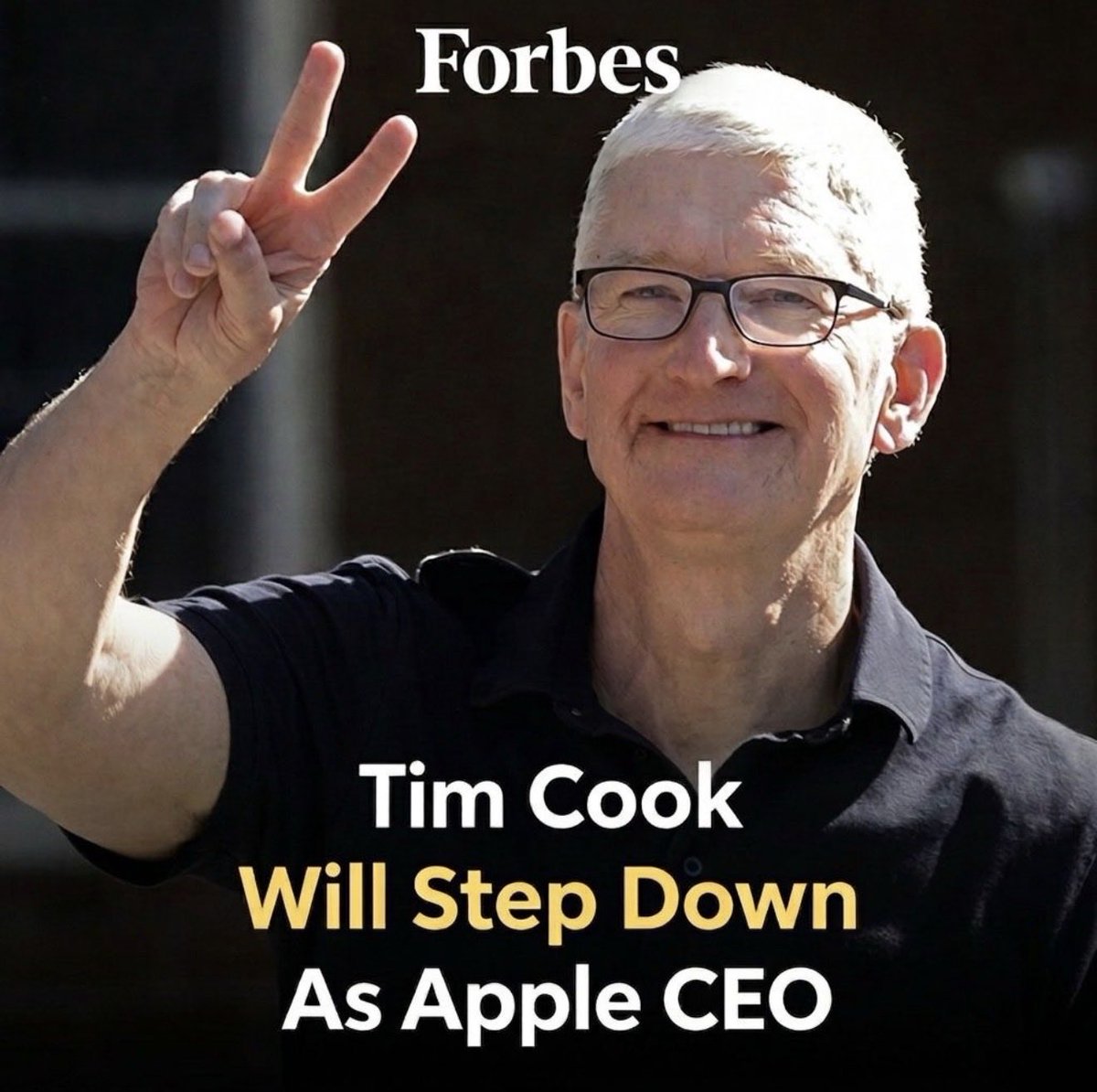
Tim Cook grew Apple from $350B to $4T between 2011 and 2026. Most people don’t realize how big a deal that actually is.
Before he was CEO, Cook was the operations and supply chain guy. And that’s basically his superpower. He’d lock up manufacturing capacity and key components early, so Apple got better prices and there was less left over for competitors.
Cook’s operating philosophy was: “inventory is fundamentally evil.” In consumer electronics, products and components lose value fast, so he treated excess inventory like spoilage. He even compared it to the dairy business: if it sits too long, it goes bad. That mindset pushed Apple to run lean, move faster, and replace stockpiles with better forecasting, supplier commitments, and priority access to production capacity
Apple would front suppliers hundreds of millions, sometimes billions in cash to build out factories, in exchange for exclusive access to the output for a year or two. Competitors literally couldn’t buy the same parts.
Apple books up most of TSMC’s newest, most advanced chip production before anyone else can touch it. When the 3nm process launched, Apple took the entire first year of capacity. That’s why Apple’s chips are always a generation ahead of what’s in Android phones.
He also made big bets on stuff like synthetic sapphire and locked in DRAM supply to control costs. That meant Apple could ship at scale while competitors dealt with shortages and higher spot prices.
And when Apple pushed 64-bit chips way earlier than anyone expected, it forced the whole industry to play catch-up on expensive work they weren’t ready for.
The guy basically turned the supply chain into a weapon.
I generated this with OpenAI’s newest image gen model. They say it’s like the jump from GPT-3 to GPT-5.
It’s able to “think” to plan out the scene and do web research to get real data.
Text rendering and accuracy are much higher.
It generates multiple images with character consistency and can have many distinct characters and variations in one scene. Very excited to play around with this.
The human brain is designed for visual processing. Us being able to read text is a side effect and suboptimal. I see a lot of potential for image gen to be the main way we consume information as these models get faster and more advanced
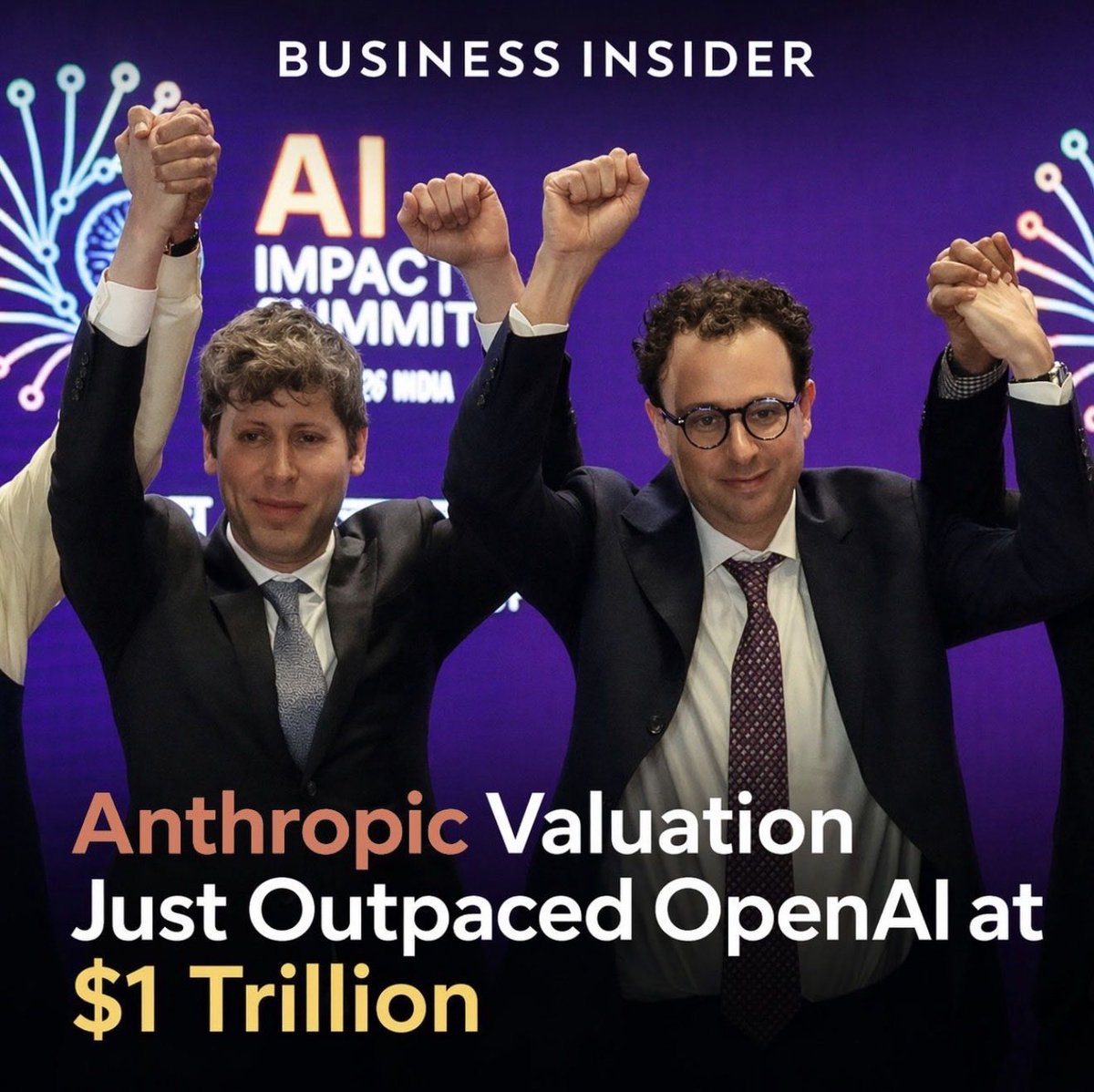
OpenAI is worth $880 Billion. Neither company is on the public stock market, this valuation comes from transactions on secondary markets like:
Next Round Capital, Hiive, Forge Global, Augment, UpMarket
𝗙𝘂𝗻 𝗳𝗮𝗰𝘁: Pictured is OpenAI's CEO and Anthropic’s CEO refusing to hold hands at the AI Impact Summit earlier this year while everyone else on stage did.
Anthropic’s CEO is a former OpenAI employee that left because of his concerns around OpenAI’s approach to safety.
Anthropic's execution has been strategic. Rather than matching OpenAI feature-for-feature, they focused on products with the most practical AI applications today.
They lagged on web search, text-to-speech, and image/video generation, but led with Claude Code (now the most popular coding agent among developers), Claude Cowork (extending the agent paradigm to knowledge work), and Claude Design, all delivering direct real-world value.
I took this photo 10 years ago. 5 months before the release of 1st Gen AirPods. I fed it to OpenAI’s new image model and gave it this prompt:
“Make this into an Apple iPod ad from the era of the iconic ear buds before AirPods. Replicate the exact vibe and energy”
I’m writing an article about how to use AI image generation for work, fun and side projects.
I’m a heavy user of AI image gen for custom tech memes and tech news bites. Follow for more and to catch the article when it comes out.