@PhysInHistory Maybe the people from the future did not attend the party because they knew not to visit "a party" on a certain "island" held for a special group of people.
Pakistan’s growing arsenal of armed drones is no longer a symbol of indigenous innovation, but the result of a deepening trilateral axis involving Turkey, China, and covert Western indulgence.
Among the most dangerous assets to emerge from this nexus is the Yiha III a Turkish-origin kamikaze drone designed for swarm operations, which Pakistan has rapidly inducted into its hybrid warfare strategy against India.
Developed by Turkish drone firms with battlefield learnings from Libya, Syria, and Nagorno-Karabakh, the Yiha III is equipped with autonomous targeting, GPS navigation, and the ability to carry small payloads allowing Pakistan to launch multi-directional saturation attacks in contested zones.
These loitering munitions are not only difficult to intercept due to their size and flight patterns, but they are also economically devastating for a country forced to maintain 24/7 radar and missile defense readiness across wide geographies.
Indian air defense units have reportedly intercepted drone swarms over Punjab, Jammu & Kashmir, Rajasthan. This drone warfare is not designed for spectacular damage but rather to cause attritional costs, force radar fatigue, and trigger false alarms classic hallmarks of hybrid warfare.
Add to this the periodic closure of Indian airspace near borders, disruption of civil aviation schedules, and targeted information campaigns on social media amplified by proxy actors in Turkey, the Gulf, and Western capitals, and the broader hybrid warfare ecosystem becomes evident.
It is no longer just Pakistan’s war
it is a war being enabled, funded, and supported by a coterie of actors who fear the rise of a confident, assertive India. That fear peaked with Operation Sindoor a daring, coordinated Indian operation that struck Pakistani airbases, disabling major radars, drone depots, and air defense grids in a matter of hours.
This was not just a tactical military success; it was a psychological rupture. India openly declared strategic and air superiority over Pakistan, a statement that unsettled not just Islamabad but policy planners in Washington, Beijing, and Ankara.
The Modi government’s swift and calibrated response stunned the global order, especially those who had banked on India’s restraint as a permanent fixture in South Asian geopolitics.
India has technically stamped its authority in the regional announcing its arrival as a power on global stage by crippling air defences & bases of another nuclear power. This has not gone unnoticed in world capitals specially Washington, Beijing, Ankara, London and many more alike.
The G2 narrative where the United States and China assume the right to define global equilibrium has now been upended. Neither anticipated that India would respond so decisively, nor that it would publicly position itself as a sovereign military power capable of unilateral trans-border action against a Nuclear armed state.
The unspoken panic in Western and Chinese corridors is evident. There is now a renewed urgency to stunt India’s rise through economic pressure, strategic distractions, and by reactivating Pakistan as a manageable chaos agent.
@HEKMATULLAHKH16@pubity Abe jaahil kuch bhi keh dene se log maan nahi lete. I think we've gotten to the root of the issue. Tum chutiyo ko chutiya banana bohot aasan hai. Isiliye tum sab brainwash ho ke suicide bombing karke sochte ho ki jannat jaane ko milega. Tumhare Allah tumhe buddhi de 🙏🏻
Snatching defeat from the jaws of victory has long been an Indian political tradition. Here are just a few examples:
1948: India takes the Jammu and Kashmir issues to the UN and then agrees to a ceasefire when the Indian Army is marching toward victory.
1954: Without any quid pro quo, India surrenders its extraterritorial rights in Tibet and recognizes the "Tibet Region of China."
1960: India signs a treaty benignly reserving over four-fifths of the Indus Basin waters for its downstream foe, Pakistan.
1966: India returns to Pakistan, which launched the 1965 war, the highly strategic Haji Pir, which subsequently becomes a launchpad for Pakistan to infiltrate terrorists into India.
1972: At Shimla, India gives away its war gains at the negotiating table without securing anything in return from Pakistan.
2021: After China's 2020 stealth encroachments on key borderlands of Ladakh, India vacates the strategic Kailash Heights, forfeiting its only bargaining chip in negotiations, and then agrees to Chinese-designed "buffer zones" in some Ladakh areas.
2025: To put an end to Pakistan's four-decade-long "war of a thousand cuts" through terrorist proxies, India launches "Operation Sindoor," only to halt it three days later without achieving any clear objective.
Salman either didn't do his homework or makers felt the hype surrounding #KaranveerMehra has damaged the confidence of other contestants, especially Vivian!
By far, he's the smartest BB18 contestant & makers needed endless lies to counter that! oops!
https://t.co/MkLR2cn3Tg
@RahulGandhi In MMS govt, income above ₹2 lakh was taxable, now no tax upto ₹5 lakh, direct ₹30k savings/year
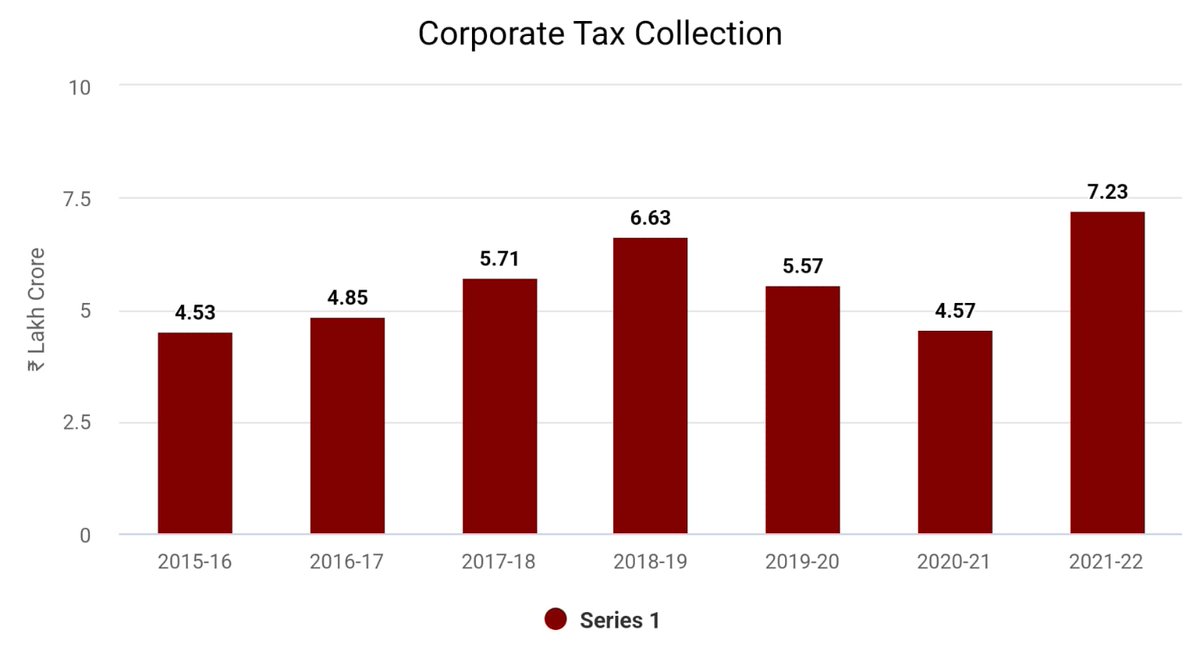
Despite corporate tax rate reduction, corporate tax collection increased
People might be angry with anyone but you do such Chu comparisons that every one Unites in abusing you 👍
I want to be doing Jameson shots at a bar counter with people cheering me on while Heartbreaker by Pat Benatar plays at max volume in the background. OMFG please god
श्री रामजन्मभूमि मन्दिर स्थल पर फर्श निर्माण से पूर्व चबूतरा (प्लिंथ) के निर्माण का कार्य अब पूर्णता की ओर है।
The plinth work at Shri Ram Janmabhoomi Mandir site is reaching it's final stage.