Centre for International Relations. My desire to be well-informed is at odds with my desire to remain sane. RT to increase awareness-not necessarily to endorse!
After Valerii Zaluzhnyi’s speech in Prague, many of his recent statements can be summed up into one central idea: he is no longer speaking only about Ukraine’s war, but about the birth of an entirely new world.
Zaluzhnyi argues that the old global security system is effectively dead. The principles that once seemed untouchable — international law, deterrence, security guarantees, and the inviolability of borders — have proven weak against a new generation of technological warfare. Ukraine, he says, has become the first country forced to experience this brutal transformation in real time.
According to him, war no longer has a clear frontline. Today, the entire territory of a country becomes a battlefield. Civilian infrastructure, energy systems, the economy, logistics, and even the psychological condition of society are now just as much a part of war as trenches or artillery.
Distance no longer guarantees safety. Cheap drones, missiles, digital technologies, and the mass accessibility of advanced weapons have fundamentally changed the nature of conflict. Capabilities that once belonged only to major powers are now spreading far more widely.
Zaluzhnyi stresses that much of the world still thinks in terms of past wars, while modern warfare has already changed completely. In the 20th century, victory depended on massive armies and manpower at the frontline. Today, the decisive factors are technology, analytics, automation, drones, communications, and the speed of adaptation.
He notes that the traditional frontline is gradually becoming “empty,” while the real struggle moves deeper — into command systems, production, logistics, information warfare, and economic resilience.
He also argues that Ukraine itself can no longer rely on outdated models of mobilization and state organization. Zaluzhnyi speaks about the need for a “smart mobilization” system — one that preserves human lives, strengthens the military technologically, and honestly explains the realities of war to society.
Without deep reforms in the army, military training, and the defense industry, he warns, surviving a long war will be impossible.
His recent speeches increasingly sound not only like warnings for Ukraine, but for Europe as well. According to Zaluzhnyi, Europe lived for too long under the illusion of permanent stability and security. Building a new security system, he says, will take years and will be painful, because democratic societies struggle to accept rapid change and unpopular decisions.
Yet the new reality has already arrived, and there is no hiding from it.
What stands out in Zaluzhnyi’s words is the absence of emotional rhetoric or political theatrics. Instead, there is a cold recognition that the world has entered a new era — an era of technological warfare, exhaustion, and constant adaptation.
And in this new era, survival will belong not to those who were strongest under the old rules, but to those who learn to adapt the fastest.
Zaangażowanie USA w świecie ma być bardziej selektywne, kraj ma skupiać się na rywalizacji z Chinami. - Ta selekcja jest zbawienna, ponieważ doprowadzi do autonomii strategicznej Europy. Zarówno w w wymiarze wojskowym, ale również gospodarczym i technologicznym. Jeśli nie dojdzie do katastrofy wojny z Rosją, będzie to miało zbawienny wpływ na integrację europejską. Jest to efekt Trumpa, który jest zaplanowany - mówił @esmolar, gość Karoliny Lewickiej w @TOKFMWywiad.
- To, co powinno nas niepokoić, to nie tylko liczba żołnierzy, ale zdolności wojskowe. W ramach tego kontyngentu był bezcenny batalion, który obsługuje rakiety dalekiego zasięgu. One mają wymierny charakter odstraszający, jeśli chodzi o zagrożenie rosyjskie - mówił o zamieszaniu wokół amerykańskich żołnierzy w Polsce @esmolar, gość Karoliny Lewickiej w @TOKFMWywiad
- Wizyta jest więcej niż polityczna, na pewno więcej niż dyplomatyczna. Obfituje w symbolikę, którą powinniśmy potraktować z największą przychylnością - oceniał wizytę @magyarpeterMP w Polsce @esmolar, gość Karoliny Lewickiej w @TOKFMWywiad
Słuchajcie @PlSorgpl
‼️‼️‼️
Od @SokzBuraka_eu
Fb
⭕️SIEWIERA W TVN: „TERAZ JUŻ MOGĘ, TO POWIEM ”😳
I POWIEDZIAŁ O SAFE COŚ, CZEGO WIELU Z PiS NIE CHCE USŁYSZEĆ.‼️
Wschodnia granica to nie fanaberia polityków.
To plan operacyjny napisany przez żołnierzy.
Najdłuższa i najbardziej zagrożona granica NATO.
Presja hybrydowa już trwa.
Konwencjonalna? Musimy być gotowi.
Jamery.
Drony przechwytujące.
Interceptory.
System C2.
Wielowarstwowa tarcza.
To nie ideologia.
To wojskowa kalkulacja.
A teraz do tych, którzy krzyczą: „kupujmy tylko w USA”:
Ile USA kupiły Piorunów?
Ile Krabów?
Ile polskich systemów?
Suwerenność to nie bycie klientem.
Suwerenność to eksport, własne IP, własna produkcja.
SAFE to 184 mld zł na twarde zdolności bojowe.
Na przemysł.
Na armię.
Partnerstwo? Tak.
Ślepa zależność? Nie.
Donald Tusk ma rację!
Bezpieczeństwo buduje się u siebie. 🇵🇱
TO JEST PRAWDZIWA SUWERENNOŚĆ‼️
#SAFE #NATO #Obronność #PolskaArmia
Absolutnie najmocniejszy rosyjski ślad w aferze Zondacrypto ujawnia dziś w OKU @Anna_Mierzynska. Po Suszku a przed Kralem Zonda miała jeszcze jednego szefa i właściciela - Pawła S. - mającego liczne kontakty z rosyjską oligarchią współpracownika Marka Falenty.
Koniecznie przeczytajcie ten materiał:
https://t.co/s0XHurWzDL
Napisałem: „Polskie dylematy między sojuszem z USA a europejskimi interesami”: jak pogodzić konieczność utrzymania sojuszu z USA i umacniania UE i Polski w niej pozycji w świecie wewnętrznie zróżnicowanego Zachodu? https://t.co/3fFdqFJ1Do
Po wielu latach nasze drogi znowu się zeszły dzięki @kultliberalna . Z Bronisławem Wildsteinem dyskutowaliśmy o Unii Europejskiej i Polexicie. Zapraszam:
Prawo do niuansu: Eugeniusz Smolar vs Bronisław Wildstein o Pelexicie, Kultura Liberalna 22.06.2028
https://t.co/SCw6PI5MFw
MY TAKE ON NATO. Many are talking about NATO these days - and for good reason. The air is thick with speculation. Some declare NATO “dead” in search of attention. Others speak about “sovereign autonomy” within the Alliance. Some use NATO as a prop in short-term domestic political games.
The truth is that the world has never stood still. In an age of tectonic change, NATO must inevitably adapt to new realities.
But another fact is equally clear: for years now, the authoritarian world has been trying to bend the international order - built by liberal democracies - to its own will. That effort has brought us to the brink of a major global conflict.
Russia’s strategic objective is the destruction of NATO, clearing the path for dominance in Europe. Its aim is to divide Europe internally and to drive a wedge between Europe and the United States.
China - seeking its greatest geopolitical victory - quietly supports this effort. Beijing has promised Moscow “no-limits” cooperation in shaping a new world order.
In such circumstances, those who understand NATO’s purpose and value must keep a cool head. For 77 years, the North Atlantic Alliance has protected peace and stability in the free world as no other multilateral security arrangement has managed to do.
To dismantle it ourselves - or to question its collective defense commitment -would amount to surrender in the shadow war authoritarian regimes are waging against us. The consequences would bring the world dangerously close to systemic collapse.
Those who constantly warn of a Russian attack on NATO should focus on how to prevent it. The first step is to stop the internal fragmentation of the Alliance.
If we have declared that we will stand behind every ally when help is needed, then we must mean it - especially at a time when a long-running shadow war seeks to destroy NATO from within.
The future of the Alliance depends on us. We must ask ourselves today:
☑️ Do we recognize that we are under attack?
☑️ Will our adversaries succeed in dividing us through interference in our domestic politics?
☑️ Do we understand that the disappearance of NATO - the most effective strategic deterrent ever created - would pose an existential threat to many free nations?
‼️ But we must also ask whether we are prepared not only to withstand that attack, but to turn it into our victory.
Europeans and Americans alike must recognize today that Russia and Iran represent two fronts in the same broader confrontation. Victory on one front will inevitably influence the other.
For NATO’s future, the most critical task is to defeat Russia’s aggression and to achieve a clear victory in the shadow war being waged against the Alliance.
The stakes are nothing less than the future of the North Atlantic Alliance - and with it the future of the free world and the rules-based international order built on law and universal values.
Our guiding principle must be simple:
WE WIN. THEY LOSE.
🇦🇱 🇧🇪 🇧🇬 🇨🇦 🇭🇷 🇨🇿 🇩🇰 🇪🇪 🇫🇮 🇫🇷 🇩🇪 🇬🇷 🇭🇺 🇮🇸 🇮🇹 🇱🇻 🇱🇹 🇱🇺 🇲🇪 🇳🇱 🇲🇰 🇳🇴 🇵🇱 🇵🇹 🇷🇴 🇸🇰 🇸🇮 🇪🇸 🇸🇪 🇹🇷 🇬🇧 🇺🇸
Dramatyczny raport Banku Światowego o Polsce.
Kilka danych
- chociaż tylko 0,5% (pół procent!) wszystkich przedsiębiorstw znajduje się w rękach zagranicznych, to jednak firmy zagraniczne i duże przedsiębiorstwa generują nieproporcjonalnie wysoki udział w wartości dodanej, wydatkach na badania i rozwój, eksporcie
oraz inwestycjach. Przedsiębiorstwa z kapitałem zagranicznym odpowiadały
za około 44% wartości towarów i usług wywożonych z Polski.
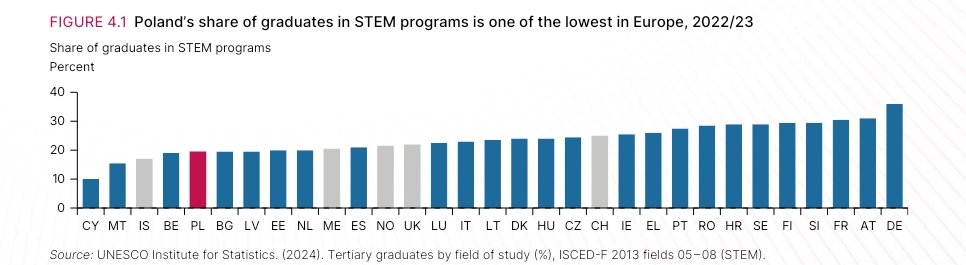
- W Polsce odsetek absolwentów kierunków STEM jest niższy niż w krajach przodujących w dziedzinie innowacji – w 2022 r. mniej niż 20% absolwentów podjęło pracę w dziedzinach nauki, technologii, inżynierii lub matematyki. Jest to najniższy wynik spośród czterech krajów Europy Środkowej i Wschodniej (4CEE), tj. Bułgarii, Chorwacji, Polski i Rumunii.
- Polska plasuje się wśród krajów UE osiągających najsłabsze wyniki w zakresie wspólnych publikacji
naukowych podmiotów publicznych i prywatnych, co stanowi kluczowy wskaźnik transferu wiedzy między środowiskiem akademickim a przemysłem (EIS 2024). Z wynikiem odpowiadającym 56,6% średniej unijnej Polska pozostaje daleko w tyle za Danią (489%) i Finlandią (368%) – dwoma krajami osiągającymi najlepsze wyniki w Europie – i nadal plasuje się znacznie poniżej poziomu odniesienia dla UE.
- Polska boryka się z poważnym deficytem inwestycji w sektorze prywatnym, plasując się w dolnym 25. percentylu wśród 27 państw UE pod względem udziału inwestycji w PKB.
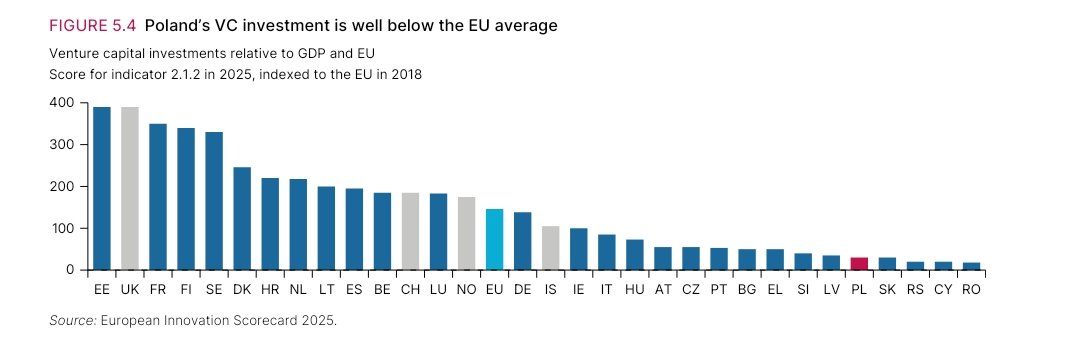
- Inwestycje venture capital w Polsce wyniosły około 0,05% PKB, czyli znacznie poniżej średniej unijnej wynoszącej 0,19% (Komisja Europejska, 2022), mimo że Polska jest największym rynkiem spośród porównywalnych krajów.
- Współpraca między uczelniami a przemysłem jest wyjątkowo słaba – zaledwie 5% publikacji naukowych
wiodących polskich uczelni powstaje we współpracy z partnerami biznesowymi, co stanowi najniższy wskaźnik w
Europie. Istnieją również obawy dotyczące jakości absolwentów szkolnictwa wyższego, którym
często brakuje praktycznych umiejętności w zakresie nauk ścisłych, technologii, inżynierii i matematyki (STEM) oraz badań naukowych. Sytuację pogarsza brak zgodności między zainteresowaniami naukowymi a potrzebami gospodarczymi, a publiczne działania w zakresie badań i rozwoju często nie mają
charakteru strategicznego.
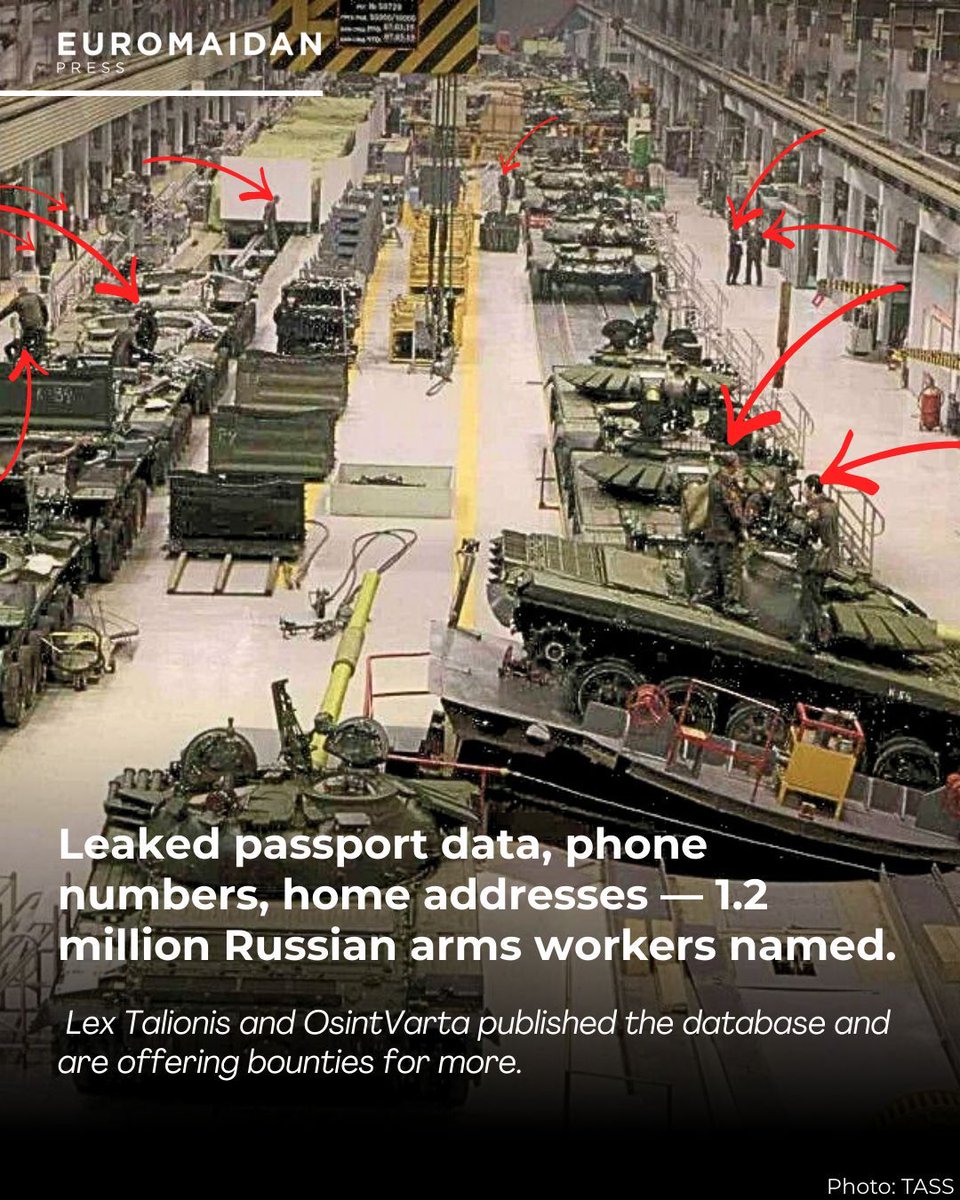
Ukrainian OSINT communities just published an interactive map covering 6,088 Russian defense factories and exposed personal data of 1.2 million employees — passport numbers, phones, emails.
The database is filterable by 16 production categories — from missile systems and ammunition to drones and electronic warfare — and each entry includes employees' passport numbers, phone numbers, and home addresses.
Of those 6,088 enterprises, only 2,290 face international sanctions. The other 3,798 are now exposed but untouched.
The hacktivists announced they are offering bounties for more leaks, network access, and classified documents from Russia's arms sector.
🔗 https://t.co/licD2fGQXP
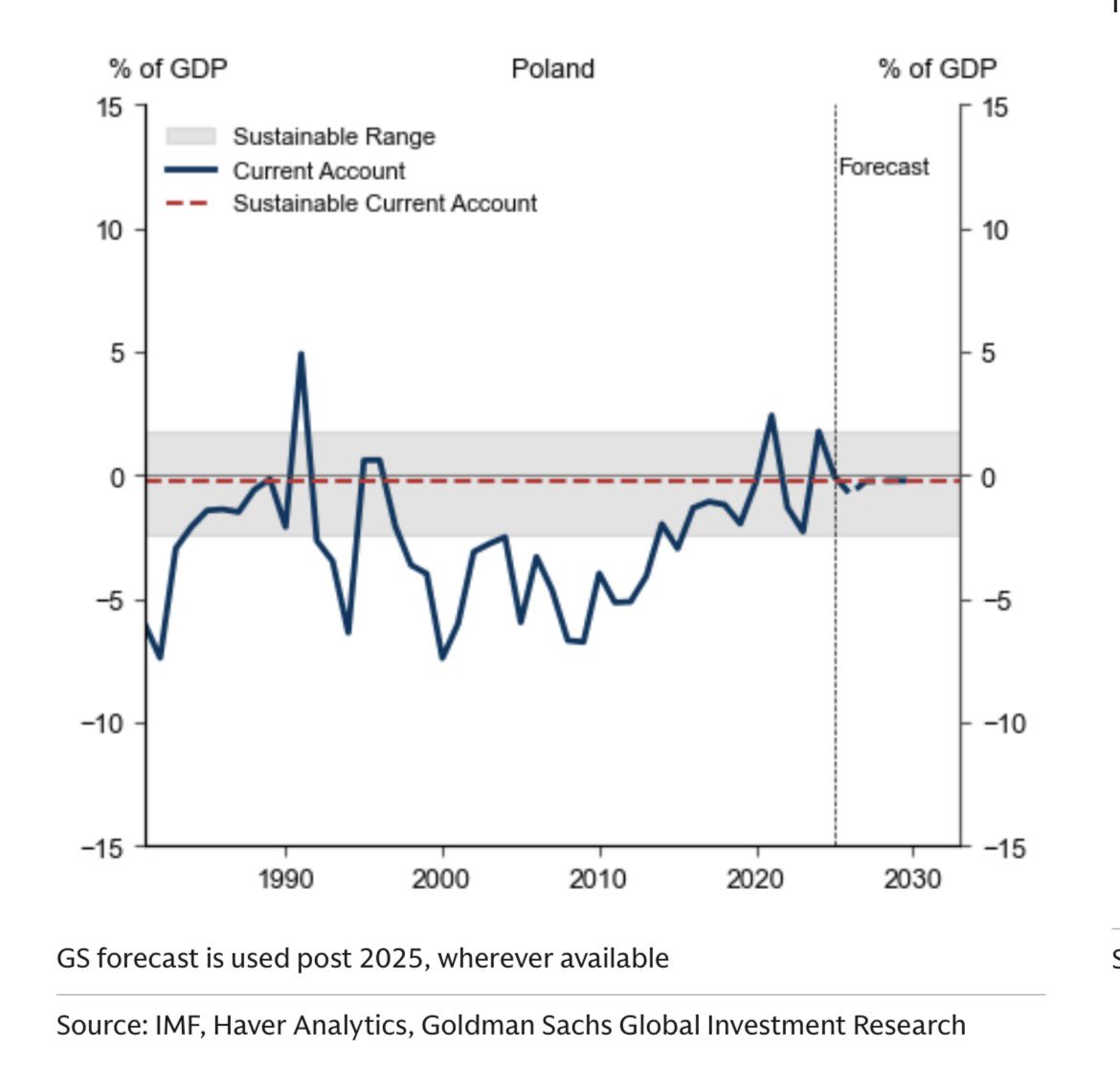
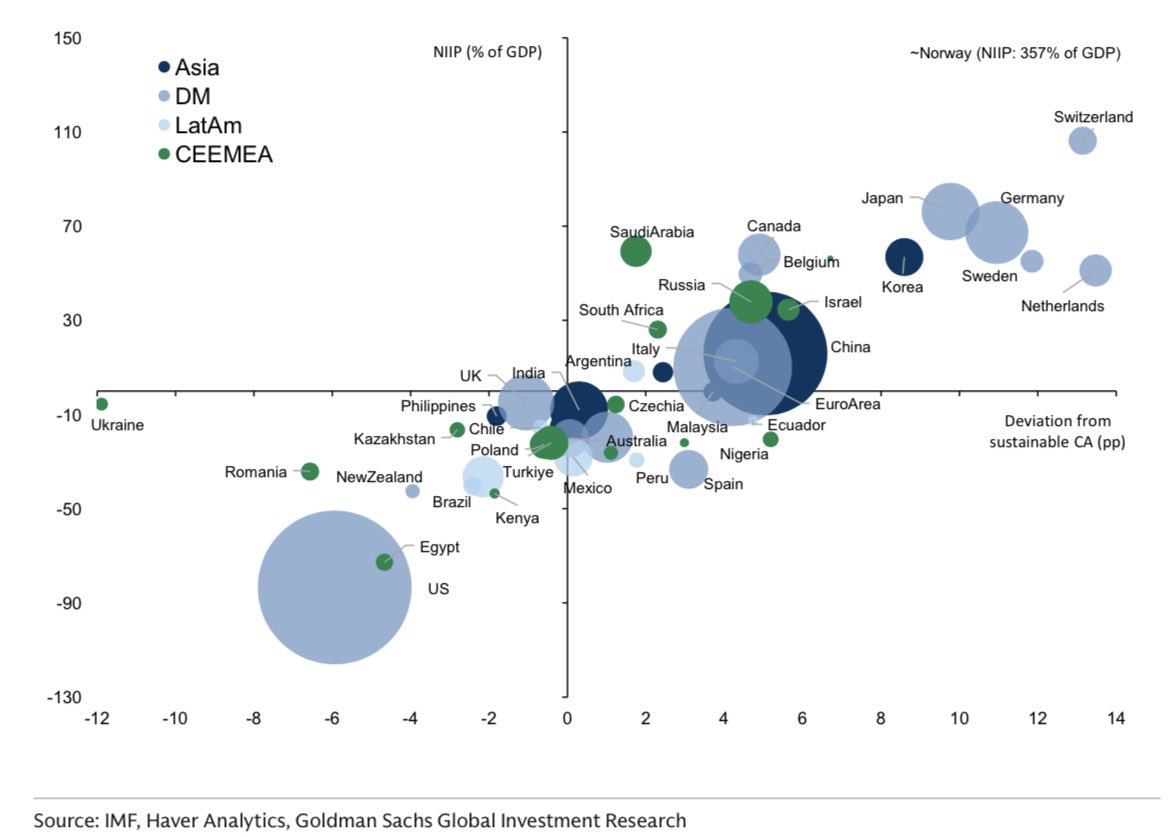
Czy polski deficyt jest bezpieczny? Goldman Sachs opublikował wczoraj obszerny raport o zrównoważeniu rachunków obrotów bieżących. Wniosek dla Polsk? Nie jest źle.👇
Najnowszy raport analitykow GS wskazuje, że Polska znajduje się w bezpiecznej strefie. Nasza Międzynarodowa Pozycja Inwestycyjna Netto (NIIP) poprawiła się z ok. -60% do -35% PKB w ciągu dekady.
Obecny rachunek obrotów bieżących jest dobrze dopasowany do długoterminowych potrzeb gospodarki.
Analitycy potwierdzają, że polski bilans płatniczy jest zrównoważony i bezpieczny.
Polska nie wykazuje niebezpiecznych nierównowag, a nasz dług netto względem zagranicy zmniejsza się systematycznie co wpływa na stabilizację całej gospodarki.