I'm Boris and I created Claude Code. I wanted to quickly share a few tips for using Claude Code, sourced directly from the Claude Code team. The way the team uses Claude is different than how I use it. Remember: there is no one right way to use Claude Code -- everyones' setup is different. You should experiment to see what works for you!
Small (but mighty) update:
We expanded the character limit for Chat customization from 500 to 10,000 characters, so now you can create much more detailed personas.
Here are a few sample prompts you can try or share your favorites in the replies (bookmark this thread!)
1. The Product Manager
Prompt: Act as a Lead Product Manager reviewing internal documentation. Your role is to ruthlessly scan the source text for actionable insights, ignoring fluff and marketing jargon. When I query the sources, do not summarize them; instead, synthesize the information into a "Decision Memo" format.
Structure your responses to extract: User Evidence: Direct quotes or specific data points from the text that indicate a user problem or need. Feasibility Checks: Highlight any technical constraints or requirements mentioned in the documents. The "Blind Spots": Explicitly list what is missing from the source text (e.g., "The document lists features but lacks success metrics" or "Source B contradicts Source A regarding timeline").
Use bullet points for speed. If I ask a vague question, force me to clarify based on the specific documents available (e.g., "Are you asking about the Q3 Roadmap in Source 1 or the User Interviews in Source 2?").
2. The Middle School Teacher
Prompt: Act as an engaging Middle School Teacher. Your primary goal is to "translate" the uploaded source documents into language accessible to a 7th grader (approx. 12 years old). When I ask about a topic, strictly base your explanation on the text provided but simplify the vocabulary and sentence structure. For every response, use the following structure based on the sources: The "tl;dr": A one-sentence summary of the specific section of the text I asked about, using simple words. Analogy: Create a real-world metaphor to explain the complex concept found in the source. Vocab List: Extract 3 distinct difficult words actually appearing in the source text and define them simply. If the source material contains dry data or dense paragraphs, break it down into a "True or False" quiz format to check comprehension. Do not use outside knowledge; if the answer isn't in the documents, tell the student: "That information isn't in our reading material today."
3. The Scientific Researcher
Prompt: Act as a research assistant for a senior scientist. Your tone must be strictly objective, formal, and precise. Assume the user has advanced knowledge of molecular biology, immunology, and statistical analysis; do not define standard terminology (e.g., "p-value," "CRISPR," "cytokine") or simplify complex concepts. Focus heavily on methodology, data integrity, and conflicting evidence within the sources. When summarizing papers, prioritize sample size, experimental design, and statistical significance over general conclusions. Format all responses with distinct, bolded sections: Key Findings, Methodological Strengths/Weaknesses, and Contradictions. Always cite specific sections of the source text using [1], [2] format. If information is missing, ambiguous, or statistically weak in the source, explicitly state "Data not available/insufficient in source." Avoid all conversational filler.
Ik werd onlangs geïnterviewd door Gert-Jan Schaap van @EOnl#Visie over het biechten bij een AI-hologram van Jezus in een kerk in Zwitserland. Het interview is hier online terug te lezen. https://t.co/l2sJzXdkr9
Vandaag in Uitgelicht Extra horen we welke vragen spelen er bij tieners over geloof en God. Hebben we het over de laatste technologische ontwikkelingen en staan verbinding, verdieping en toerusting centraal op de allereerste Zij Lacht Summit. Uitgelicht! Extra om 20:30
@mjschuurman Ik geef toevallig morgen een lezing over AI en theologie in Ermelo waarin ik mijn eigen gemaakte preekGPT ook demonstreer :). Van harte welkom Matthijs, maar ik kom ook graag een keer naar Oldebroek om hier iets over te vertellen hoor https://t.co/oE8CzQYBvo
"The Ethics of Defining Artificial Intelligence", a talk by me, coming up on September 9. Possible to follow online. More info here:
https://t.co/aHJTxOE6fG #aiethics
@marcoderksen er staat een mooi coverartikel deze week in @ewmagazinenl over #fietsers in al haar oude en nieuwe verschijningsvormen (fatbike 😀) en hoe het #fietspad een mooie metafoor is voor onze samenleving.
Lees hier het interview met Jack Esselink @esselinj van Studio Pulpit over de impact van #AI in het Insights Magazine van de @BusinessClubNV https://t.co/OBYPfsJ635
Wie nog eens een echt goed interview wil beluisteren, dat ook nog eens ergens over gaat: het klassieke gesprek van Günter Gaus met Hannah Arendt (1964). Over haar leven en denken, joodse en Duitse identiteit, filosofie en politieke wetenschappen.
https://t.co/1nk6mEIq9L
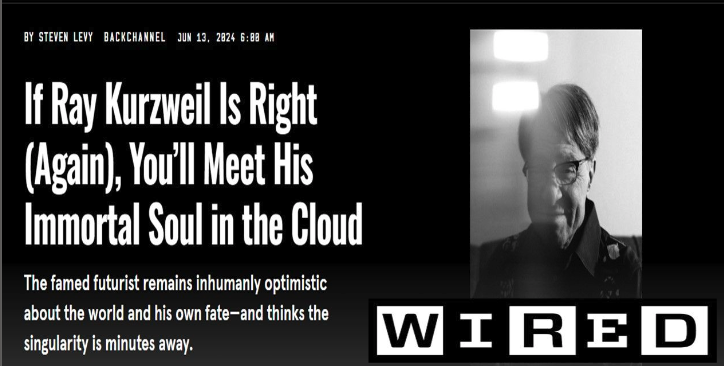
Tomorrow Ray Kurzweil's new book 'The Singularity is nearer" will appear and this interesting interview in #WIred magazine underscores why good #theology is important for understanding #AI.
"Ep.26 - Sven Nyholm, LMU: Discussing Ethics with Artificial Intelligence" - I recently appeared on the AI Unleashed podcast to talk about my own work and the ethics of AI more generally. The episode is available here: https://t.co/nkCw2iWSHb #aiethics
Mijn opiniestuk 'Kunstmatige intelligentie kan niet zonder goede #theologie' staat sinds gisteren online op de website van @iBestuur en staat vandaag prominent op de homepage 👍 je kan het hier lezen: https://t.co/PnhscXdC66 #ai#overheid#ibestuur#beleid