NEW 🧵: Should industrial policy target manufacturing or services?
It should target both, but focus more on manufacturing as it remains the backbone of productivity growth and innovation.
Most underrated industrial policy success story: Morocco's auto industry
- More car exports to Europe than China
- Zero to $14 billion in auto exports in 15 years
- Invested heavily in infrastructure: rail, highways, ports
- Brought in foreign firms from France, China, Japan, Korea (Renault is Morocco's largest private employer)
- Foreign firms enticed with not just subsidies but speed: factories can get approved and built in months
- Hugely successful SEZs and industrial parks
- Took advantage of FTAs with EU and US and geographical proximity to Europe
- Now turning into an EV manufacturing hub
- Surge of new plants from Chinese battery makers
Copper is one of the most exciting metals to study.
We're obsessed with "Electrifying" the world.
But we have completely ignored the MASSIVE metals supply/demand imbalance.
This creates one of the most asymmetric bets in all of markets.
A thread on the copper setup ... 🧵
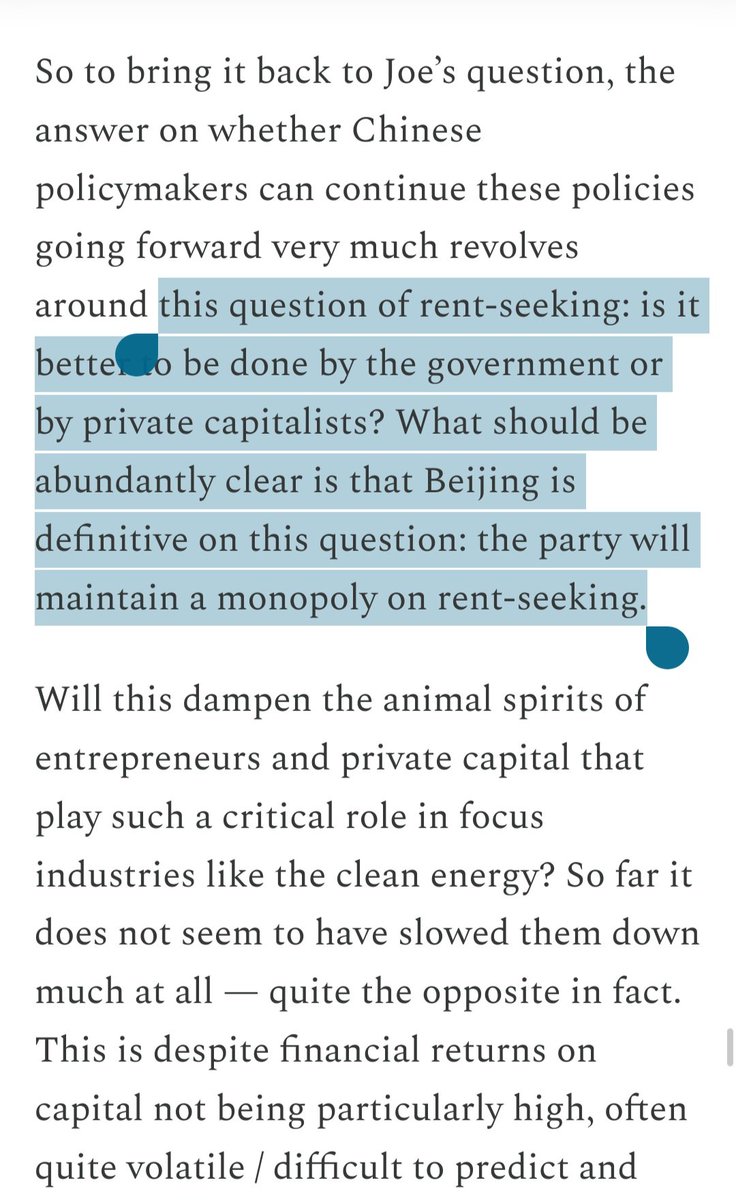
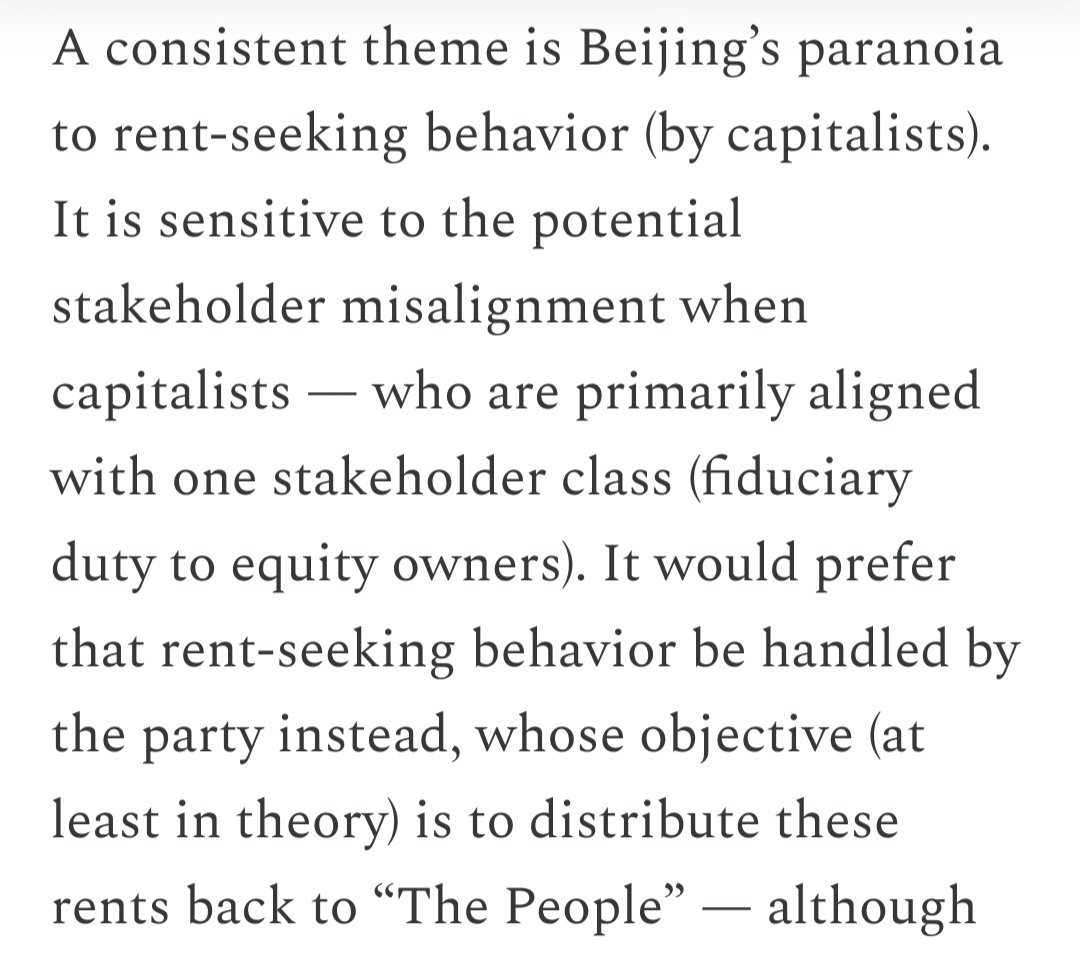
"In China, the general policy orientation is to favor labor over capital (especially equity capital). You can see this in how so many policies favor labor, especially lower-income labor"
Interesting article by a US investor who actually understands China: https://t.co/hwo2TGJpBK
This is the crucial point to understand China's socialist market economy:
The state maintains public ownership of the natural monopolies, to prevent rent-seeking by capitalists.
Markets are an *instrument*, to encourage industrial production and innovation, but the interests of the people trump the interests of private capital.
For China, boosting manufacturing in the real economy will always take precedence over boosting market caps and shareholder dividends.
https://t.co/jxxO5cjruM
Energy guru Daniel Yergin: «I'm sick of the energy transition discussion»
Daniel Yergin is often called the most influential energy analyst in the world. The American author has a clear answer to the question of whether the age of oil is over.
#OOTT https://t.co/YkRwCWopw2
I think this is the bottom in Uranium.
Fund flows are extremely bearish right when technicals are inflecting bullish.
Most likely the final shake-out has happened and we're heading higher.
Disc: we own $U.UN
#uranium
Ancient Yemeni architecture is fascinating in that it seems to preempt modernist style — an austere facade and an almost industrial command of verticality, in a hostile desert environment
In Bergen, Norway, there are no garbage trucks and no trash piling up on streets because all over town, there are receptacles that connect to an UNDERGROUND PNEUMATIC WASTE TRANSPORT SYSTEM. The waste collects for a bit, and then WHOOSH...it's off to the recycling center. 🤯
Many questions about the Ras El Hekma Project
IF what Madbouly said is true, it's a huge lifeline to a leadership that ran Egypt's finances into the ground. 2 points
1) I'll believe it when I see deposits
2) This is temporary relief that can be squandered as seen repeatedly 🧵
"Developing countries are diverting the resources that are needed for development to service their debt".
That debt is largely owed to foreign investors, who profit from struggling Global South nations' debt distress. Remember: their financial wealth is the poor nation's debt.
The real debt trap: Wall Street (and neoliberal economists) encouraged Global South nations to borrow on capital markets.
Now 3.3 billion people are living in countries that spend more on debt payments than on education and healthcare.
Meanwhile, Western investors are profiting
https://t.co/b08FJ5zqmQ
What makes the ESG issue so complex is that progressives who were once hostile to capitalism are now using it as a tool to to accomplish through “the market” what they couldn’t do through lawmaking. Republicans need to understand this issue *deeply* to address it.