Aging & professions like teaching, coaching, & singing can decrease vocal functioning. Our latest pub, a feasibility study, compared 2 tech-driven evidence-based vocal therapies in an attempt to intervene w/older adults https://t.co/NQlkSfcOKs @KCHillinois @AHSIllinois@CHAD_UIUC
Not a bad idea. I’ll think about it.
Funny thing is… almost everything I do related to airborne precautions, clean air, and Long Covid is unpaid labor.
Research translation. Calls with families. School advocacy. Public education. All pro bono. /1
Yesterday: ideas → reality.
The inaugural Conductor Symposium.
Students designing real solutions for health, cognition, performance and behavior—not just talking about them.
This is the work.
🔗 https://t.co/uZPHsJVny2
@IlliniHealthKin@AHSIllinois@iSchoolUI@UofIllinois
Thanks to my team @etclab@AHSIllinois@UofIllinois for assisting with ~3 hours of filming instructional pickleball videos today. I’m sunburnt and tired, but we accomplished a lot.
1/
6 days ago, Illinois took a major step toward monitoring classroom air quality—thanks to the work of @IllinoisAir.
Yesterday, momentum kept building. 🧵👇
https://t.co/Y88GdGEgmr
To counterbalance my apocalyptic content with research that never gets the same kind of ❤️ or attention, I’m going to start a mega 🧵 of my own published papers & collaborative work to maximize reach. Here’s a running list of my publications from
April 16, 2024 - April 15, 2025👇
🧠 Advancing Alzheimer's Disease Research - Unveiling Sex-Specific Biomarkers
Alzheimer's Disease (AD) impacts nearly 6.5 million individuals in the U.S., ranking as the fifth leading cause of death for those 65 and older.
Our research examines the pronounced effects of AD on females, who exhibit higher incidence rates, more significant neuropsychological challenges, and increased brain atrophy.
🔍 Key Findings
Earlier Work - This investigative team discovered that functional connectivity from the hippocampus to the precuneus cortex and brain stem was significantly stronger in males with mild cognitive impairment. This highlighted potential sex-specific biomarkers linked to different stages of the disease.
New study - "Sex Differences in Interacting Genetic and Functional Connectivity Biomarkers in Alzheimer's Disease” (just published online in GeroScience) extended this research to individuals with AD.
Results: Males exhibited significantly stronger interhemispheric functional connectivity between the left and right hippocampus compared to females.
As a late contributor to this research, I'm honored to be part of a team that's pushing the boundaries of our understanding of Alzheimer's Disease.
🎯 Implications
Our findings shed light on the crucial role of the hippocampus in sex differences in AD. By understanding these disparities in brain connectivity, we can pave the way for sex-specific precision medicine, potentially revolutionizing AD treatment.
https://t.co/jr2vFQNZhO
🚨 Attention Educators & Parents! 🚨
The @EtcLab just launched a new resource to tackle the crisis of illness-driven absenteeism in our schools. Check out our latest public data release, aimed at shedding light on this urgent issue and driving action towards cleaner air in educational facilities.
📊 Explore Your State's Data: Dive into our data repository to see how your state is faring. It's time to push for change and ensure our children's health and education are top priorities.
💡 Get Involved: If you have expertise in data dashboards and want to make a difference, join us! We're looking for volunteers to help develop real-time analysis and interactive tools. Your skills can help shape a healthier future for our schools.
🔗 Access the Data: https://t.co/EL4UEDkshL
Let's unite for cleaner air and healthier schools! Share this post, tag your representatives, and make your voice heard. Together, we can create a safer, more equitable educational environment where cleaner air boosts cognitive health, sharpens attention, and enhances learning, leading to improved academic performance for all. It's not just about having students in their seats; it's about ensuring they are fully engaged and thriving!
APA Citation:
Mullen, S. P., & Chong, D. (2024, March 18). Public School Absenteeism in the US. Retrieved from https://t.co/EL4UEDkshL
#CleanAirForSchools #EducationalEquity #PublicHealth #DataForChange
If you want to understand how #LongCovid affects the brain, or the neuroscience of cancer, there's nobody better than @michelle_monje to learn from.
Our conversation in the new Ground Truths (link in profile)
Now @Spotify and @ApplePodcasts
All content is free.
1/ 🧠 Introducing the Challenor Cognitive Challenge! 🧠 Boost your brain's agility & coordination with this exercise inspired by Southeast Asian martial arts. Named in honor of @urbanmel & designed for those w/#LongCovid who can do this #braintraining while lying or standing🧵
This week in #LongCovid:
✓ Leaky blood-brain barrier
✓ Interferon-γ as a potential biomarker
✓ Persistent infections and >50%⬆️risk
✓ Vaccination protection in adults and kids >40%
✓ Our new @ScienceMagazine perspective
All in new Ground Truths w/ @zalaly (link in profile)
🌟 Incredible Insights! The Surprising Link Between Classroom Air and Student Success 🌟
Dive into a treasure trove of data revealing a hidden factor in academic achievement: the air our students breathe! Uncover the startling connections among classroom air quality, student absenteeism and performance:
📚 Study Highlights:
Shendell et al (2004) + Gaihre et al (2014):
Where? U.S. & Scotland, 22 + 30 schools
What? CO2 Levels
Findings? Increased CO2 = More Absences! A 100 ppm increase in CO2 was linked to 0.2% (0.4 days/session) increased student absenteeism. A 1000 ppm CO2 jump pushes absenteeism up by 10-20%!
References:
Shendell, D.G.; Prill, R.; Fisk, W.J.; Apte, M.G.; Blake, D.; Faulkner, D. Associations between Classroom CO2 Concentrations and Student Attendance in Washington and Idaho; Lawrence Berkeley National Lab. (LBNL): Berkeley, CA, USA, 2004.
Gaihre, S., Semple, S.; Miller, J.; Fielding, S.; Turner, S. Classroom carbon dioxide concentration, school attendance, and educational attainment. J. Sch. Health 2014, 84, 569–574.
MacNaughton et al (2017):
Where? U.S., 1772 schools
What? Fine Particles (PM2.5)
Findings? Every tiny increase in PM2.5 ups chronic absenteeism by 1.58%!
Reference:
MacNaughton, P.; Eitland, E.; Kloog, I.; Schwartz, J.; Allen, J. Impact of particulate matter exposure and surrounding “greenness” on chronic absenteeism in Massachusetts public schools. Int. J. Environ. Res. Public Health 2017, 14, 207.
Simons et al (2010) + Haverinen-Shaughnessy et al (2011):
Where? U.S., 2751 schools
What? Greenery, Ventilation, and More
Findings? More greenery = Less absence! Poor air = More absences! Better air flow boosts math and reading scores!
References:
Simons, E.; Hwang, S.A.; Fitzgerald, E.F.; Kielb, C.; Lin, S. The impact of school building conditions on student absenteeism in upstate New York. Am. J. Public Health 2010, 100, 1679–1686.
Haverinen-Shaughnessy, U.; Moschandreas, D.J.; Shaughnessy, R.J. Association between substandard classroom ventilation rates and students’ academic achievement. Indoor Air 2011, 21, 121–131.
Hutter et al (2013):
Where? Austria, 9 schools
What? Chemicals & CO2
Findings? Certain chemicals and CO2 are brain drainers, affecting cognitive functions!
Reference:
Hutter, H.P.; Haluza, D.; Piegler, K.; Hohenblum, P.; Scharf, S.; Uhl, M.; Damberger, B.; Tappler, P.; Kundi, M.; et al. Semivolatile compounds in schools and their influence on cognitive performance of children. Int. J. Occup. Med. Environ. Health 2013, 26, 628–635.
Haverinen-Shaughnessy and Shaughnessy (2015):
Where? U.S. & England, multiple schools
What? Ventilation & Temperature
Findings? More fresh air = Sharper brains! Cooler rooms = Better test scores!
Reference:
Haverinen-Shaughnessy, U.; Shaughnessy, R.J. Effects of classroom ventilation rate and temperature on students’ test scores. PLoS ONE 2015, 10, e0136165.
👀 The Verdict:
Clean air isn't just a comfort; it's a catalyst for academic excellence! It's time to breathe fresh life into our schools and unlock the full potential of our future leaders!
🔗 Stay Informed!
Dive deeper into the data, and let's push for healthier, smarter classrooms worldwide!
Many clinicians share your concerns...I want to start at zero with what #LongCovid (formerly long-haul) is and how we know it exists. Done this before but the science has evolved. I am not a change agent but I want to be a resource for those who want to learn abt it.
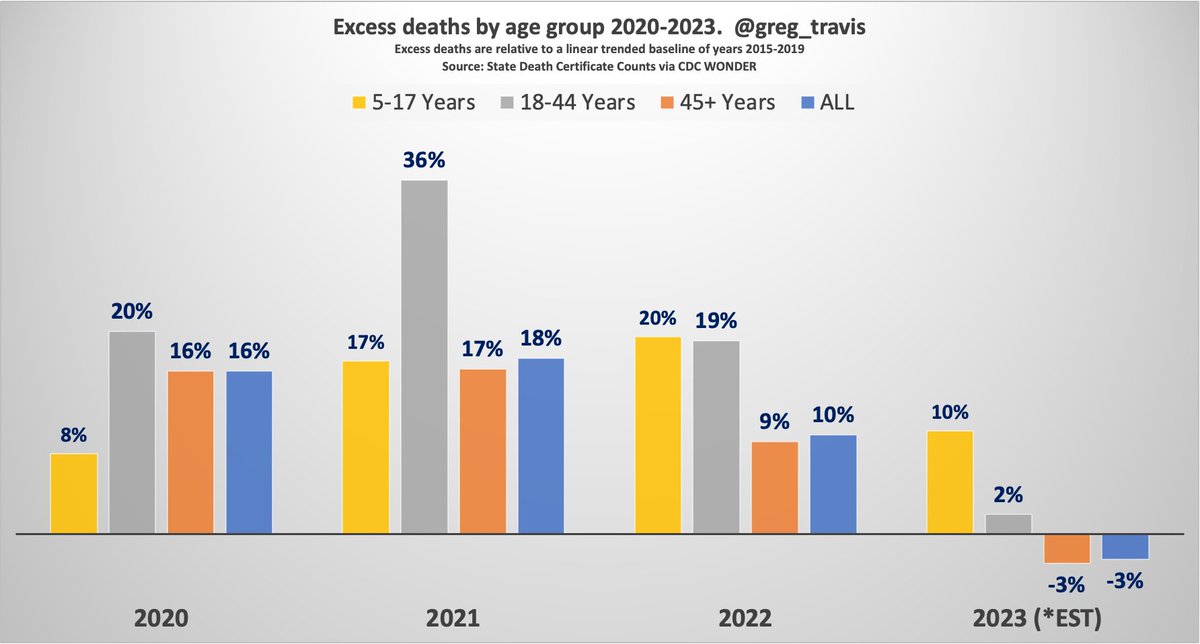
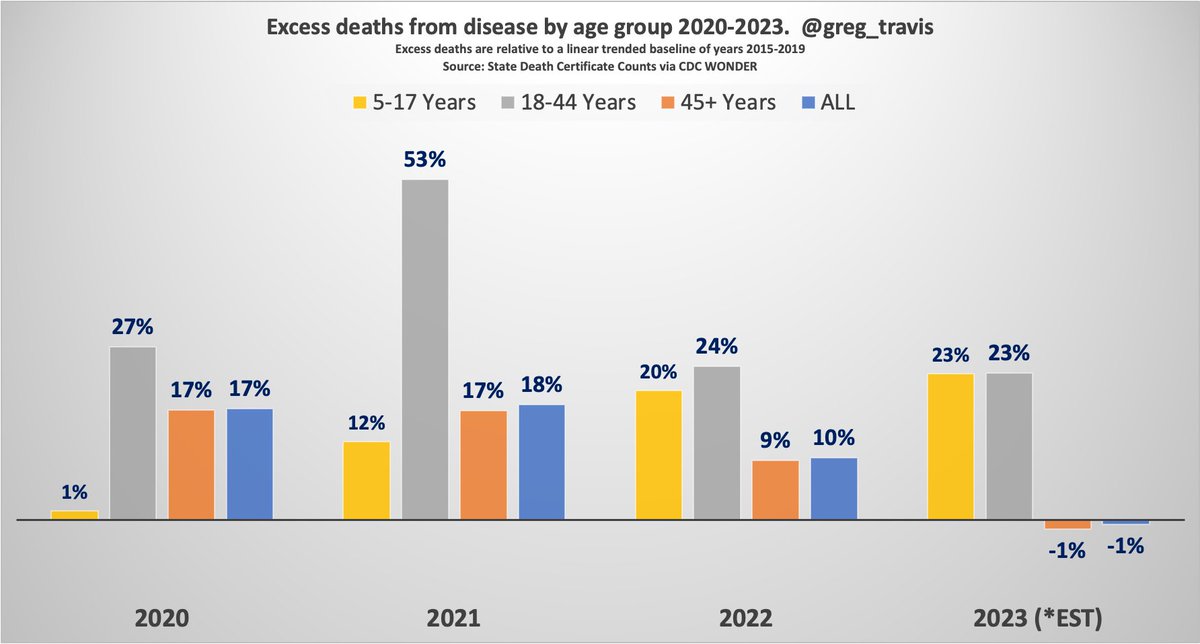
Excess deaths by age group 2020-2023
The 45+ age group is the most highly vaccinated and least infected age group
The 5-17 age group is the least vaccinated and most infected age group
Anyone who looks at this and concludes "it's the vaccines" self-nominates for village idiot
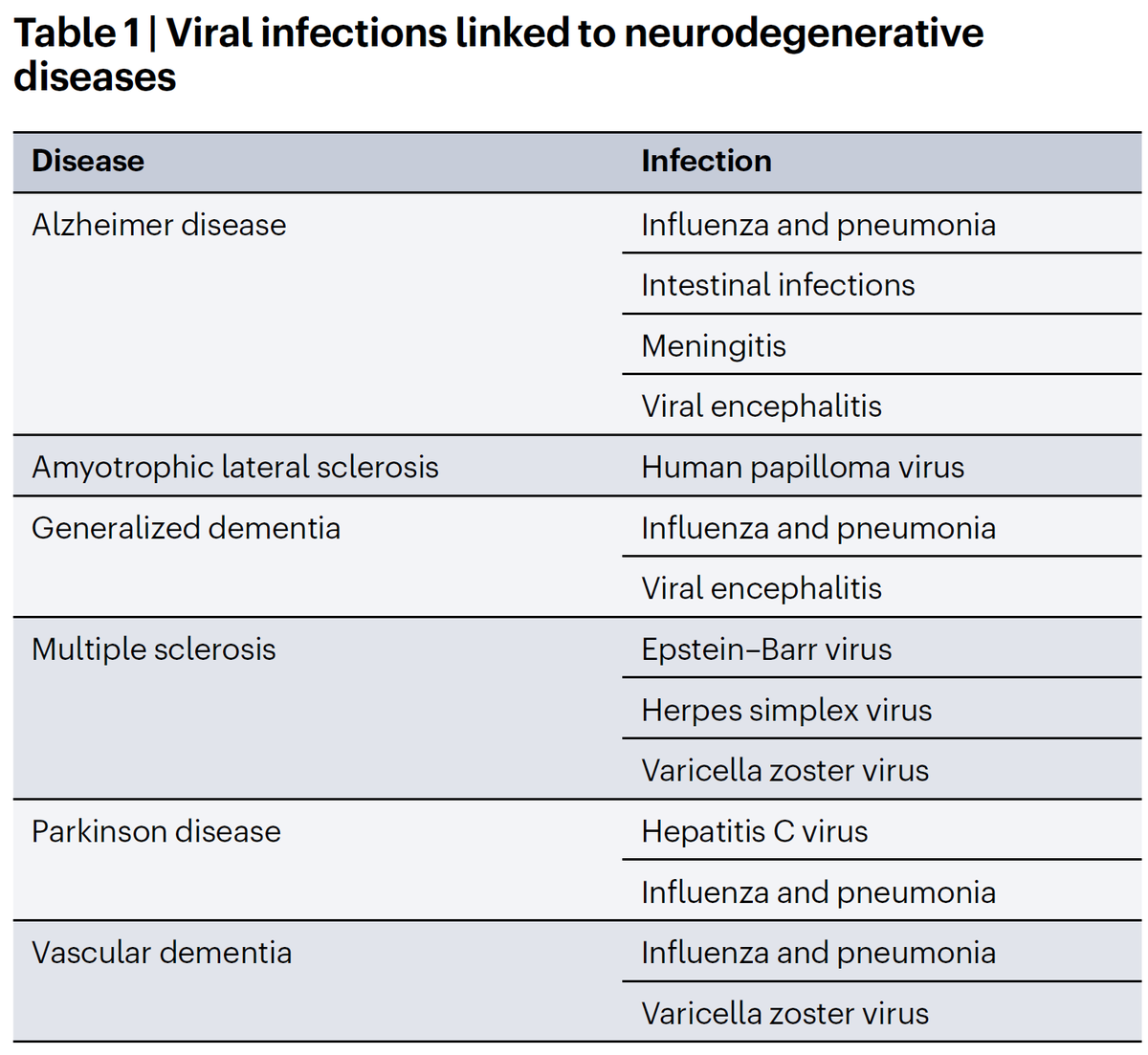
Do viral pathogens increase the risk of neurodegenerative disease?
Recent analysis of more than 400.000
patients across different biobanks point to several straightforward conclusions:
- Increased risk of developing neurodegenerative diseases persists up to 15 years after a single initial virus infection;
- The largest effect association was found between viral encephalitis exposure (caused by many viruses, including coronaviruses) and Alzheimer’s disease.
- Influenza with pneumonia was significantly associated with five of the six neurodegenerative diseases studied.
- The previously reported association between Epstein–Barr virus (EBV) infection and Multiple Sclerosis was also confirmed.
What about vaccines and the risk for neurodegenerative diseases?
(Anti-Vaxxers will love this part)
- Influenza and pneumonia vaccination has been found to reduce the risk for Alzheimer's and Parkinson's disease.
- Shingles (varicella-zoster) vaccination is associated with a reduced risk of dementia in both the United States and Wales.
- Protection against bacterial and viral infection benefits the brain since these infections may activate dormant herpes simplex type 1 (HSV-1) and herpes zoster virus (HZV). HSV-1 and HZV can interact to trigger AD.
Despite these findings, influenza vaccination
coverage in the United States is typically less than 50%, and only about 35% of people over the age of 60 have received a shingles vaccine.
In addition to vaccination, some studies suggest that using antivirals may reduce the risk of dementia. Antiviral target-specific drugs could also provide ways of ameliorating risk or halting neurodegeneration progression, but this remains a goal for future drug development.
References:
Viral pathogens increase risk of neurodegenerative disease https://t.co/koZGtguJ8n
Vaccination Reduces Risk of Alzheimer’s Disease, Parkinson’s Disease, and Other Neurodegenerative Disorders https://t.co/sQJ0j0Rhen
My response:
The Unseen Culprit in Education’s Downfall: Ignoring the Viral Roots of Learning Loss
In this op-ed, the focus was drawn sharply to the issue of school closures and remote learning as the harbingers of a supposed 'learning loss epidemic.'
However, this narrow lens overlooks a glaring, more parsimonious culprit: the SARS-CoV-2 virus itself.
Learning loss is indeed a significant crisis, but attributing it merely to the interruption of traditional schooling is a gross oversimplification. The virus, a master of biological and social disruption, has left indelible marks on our educational system, chiefly through its multifaceted assault on cognitive functions and community health.
Consider the neurological impact: mounting evidence suggests the virus can cause cognitive deficits, sleep disturbances, sensory issues, and even dysphasia and dysphonia. These are not mere side effects but direct assaults on the very faculties required for learning. How can a child absorb algebra when battling post-viral fatigue or neurological inflammation?
Furthermore, COVID-19 increases vulnerability to other infections, such as RSV, creating a domino effect of absenteeism and chronic illness. A recent surge in tuberculosis cases globally adds to the tapestry of a health crisis spilling into educational realms. When our children are in a constant battle against viral foes, both old and new, learning takes a backseat.
Yet, the discourse around education has been curiously silent on these points. Instead of acknowledging the virus's role, we've become mired in debates about the efficacy of online learning platforms and the logistics of school reopenings. This is the cycle of insanity: a refusal to face the viral root of our woes, opting instead to shuffle deck chairs on the Titanic.
And what of the cognitive decline not from the virus but from misinformation and misunderstanding—a barrier arguably as potent as the pathogen itself? In our failure to enhance health literacy, we have allowed the virus to sow confusion and inaction, ensuring that its impact on education extends far beyond the biological.
We cannot afford to continue this vicious cycle. It is past time for policies that address the viral underpinnings of our educational crisis, from bolstering public health measures to directly supporting those with long COVID symptoms. We must dismantle the barriers of misinformation by investing in health literacy as a core component of our educational strategy.
The pandemic has been a lesson in interconnectedness, showing us that public health is inextricably linked to educational outcomes. To break the cycle, we must acknowledge the virus not just as a disruptor of health but as the unseen force undermining our educational endeavors. Only then can we hope to reclaim the future that our children so rightfully deserve.
This TIMES article on Long COVID research failure not only does a disservice to the intricacies of biomedical science but also prematurely calls for a paradigm shift that could potentially derail years of progress. The authors' suggestion to pivot from the biomedical model to a focus on symptom management and health services research is a regressive approach that risks abandoning the pursuit of a deeper understanding of Long COVID's underlying biological mechanisms. Such a shift is a capitulation to complexity and an implicit endorsement of ignorance.
Furthermore, the proposed centralization of research under a government agency, such as the Health and Human Services Office of Long COVID Research and Practice, is a simplistic solution to a multifaceted problem. History has shown that bureaucratic centralization often stifles innovation and delays action, which is the antithesis of what is required in the dynamic field of emerging diseases. The call to concentrate power within a singular entity seems to be a knee-jerk reaction to the understandable frustrations with the pace of research, yet it disregards the benefits of a diverse and decentralized approach that can spark creativity and rapid responses.
Lastly, the article's call for patient involvement rings hollow when the authors themselves advocate for a narrow focus on management over treatments. This token nod towards patient advocacy groups contrasts starkly with their recommendation to step back from research aimed at unraveling the disease's mysteries. Patients are not just seeking empathy and management of their symptoms; they are desperately seeking answers and solutions that can only come from a robust and sustained scientific inquiry into the fundamental nature of Long COVID. By suggesting otherwise, the authors seem to be out of touch with the very community they purport to serve, and the article reflects a resigned attitude that patients, researchers, and clinicians should find unacceptable.
Finally, the conflation of ME/CFS with Long COVID is a disconcerting oversimplification that dismisses decades of patient experiences and scientific inquiry. ME/CFS is a distinct clinical entity that existed long before the COVID-19 pandemic, and while there may be symptomatic overlap, each condition warrants its own separate consideration in research and patient care. To assume that Long COVID is simply a rebranded form of ME/CFS is to erase the unique challenges and struggles faced by patients of both conditions. It is only through dedicated, condition-specific research that we can honor the lived realities of those affected. Science, not supposition, should lead the way in our efforts to understand and treat these complex syndromes. Only with clear, evidence-based insights can we hope to provide the recognition and respect that patients with ME/CFS and Long COVID rightly deserve. The medical community's responsibility is to keep these conditions distinct in research and treatment until such time as rigorous scientific evidence suggests a unified approach.
https://t.co/5kn3bwZtem
We’re looking for amazing humans to join our doctoral program. Note that my department will undergo an official name change next year (Health & Kinesiology). Check out our College @AHSIllinois & everything we have to offer (Speech & Hearing Science; RST) & give my @EtcLab a peek!
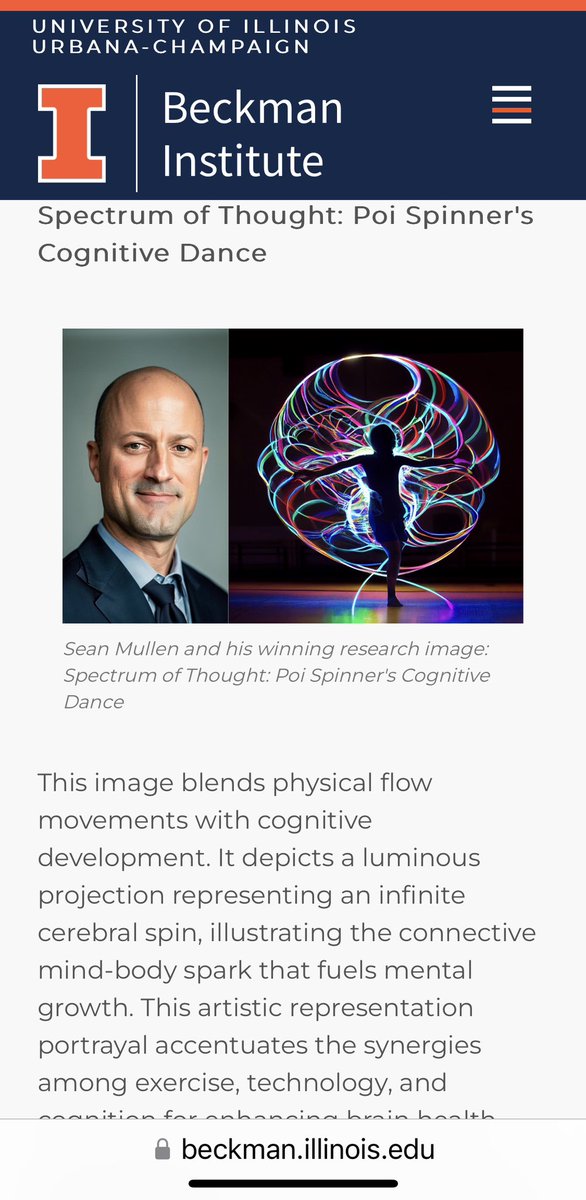
Honored to be 1 of 6 researchers (& 1 of 2 faculty) recognized in the 2023 @BeckmanInst Research Image Contest. My piece, “Spectrum of Thought: Poi Spinner's Cognitive Dance,” melds movement, AI, & the mind-body connection. It's a tribute to the power of exercise, tech, and cognition in brain health. @EtcLab@AHSIllinois
https://t.co/GZVeMJyPvL