When hiring your first 10-15 engineers, forget ‘10x engineers,’ focus on ‘engineers who give a sh*t’ - who care about building it right, think about the next 4 releases, learn to become domain experts, eager to hear user feedback, care about the business and their part in supporting it, will burn the midnight oil to get it done without being prompted, are excited to write the docs, push those around them to be better, want to be part of the interview circuit, keep linear/jira clean and up to date, start to dig into the competitors, add that extra polish because they can’t imagine doing it any other way.
Companies are representations of the people that build them.
When building a company, find team members who really ‘give a sh*t,’ it’s the only way.
I am regularly asked what we @Venrock look for in frontier & deep tech teams at the Series A:
1. technology is past scientific possibility
2. customer commitment is real, not just interest
3. unit economics strengthen with deployment
4. team is uniquely credible for the next bottleneck
Most rounds get stuck on #2.
🎙We’re back with a conversation between one of the greatest minds in AI research @MelMitchell1 of the @sfiscience and @ethanjb. Tune in for perspectives on AI capabilities, performance benchmarks, and the path forward that’s grounded in evidence: https://t.co/UpaLMl508p
🎙We’re back with a conversation between one of the greatest minds in AI research @MelMitchell1 of the @sfiscience and @ethanjb. Tune in for perspectives on AI capabilities, performance benchmarks, and the path forward that’s grounded in evidence: https://t.co/UpaLMl508p
🚨 The era of general-purpose AI is over.
Today we're launching Oumi. 🚀
The platform that lets any team build custom AI models — in hours, not months.
Just describe what you need. Oumi builds it. #VibeML
Higher quality. Lower cost. Fully yours.
The core idea behind Newton’s physical world model is learning about physical dynamics directly from sensor data (e.g. vibrations, pressure, magnetic signals) rather than relying on human-generated artifacts like text.
Language models, on the other hand, have a broad understanding of how we talk about the world, but they’ve never sensed a vibration or temperature change.
In our new research at @PhysicalAI, we introduce a lightweight, parameter-efficient method to bridge these two worlds. This results in a model that can describe and reason about what sensors are detecting and provide qualitative interpretations: the water is about to boil, the machine is behaving abnormally, or the room needs ventilation.
These interpretations can directly guide actions (e.g. turn off the stove, schedule maintenance, open a window etc) bringing physical intelligence and human language together.
Perhaps surprisingly, aligning Newton with language is lightweight. Training took just 20 minutes on a single H100, thanks to the emergent structure in Newton’s physical encoder, which naturally clusters similar physical behaviors, even though it was never trained on these labels.
Our paper presents a proof of concept system that can answer free-form questions about local physical conditions like road surface type, ride comfort, or anomalies, while retaining the general world knowledge of the LLM.
This work demonstrates a promising path toward interpretable, language-grounded physical intelligence, where machines can explain what they sense and humans can reason with them intuitively.
Huge thanks to my co-authors Hasan Doğan, Laura I. Galindez Olascoaga, Muhammed Selman Artıran, and O. Serdar Gedik.
Read more & find the paper here:
https://t.co/iUfVFunfSU
@claudeai $15-25 per PR
No Zero data retention
20min for a review?
If you want
orders of magnitude cheaper with really high quality and low noise
always zero data retention (even for managed saas)
< 2 min for a review
just install https://t.co/DrhW4lIxk9
What does a Defense Neo-Prime look like?
When companies like Anduril Industries, Shield AI, or Epirus emerge, three things are usually true very early:
1) A clear step-change capability
e.g., autonomous targeting, microwave drone defeat, autonomous ISR.
2) Immediate operational demand
units actively trying to buy the system.
3) System-level control
not just a component, but a platform that owns the architecture.
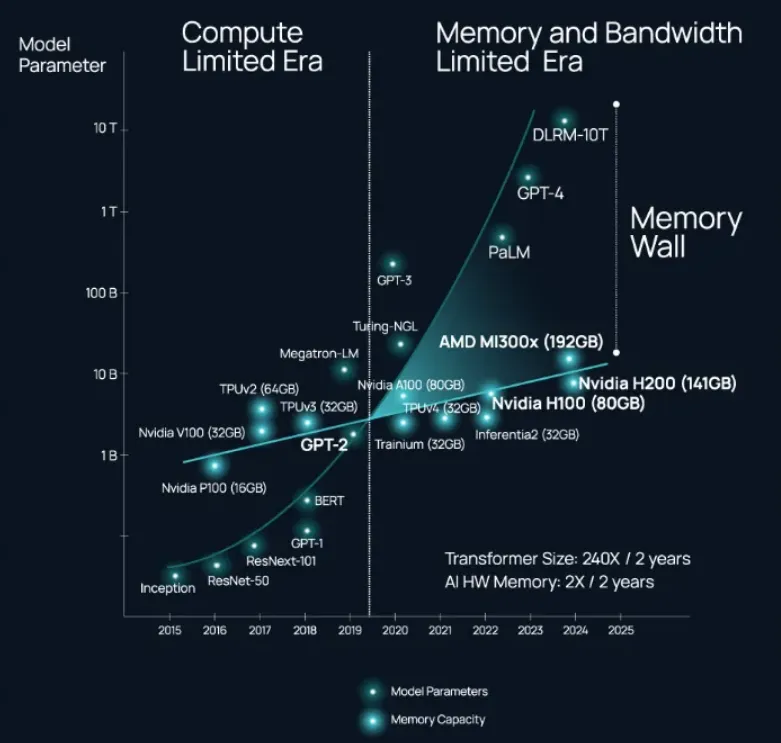
The limiting factor is no longer how many operations a chip can perform. It is how quickly data can move to and from those compute units — and how much energy it costs to do so.
https://t.co/lWZwW6uEVJ
Everyone’s portfolio is overweight NVIDIA.
Transformers have grown ~240× in two years. HBM capacity? ~2×.
AI is no longer compute-bound — it’s memory-constrained.
If bandwidth-per-watt doesn’t bend, GPU scaling slows — no matter how fast the cores get.
If the memory wall compounds, it’s not just an engineering problem — it’s your overweight NVDA position.
Three bottlenecks are converging.
Bandwidth density.
Even with HBM, large models saturate memory channels. More stacks mean more packaging complexity and tighter yield constraints.
Energy per bit.
At scale, moving data often consumes more energy than computing on it. In dense racks, this becomes a thermal limit.
System integration.
Performance deltas now come from topology, interconnect, and memory coupling — not just transistor counts.
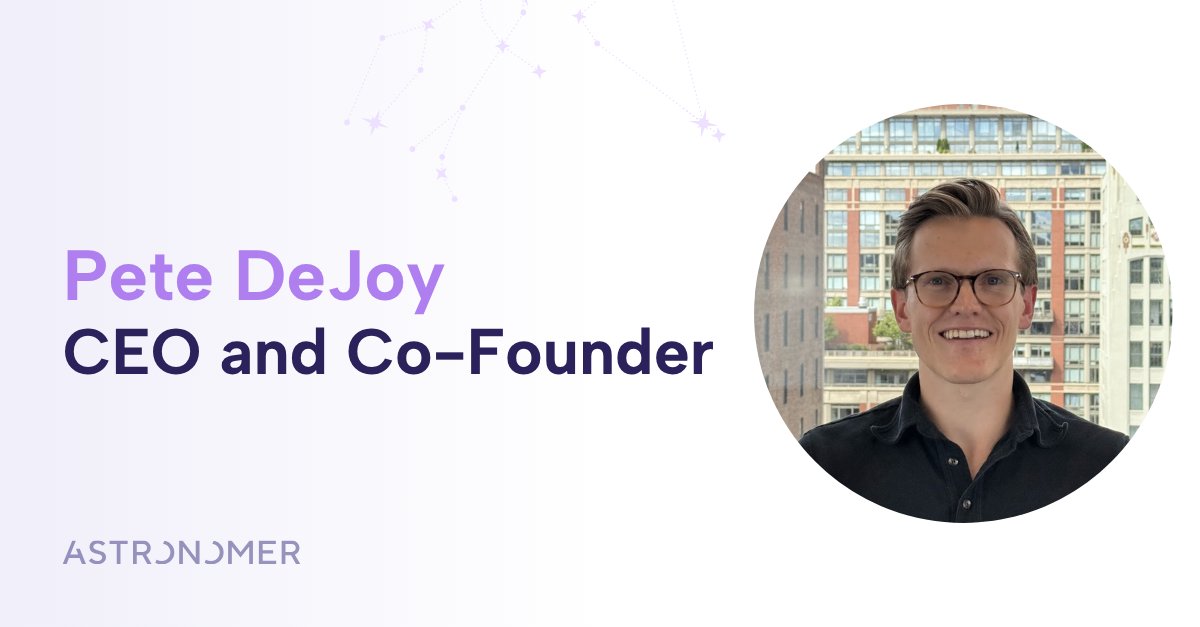
After an extensive search process, we are excited to share that the Board of Directors has appointed @petedejoy as CEO of Astronomer, effective immediately. As CEO, Pete will also become a member of Astronomer’s Board of Directors.
Pete, an 8-year Astronomer veteran and co-founder, most recently served as Chief Product Officer before taking over as interim CEO in July.
The work of data engineers is more important than ever, and Astronomer remains focused on continuing that success and delivering game-changing results to our customers.
Thanks to my new 24/7 friend @tembo I was able to fully finish project for the client today + implement Why page for Unlingo and fully move Screenshots functionality to v2 with new algorithm for sync.
Things which was also done today for v2 but need some tests before merging:
1. Functionality for merging branches with all languages
2. Full migration to @unkeydev for keys management
3. New designs for sign-in/sign-up pages
4. Full codebase migration to @WorkOS
5. Full analytics migration to @OpenPanelDev
Had a great chat with Anurag earlier today about all of his side projects and how he uses @vercel, @v0, and @tembo to ship!
My initial assumption was that the biggest win would be using v0 to prototype and then Tembo’s agent to build. While that is true and an amazing workflow - the biggest advantage he shared was using the Vercel for GitHub integration!
The workflow looks like:
>Using v0 to prototype
>Using a Tembo agent to make fixes/improvements
>Using the Vercel for GitHub integration to preview the deployment
>Deploying or iterating using the agent
Vercel x Tembo is a diabolically good combo 😮💨
Brand consistency breaks fast as codebases scale.
Different apps, repos, and teams all drifting out of sync.
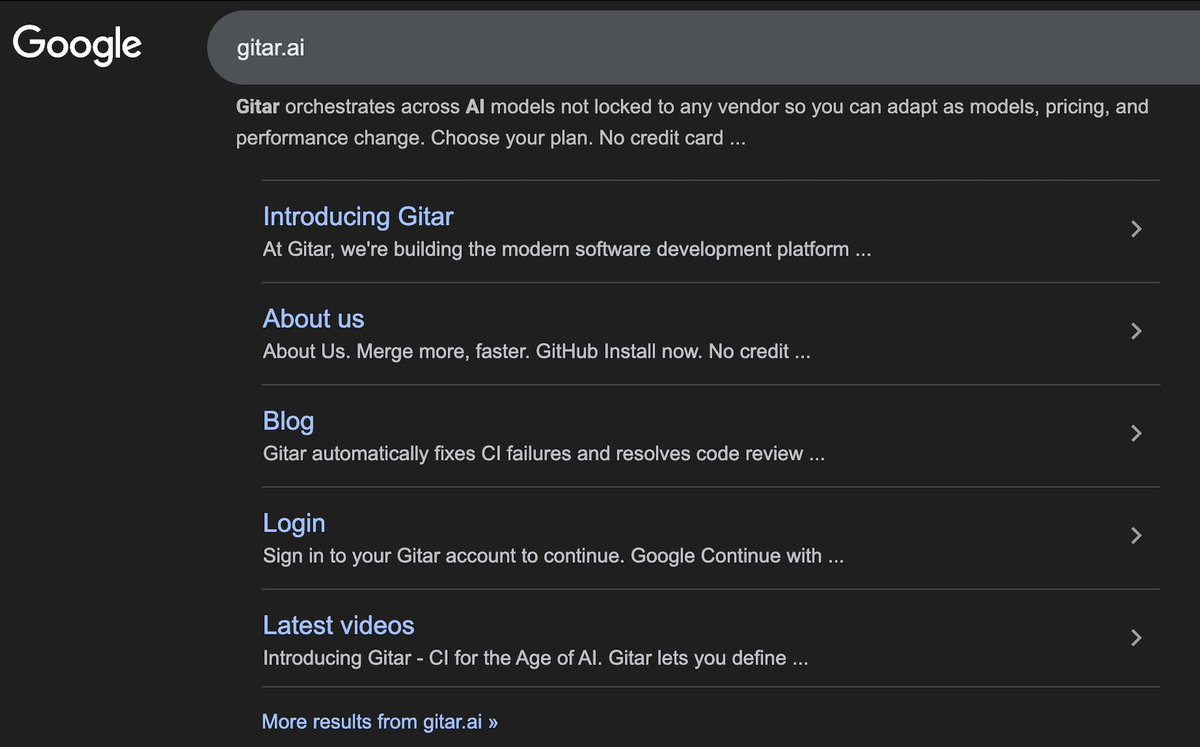
We hit this at Gitar 😅 so we built an AI-native way to fix it.
Now, I can just tell Gitar to enforce brand consistency in natural language
For anyone leaving @NASAJPL who is interested in missile defense please reach out to me about @longwalldefense.
We are developing modern missile defense systems to prevent conflict, reduce damage from ballistic missiles, and win wars.
Hiring now for:
- Hardware Dev. (Structures, Mechanisms, Components)
- Test + Ops
- Manufacturing Eng.
- Technicians (Weld, Additive, Component, AVI, Integration)
🔐 Introducing Astro Private Cloud!
This release represents a fundamental shift in how enterprises deliver data orchestration at scale within their own infrastructure.
For data platform teams managing hundreds of Airflow deployments across several teams or applications, Astro Private Cloud delivers the governance, security, and operational efficiency needed to transform from reactive firefighting to proactive service delivery.
Learn more: https://t.co/Lf3674Ca67