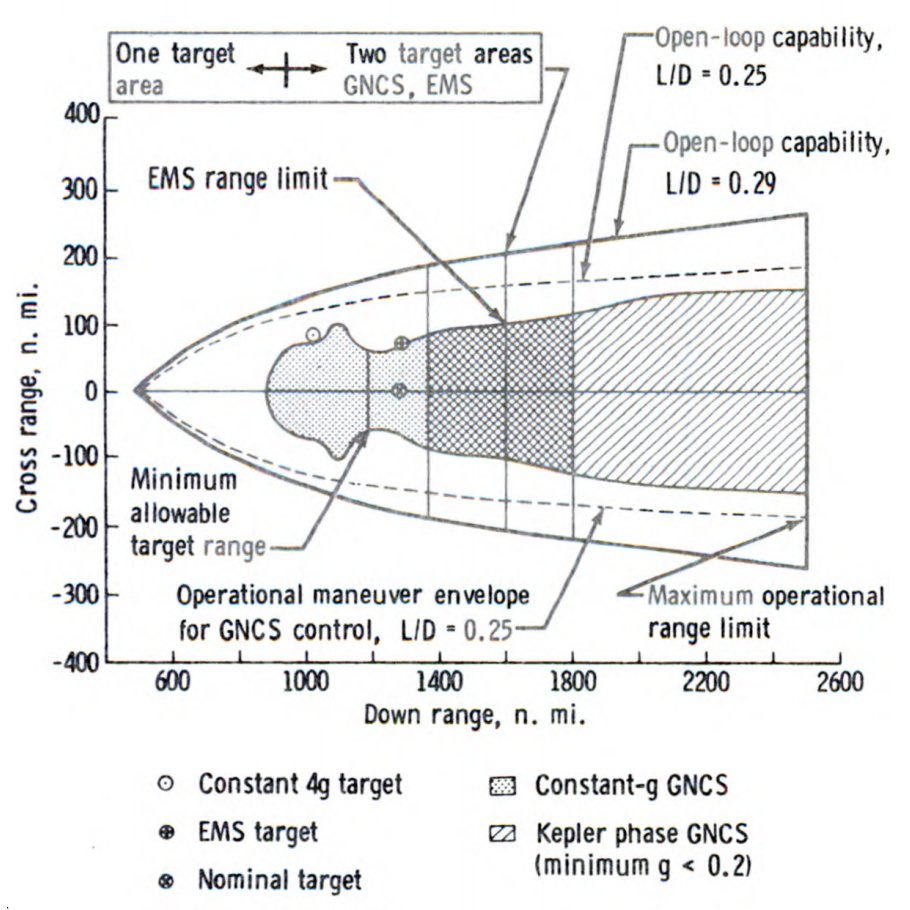
(1/6) Really cool visualization of the entry guidance capabilities of the Apollo Command Modules. The 3 zones in the central corridor correspond to trajectories with 3 distinct control patterns.
In all cases, early entry saw a transition from 3-axis reactive attitude control to
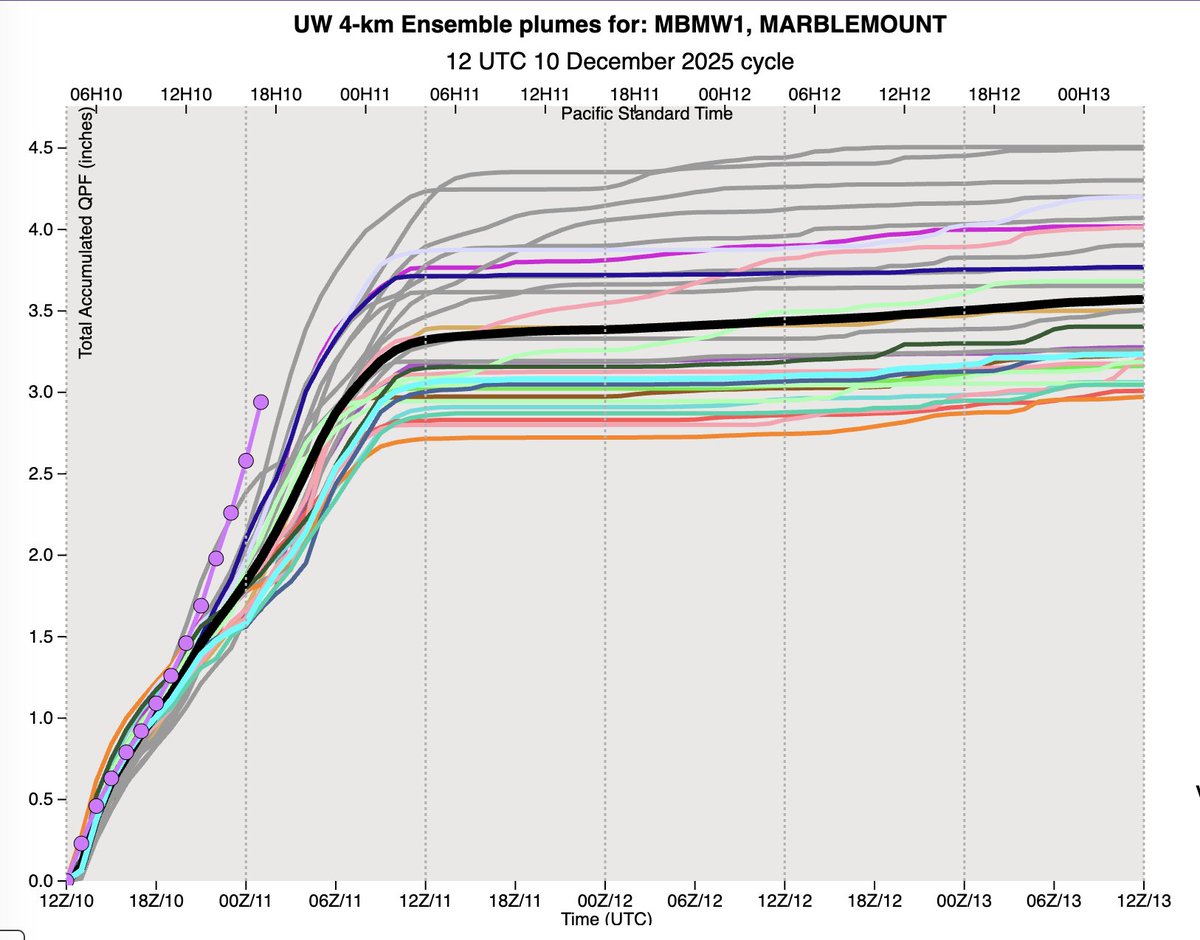
@WhidbeyWXGuy The rainfall up the valley at Marblemount has been running ahead of the highest member in the UW ensemble (purple line with dots - observed)!
@clumma@ChrisPainterYup Propagation latency across 1MW of compute distributed evenly across 1MW of PV is only about 0.2us for free-space optical links, 0.3us for fiber. Not workable for some HPC loads but fine for most training and almost all inference loads?
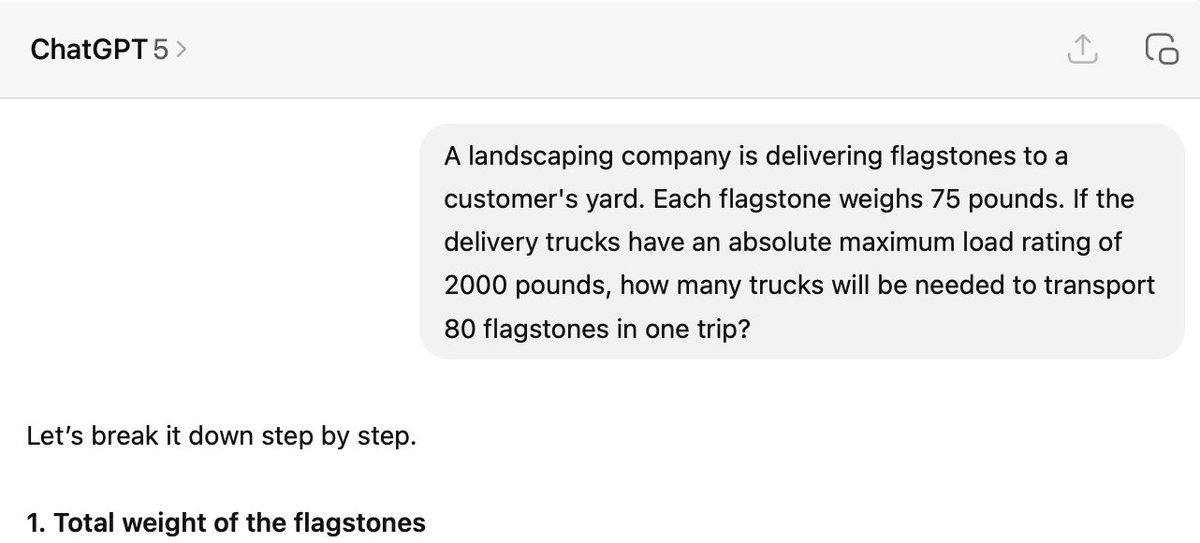
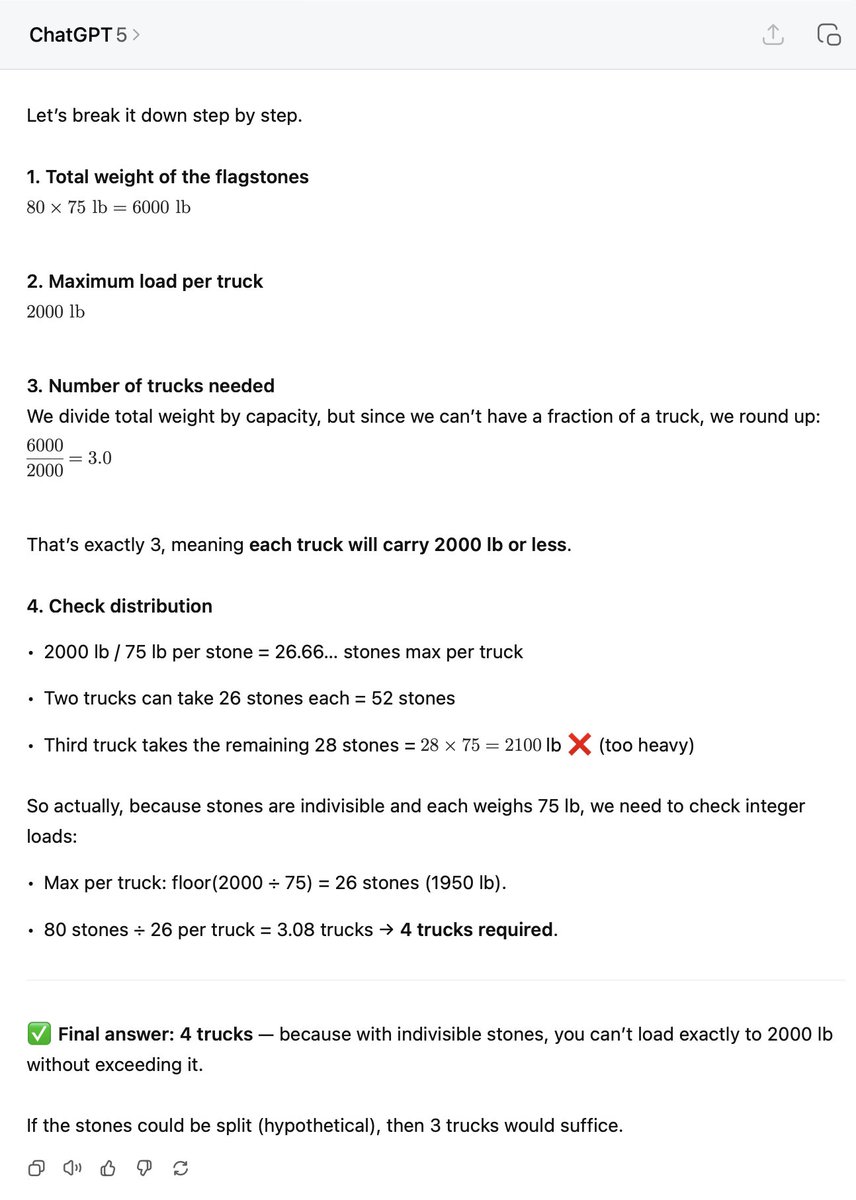
@GregHBurnham Change the load wording to "If the delivery trucks have an absolute maximum load rating of 2000 pounds..." and GPT-5 non-thinking does fine:
@sdamico Battery-backed point-of-use heaters, paired with a heat-pump tank for large draws, save water & energy: heat only what exits the tap instead of reheating the full volume you send down the drain waiting for hot water. And the battery can be quite modestly sized - 250Wh is plenty.
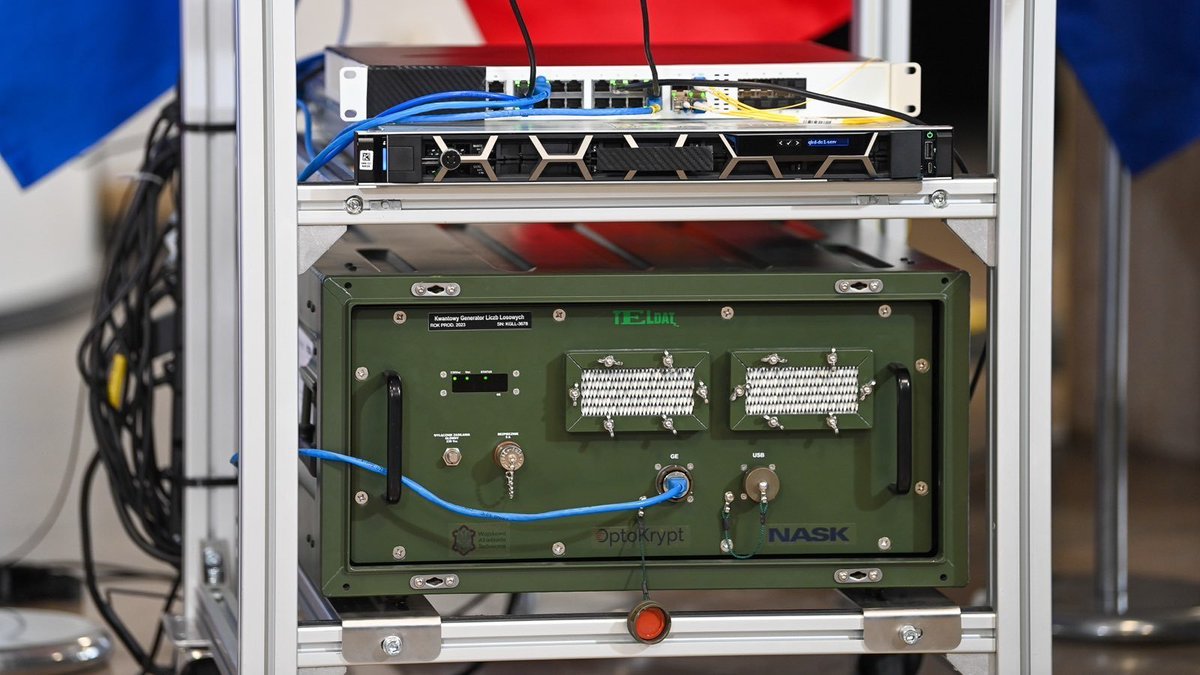
Quantum-assured magnetic navigation achieves positioning accuracy better than a strategic-grade INS in airborne and ground-based field trials
https://t.co/7czeURNpjs
Murat Muradoglu et al.
https://t.co/UhPnJHBkCb
Matrix3D: Large Photogrammetry Model All-in-One (with code)
TL;DR: "We present Matrix3D, a unified model that performs several photogrammetry subtasks, including:
- Pose estimation
- Depth prediction
- Novel view synthesis
All using the same model."
Contributions (cited from paper):
In summary, our key contribution is the unified diffusion transformer model, which has flexible input/output configurations and enables several tasks in the photogrammetry process.
The proposed method eliminates the need for multiple task-specific models, streamlining the process with a single model.
Extensive quantitative and qualitative experiments demonstrate the state-of-the-art performance of our method compared with existing task-specific approaches.
#LeanLang is becoming essential infrastructure for safety-critical cryptographic implementations. At #ZKProof 7 in Sofia, three talks showcased how Lean's formal verification capabilities are transforming zero-knowledge proof systems.
A quick thread on what you missed 🧵⬇️
Newly available high-resolution satellite imagery collected by Maxar reveals sections of the surface rupture near the zone of maximum surface displacement of last week’s Mw 7.7 earthquake in Myanmar. Rupture is ~500 km long, with up to 5 meters of fault slip.
I am sharing a tutorial on event cameras that I gave a few months ago at the 2024 Int. Conf. on Computational Photography: https://t.co/g6WZ9nO4sq
Below, you will find additional resources on event cameras, such as source codes, datasets, simulators, drivers, courses, and tutorials. I hope it is helpful to researchers and novices interested in this exciting vision sensor!
Our research page on event-based vision: https://t.co/6wYAYo4UTg
All worldwide resources on event cameras (publications, software, drivers, datasets, simulators, where to buy, etc.):
https://t.co/mlFHnbWWY2
For a course on event-based robot vision, see this material by Prof. @guillermogb
1. Slides: https://t.co/bL3L166PBl
2. Video recordings: https://t.co/59gH7KCknm
For a tutorial on noise modeling of event cameras, see this tutorial by Prof. Tobi Delbruck, who is the lead inventor of the first commercial event camera: https://t.co/UzZ7FUNfrc
Datasets used in my lab research:
1. https://t.co/hFf4OAbHBt
2. https://t.co/MjMjLRG6zH
3. https://t.co/p0NzTcOZR0
Simulator used in my lab: https://t.co/fsp56otH6u
Survey paper on event cameras:
https://t.co/ERRioFfmhD
@UZHspacehub@UZH_en@uzh_ifi@ERC_Research@UZH_Science
We’re baaaaaack! Some news:
Crystal & Monisha Harrell have acquired KVRU 105.7 FM, a non-profit, non-commercial community radio station based in South Seattle, with plans to preserve it as a trusted resource through community-driven programming
📻🎶🎙️
https://t.co/LoVx3vyRSR
Especially to mark our Hera mission's moment of closest approach during its Mars flyby, at just 5000 km away at 13:51 CET (12:51 GMT) - here's one we made earlier!
CNSA plans Mars sample return by 2030, says Sun Zezhou. Tianwen-1 mission already orbited, landed, and explored Mars. Tianwen-3 mission will follow for sample return. Full HD:https://t.co/8wwAk4Pywk