🔥 EL NIÑO IS NO LONGER JUST A WEATHER STORY — IT IS BECOMING A MARKET STORY.
Financial markets are already positioning for the fallout from the 2026–27 El Niño.
☕ Coffee & cocoa are surging on crop-risk fears across West Africa and Brazil.
🌾 Wheat in Australia. Rice & sugar in India. Crops are entering the crosshairs.
🚢 Panama Canal transit costs are exploding as drought threatens water availability.
⚡ Copper faces a brutal paradox: drought can disrupt Zambian mining while floods threaten Chilean supply.
And this is only the beginning.
A warmer planet amplifies the consequences. El Niño’s typical warming boost of ~0.1–0.2°C is now being superimposed on an already ~1.4°C warmer world, while a warmer atmosphere can intensify extreme rainfall.
The most ominous number?
🌍 At least 49 MILLION additional people could be pushed into food insecurity, according to WFP warnings cited in the report.
Markets have months to hedge the risk.
Small farmers and vulnerable communities may not.
El Niño is moving from the weather forecast → commodities → inflation → food security.
The next shock may not arrive as a headline.
It may arrive as a price.
#ElNino #Commodities #FoodSecurity #Agriculture #Markets #Coffee #Cocoa #Wheat #Rice #Sugar
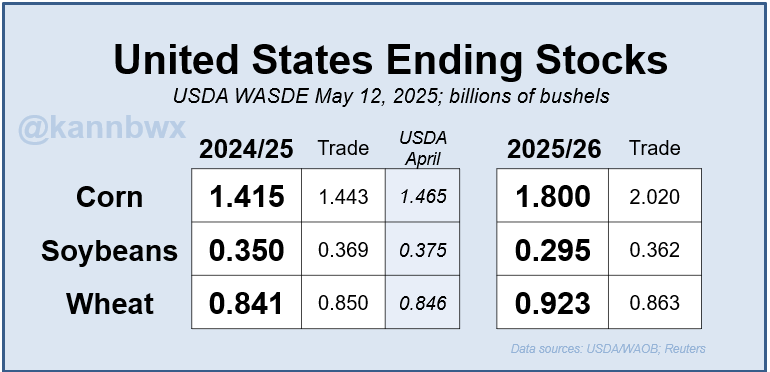
USDA puts 2025/26 U.S. corn ending stocks up 27% on the year (trade expected 40%). Wheat is pegged to rise 10% but soybean stocks are set to fall 16% on the year.
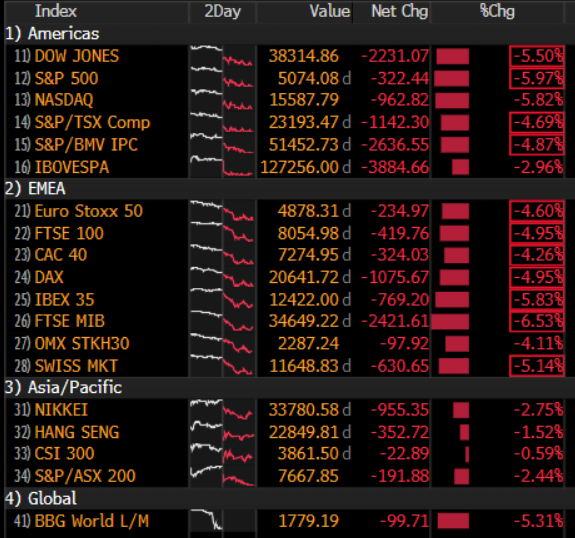
In the past, this kind of stock market meltdown would bring world leaders together to stabilize markets. But incentives are different now. The rest of the world wants this sell-off to get worse, as it raises the cost to the US of its tariff policy, raising odds the US backs down.
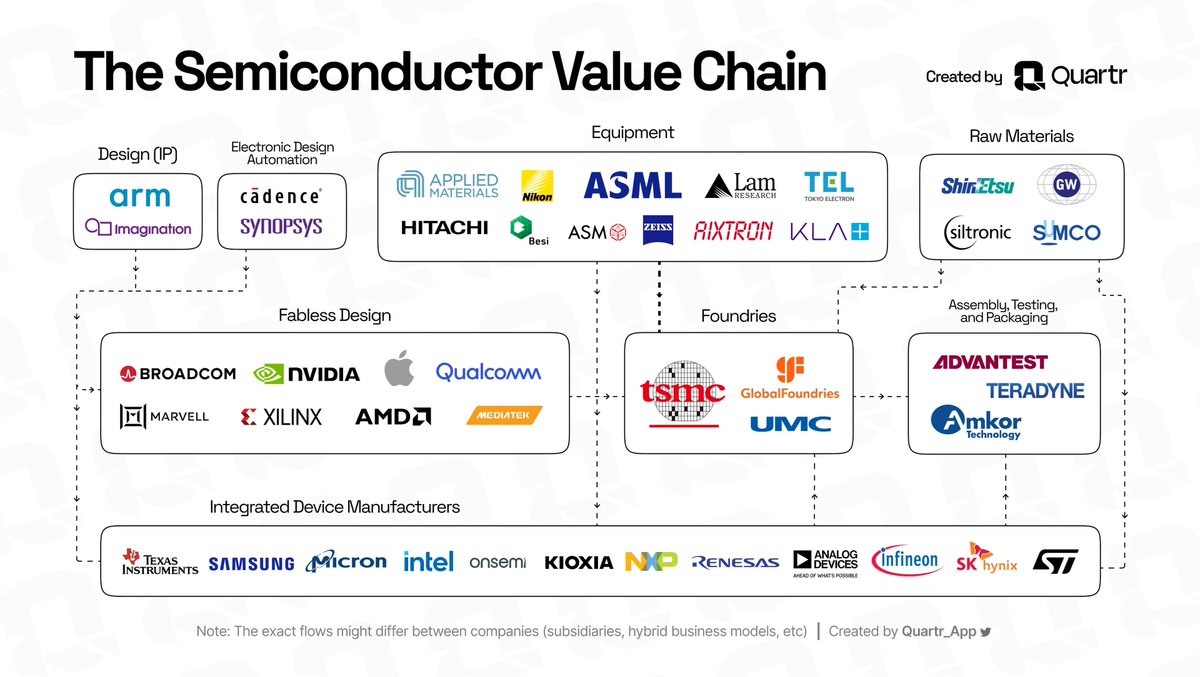
Here's the cheatsheet if you knew nothing about:
NVDA
AMD
INTC
QUAL
AVGO
MU
(Bookmark this to review as reference)
NVIDIA: Products: NVIDIA specializes in GPUs (e.g., GeForce, Quadro, Tesla) and AI accelerators (e.g., NVIDIA A100).
Application: NVIDIA GPUs, especially the Tesla and GeForce series, are extensively used in AI and deep learning tasks such as neural network training and inference.
Impact: NVIDIA has been a major driver of AI advancements due to its CUDA platform and specialized hardware like Tensor Cores. NVIDIA GPUs are prevalent in data centers powering AI infrastructure and in edge devices for inference tasks.
Advantages: Market leader in GPUs, particularly in gaming and professional visualization. Strong presence in AI and deep learning with GPUs optimized for such workloads. Expanding into data center and automotive markets with AI-focused products.
Disadvantages: Relatively higher cost compared to some competitors. Dependency on gaming and cryptocurrency markets for a significant portion of revenue.
AMD (Advanced Micro Devices): Products: AMD produces CPUs (e.g., Ryzen series), GPUs (e.g., Radeon RX series), and APUs (combining CPU and GPU).
Application: AMD's CPUs and GPUs are widely used in AI applications ranging from training deep learning models to inferencing in various industries including gaming, automotive, and healthcare.
Impact: AMD's Ryzen CPUs offer competitive multi-core performance suitable for AI workloads. Their Radeon GPUs, while not as dominant in AI as NVIDIA's offerings, provide cost-effective solutions for smaller-scale AI projects and research.
Advantages: Competitive performance and value proposition in both CPU and GPU markets.
Strong presence in gaming and enthusiast markets.
Increasing market share in CPUs with competitive offerings against Intel.
Disadvantages: Historically, AMD has faced challenges with power efficiency and thermal management compared to Intel.
Limited presence in enterprise and data center markets compared to Intel.
Intel: Products: Intel primarily manufactures CPUs for various markets including consumer, enterprise, and data center (e.g., Core series, Xeon).
Application: Intel's CPUs and emerging products like Nervana Neural Network Processors (NNP) cater to AI workloads, including training and inference.
Impact: Intel's dominance in CPU market share translates to widespread use of its processors in AI servers. With acquisitions like Nervana, Intel aims to strengthen its AI offerings and compete more effectively against NVIDIA in the AI hardware space.
Advantages: Dominant market share in CPUs for PCs and servers. Strong R&D capabilities and manufacturing technology. Diversification into areas like AI, IoT, and FPGA through acquisitions.
Disadvantages: Manufacturing delays and challenges in transitioning to advanced process nodes. Increasing competition from AMD in consumer and server CPU markets. Less competitive in discrete GPU and mobile CPU markets.
Qualcomm: Products: Qualcomm specializes in mobile SoCs (e.g., Snapdragon series), modem technologies, and various semiconductor solutions for mobile devices.
Application: Qualcomm's Snapdragon SoCs integrate AI accelerators for tasks like image recognition, natural language processing, and voice recognition in mobile devices, IoT, and automotive applications.
Impact: Qualcomm's presence in mobile AI accelerates the deployment of AI at the edge, enabling on-device processing for improved privacy, latency, and efficiency.
Advantages: Market leader in mobile SoCs with strong integration of CPU, GPU, modem, and AI capabilities.
Extensive licensing business for wireless technologies.
Diversifying into automotive, IoT, and networking markets.
Disadvantages: Facing challenges in the Chinese market due to regulatory issues.
Increasing competition from companies like MediaTek in the mobile SoC market.
Micron Technology (MU): Products: Micron manufactures memory and storage solutions including DRAM, NAND flash memory, and SSDs.
Application: Micron's memory and storage solutions play a crucial role in AI infrastructure, providing high-speed storage and memory for AI model training and data processing.
Impact: Micron's DRAM and NAND flash memory are integral components of AI servers and accelerators, contributing to the overall performance and efficiency of AI systems.
Advantages: One of the leading producers of memory and storage solutions. Diverse product portfolio catering to various applications including data centers, consumer electronics, and automotive.
Strong focus on innovation and R&D.
Disadvantages: Vulnerability to cyclical demand patterns and price fluctuations in memory markets.
Intense competition from other memory manufacturers like Samsung and SK Hynix.
Broadcom (AVGO): Products: Broadcom offers a wide range of semiconductor solutions including networking, storage, broadband, and wireless communication chips.
Application: Broadcom's networking and communication chips facilitate the deployment of AI applications in data centers and edge computing environments, enabling seamless connectivity and data transfer.
Impact: Broadcom's networking solutions support high-speed data transfer and low-latency communication, critical for distributed AI systems and real-time inference applications.
Advantages: Diversified product portfolio covering multiple segments of the semiconductor market.
Strong focus on acquisitions to expand its product offerings and market reach.
Dominant position in certain markets like networking and broadband.
Disadvantages: Dependence on a few key customers for a significant portion of revenue.
Regulatory scrutiny regarding antitrust issues due to its market dominance in certain segments.
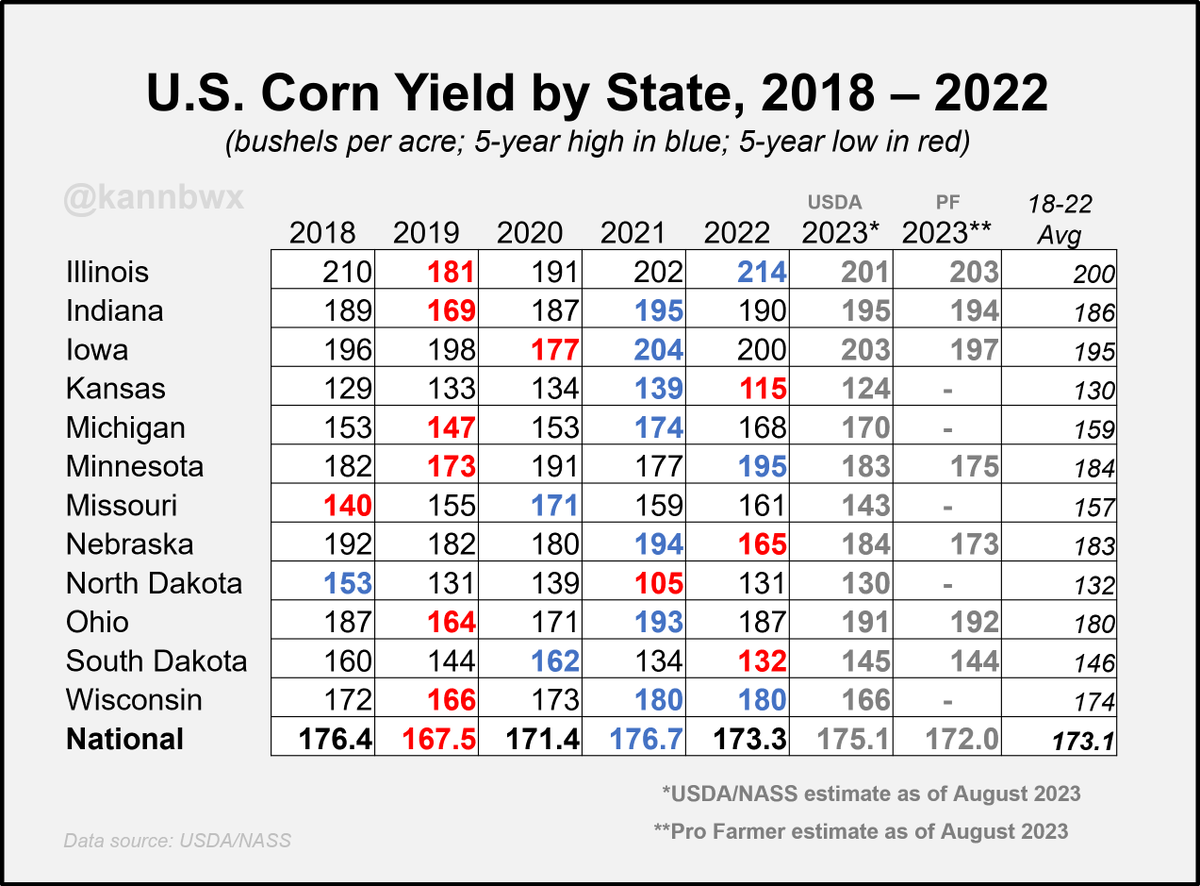
🌽This table is getting full, but it's helpful to see how the USDA & Pro Farmer numbers stack up against each other & past years. Versus USDA, Pro Farmer sees notable #corn yield downside in Minn & Neb, plus a sub-200 in Iowa. Not much disagreement elsewhere, small upside in IL.
I think June is the hardest month to trade, and it did not disappoint this year...
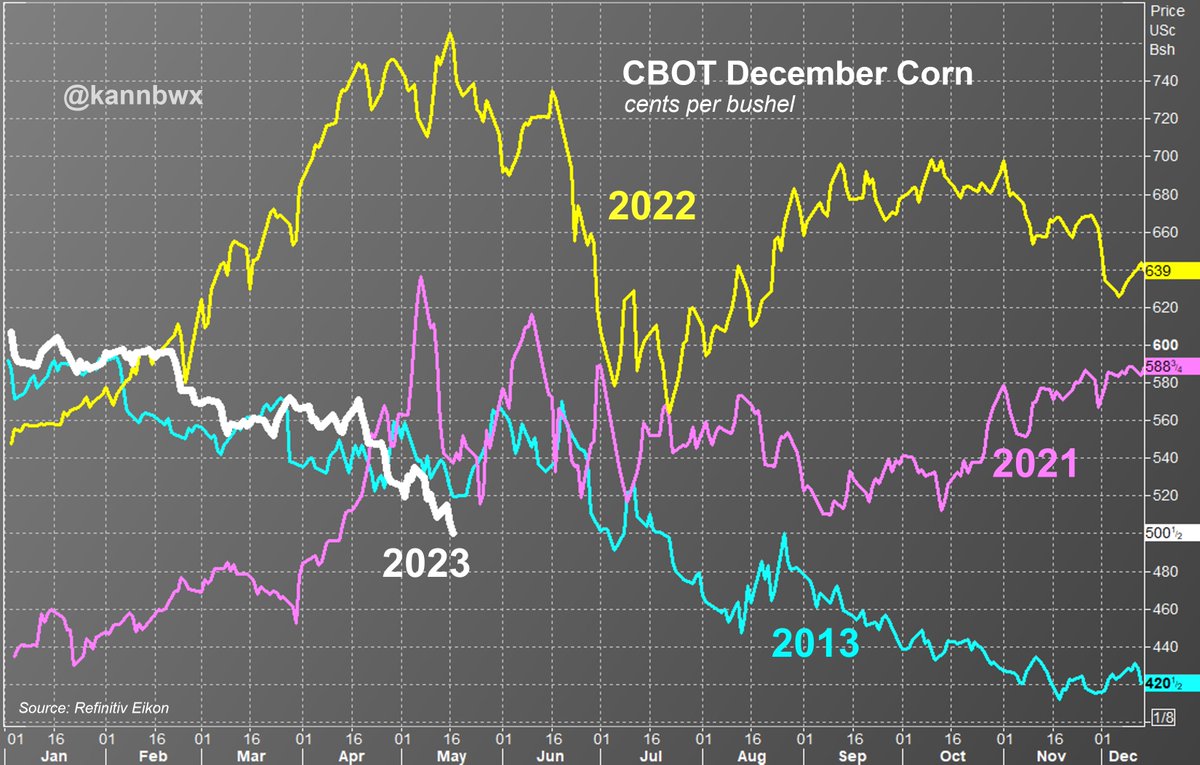
CZ23 went from 520 to 630, back to 498.
SX23 went from 1140 to 1380 to 1255 to 1345.
May 17: CBOT December #corn falls below $5/bu for the first time since Sept. 10, 2021. But the mid-session low (so far) of $4.94 is the lowest for Dec corn during year of expiry since April 12, 2021.
➡️The recent move's all-time high of $7.66-1/4 came a year ago (May 16, 2022).
20 Lessons From The Psychology Of Money:
Lesson 1: Our Worldview Is Limited
What we experience is just a tiny part of what’s happening worldwide. But it shapes how we see things 80% of the time. This is especially true regarding money because our experiences shape our attitudes and beliefs. If we recognize that our experiences are limited, we can be more open to new ideas and perspectives.
Lesson 2: Luck Vs. Risk. Knowing the difference between luck and risk is essential when making financial decisions. Sometimes, bad luck can mess up a good decision, and sometimes, good luck can make a wrong decision look good. Understanding the difference between luck and risk can help you make better decisions and avoid unnecessary risks.
Lesson 3: Knowing When Enough Is Enough. Most of us have enough to live on, but we always want more. We should recognize when we have enough and be content with it.
Lesson 4: Don’t Risk What’s Important.
Things like our reputation, freedom, family, friends, and happiness are never worth risking.
Lesson 5: The Magic Of Compound Interest. Compound interest can be a powerful tool when used correctly. You can create wealth by putting money into low-cost index funds over time.
Lesson 6: Plan For The Worst. Having emergency funds and planning for the worst is essential. Setting aside six months to a year’s living expenses can help weather any storm.
Lesson 7: Take Control Of Your Finances
Taking control of your finances, you are in charge of your financial destiny. You should do what’s right for you, even if everyone else does something different.
Lesson 8: Freedom Is Key.
Building freedom in your life is essential. Even if you love your job, you should focus on building freedom because things can change quickly.
Lesson 9: Nobody Cares About Your Stuff. We often think material things will impress others, but no one cares. It’s liberating to realize that we don’t need to impress anyone.
Lesson 10: Be Wealthy, Not Flashy
True wealth is measured by freedom, not how much money you spend. You should focus on building wealth to live life on your terms.
Lesson 11: The Importance Of Time
Time is one of the most valuable things we have. The earlier we start saving and investing, the more time we have to grow our wealth.
Lesson 12: Understand Your Biases
We all have biases that can affect our financial decisions. Recognizing these biases and working to overcome them can help us make better choices.
Lesson 13: Money Is A Means To An End
Money is just a tool to help us achieve our goals. It’s not the end goal in itself. Focus on what you want and use the money to get there.
Lesson 14: It’s Not About Timing The Market Trying to predict the market is a losing game. Instead, focus on profitable long-term investment strategies and avoid getting caught up emotionally in short-term market fluctuations.
Lesson 15: Don’t Follow The Herd
Just because everyone else is doing something doesn’t mean it’s right for you. Avoid the herd mentality and make financial decisions based on your goals and values.
Lesson 16: The Value Of Simplicity
Simple financial strategies are often the most effective. Avoid overly complicated investments or strategies that are difficult to understand.
Lesson 17: Make Peace With Risk
Risk is a natural part of investing. Instead of avoiding it, learn to manage and accept it. Don’t let fear of risk prevent you from achieving your financial goals.
Lesson 18: Invest In Yourself
Investing in yourself, whether it’s through education, personal development, or health, is one of the best investments you can make.
Lesson 19: Learn From Mistakes
We all make mistakes, but the key is to learn from them. Analyze your financial mistakes and use them as a learning opportunity to make better decisions in the future.
Lesson 20: Stay Humble
No matter how successful you become, always stay humble. Be grateful for what you have; remember, there’s always more to learn.