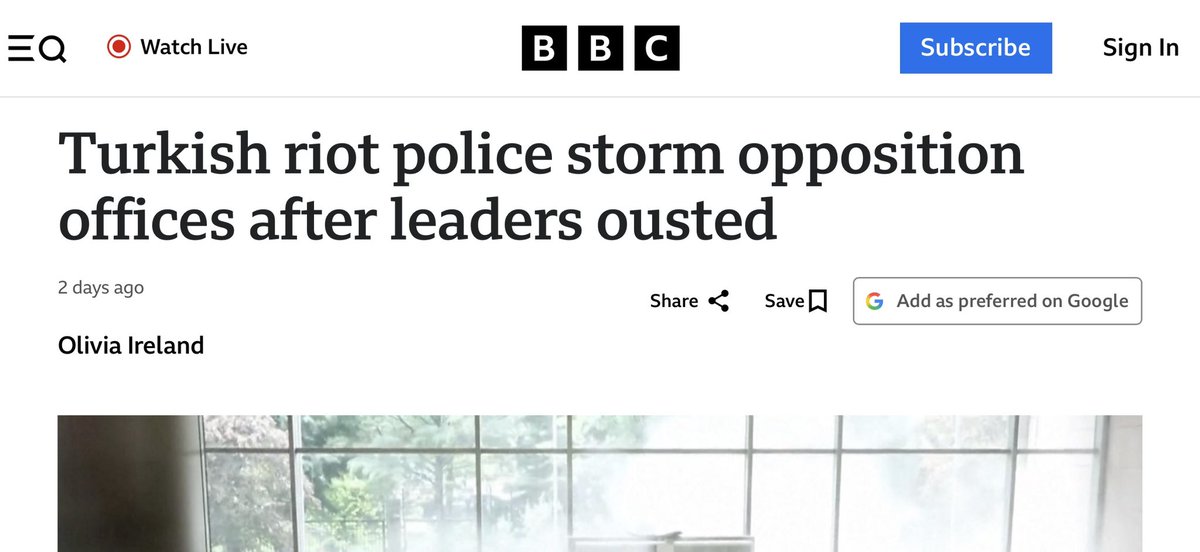
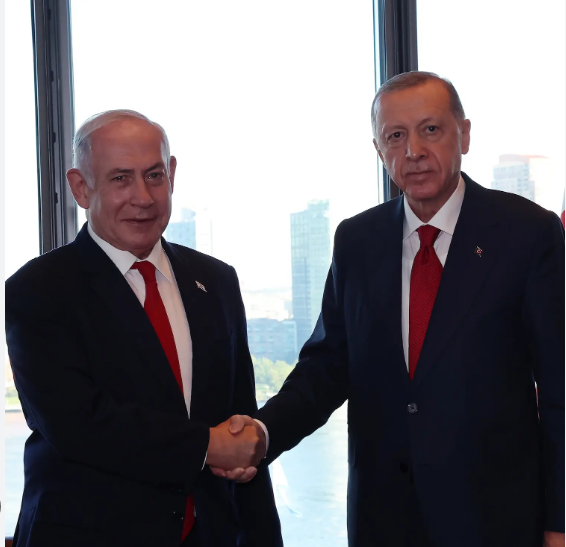
Erdogan ordered Turkey’s police to raid the opposition party’s HQ days after a kangaroo court ousted the opposition leader. We cannot keep ignoring Turkey’s descent into authoritarianism. We must stand for the people's right to democracy for allies & adversaries alike.
https://t.co/Ot3jtDeNtQ
"Oğlum paraları sıfırla" lafını ben kulaklarımla duydum.
10'a yakın uluslarası bağımsız kurum sesin orijinal olduğunu tasdik etti.
Amma hakkında bırakın mahkeme kararını bir soruşturma bile yok. Hepsi yandı kül oldu.
Muktedirimiz hukuken tertemiz, pirü pak.
Turkish police stormed the CHP headquarters in Ankara, the main opposition to Erdogan, using tear gas, water cannons, and rubber bullets.
This is naked authoritarianism.
Erdogan is systematically neutralizing any challenger through judiciary and police
Back in the early 90s, before the Internet, we had "Defrag and Chill". You'd start Disk Defragmenter on your 540MB hard drive, dim the lights, crack open a Surge, and just vibe while the little blue bars crawled across the screen like they were solving world peace. Forty-five minutes of pure, unfiltered anticipation. No notifications. No algorithms. Just the two of you, the gentle grinding of the hard drive, and the sacred promise that your Solitaire games were about to feel 3% snappier.
This is MS_DOS 6.22, which I worked on, but I honestly have no idea who wrote defrag. Iconic utility though!
A basket of groceries in Istanbul is now more expensive than in the UK.
I compared two online shopping baskets - 1 from Carrefour for delivery in Istanbul; one from Sainsbury's.
The price of 19 basic items in the UK totalled £44.53.
The price of the 19 basic items in Istanbul totalled 4,425.18 TL / £71.99 at today's exchange rate.
I compared using the cheapest available options and the most similar items/quantities available.
There are a few items that really push up the cost of the grocery basket in Turkey, namely beef and instant coffee (?!). Some goods such as olive oil are roughly the same price as in the UK, while some items such as eggs, milk and onions are quite a bit cheaper in Turkey.
The gross minimum wage in Turkey is 33,030 (£537.88) a month.
The gross minimum wage in the UK is £12.71 an hour for people over 21. Assuming a 35 hour working week, this is £444.85 a week.
None of this is to say that people in the UK have it easy. I know the cost of living crisis - already years in the making and now exacerbated by the war in Iran - is hitting many people very very hard.
The point I'm rather trying to make is that inflation in Turkey is crazy, pushing living costs up to levels that far outstrip what many people earn.
🇮🇱🇹🇷My thoughts on Israel-Turkey fight on Twitter:
To start with the conclusion: no, there won't be a direct military confrontation between Israel and Turkey. It is all talk: loud in rhetoric, quiet in substance.
For both leaderships, a heated external rivalry is the ultimate political gift. What we see is just the perfect utilisation of it from both Ankara and Tel Aviv.
President Erdoğan has long mastered the art of using the Palestinian cause to consolidate his conservative & religious base. By framing Israel as an existential threat to Turkey, he shifts the domestic focus away from economic woes (like the 2026 bread price hikes) and toward a "national survival" narrative.
For Tel Aviv it is the same: Israeli leadership uses Turkey’s rhetoric to justify a permanent state of high-alert. By painting Turkey as a "sophisticated and dangerous" successor to Iran's regional influence, they maintain a "rally around the flag" effect, ensuring that the electorate remains focused on external threats rather than internal political divisions.
At the same time, Netanyahu needs another "external threat" to avoid judicial persecution for corruption. No better "enemy" than Turkey in this.
These verbal volleys we have been experiencing on twitter are designed for voters in Istanbul and Tel Aviv, not for generals in a war room.
Military impact: Modern warfare between two major, non-adjacent powers like Turkey and Israel makes no strategic sense. Any direct military engagement would require long-range operations across multiple sovereign territories or maritime escalation in the Eastern Mediterranean both highly escalatory and logistically complex. Not gonna happen.
More importantly, Turkey is a member of NATO. While NATO would not automatically defend Turkey in an offensive war, any conflict involving a NATO member and Israel would create an unprecedented crisis for Western security architecture. The United States, Israel’s primary ally and NATO’s leading power, would actively work to prevent such a scenario.
In terms of economic co-operation: Turkey and Israel are still big trading partners, despite everything. Current 2026 data shows a suspicious, multi-hundred-percent spike in Turkish exports to the Palestinian Authority.
Yep, it is just a "paperwork pivot". Turkish steel, cement, and electrical goods are being shipped to Palestinian destinations but are functionally integrated into the broader Israeli market.
Furthermore, trade via third countries like Greece and Romania has flourished. While politicians from both countries shout at microphones and post tweets, the merchant fleets are quietly keeping the regional economy afloat.
To summarize: Turkey and Israel are like two actors in a high-stakes drama. They need each other to play the villain so they can remain the heroes of their own domestic stories.
As long as the trade ships (even the "dark" ones) keep sailing and the NATO flag keeps flying over Ankara, a direct war remains a fantasy.
Thank you for your attention to this matter.
🇮🇱🇹🇷My thoughts on Israel-Turkey fight on Twitter:
To start with the conclusion: no, there won't be a direct military confrontation between Israel and Turkey. It is all talk: loud in rhetoric, quiet in substance.
For both leaderships, a heated external rivalry is the ultimate political gift. What we see is just the perfect utilisation of it from both Ankara and Tel Aviv.
President Erdoğan has long mastered the art of using the Palestinian cause to consolidate his conservative & religious base. By framing Israel as an existential threat to Turkey, he shifts the domestic focus away from economic woes (like the 2026 bread price hikes) and toward a "national survival" narrative.
For Tel Aviv it is the same: Israeli leadership uses Turkey’s rhetoric to justify a permanent state of high-alert. By painting Turkey as a "sophisticated and dangerous" successor to Iran's regional influence, they maintain a "rally around the flag" effect, ensuring that the electorate remains focused on external threats rather than internal political divisions.
At the same time, Netanyahu needs another "external threat" to avoid judicial persecution for corruption. No better "enemy" than Turkey in this.
These verbal volleys we have been experiencing on twitter are designed for voters in Istanbul and Tel Aviv, not for generals in a war room.
Military impact: Modern warfare between two major, non-adjacent powers like Turkey and Israel makes no strategic sense. Any direct military engagement would require long-range operations across multiple sovereign territories or maritime escalation in the Eastern Mediterranean both highly escalatory and logistically complex. Not gonna happen.
More importantly, Turkey is a member of NATO. While NATO would not automatically defend Turkey in an offensive war, any conflict involving a NATO member and Israel would create an unprecedented crisis for Western security architecture. The United States, Israel’s primary ally and NATO’s leading power, would actively work to prevent such a scenario.
In terms of economic co-operation: Turkey and Israel are still big trading partners, despite everything. Current 2026 data shows a suspicious, multi-hundred-percent spike in Turkish exports to the Palestinian Authority.
Yep, it is just a "paperwork pivot". Turkish steel, cement, and electrical goods are being shipped to Palestinian destinations but are functionally integrated into the broader Israeli market.
Furthermore, trade via third countries like Greece and Romania has flourished. While politicians from both countries shout at microphones and post tweets, the merchant fleets are quietly keeping the regional economy afloat.
To summarize: Turkey and Israel are like two actors in a high-stakes drama. They need each other to play the villain so they can remain the heroes of their own domestic stories.
As long as the trade ships (even the "dark" ones) keep sailing and the NATO flag keeps flying over Ankara, a direct war remains a fantasy.
Thank you for your attention to this matter.
🇮🇱🇹🇷My thoughts on Israel-Turkey fight on Twitter:
To start with the conclusion: no, there won't be a direct military confrontation between Israel and Turkey. It is all talk: loud in rhetoric, quiet in substance.
For both leaderships, a heated external rivalry is the ultimate political gift. What we see is just the perfect utilisation of it from both Ankara and Tel Aviv.
President Erdoğan has long mastered the art of using the Palestinian cause to consolidate his conservative & religious base. By framing Israel as an existential threat to Turkey, he shifts the domestic focus away from economic woes (like the 2026 bread price hikes) and toward a "national survival" narrative.
For Tel Aviv it is the same: Israeli leadership uses Turkey’s rhetoric to justify a permanent state of high-alert. By painting Turkey as a "sophisticated and dangerous" successor to Iran's regional influence, they maintain a "rally around the flag" effect, ensuring that the electorate remains focused on external threats rather than internal political divisions.
At the same time, Netanyahu needs another "external threat" to avoid judicial persecution for corruption. No better "enemy" than Turkey in this.
These verbal volleys we have been experiencing on twitter are designed for voters in Istanbul and Tel Aviv, not for generals in a war room.
Military impact: Modern warfare between two major, non-adjacent powers like Turkey and Israel makes no strategic sense. Any direct military engagement would require long-range operations across multiple sovereign territories or maritime escalation in the Eastern Mediterranean both highly escalatory and logistically complex. Not gonna happen.
More importantly, Turkey is a member of NATO. While NATO would not automatically defend Turkey in an offensive war, any conflict involving a NATO member and Israel would create an unprecedented crisis for Western security architecture. The United States, Israel’s primary ally and NATO’s leading power, would actively work to prevent such a scenario.
In terms of economic co-operation: Turkey and Israel are still big trading partners, despite everything. Current 2026 data shows a suspicious, multi-hundred-percent spike in Turkish exports to the Palestinian Authority.
Yep, it is just a "paperwork pivot". Turkish steel, cement, and electrical goods are being shipped to Palestinian destinations but are functionally integrated into the broader Israeli market.
Furthermore, trade via third countries like Greece and Romania has flourished. While politicians from both countries shout at microphones and post tweets, the merchant fleets are quietly keeping the regional economy afloat.
To summarize: Turkey and Israel are like two actors in a high-stakes drama. They need each other to play the villain so they can remain the heroes of their own domestic stories.
As long as the trade ships (even the "dark" ones) keep sailing and the NATO flag keeps flying over Ankara, a direct war remains a fantasy.
Thank you for your attention to this matter.
Merkez Bankası’nın ana hissedarı olduğu Bankalararası Kart Merkezi vurgununda 6 ayrı yolsuzluk saptandı.
Eski MB Başkan Yardımcısı örgüt liderliğiyle, eski BKM Genel Müdürü örgüt yöneticiliğiyle suçlanıyor.
Buna rağmen 6 tutuklu 3 ayda bırakıldı.
Vurgun var, tek bir tutuklu yok!
JUNE 2028.
The S&P is down 38% from its highs. Unemployment just printed 10.2%. Private credit is unraveling. Prime mortgages are cracking. AI didn’t disappoint. It exceeded every expectation.
What happened?
https://t.co/JzzwCrbJgS