The SOLID project has decided to stop sharing content on the social platform X as of February 3rd, 2025.
Collaboration with this platform is no longer compatible with the values of our project.
Find our work on our website and our new Bluesky account: https://t.co/A3jvPutOC0
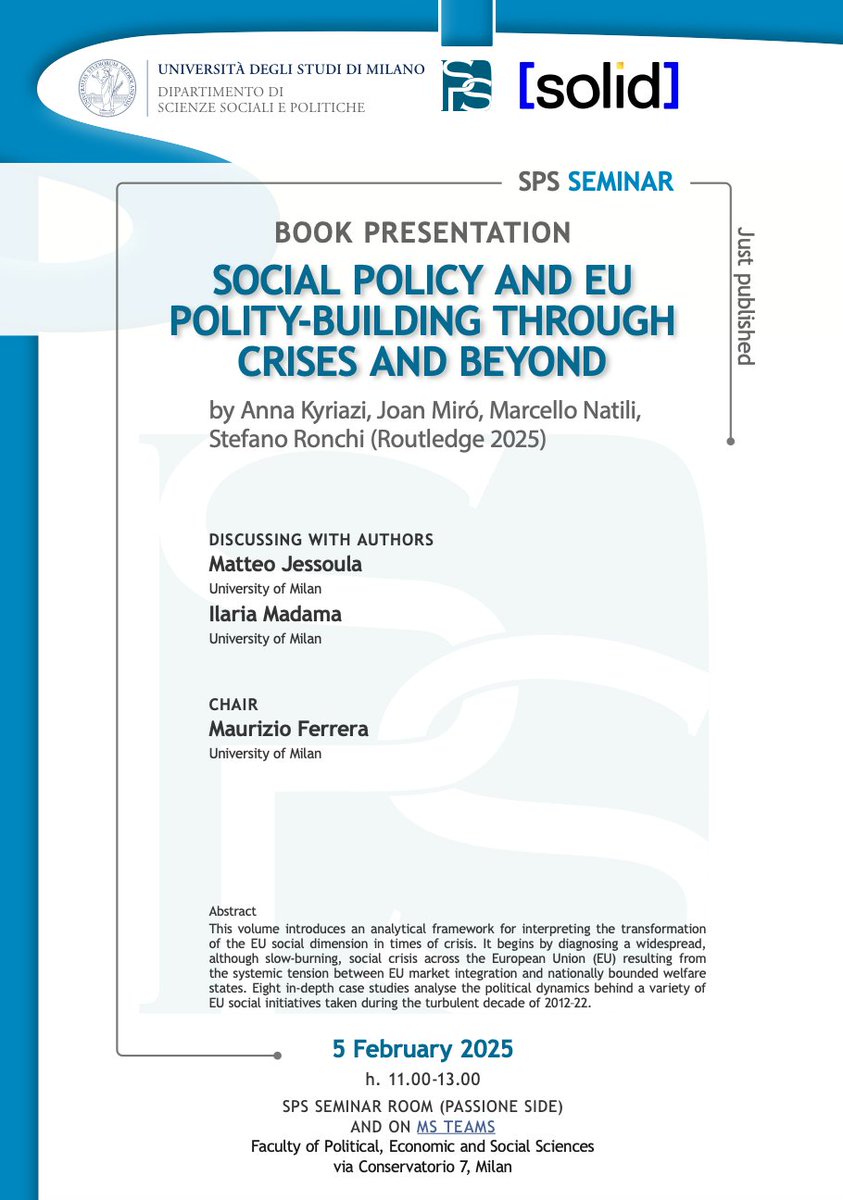
Join us tomorrow at @lastatale for the presentation of:
📖 "Social Policy and EU Polity-Building Through Crises and Beyond" by Anna Kyriazi, @joanmiroartigas, Marcello Natili & @Ste_Ronchi
🎤 Chair: Maurizio Ferrera
🧑🏫 Discussing with authors: @MatteoJessoula & @ilaria_madama
Today, SOLID member @VanDitmars presents her research agenda at @Politics_UvA:
🗓️ Fake News, Generations & Euroscepticism
🕓 16:00–17:30
📍 Room REC B9.22
Talk: “Political Socialization during Europe’s Crises: The Social Bases of EU Attitudes across Generations”
Don’t miss it!🇪🇺
In 2024, we asked #EU citizens: 'Do you think the single European currency (#Euro) is a bad thing?'
What do you think the majority answered?
Stay tuned for the results at 5pm CET! #PollOfTheWeek
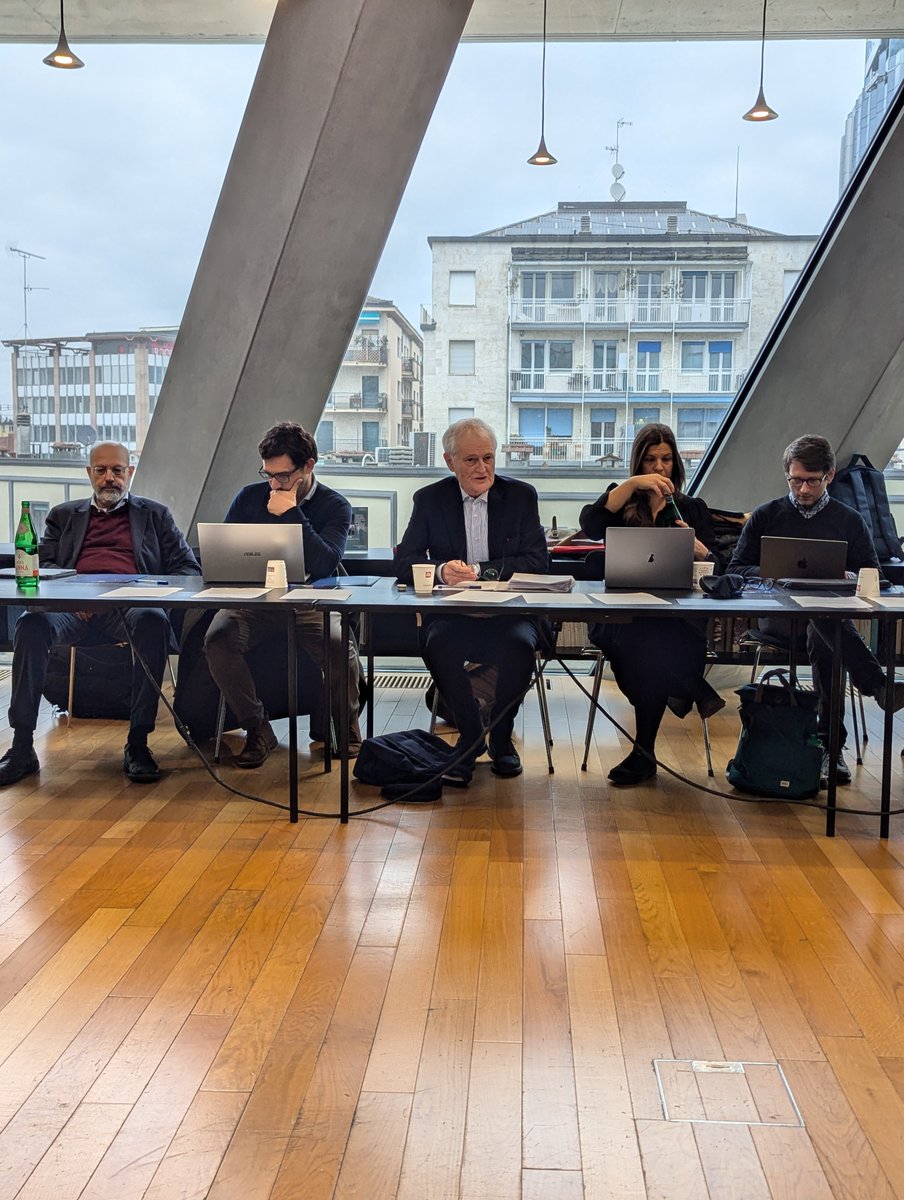
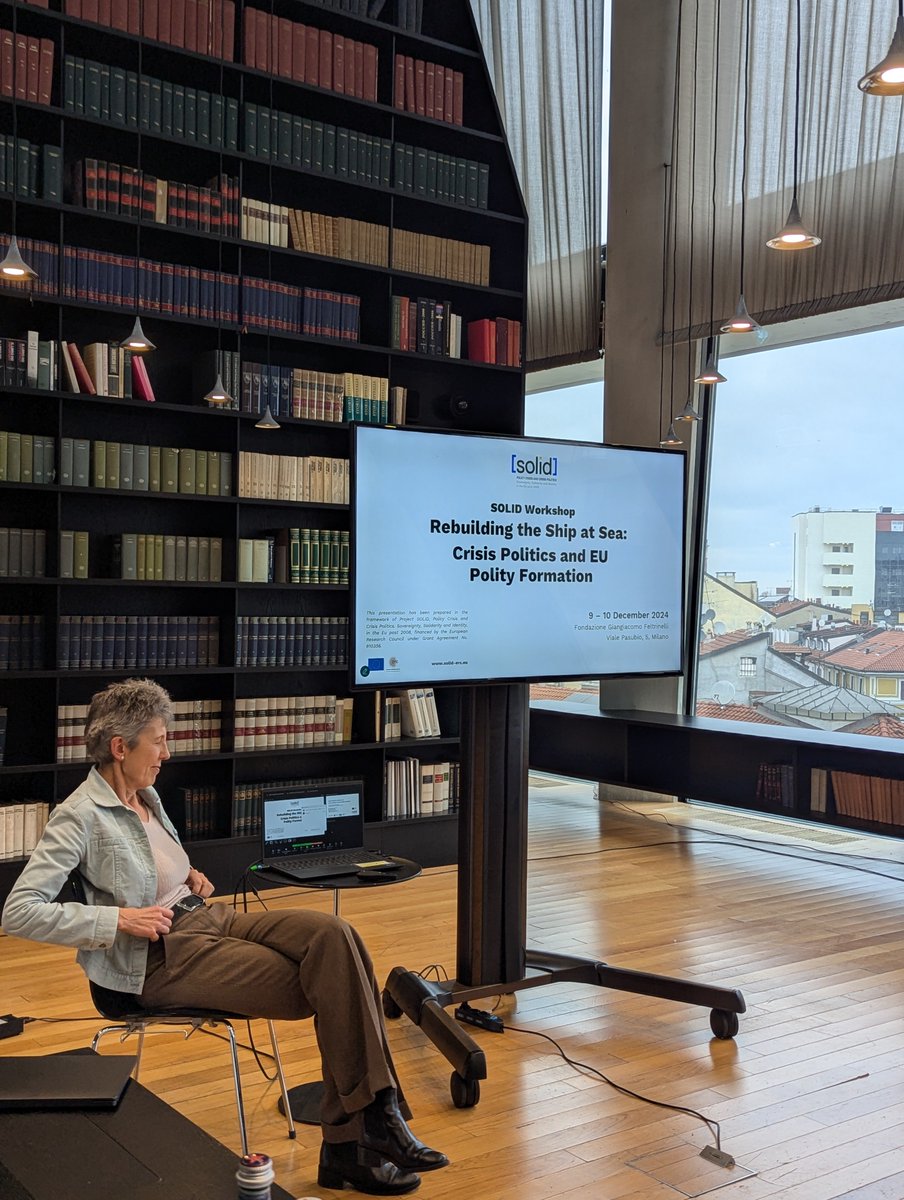
A huge thank you to our external commentators @alexandreafonso, @halikiopoulou, @giorgiomalet, @FrancescoNicoli, @ProfCRadaelli and Jonathan Zeitlin for their thoughtful insights and to all participants for the engaging discussions. Stay tuned for more updates on our work!
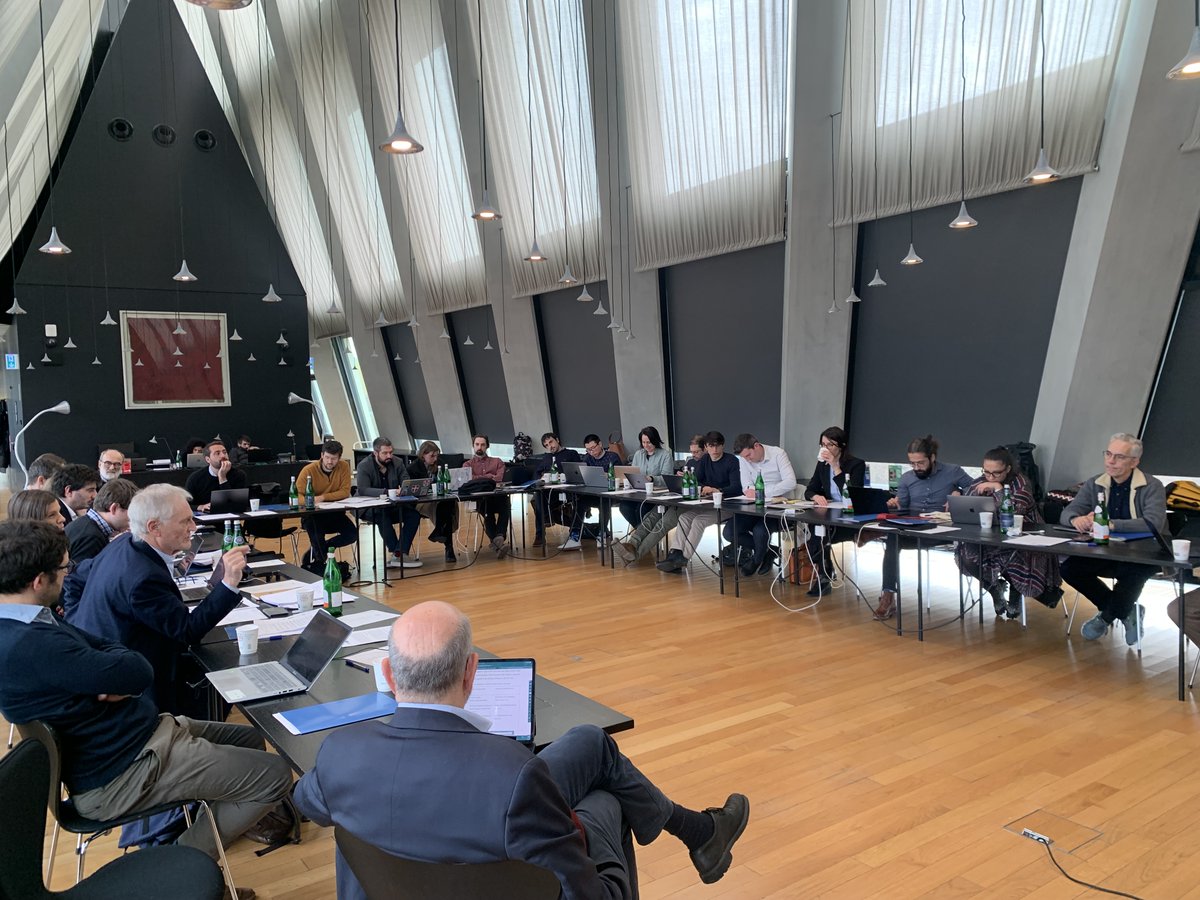
🎉 It’s a wrap! The SOLID Project workshop (9-10 Dec) has come to an end, and what an incredible two days it’s been! Members presented their contributions to the upcoming Journal of European Public Policy @jepp_journal special issue.
Who drives protests in times of crisis? Figure 7 sheds light on the actors behind protests during the Eurozone, refugee, and COVID-19 crises, revealing striking differences in mobilization patterns. A thread on the key findings 👇 #ProtestTrends
Latest study by @joeganderson and @anna_kyriazi reveals how parliamentary 'referendum politics’ in the UK escalated EU-related tensions, culminating in the #BrexitReferendum. Through analysis of Commons debates (2000–2015), it highlights the dynamics driving a binary 'exit' vote
🔍 In 2024, we asked EU citizens: should the #EuropeanUnion continue providing military aid (weapons and ammunition) to #Ukraine?
What do you think they answered?
Try to guess and stay tuned for the results at 5pm CET! #PollOfTheWeek 🇪🇺🇺🇦
Solid Members @alexdmoise, @ZTruchlewski and @nenaoana developed the concept of the J-Curve as it applies to the EU’s security dilemma following the #Russianinvasion of #Ukraine, focusing on how characteristics of the J-Curve should affect public preferences for #securitypolicy
Can external threats like Russia’s invasion of Ukraine drive EU polity centralization? Latest paper by @alexdmoise, @ZTruchlewski and @nenaoana on @PolBehavior revisits classic theories of state formation in the context of modern mass democracy to explore this question👇
❓In 2022, we asked EU citizens: 'Would you support increasing your personal tax by 1% to fund financial support for other EU member states in the circumstance of a major surge in public debt?”
What do you think they replied?
Stay tuned for the answer at 5pm CET! #PollOfTheWeek
In 2022, we asked EU citizens if the #EU should provide financial support to member states during a major #publichealthcrisis. Who do you think voted most in favor and who voted most against?
Stay tuned for the answer—publishing tomorrow 10am CET!
@FondFeltrinelli@Europarl_EN The webinar will focus on the EU’s external role and #CommonDefense, exploring paths towards a unified #ForeignPolicy framework in an increasingly complex global landscape 🌍 . Scholars, civil society leaders, and MEPs will dive into these urgent topics.
📆 Excited for the upcoming Webinar on European Defense, organized by @FondFeltrinelli , as part of the #VCVE project funded by the @Europarl_EN . This series, Balancing Europe, tackles key challenges in #EuropeanIntegration. 🇪🇺
In 2022, we surveyed 34,246 #EU citizens on what they believed were the 2 most important issues facing the EU. What do you think topped their list?
Stay tuned for the answer—publishing at 5pm CET!
In Europe, the job market situation is particularly dire due to the so-called 'double dualisation'. What is it? And has the COVID crisis worsened the job situation in the EU? We discuss it with @MarcelloNatili@fedra13pct@Ste_Ronchi on EV: https://t.co/le04kHGD3c