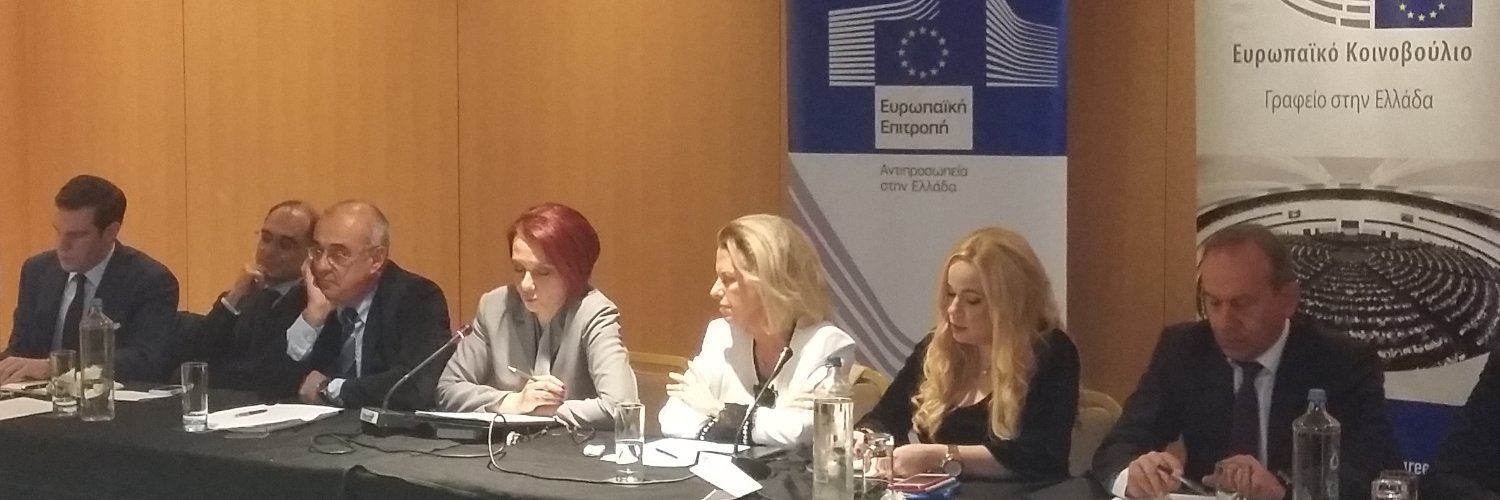
My interview for @syriawise. We discuss the current war in #Gaza, my views regarding intern'l politics & a lot more. #Syriawise is an independent outlet aiming to expose the lies & propaganda on what has been happening in #Syria. Honoured to be part of it.
https://t.co/LioJO0h2vl
One day after the end of the Israeli "Operation Rising Lion" against Iran, the Iranian Defense Minister at the time, Aziz Nasirzadeh, travelled to Beijing. The visit came after Moscow did not respond to Tehran's demands to obtain advanced air defense systems such as the S-400 system, which reflects the Iranian leadership's adoption of a new military policy. There was also the general feeling, both in Iran and Israel, that the war had not ended and that a more brutal round is inevitable. I have personally mentioned this in several threads here on X. In Tehran, Khamenei the father was preparing for the worst-case scenario, which is his assassination and the elimination of the army and IRGC leaders, by putting together a long list of replacements. As for Israel and America, the preparations were military without a clear vision of the political landscape, and without a calm assessment of what would happen after the first strike. As was clear, the politicians in Jerusalem and Washington did not have long-term plans, but rather the general line was that the Iranian regime, which is facing internal popular anger, can be overthrown by striking its leadership. The replacements and their mentality were not taken into consideration. Yes, Khamenei the father was a religiously hardline figure, but his foreign policy was pragmatic. He adopted a strategic patience approach for years in the face of American economic pressures, and even in the face of the shadow war (assassinations) waged by Israel inside Iran. So, was it rational to assassinate the pragmatic Khamenei without guarantees that this assassination would lead to the fall of the regime, or without guarantees that the expected successor, his son Mojtaba, would be more rational and less willing to escalate? As we witnessed, there were no guarantees on the ground, and indeed, Khamenei's assassination did not lead to the fall of the regime. Moreover, Mojtaba proved to be more hardline than his father and more courageous in adopting escalatory decisions. So, what if Washington and Jerusalem had not assassinated Khamenei the father? In my opinion, this decision was the biggest mistake of the forty-day war, and Washington, Jerusalem, and the entire region will pay the price for it in the coming period unless there is an unexpected surprise. 4/
🧵Thread
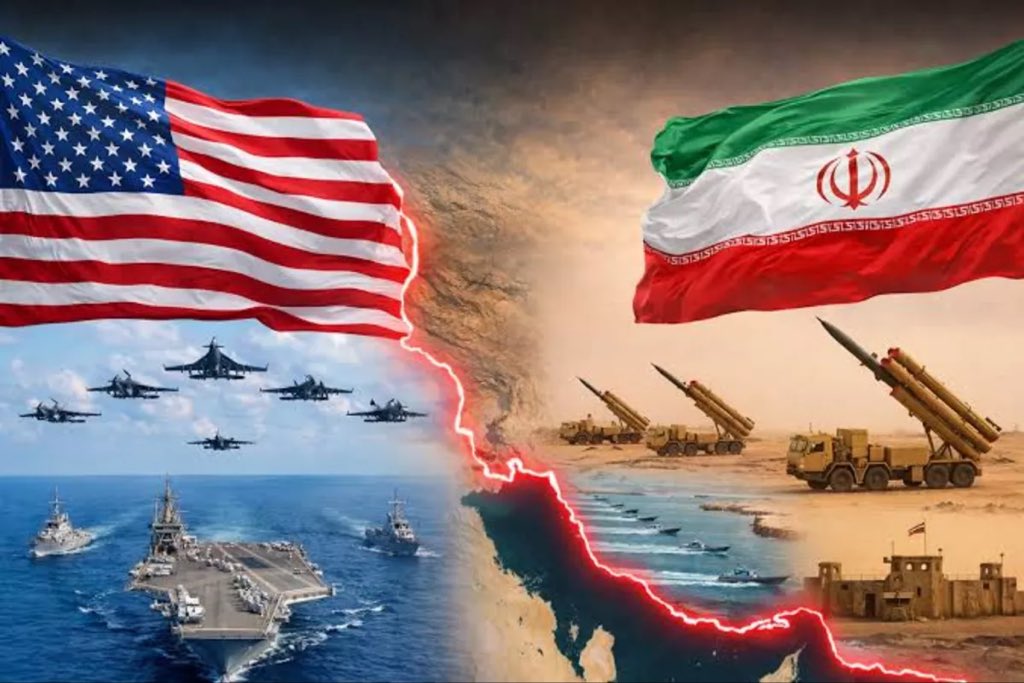
Neither peace nor war... This summarizes the current reality in the Strait of Hormuz and the Middle East in general after the forty-day war, whose conclusion remains uncertain. While politicians on both sides of the conflict (Iran and the US) claim that the negotiating track is still open and that the chances of a diplomatic solution are still possible, they simultaneously acknowledge that the prospects of this path are low. However, it can be said that both sides have begun adapting to the current reality. Tehran is reorganizing its military capabilities, while the generals of the Quds Force are working to reorganize the ranks and plans of their militias in the region. The Iranian perspective is that victory has become one step away, but a return to war is possible at any moment. As for Washington, Trump, whose contradictory statements cannot be relied upon, has become convinced that the current reality is the best that can be achieved. The Middle East today is changing into a new Middle East, not the one Netanyahu wanted or Washington desired, but one that surpasses even the dreams of the most optimistic in Tehran. This leads to the logical question that I will try to answer: Where did Washington and Jerusalem go wrong for things to reach the situation they are in now? 1/
The bottom line: While Washington is sending messages to Tehran through intermediaries, whether Qatari, Omani, or Pakistani, urging it to return to the negotiating table, and while senior and junior American officials alike insist that the Strait of Hormuz is open and under American control, Trump appears almost daily to assert that the strait has become American territory, the US Treasury Department announces the launch of an economic war on Iran—an economic war on a country that has faced maximum American sanctions for decades and has become highly experienced in dealing with them. Meanwhile, in Tehran, the Iranian leadership is rearranging its internal security, military, and political cards, preparing for a new war and another escalation, and drawing up plans for an Iranian Middle East. Yes, the scene in the Middle East is extremely complicated, and all the options before Trump after committing one mistake after another are heavy and costly. But expecting that ignoring the Iranian dilemma is the best option is, in my opinion, the biggest mistake Trump could make. Personally, I believe that Trump is closer to making this mistake. And I see that the countries of the region have begun to deal with the reality in the Middle East on the assumption that Trump will adopt this decision: ignoring the dilemma. Some announced regional alliances, while others began covertly communicating with Tehran offering money in exchange for avoiding escalation. The concept of "double ignorance" (Διπλῆ ἄγνοια), a particularly important concept in ancient Greek philosophy, associated with Socrates and Plato, is what I find fitting to describe Trump and his policy in the Middle East: The ignorant person is unaware of their own ignorance and makes decisions based on double ignorance. 🧵
One day after the end of the Israeli "Operation Rising Lion" against Iran, the Iranian Defense Minister at the time, Aziz Nasirzadeh, travelled to Beijing. The visit came after Moscow did not respond to Tehran's demands to obtain advanced air defense systems such as the S-400 system, which reflects the Iranian leadership's adoption of a new military policy. There was also the general feeling, both in Iran and Israel, that the war had not ended and that a more brutal round is inevitable. I have personally mentioned this in several threads here on X. In Tehran, Khamenei the father was preparing for the worst-case scenario, which is his assassination and the elimination of the army and IRGC leaders, by putting together a long list of replacements. As for Israel and America, the preparations were military without a clear vision of the political landscape, and without a calm assessment of what would happen after the first strike. As was clear, the politicians in Jerusalem and Washington did not have long-term plans, but rather the general line was that the Iranian regime, which is facing internal popular anger, can be overthrown by striking its leadership. The replacements and their mentality were not taken into consideration. Yes, Khamenei the father was a religiously hardline figure, but his foreign policy was pragmatic. He adopted a strategic patience approach for years in the face of American economic pressures, and even in the face of the shadow war (assassinations) waged by Israel inside Iran. So, was it rational to assassinate the pragmatic Khamenei without guarantees that this assassination would lead to the fall of the regime, or without guarantees that the expected successor, his son Mojtaba, would be more rational and less willing to escalate? As we witnessed, there were no guarantees on the ground, and indeed, Khamenei's assassination did not lead to the fall of the regime. Moreover, Mojtaba proved to be more hardline than his father and more courageous in adopting escalatory decisions. So, what if Washington and Jerusalem had not assassinated Khamenei the father? In my opinion, this decision was the biggest mistake of the forty-day war, and Washington, Jerusalem, and the entire region will pay the price for it in the coming period unless there is an unexpected surprise. 4/
On January 12, 2024, the Biden administration announced the launch of a military operation in cooperation with the United Kingdom against the Houthi militia in Yemen. The operation was sporadic and achieved little, which was expected. The militia, having faced years of air operations conducted by the Saudi Air Force over the previous decade, had become adept at dealing with airstrikes, and most of its sensitive sites were located in deep underground tunnels that were difficult to destroy from the air. With Trump's arrival at the White House, Washington renewed its military operation against the militia in mid-March 2025. However, less than three months later, and quite unexpectedly, Trump announced the termination of this operation, claiming that the militia had halted its attacks against ships passing through the Bab al-Mandab Strait, despite the militia's repeated denials that it had agreed to any deal with Washington. Here lies another mistake by Trump: instead of supporting a ground military operation by the legitimate Yemeni government in Aden, backed by Saudi Arabia, which would have achieved significant gains by removing the strategic port of Hodeidah from the hands of the Houthi militia and then advancing towards the capital, Sana'a, thus effectively besieging the militia and reducing its ability to close the Bab al-Mandab Strait and target ships in the Red Sea and target Israel and Saudi Arabia, Trump had a different opinion, which was to escape from the confrontation. The result was that the militia participated in supporting Tehran in the latest war. 7/
In June 2025, Israel launched a military operation against the Iranian regime under the name "Operation Rising Lion". The operation began with a series of assassinations targeting top leaders of the Iranian army and the IRGC, as well as a number of nuclear scientists. Washington was directly involved in the operation by targeting three key sites of the Iranian nuclear program (Isfahan, Natanz, and Fordow). The operation was progressing toward a significant victory for Israel, given the Iranian leadership's reluctance to take any escalatory steps in the Strait of Hormuz and the region. It also came after the Israeli Defense Forces had weakened Hezbollah and sidelined Hamas in Gaza, following the fall of the Assad regime and the weakening of the Houthi militia. However, the gains of these operations, which began after the October 7th attacks and culminated in the start of this war, went unexploited when Trump intervened to halt the war without an agreement that would allow Israel to transform these gains into a decisive victory in the region. In my opinion, this is one of Trump's biggest mistakes, for which Israel and the region are currently paying the price. It was also a mistake on the part of the Israeli government, which succumbed to American pressure and halted the war without securing the war's outcome through an agreement and a commitment from Tehran to subject its nuclear program to strict monitoring and to stop supporting militias in the region. However, Trump's haste to end the war, and the lack of a long-term strategy and his administration’s confused approach to the war, from a knockout blow to a slap, awakened the Iranian leadership and prompted it to reorganize its cards to become more prepared for the next war, which was evident during the last war that began with the biggest mistake. 3/
🧵Thread
Neither peace nor war... This summarizes the current reality in the Strait of Hormuz and the Middle East in general after the forty-day war, whose conclusion remains uncertain. While politicians on both sides of the conflict (Iran and the US) claim that the negotiating track is still open and that the chances of a diplomatic solution are still possible, they simultaneously acknowledge that the prospects of this path are low. However, it can be said that both sides have begun adapting to the current reality. Tehran is reorganizing its military capabilities, while the generals of the Quds Force are working to reorganize the ranks and plans of their militias in the region. The Iranian perspective is that victory has become one step away, but a return to war is possible at any moment. As for Washington, Trump, whose contradictory statements cannot be relied upon, has become convinced that the current reality is the best that can be achieved. The Middle East today is changing into a new Middle East, not the one Netanyahu wanted or Washington desired, but one that surpasses even the dreams of the most optimistic in Tehran. This leads to the logical question that I will try to answer: Where did Washington and Jerusalem go wrong for things to reach the situation they are in now? 1/
On December 27, 2019, an Iraqi militia affiliated with the Iranian Quds Force (likely Kataib Hezbollah) targeted the American K1 base in Kirkuk province in northern Iraq. The attack resulted in the death of an American civilian contractor and the injury of several US troops. In response, Trump made a decision that would prove pivotal for the future of the Middle East. On January 3, 2020, Washington assassinated General Qassem Soleimani, commander of the Quds Force of the Iranian Revolutionary Guard Corps (IRGC), or what I personally call the man behind the so-called "axis of resistance". Soleimani's assassination was not an ordinary event. He was the one managing Tehran's regional strategy. In Iraq, he was leading the Popular Mobilization Forces in the war against ISIS, while also shaping Tehran's control over Baghdad's political and military decisions. In Syria, he was the one who convinced Khamenei to intervene militarily to protect Assad, and he personally persuaded Putin to intervene militarily in support of the Syrian regime in confronting the uprising. In Lebanon, he was instrumental in advancing Hezbollah's military capabilities, and on this basis, he facilitated the transfer of drone and missile manufacturing to Lebanese territory. He was also present inside Lebanon to manage operations during the July 2006 war. In Yemen, Soleimani sent Iranian advisors to Saada and also transferred Hezbollah experts to Yemen. He then contributed to the transfer of missile and drone manufacturing technology to the Houthi militia. Ultimately, Soleimani was not an ordinary man who could be replaced. His assassination sent shockwaves through the Iranian axis and weakened its influence in the region. However, Trump, who demonstrated strength with this move and reminded the Iranians and Washington's adversaries that the United States still controls the strings of the geopolitical game in the Middle East, erred by not responding to Tehran's bombing of the Ain al-Assad base, which came as Iran's response to Soleimani's assassination. 2/
The bottom line: The situation in the Middle East remains far from calm and stable. The memorandum of understanding, about which I have written extensively explaining its implications for the region, is no longer viable. The Iranians are increasingly convinced that achieving victory over America and Israel is both possible and real. In Washington, a bewildered Trump is caught between the whispers of his vice president, who warns him of the Iranian quagmire, and his secretary of state and chief of staff, who insist that military escalation is the only path towards ending the regional conflict with an agreement that preserves America's global prestige and that of its allies in the Middle East. In Israel, Netanyahu is heading to Washington with a proposal for a final strike that could restore the regional balance. This strike will either be carried out jointly by Israel and the US, or, failing that, by Israel acting alone. Meanwhile, amidst this prospect, the Houthis have begun increasing their activity in Bab al-Mandab and the Red Sea, even targeting Saudi Arabia. In response, Riyadh has begun to make moves within Yemen. Hezbollah is watching developments and awaiting Iranian orders, while the Syrian government may find itself compelled to become involved in Lebanon while remaining vulnerable to Iraqi militias along Syria's eastern border. The Middle East is boiling and on edge, and the coming days will be decisive. 🧵
🧵Thread
While American bases are filling up with warplanes and air refuelling aircraft, the region, which had witnessed relative calm after the signing of the memorandum of understanding between Washington and Tehran, seems to have returned to a state of high alert. This memorandum, which was stillborn and, in my personal opinion, a victory for the Iranian regime, is now considered by both sides of the conflict to be effectively defunct. Meanwhile, as global oil prices continue to and the pace of reciprocal strikes between the United States and Iran intensifies, the Israeli government remains unexpectedly silent. This is an analytical reading of the situation in the Middle East amid the growing likelihood of an escalation into full-scale war. 1/
In Washington, with Trump's recent statements hinting at the possibility of military escalation against Iran while simultaneously asserting that there is still time for diplomacy, it seems the American administration is still operating within the same mindset. Trump is still reluctant to confront realities and he dreams of ending the escalation with Iran through an agreement that reopens the Strait of Hormuz for free international navigation, along with a nuclear agreement that renders the Iranian nuclear program entirely peaceful and culminate in a peace agreement that ends decades of conflicts in the Middle East. Tehran asserts daily that these dreams are unrealistic and will not materialize. However, Trump's fear of becoming mired in a prolonged war in the Middle Eastern quagmire, with consequences similar to the war in Afghanistan, which ended after more than two decades with an American withdrawal and a Taliban victory, continues to shape his decision-making. Caught between unrealistic dreams and legitimate concerns, this outlook is reflected in Washington's statements and strategy in the Middle East. Despite the renewed military escalation, US strikes remain limited to southern and eastern Iran. Of course, given Trump's reputation for limited patience, will be compelled to make a new strategic decision in the coming days. The options before him are as follows: The first option is to go to open war with the Iranian regime, including a limited ground operation targeting Iranian islands and coasts to impose the American vision for the Strait of Hormuz, while simultaneously targeting Iranian military and political leaders, including the Iranian Supreme Leader, Mojtaba. The second option is to adhere to diplomacy to revive the memorandum of understanding while offering concessions on the Strait of Hormuz and the nuclear issue. The third option is a limited military escalation through a military operation against specific objectives such as Iran's nuclear stockpile and the islands of Qeshm and Kharg, then returning to diplomacy in the hope that Tehran will moderate its negotiating demands. 7/
Republished: The July 18, 2012 Crisis Cell explosion remains one of Syria's greatest mysteries. @evacool_ Eva J. Koulouriotis revisits the unanswered questions surrounding the attack and its lasting impact.
https://t.co/ioObCPHMvQ
My recent interview (English translation) for the Turkish newspaper @BirGun_Gazetesi. We are discussing about the the latest NATO summit and analyzing how it could affect Middle East politics.
Turkish text in the comments.
https://t.co/9elZ814Hj8