CardioNugget™ 🫀
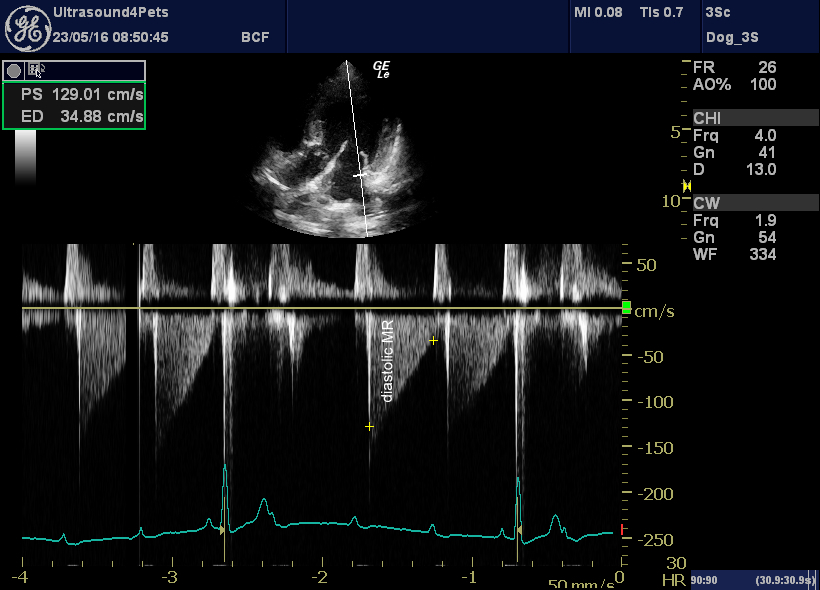
Why does diastolic MR occur in acute severe Aortic Regurgitation?
1️⃣ Acute severe AR → rapid filling of a noncompliant LV
2️⃣ LVEDP rises dramatically
3️⃣ LV diastolic pressure exceeds LA pressure → premature mitral valve closure
4️⃣ LV pressure continues to rise in late diastole → blood is forced back across the closed mitral valve = diastolic MR
Often accompanied by premature MV closure and a normal-sized LV in acute severe AR.
#CardioNugget™ #EchoBoards #EchoFirst #ASEcho #Cardiology #FOAMed #BoardPrep #AorticRegurgitation
10 WEBSITES EVERY STUDENT SHOULD USE BEFORE GRADUATION.
Bookmark every single one. Your university will never tell you about most of these.
1. https://t.co/Sw42cy7v6U
Upload every textbook, lecture, and PDF for a course. Ask questions across all of them. Built by Google DeepMind.
2. https://t.co/6w0IBtOEYB
Search scientific research fast. Ask any question and get answers with links to relevant papers in seconds.
3. https://t.co/OAhaYocdxH
The world's largest open library. Almost any textbook your professor assigned is on here for free.
4. https://t.co/Y3KvNzZ11m
Research assistant that cites every source. Replaces 90% of Google searches for academic work.
5. https://t.co/Po8bWb4d0Z
Free reference manager that builds your bibliography automatically. Saves 20+ hours per semester.
6. https://t.co/9kI8wuIEk1
Solves math, physics, chemistry, and engineering problems step by step. Shows the full working.
7. https://t.co/7rJwkujVhX
The job platform built specifically for students. 1.4 million employers actively recruiting on it right now.
8. https://t.co/0FjarSEgUe
Matches you to scholarships you actually qualify for. Over $3.4 billion awarded to students every year.
9. https://t.co/Gv2m8XhUiP
Free Barbara Oakley course taken by 4 million people. The science of how to actually study and remember.
10. https://t.co/GdrQtY6qs6
Free with most university logins. 16,000+ courses on everything from Excel to AI engineering.
The students who graduate with the biggest head start are not smarter. They just found the right tools earlier.
Door-to-defecation time…
Defecation Patterns and Cardiovascular Outcomes in Acute Coronary Syndrome: The Influence of Stimulant Laxative Use
https://t.co/wypacDc2aH
We quantitatively assessed the degree of echogenicity in the proximal and mid segments of both coronary arteries to determine its additional diagnostic value in 109 patients with clinically suspected Kawasaki disease.
Read our @JournalASEcho article: https://t.co/fYoKY23ayt
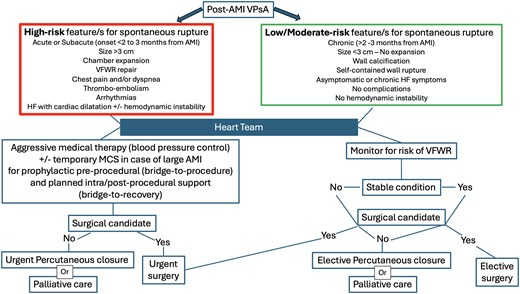
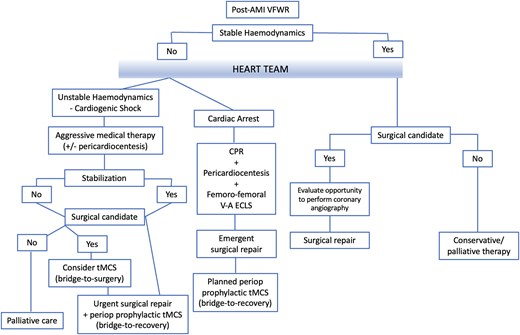
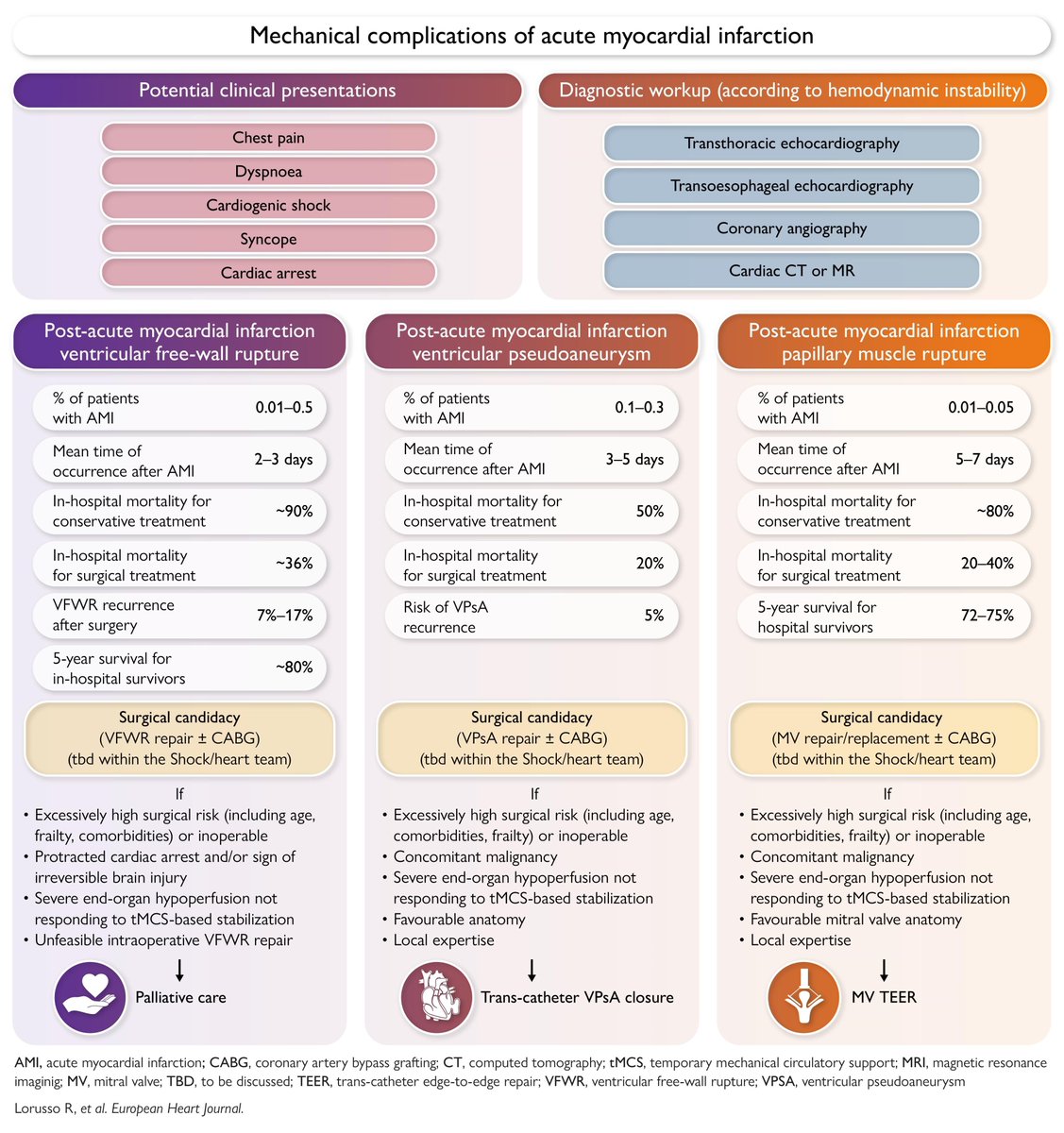
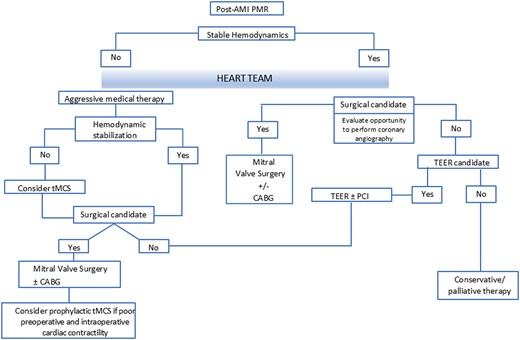
📌Ventricular free-wall rupture, ventricular pseudoaneurysm & papillary muscle rupture complicating acute myocardial infarction
A clinical consensus statement of the @escardio & @EACTS#PositionPaper#MechanicalComplications#MI
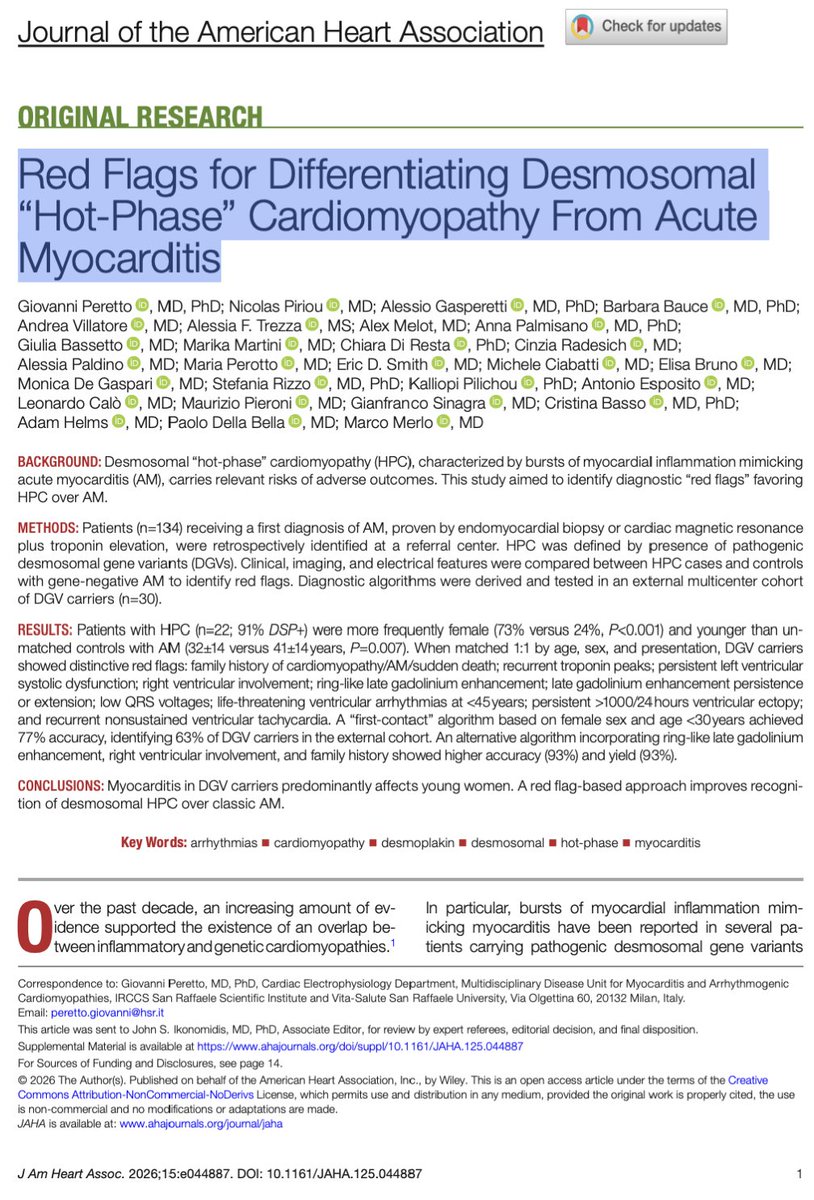
🫀🔥 Not every myocarditis is myocarditis. And missing this… can kill your patient. Do not trust with your life CMR findings for final diagnosis.
We’ve all seen it:
👉 chest pain
👉 troponin ↑
👉 CMR positive
Diagnosis:
❌ “Acute myocarditis”
Case closed.
But this paper introduces a dangerous reality:
👉 Some of these patients don’t have myocarditis.
They have:
👉 Desmosomal “hot-phase” cardiomyopathy (HPC)
A genetic disease.
With:
⚠️ recurrent inflammation
⚠️ arrhythmias
⚠️ sudden death risk
The real problem?
HPC mimics myocarditis perfectly.
- Same symptoms.
- Same biomarkers.
- Same CMR criteria.
So what are we missing?
👉 RED FLAGS
🧬 Clinical
Family history of:
- cardiomyopathy
- myocarditis
- sudden death
- Recurrent troponin “bursts”
🧠 Imaging (this is where it gets interesting)
Ring-like LGE pattern
Right ventricular involvement
LGE that doesn’t regress over time
LV function that doesn’t normalize
⚡ Electrical
Low QRS voltages
High PVC burden (>1000/day)
Recurrent NSVT
VT/VF at young age
The key insight
Just 3 findings can identify most cases:
👉 ring-like LGE
👉 RV involvement
👉 family history
🎯 Diagnostic accuracy ≈ 93%
Let that sink in
We are:
👉 calling it myocarditis
👉 discharging the patient
👉 maybe giving NSAIDs
While the real disease is:
⚠️ arrhythmogenic cardiomyopathy in disguise
This is not semantics
This changes EVERYTHING:
👉 genetic testing
👉 family screening
👉 ICD consideration
👉 long-term management
My take
This paper is not about rare disease.
It’s about a diagnostic mindset error:
👉 We stop thinking too early.
The real shift
From:
❌ “Does this look like myocarditis?”
To:
👉 “What if this is NOT myocarditis?”
⚡ Because in cardiology:
The most dangerous diagnosis is the one that looks obvious.
And, when you lean into a tunneled vision because the standard semeiology of CMR looks like "myocarditis" you take a risk without contextualzing properly.
#Cardiology #CMR #Myocarditis #Cardiomyopathy #Arrhythmia #Imaging #PrecisionMedicine #CardiacMRI
🔝I presented on my TOP 10 LIFESAVING PAPERS in critical care at @CC_Symposium last week!
🎖️Which papers made it in? Why? What did they change for ICU care?
#FOAMed#POCUS#FOAMcc@veerappan91050
Lets take you on a little journey!
Approach to Patient with Cirrhosis and AKI :
Hepatorenal syndrome
⚠️ Occur 50% of hospitalized patients with cirrhosis
❗️PPt by overdiuress , GI Bleed,infection
✅️Vasoconstrictor + Albumin.
https://t.co/JDrDdOblcr
“Stewart Light” approach to acid-base and visualization
Classical ABG interp: use pH, PaCO₂, HCO₃⁻ [or SBE, base excess], and the Boston compensation rules to decide whether the respiratory response fits. It works well for single disturbance, but incomplete when several coexisting processes. For eg - if SBE = 0, there could be no metabolic disturbance, or two that are equal but opposite.
Stewart/Physiochemical approach = three indep vars: PCO2, strong ion difference (SID), and total weak acid concentration ([ATOT].. mainly alb and phos)
In “A pragmatic approach to complex acid base disturbances of critical illness: the ‘Stewart light’” the authors propose a hybrid approach:
- keep Boston rules for respiratory/compensation
- add pH-adjusted partition of metabolic SBE into chloride/SID effect (from Na - Cl), albumin effect, and unmeasured-ion reminder
Why? To tease out situations where multiple metabolic processes pull in opposite directions, for e.g. when a Strong Ion Difference and unmeasured-ion (or lactate) coexist.
Most useful for DKA, intoxication, sepsis, vomiting, NS administration, diuresis, or [my interest] chronic hypercapnia… Boston Rules can tell if you if the net secondary response(s) are as expected, but doesn’t tell what type of metabolic processes are present.
5 steps:
1. clinical context, pH, severity, and Boston rules (e.g. winters formula for met acidosis)
2. Quantify strong-ion effect SBE_SID = Na⁺ − Cl⁻ − 35; if pH is outside 7.30–7.50, adjust that reference 35 by 1.5 mmol/L for each 0.1 pH unit away from 7.40—upward in acidemia, downward in alkalemia. Negative values = strong-ion acidosis, positive values = stron-ion alkalosis
3. Quantify weak-acid effect from albumin SBE_Alb = 0.3 × (40 − albumin in g/L), so hypoalbuminemia is treated as an alkalinizing force.
4. Assign remainder: unmeasured ions: SBE_UI = SBE − SBE_SID − SBE_Alb; if lactate is available, subtract its contribution to see whether additional unmeasured anions remain
Then, 5.: synthesize all together.
(and clinically determine if a positive SBE_SID is due to chloride depletion primary process or expected renal repsonse to chronic hypercapnia).
They recommend visualizing it with a gamblegram and practicing… and this all seems to hard. So I vibe coded a visualization, available here:
Takes your blood gas and chemistries result -> gives “Stewart Light” interpretation and some visualizations/explanations.





![doc_BLocke's tweet photo. “Stewart Light” approach to acid-base and visualization
Classical ABG interp: use pH, PaCO₂, HCO₃⁻ [or SBE, base excess], and the Boston compensation rules to decide whether the respiratory response fits. It works well for single disturbance, but incomplete when several coexisting processes. For eg - if SBE = 0, there could be no metabolic disturbance, or two that are equal but opposite.
Stewart/Physiochemical approach = three indep vars: PCO2, strong ion difference (SID), and total weak acid concentration ([ATOT].. mainly alb and phos)
In “A pragmatic approach to complex acid base disturbances of critical illness: the ‘Stewart light’” the authors propose a hybrid approach:
- keep Boston rules for respiratory/compensation
- add pH-adjusted partition of metabolic SBE into chloride/SID effect (from Na - Cl), albumin effect, and unmeasured-ion reminder
Why? To tease out situations where multiple metabolic processes pull in opposite directions, for e.g. when a Strong Ion Difference and unmeasured-ion (or lactate) coexist.
Most useful for DKA, intoxication, sepsis, vomiting, NS administration, diuresis, or [my interest] chronic hypercapnia… Boston Rules can tell if you if the net secondary response(s) are as expected, but doesn’t tell what type of metabolic processes are present.
5 steps:
1. clinical context, pH, severity, and Boston rules (e.g. winters formula for met acidosis)
2. Quantify strong-ion effect SBE_SID = Na⁺ − Cl⁻ − 35; if pH is outside 7.30–7.50, adjust that reference 35 by 1.5 mmol/L for each 0.1 pH unit away from 7.40—upward in acidemia, downward in alkalemia. Negative values = strong-ion acidosis, positive values = stron-ion alkalosis
3. Quantify weak-acid effect from albumin SBE_Alb = 0.3 × (40 − albumin in g/L), so hypoalbuminemia is treated as an alkalinizing force.
4. Assign remainder: unmeasured ions: SBE_UI = SBE − SBE_SID − SBE_Alb; if lactate is available, subtract its contribution to see whether additional unmeasured anions remain
Then, 5.: synthesize all together.
(and clinically determine if a positive SBE_SID is due to chloride depletion primary process or expected renal repsonse to chronic hypercapnia).
They recommend visualizing it with a gamblegram and practicing… and this all seems to hard. So I vibe coded a visualization, available here:
Takes your blood gas and chemistries result -> gives “Stewart Light” interpretation and some visualizations/explanations.](https://pbs.twimg.com/media/HGbqQKjawAApsT_.jpg)
![doc_BLocke's tweet photo. “Stewart Light” approach to acid-base and visualization
Classical ABG interp: use pH, PaCO₂, HCO₃⁻ [or SBE, base excess], and the Boston compensation rules to decide whether the respiratory response fits. It works well for single disturbance, but incomplete when several coexisting processes. For eg - if SBE = 0, there could be no metabolic disturbance, or two that are equal but opposite.
Stewart/Physiochemical approach = three indep vars: PCO2, strong ion difference (SID), and total weak acid concentration ([ATOT].. mainly alb and phos)
In “A pragmatic approach to complex acid base disturbances of critical illness: the ‘Stewart light’” the authors propose a hybrid approach:
- keep Boston rules for respiratory/compensation
- add pH-adjusted partition of metabolic SBE into chloride/SID effect (from Na - Cl), albumin effect, and unmeasured-ion reminder
Why? To tease out situations where multiple metabolic processes pull in opposite directions, for e.g. when a Strong Ion Difference and unmeasured-ion (or lactate) coexist.
Most useful for DKA, intoxication, sepsis, vomiting, NS administration, diuresis, or [my interest] chronic hypercapnia… Boston Rules can tell if you if the net secondary response(s) are as expected, but doesn’t tell what type of metabolic processes are present.
5 steps:
1. clinical context, pH, severity, and Boston rules (e.g. winters formula for met acidosis)
2. Quantify strong-ion effect SBE_SID = Na⁺ − Cl⁻ − 35; if pH is outside 7.30–7.50, adjust that reference 35 by 1.5 mmol/L for each 0.1 pH unit away from 7.40—upward in acidemia, downward in alkalemia. Negative values = strong-ion acidosis, positive values = stron-ion alkalosis
3. Quantify weak-acid effect from albumin SBE_Alb = 0.3 × (40 − albumin in g/L), so hypoalbuminemia is treated as an alkalinizing force.
4. Assign remainder: unmeasured ions: SBE_UI = SBE − SBE_SID − SBE_Alb; if lactate is available, subtract its contribution to see whether additional unmeasured anions remain
Then, 5.: synthesize all together.
(and clinically determine if a positive SBE_SID is due to chloride depletion primary process or expected renal repsonse to chronic hypercapnia).
They recommend visualizing it with a gamblegram and practicing… and this all seems to hard. So I vibe coded a visualization, available here:
Takes your blood gas and chemistries result -> gives “Stewart Light” interpretation and some visualizations/explanations.](https://pbs.twimg.com/media/HGbqOHJbQAAESR_.png)







![doc_BLocke's tweet photo. “Stewart Light” approach to acid-base and visualization
Classical ABG interp: use pH, PaCO₂, HCO₃⁻ [or SBE, base excess], and the Boston compensation rules to decide whether the respiratory response fits. It works well for single disturbance, but incomplete when several coexisting processes. For eg - if SBE = 0, there could be no metabolic disturbance, or two that are equal but opposite.
Stewart/Physiochemical approach = three indep vars: PCO2, strong ion difference (SID), and total weak acid concentration ([ATOT].. mainly alb and phos)
In “A pragmatic approach to complex acid base disturbances of critical illness: the ‘Stewart light’” the authors propose a hybrid approach:
- keep Boston rules for respiratory/compensation
- add pH-adjusted partition of metabolic SBE into chloride/SID effect (from Na - Cl), albumin effect, and unmeasured-ion reminder
Why? To tease out situations where multiple metabolic processes pull in opposite directions, for e.g. when a Strong Ion Difference and unmeasured-ion (or lactate) coexist.
Most useful for DKA, intoxication, sepsis, vomiting, NS administration, diuresis, or [my interest] chronic hypercapnia… Boston Rules can tell if you if the net secondary response(s) are as expected, but doesn’t tell what type of metabolic processes are present.
5 steps:
1. clinical context, pH, severity, and Boston rules (e.g. winters formula for met acidosis)
2. Quantify strong-ion effect SBE_SID = Na⁺ − Cl⁻ − 35; if pH is outside 7.30–7.50, adjust that reference 35 by 1.5 mmol/L for each 0.1 pH unit away from 7.40—upward in acidemia, downward in alkalemia. Negative values = strong-ion acidosis, positive values = stron-ion alkalosis
3. Quantify weak-acid effect from albumin SBE_Alb = 0.3 × (40 − albumin in g/L), so hypoalbuminemia is treated as an alkalinizing force.
4. Assign remainder: unmeasured ions: SBE_UI = SBE − SBE_SID − SBE_Alb; if lactate is available, subtract its contribution to see whether additional unmeasured anions remain
Then, 5.: synthesize all together.
(and clinically determine if a positive SBE_SID is due to chloride depletion primary process or expected renal repsonse to chronic hypercapnia).
They recommend visualizing it with a gamblegram and practicing… and this all seems to hard. So I vibe coded a visualization, available here:
Takes your blood gas and chemistries result -> gives “Stewart Light” interpretation and some visualizations/explanations.](https://pbs.twimg.com/media/HGbqR38aMAAoc1g.png)


