And, of course, science is always a team effort. ❤️
A huge thank you to everyone who contributed to this work, both within and beyond the Molecular Metabolism group.
And a very special thank you to @CabaleiroAlba , my eternal companion in science. 🫶
🌞 It’s summer, and from the Molecular Metabolism group we’re contributing to your summer reading with a fresh new paper! 📚
Our latest study, “Resmetirom Ameliorates Fibrogenesis in HSC”, uncovers a new mechanism through which resmetirom may directly modulate liver fibrosis.
We think that this work opens new questions about targeting thyroid hormone signaling in HSCs as a strategy against liver fibrosis.
If you want to see more: https://t.co/R4BluXXJri
#MASH#MASLD#LiverFibrosis#Resmetirom#Hepatology
Hoy, en el Día de la Mujer Trabajadora, salimos en el periódico. Un orgullo compartir este logro y seguir avanzando en ciencia.
Gracias especialmente a mi compañera @ParrachoTamara por su trabajo, esfuerzo y dedicación 💜🔬
https://t.co/0dktc56bUK
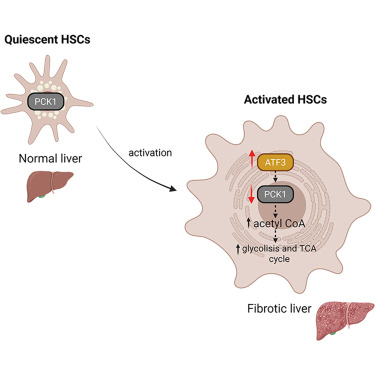
We are back!! I'm excited to share our new paper from @RubenNogueiras lab at @cimususc , where we identified the key role of PCK1 in liver fibrosis progression. Key findings below...👇
Finally, this work wouldn't have been possible without our entire lab team and collaborators, but special thanks to @ParrachoTamara and @ChusaGzlzRellan for driving this project to success! 🔬
So, PCK1 protects the liver from scarring by keeping fibrogenic cells in a quiescent state. When PCK1 is reduced, these cells undergo metabolic reprogramming characterized by increased glycolysis, become aberrantly activated, and promote liver fibrosis in mice.