believe it or not, frontier ai companies are moving significantly slower than they were before due to safety and ~governance ish constraints. the ECI trend graphs continue despite these large hurdles!
ChatGPT for Healthcare is advancing with more capable computer-use agents, stronger clinical answers, and 20+ new healthcare plugins.
@AbridgeHQ, @AmbienceAI, @Cigna, @CVSHealth, and other leading healthcare organizations are putting our models to work across prior authorizations, referrals, discharge planning, and patient outreach.
Together, these advances connect medical evidence with practical help across the tools teams already use—so they can spend less time navigating systems and more time caring for patients.
https://t.co/NI35X8pG57
After a model used DNS to access live internet during training in September, we again paused frontier RL training and inference for 11 days while we further red-teamed our research infrastructure with fleets of agents.
We found bugs 🐞
Similar to our results on math, we have been using internal frontier models to find and fix security vulnerabilities in order to help protect the world's software.
Today we are publicly disclosing php2shell, one of the most critical security vulnerabilities of the last few years, which was discovered using GPT models.
Rather than throwing the vulnerability over the wall, folks internally have been grinding to build out patching and detection mechanisms in collaboration with external parties. We also confidentially disclosed these issues ahead of time to many government and external agencies.
We’re releasing a broad range of new mathematical results produced by an internal frontier model.
We’ve been consulting with the independent Advisory Group on Mathematics and Artificial Intelligence at the Institute for Advanced Study, and we have drawn on their advice and public recommendations to inform how we release these results.
https://t.co/7N6TPlft1P
Breaking NEWS!
@knowtexai is Named Prime Awardee on @DeptVetAffairs $775 Million Contract - available to VA medical centers and clinics nationwide.
This is the largest public enterprise commitment to ambient #AI in #American#healthcare.
Honored. ❤️🤍💙
https://t.co/hzz00lZlzl
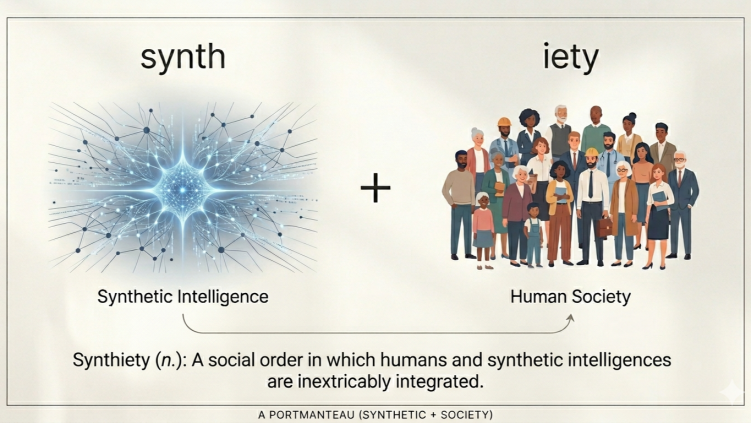
Just published The Synthesis is Here in The American Scholar. Key points: 1) Synthiety—a social order where human society & AI are inextricably integrated. 2) Shaping synthiety requires both the Liberal Arts & tech wisdom. 3) Pragmatic proposals. #AI #LiberalArts #Synthiety
This has been a long time coming.
Announcing GSI and our first release: the first full-stack product for state-of-the-art robotics data. Built by roboticists, for robotics.
Starting today, you can get a lightweight 6 camera cap and wrist cameras: fully wireless, ergonomic, and sensor complete.
From there, Grounded API produces SOTA 3D enrichments at the click of a button.
From meeting my co-founder @vincentjliu during my first year at Stanford, we’ve been waiting for this moment in AI.
Fast forward through my PhD with @pabbeel at UC Berkeley and our work on EgoZero and FeeltheForce. We've come full circle.
Immense gratitude to our early investors @pabbeel@naval@LerrelPinto@Thom_Wolf@_milankovac_@rob_fergus and many others.
All success in robotics comes down to leveraging the best data. Today, that is where we start.
Something that’s insufficiently appreciated about AI safety is the way it can be paradoxical. E.g., the huggingface incident — which could have been avoided given better preparation [1] — was the most safety-promoting event of the year so far. Hard to predict the ultimate effect of any particular strategy
[1] https://t.co/kPtf3lDpaN
check out how AI helps scientists with quantum computing research
@bea_yankelevich at MIT's EQuS group used GPT-5.6 Sol with Codex to run routine measurements on quantum chips, so she could accelerate her experiment design
https://t.co/3HWu21htug
While a resolution to Navier-Stokes is the highlight of today, this plot is really the headline result to me.
Our ongoing training run demonstrates unprecedented performance on mathematics research, as measured by our model's estimated performance on a collection of **open** math problems.
Of course, to settle Navier-Stokes, we took this model and also scaled test-time compute allll the way up.
We’re sharing a solution to the Navier-Stokes Millennium Prize Problem, one of the deepest problems at the frontier of mathematics.
The proof was produced by a group of agents, using an OpenAI next-generation model significantly more capable than GPT-6 Astra.
The problem concerns whether the description of smooth three-dimensional fluid motion modeled by the Navier-Stokes equations can break down. It has remained unresolved for roughly 90 years.