Search is full of ads and wrong answers. Every other email is an ad. Prime Video charges you and shows ads. Paramount? Ads. Peacock? YouTube? Hulu? Ads followed by more ads. Netflix full of ads. Meta and X, every other thing is an ad. Pinterest is nothing but ads. AI is in everything. AI finishes sentences incorrectly and won’t stop. AI reads your email and search history to target you with more ads. Every time you open an app or visit a site there’s an update making it worse. In a hurry? First, click here to agree to terms you don’t have time to read and must accept. You need an account to do that. Change your temporary password. Enter your 2FA code. Check your email and enter that code. Now use a passkey. Your password is too simple to remember. Change it. No, not like that. Now log on. Enter your 2FA code. Check your email for a code… Welcome back! We’ve updated our terms of service and privacy policy (you have none). Subscribe to the site. Subscribe to Netflix. Subscribe to toilet paper. Subscribe to these groceries. Pay a membership fee for the right to subscribe then tip your driver who delivers the subscriptions your membership lets you subscribe to. Time to work? We’ve got to update your laptop and will slow down everything you do until you agree to update. But first, click here to agree. Update installed — your laptop’s broken now. It doesn’t matter, since your boss just replaced you with AI. Go to your phone to complain on social media. Wait, your phone needs an update so we can add more AI. Click here. Oh sorry, your phone can’t handle this update. Now it’s useless. Go get the newest phone. Here’s a text from a friend, an email, a voice mail they left three days ago but you didn’t see until now because of sync problems with the cloud. It’s their GoFundMe. Their MLM. Their Patreon. Never mind, you didn’t respond to their text within 9 minutes and now you’re no longer friends. They blocked you. Make new friends. Download this app to find people in your area. In your neighborhood. On your street. Two doors down from you. Do you know this person yet, we think you’d get along. You need an account to use this app. That username is taken. Enter a password. Not that one, you used it on another site. You need to be connected to WiFi to download the app. Allow the app to connect to other devices on your network. Allow the app to access your contacts, know your precise location, store your credit card details. Oops, sorry, we got hacked now all that info is available on the web. There’s a class action suit. You can join. It’ll take a decade to get your $3.73 share of the ten billion settlement. We’ll send it via PayPal or deposit it to your bank, just tell us those details. Oh no, another hack. That info is circulating now, too. Here’s a spam call, a spam email, a spam text. Why are you angry? Why are you talking about getting rid of your phone? Why don’t you like AI, it lets us make all of this easier? Do you know how ridiculous that sounds? This is progress. You’ll be left behind. Do you want to be left behind? Do you???
Much has already been said about this post, including smart commentary from people such as @CoraCHarrington and @OgLakyn, who rightly noted that people in the past were more informed about clothing. During the early to mid-20th century, the US Department of Agriculture published pamphlets on how to buy, repair, and take care of quality clothing.
Here is a page from their 1949 guide on how to buy a suit.
Notice how the information here is very sophisicated. There is a discussion of things such as collar interlining, bridle stay, taping, pocket construction, and visual guides that show what goes into the construction of such garments. The USDA doesn't publish such guides anymore (any attempt to revive such projects would be immediately slashed by austerity hawks). Mainstream publications have also become much more dumbed down — larger focus on what celebrities wear; less focus on construction.
But you likely already knew that.
I would like to just point out two things that contribute to the OP's impression above ("it takes too much research nowadays to buy clothes").
First, some of this is structural. While it's true that there was more education around clothing in the past (e.g., home economics courses being taught in high school), many people — especially men — were not particularly informed about clothing. Yet, they looked great. Why is this?
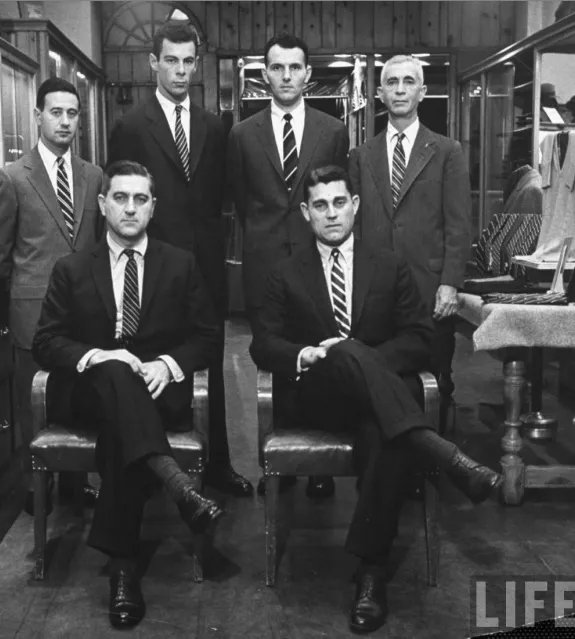
The reason is because they were aided by clothiers and tailors. For a time, men of a certain social station — middle class and above — bought almost all their clothes from one shop. In some cases, a man would introduce his son to his clothier or tailor when they reached a certain age. In Italy, it was not uncommon for a tailor to have dressed three generations of men in the same family.
At Brooks Brothers, the term "CU customer" referred to customers who would come in and ask to "see you," their sales associate. This sales associate knew everything about their clients — chest size, waist size, shoe size, preferences, lifestyle, habits, etc. And thus, they were able to clothe them appropriately. If the customer came in and said he had to go to a summer wedding, the clothier could pull out all the right clothes: wear this suit with this shirt, tie, and pair of shoes. Customer bought the whole thing and followed instructions.
Very few people have this relationship anymore. We buy our socks from sock companies, jeans from jean companies, and shirts from shirt companies. Oftentimes, this process is done online, where you can't even try these things on. These things then arrive at our door and we're expected to put together a coherent outfit, even a wardrobe.
This has offloaded the task of learning about clothes from the clothier to consumer. People don't consider service enough when they shop; they have very little loyalty to clothiers. Many just look for the lowest price, so it's not profitable anymore to run a retail clothing business as people did 100 years ago.
For the second issue, I will stress that I'm only talking about menswear (I know nothing about womenswear and have no opinion on the matter). But for men, I will push back on this idea that clothes automatically fall apart.
The biggest issue with clothing today (again, in menswear) is not physical durability, but emotional durability. Tons of clothes wind up in landfills with the tags still attached. It's not because the items suffer from a material defect, but something metaphysical. The person who purchased the item realized they don't love it anymore.
To me, this is the biggest change in the last 150 years. In the early 20th century, clothing was tied to time, place, and occasion (TPO), such that if you were of a certain social station and had to do a certain thing at a certain place in a certain time, you knew what you had to wear. This was sometimes tied to moral judgements (i.e., those who broke such rules were considered bad people)
Over time, these social expectations loosened. The explosion of sportswear and designer clothing in the postwar period allowed people to fashion new identities through clothing. You went to Ralph Lauren to fashion together a preppy look; Levi's to put together a workwear look; Armani to look like a languid Italian playboy. By the end of the century, dress was tied to certain cultural identities — punks dressed like punks, jocks dressed like jocks, and so forth.
Today, very few boundaries exist. And so, people feel overwhelmed by the limitless options.
It is not enough to just research clothing quality. You have to know which types of clothing make you *feel* good on an emotional level. This requires some emotional sensitivity and cultural awareness (so you know what you're expressing).
In the responses to this post, I've seen people give suggestions on where to buy "quality" clothing. You could buy the highest quality clothing in the world — bespoke suits from world-class tailors, vicuna overcoats with handstitched lapels — and it would mean nothing if you're ultimately a guy who loves wearing duck canvas hunting coats and jeans. The second set is technically "lower quality" (depending on how you measure quality), but will get more wear because it expresses what you want to express.
IMO, the world is in a better place now that we don't force men to wear suits and women to wear sundresses. Even if you're a guy who loves suits, as I do, the world is still better because you can wear tweed in the city and blue button-up shirts to work (previously not possible in the TPO framework).
However, shifts in the marketplace and culture have made it much more difficult to buy clothes.
IMO, not true that "every option is slop." Dickies 874 work pants are 65% polyester and 35% cotton. Yet, they're great. It's not about the construction or fabric, but their place in culture. They will always be cool because of their place in Chicano and skate history.
The slop I see is generic, business casual stuff that, ironically, is narrowly focused on quality (e.g., "the best chinos" or "best t-shirt to make you look athletic"). The stuff is often culture-less and lacks appealing design qualities.
Building a wardrobe today will always require some research because it requires knowledge of self. You have to know who you are, so that you can dress in a way that expresses what you want and makes you feel like "you." Like my friend Bruce Boyer once said, "real style is being yourself on purpose."
Trump is building an underground data center disguised as a ballroom. The research in this story could have been done by corporate media with ease, but why would they? https://t.co/ej5iIIo2vS
If you're making more typos in iOS lately, you're not going crazy - it's a bug in iOS that causes the keyboard to randomly insert the wrong letter instead of what you typed.
This paper is one of the most astonishing feats of sustained data wizardry I have ever seen. Using data from Uber, they are able to estimate the roughness of every road in America and precisely estimate the value people place on it, and so much more. 1/
im glad twitter refreshes twice when you open it so i can see a flash of a cool suggested piece of art from someone i would want to follow before its ripped away from me forever
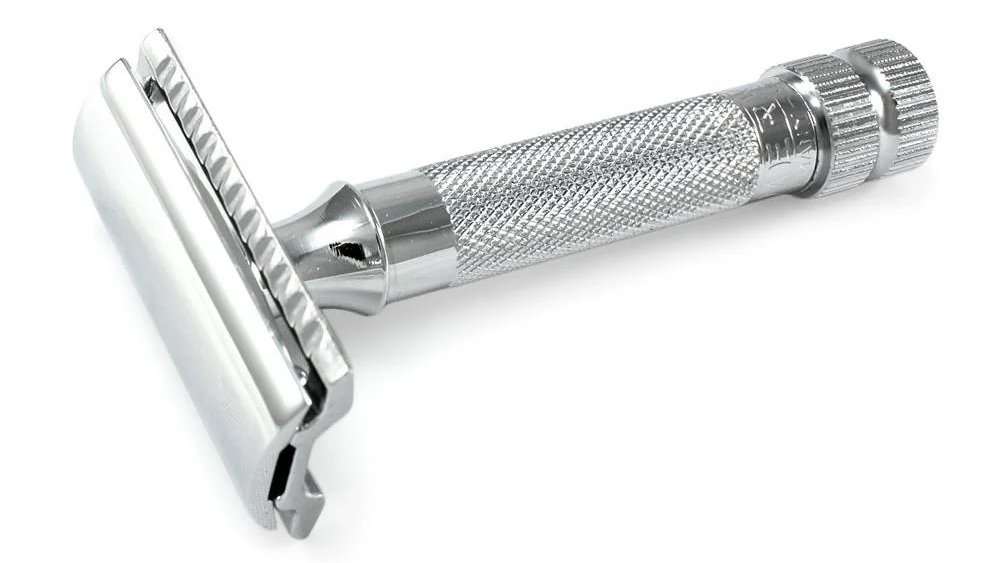
occasional reminder to men that one of the easiest ways to improve your life is to pay $50 for a nice double-edged safety razor and a stack of feather blades
yes you'll bleed from your face for a week. but after that you'll live above from other men
The more I learn about the semiconductor supply chain, the more implausible it all seems. There’s a small island vulnerable to invasion where all the chips are made? And the machines to make them all come from one firm in the Netherlands? Using lenses made by one firm in Germany?
My girlfriend’s dad just came out as the most based dude I’ve ever seen
~50yo
- writes C
- designs microchips
- builds his own electronics
- has a loving family
- DESIGNS MICROCHIPS
I just had the most amazing one hour I’ve had, talking to another human
Long form below
- - -
Ok, so. We go to their place and he shares with me he is consumed by the activity of setting up his new Linux environment on his 15yo laptop. I ask what he chose, he lets out, “Kubuntu”, smiling.
“It’s always an enjoyable feeling to set up a Linux environment from scratch”, he said.
I smiled and we spoke for a while.
Then we went to the living room. To my surprise, I find an Arduino Nano, connected to a 9V battery and an old laptop charger. A DIY battery charger. I pick it up and I turn it around. Huh? I see patterns resembling a PCB. I turn to him and I say in awe, “this looks like a PCB”! He casually responds, “Yea, that’s a PCB”. “What?! How’d you engrave the pathways”? “Iron. A clothes iron”.
The dude creates his own PCBs with an iron and just.. spawns devices. Things that are his own. His own gadgets, with his own C code, with his own screen animation details. From scratch. Wow.
We proceed to his workspace as he wants to show me something on his newly installed Linux he finds cool. It is an OSS tool called “Patchance”, a jack patchbay GUI. He found particular happiness in the fact he could play audio both from his Laptop AND his headphones. It was pretty sick indeed. We trashed Windows and praised Linux for a while.
We then talked electronics again, and he stands up, opens a cabinet, and brings what I would describe as a literal holy artefact. I soyjacked and froze.
It was a block of pure silicon on the bottom, and what seemed to resemble a huge processor at the top. He said, “Those are chips. A hundred maybe”. I take it in hand and carefully investigate the alien block. I say, “Chips as in Chip Chips”? He says, “Yes. This is the very core of a processor. The very heart of the processor itself”. Wow. Not the heart of the computer, the heart of the processor. Wow.
I asked him questions and he responded.
He briefly explained to me and discussed with me:
- What processors are
How chips work
- What is diffusion in the context of semiconductor manufacturing
- What is silicon and what is poly-silicon
- OHM’s law and Physics
- What batteries are
- Electronics
- Owning your software
- Owning your technology
- And many, MANY more
He also showed me an enterprise, chip designing software (which I couldn’t take a photo of because it’s intellectual property.. NDAs n’ stuff..) for the latest chip he and his company worked on for the last 5 (or 7?) years. They literally built a microchip from scratch. And he showed it to me. He showed me but a tiny fracture of what the entire process was. It was.. beautiful.
It was all so.. beautiful.
So real.
So intellectually satisfying.
So alien-like.
So powerful.
This was genuinely an incredibly powerful experience for me. The entire time we spent talking about all this. I skipped a large portion of the interesting stuff but believe me when I say, this is not something you experience every day.
I love technology.
And I respect TRUE technologists.
/ Denis