Just in time for @aztecnetwork's mainnet launch, we've published a spec-like explainer of Ultrahonk!
Our first article of 2026 🥳
https://t.co/0MFZKuXdhT
weekend project: https://t.co/SirJJ7epLk
one shelf for books, manifestos, essays, etc... built it for myself to keep everything I want to read and everything i love in one place.
Interesting note here
"My Claude account is in Anthropic's whitelist for security researchers. All I had to do to get on that whitelist was provide the link to the forum post saying Shielded Labs hired me; it did not do any actual identity verification (they would have been able to match my name in the forum post to my credit card on file, but I am not sure if they did that), so I think anyone with a history of public security research could get on that whitelist."
https://t.co/rz7upypogr
Plonky3 is the underlying STARK protocol for most zkVMs in production today
Yet, there aren't many tutorials to help developers get started with Plonky3
We've just dropped a tutorial detailing how to use Plonky3 to generate proofs for Merkle trees.
https://t.co/90rZEzgGEd
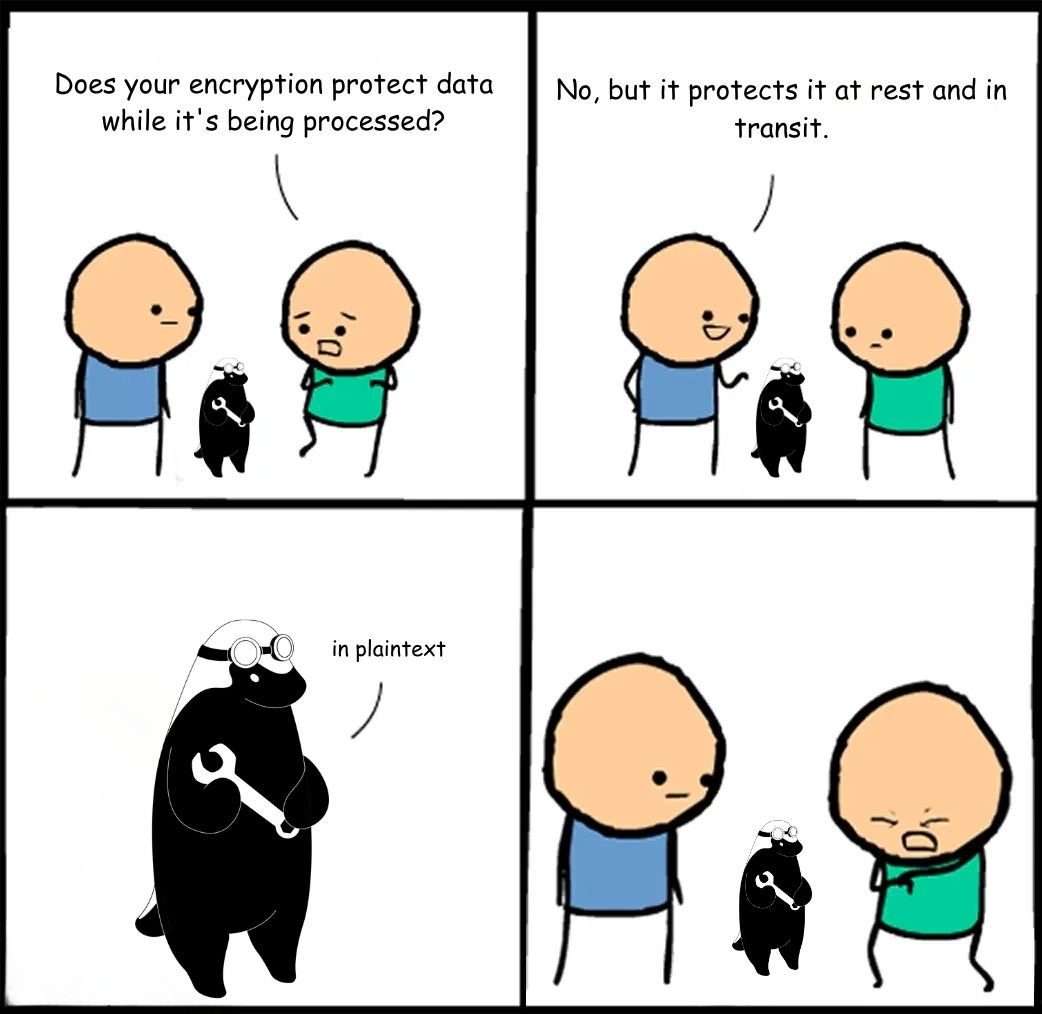
Data-in-use is the exposure window your encryption skips.
The moment computation begins, your data exists in plaintext inside a trust boundary you don't fully control.
That's where breaches live.
@0xprivacypools@nethan_eth Cool! I have a technical question: how are private transfers in the shielded pool supported? With the mechanism of the paper "Derecho: Privacy Pools with Proof-Carrying Disclosures" using recursive proofs?