this is the filter. we are failing. probably we were always going to fail - too much testosterone in the model. might as well relax now. eat a tomato. sing a little song
Let me try to list where I think we stand in terms of “existential risks,” that is, civilization-destroying events. I classified them into three categories of risk: Low, Medium, and High, at least in my opinion. Of course, if you are good eschatologists, you know that we are dealing with a complex system, and everything in a complex system is linked to everything else. The result is a sort of Jenga tower game, where you take out a critical piece, and the whole thing comes down. But we can try at least to understand what we are facing.
https://t.co/oZlbalHQMM
Dinosaurs, Forests, and a Hotter Earth: Solving the Mesozoic Climate Puzzle!
Imagine a world where dinosaurs roamed under sweltering skies, but the usual climate culprit—CO₂—wasn’t calling the shots. That’s the "Mesozoic Conundrum," a 186-million-year-old mystery where Earth’s temperatures soared without CO₂ levels budging much. In a groundbreaking preprint, scientist Ugo Bardi from the University of Florence cracks this ancient climate riddle, and it’s all about forests and their superpower: albedo.
Bardi’s study, hot off the EarthArXiv press (May 23, 2025), reveals that during the Mesozoic Era (252–66 million years ago), Earth’s thermostat was cranked up not just by CO₂ but by a massive spread of lush forests. Picture the planet transforming from sparse, sun-scorched deserts to dense, dark green jungles covering up to 80% of the land by the Mid Cretaceous, when global temperatures hit a toasty 27.5°C. These forests, Bardi argues, acted like a giant solar sponge, soaking up sunlight thanks to their low albedo (reflectivity) compared to deserts or grasslands. This soaked-up heat caused a whopping 5.1°C temperature spike, matching the fossil record’s evidence of a steamy Mesozoic world.
Using clever data from ancient carbon deposits and climate reconstructions, Bardi shows a tight link (a dazzling R² = 0.88!) between forest growth and rising temperatures. What fueled this forest boom? The breakup of the supercontinent Pangaea created new coastlines and wetter climates, while plants themselves pulled off a "biotic pump," drawing rain inland to keep the greenery thriving. CO₂, usually the climate headliner, played second fiddle here, staying steady at 500–1200 ppm while forests stole the show.
Why does this matter today? Bardi’s findings flip the script on how we model ancient climates and could shape modern reforestation efforts. Planting trees to fight climate change? Sure, but their albedo effects might heat things up more than we think! This dino-era tale is a wake-up call: Earth’s climate is a wild, complex beast, and understanding its past could save our future.
Read the full scoop on EarthArXiv (DOI: 10.31223/X5S420) and join the adventure into Earth’s ancient climate secrets!
The first episode of Mr Benn was broadcast on this day in 1971. Created by David McKee and narrated by Ray Brooks, 13 episodes aired during 1971 and 1972 (a fourteenth - Gladiator - appeared on Nickelodeon in 2005).
Reminder the clocks go back an hour tonight
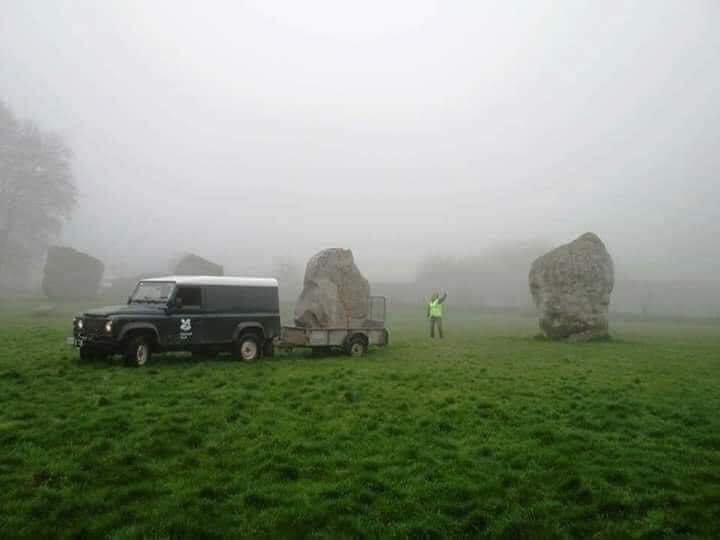
Whilst some will get an extra hour's sleep on Sunday, spare a thought for the National Trust Volunteers who work tirelessly through the night to move the stones back 1 hour at various stone circles around the countryside.
I often have compassion for inanimate objects. For example, if I'm about to refill the teabag tin & there's one in there, I'll put the lone teabag on the top of the pile to make sure it's used next, as it's that teabag's turn.