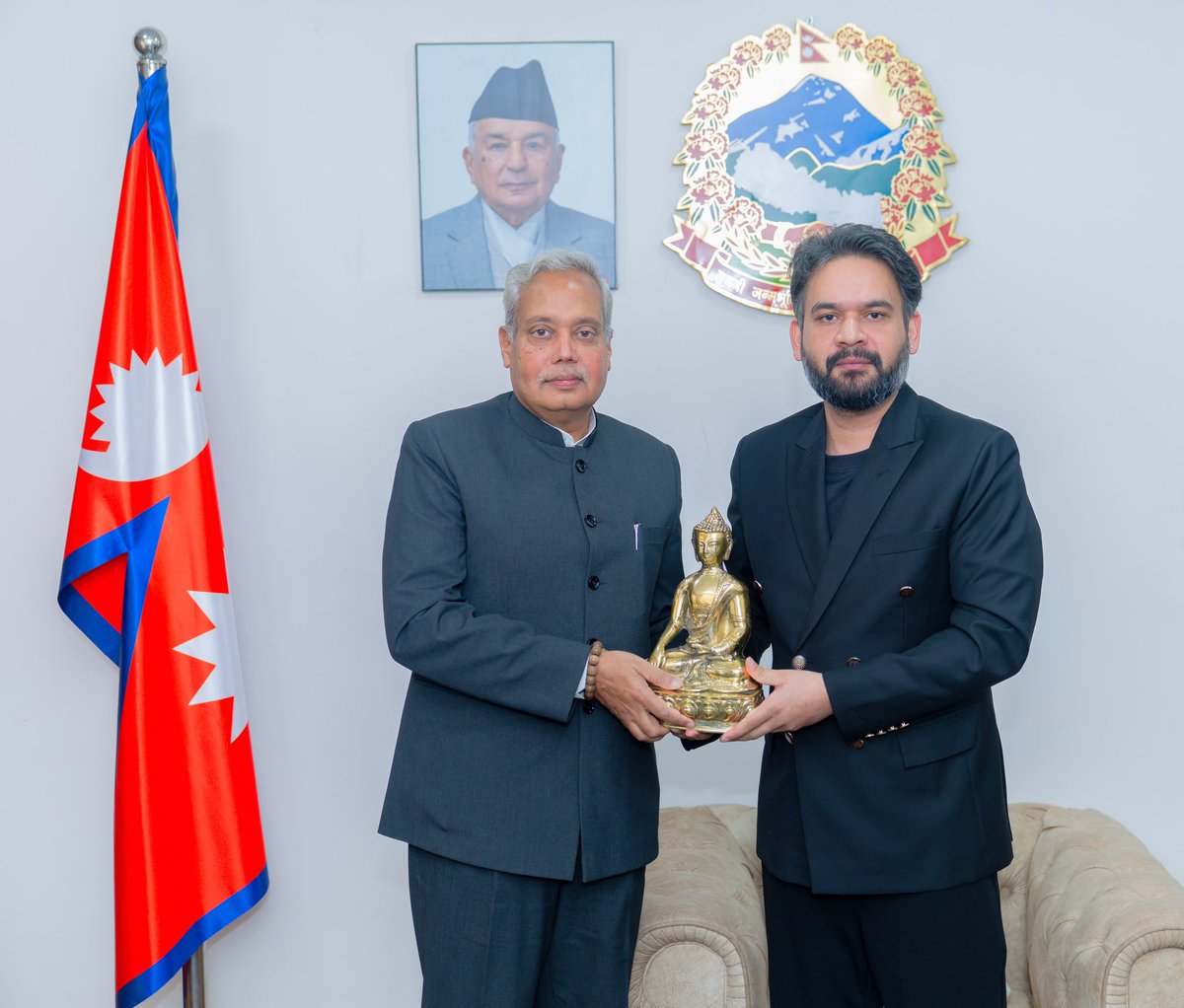
यहाँको मेरो कार्यकाल पूरा गरी नेपालबाट बिदा हुने तयारी गर्दै गर्दा, यो सुन्दर देशमा बिताएका पलहरूको एउटा छोटो भिडियो यहाँ प्रस्तुत छ।
🇮🇳🇳🇵
@IndiaInNepal
प्रकृति हाम्रो लागि वरदान हो तर त्यसको हामीले व्यवस्थापन गर्न सकेनौं भने त्यो अभिशाप साबित हुनसक्छ। हामी मलेसियालगायतका देशहरूबाट काठ आयात गरिरहेका छौँ, तर हाम्रै प्राकृतिक स्रोत-साधन भने नदीमा बगेर नष्ट भइरहेका छन्। काठ, बालुवा जस्ता प्राकृतिक स्रोतको सही सदुपयोग तथा व्यवस्थापन गर्न सम्बन्धित सरोकारवाला पक्षको ध्यानाकर्षण गर्दछौं। #parliament #nepal #climate_management
परराष्ट्रमन्त्री शिशिर खनालले सात दिनको न्युयोर्क भ्रमणमा ३१ उच्चस्तरीय भेटवार्ता भ्याएर, २१ कार्यक्रममा सहभागी पनि भएछन्। प्रायः हेरियो/सुनियो र पढियो पनि। नेपाललाई प्राथमिकतापूर्व फोरम दिइएको देखियो। उनको प्रस्तुती र प्रश्न सुनेर बुझेर सोचेर शालिन उत्तर दिने शैली उत्कृष्ट लाग्यो।
खनालले मौकाको भरपुर सदुपयोग गरे - सही गरे 👍
https://t.co/dF0EQsEKmp
राष्ट्र संघ सभामा प्रधानमन्त्री जी को सम्बोधनकाे पूर्ण पाठ।
Mr. President,
Mr. Secretary-General,
Excellencies,
Distinguished delegates,
Ladies and gentlemen,
I come before you from Nepal - a distant country in the Himalayas - carrying a close warning for humanity.
I wish I could stand here today simply to speak about development, democracy, peace and the hopes of a young nation.
Instead, I must speak about death and destruction of epic proportions.
About families waiting for loved ones who will never come home.
About communities searching through mud, rocks and water for people whose bodies may never be recovered.
About bridges, roads, schools, homes and livelihoods swept away in minutes.
And about a country whose steady progress to achieve Sustainable Development Goals has been interrupted.
====
Four weeks ago, the world saw the shocking images of the catastrophic flash floods that swept through Nepal’s mountain communities with ferocity many have called a “Himalayan Tsunami.”
The Bhotekoshi-Trishuli disaster was not just a local tragedy, it was a warning to the world.
And I ask you today: have we really heard that warning?
Nearly three years ago, standing in the shadow of our Mount Everest, the Secretary-General of the United Nations warned humanity about the madness of an impending climate disaster.
That cry from the rooftop of the world was not heard loudly enough.
We in Nepal heard it. Our communities heard it.
Scientists around the world heard it. They repeated it with evidence.
But we, the political leaders of the world, have been negligent to translate those warnings into action at the speed and scale that vulnerable people require.
Last month, we saw the tragic consequences.
=====
A warming climate is destabilizing the fragile Himalayan ecology.
Melting permafrost are fracturing mountain slopes beneath the glaciers and accelerating the risks of ice-rock avalanche, floods, landslides and other cascading hazards.
The resulting devastation unleashed havoc on both sides of the Nepal-China border. The flood continued downstream towards India.
This tells us something fundamental:
Climate change does not recognize borders.
Glaciers and floods do not travel with a visa stamped on passports.
======
Excellencies,
I am not here to complain but to share some suggestions.
First, I wish to express Nepal's deep gratitude to all those who came to our aid in the aftermath of the deluge.
Our immediate neighbors, India and China, offered prompt and generous assistance.
Other friendly countries, the United Nations system, humanitarian agencies, philanthropies and people around the world stood with Nepal.
To all of them, I say: thank you on behalf of the grateful people of Nepal.
Nepal now faces a massive task of recovery and reconstruction.
After at least 1400 confirmed deaths and over 6,000 people still missing, our rapid assessments peg physical recovery needs at about 10 percent of GDP.
As in rebuilding after past disasters like the 2015 Gorkha earthquake, we count on your solidarity and support.
But we must also understand why this disaster matters beyond Nepal.
Nepal contributes less than 0.1 percent of global greenhouse-gas emissions.
We did not create this crisis. Yet we are paying a colossal price for it.
Our glaciers are retreating. Our mountain slopes are becoming unstable. Our rivers are becoming less predictable.
And every major disaster threatens to erase years of development.
For Nepal, climate catastrophe is not just a humanitarian event, but a development emergency.
It destroys roads, bridges, schools, homes, farms and livelihoods.
It destroys clean energy infrastructure that we need to fuel our future.
And it forces a poor country to borrow money to repair damage it did not cause.
=====
But we are not here to blame any country or continent.
We are not here to turn climate change into another geopolitical battlefield.
लोकल अम्बा (साउजीका अनुसार सिन्धुलीको) आएछ, किलोको रू. १८०।-
खाइहालौं, एकाध हप्ता त पाइएला त्यसपछि त इलाहाबाददेखि थाइल्याण्डबाट आयातीत मँहगा न मँहगा अम्बा पाइने न हो।