Check out our new “For developers” page with resources from the workshop panel discussions:
https://t.co/Dul4bpnGyG
We would be happy to hear your suggestions! Submit them here: https://t.co/UQzEkjMajj
2023 EMAC Workshop Videos are Live!
Thank you to everyone who attended the EMAC workshop! Talk recordings can be found at https://t.co/nzM6IRVrJd or on our YouTube channel.
See more: https://t.co/Gloav0v9jD
Last chance to register for the virtual #EMAC Workshop on Open-Access Exoplanet Modeling and Analysis Tools! Submit your registration by Friday to be guaranteed access.
Schedule: https://t.co/nzM6IRVZyL
Registration: https://t.co/Pe5rK9rcQE
EMAC Workshop - Register to Attend
Register now to attend the #EMAC workshop!
View the schedule and register on our website: https://t.co/nzM6IRVrJd
See more: https://t.co/EHyM9lqBDN
Hello Exoplaneteers!! EMAC is on the ground at #AAS241 ! Come visit our table in the NASA table area — and if you have a resource listed on EMAC, come pick up your EMAC Developer badge!
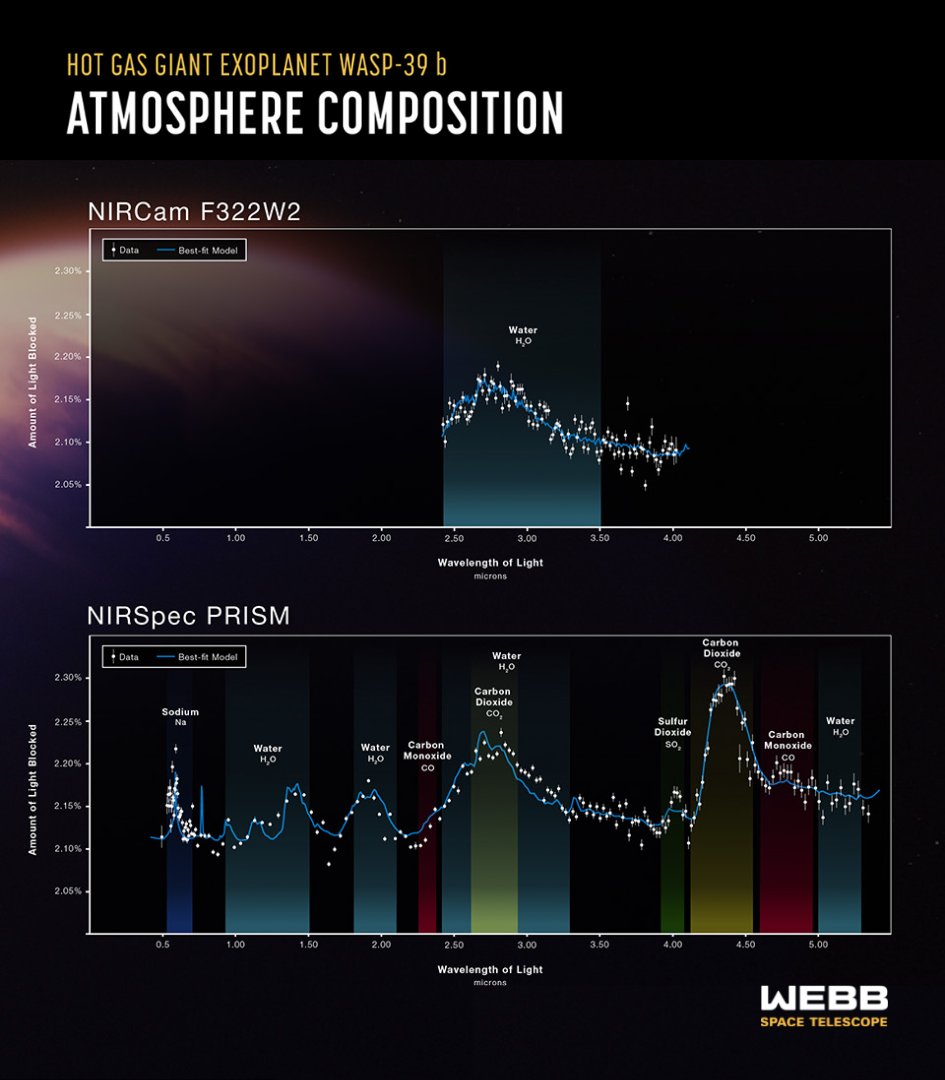
Other codes used in these analyses include batman (https://t.co/HuVbChD0ud), transitspectroscopy, Juliet (https://t.co/axJxRY7XDj), chromatic,, Pylightcurve, Starry (https://t.co/5gdGxtqgL0), ExoTHETyS, Virga, ExoTiC-JEDI, ATMO (https://t.co/wtzmfwcAZ1), and the JWST pipeline
These spectra of a giant exoplanet are truly incredible! Let's look at some of the open-source and publicly available codes that went in to producing this chemical profile
Webb’s latest data gives us the first molecular and chemical profile of a distant world, gas giant WASP-39 b. This bodes well for its ability to probe the atmospheres of small, rocky planets like in the TRAPPIST-1 system: https://t.co/SEnIRYikS0
@ShamiTsai et al. use photochemical codes including gCMCRT (https://t.co/WP6BGymUJz) and VULCAN (https://t.co/6Z1TgumfhQ) to suggest sulfur dioxide in the atmosphere of WASP-39 b is produced by photochemical reactions.
Laughing gas on an exoplanet? @nogreenstars and collaborators use the Atmos code (https://t.co/7Q6plymfDD) to suggest looking for nitrous oxide as a sign of life.
press release: https://t.co/rUF2UlusoP
ADS: https://t.co/cgyh9Jbq8J
Check out our new tutorial for the planetary atmosphere model and radiative transfer code Pytmosph3R! This code quickly produces spectra for 1D, 2D, and GCM models along with substantial built-in plotting capabilities.
EMAC: https://t.co/cfI7ijzi1y
Demo: https://t.co/7hcR4Eluon
New EMAC Paper
Has #EMAC helped you find the tools you need for your research? Cite our new Research Note in your work! https://t.co/S90XIWcF9n
See more: https://t.co/itctfns5MX
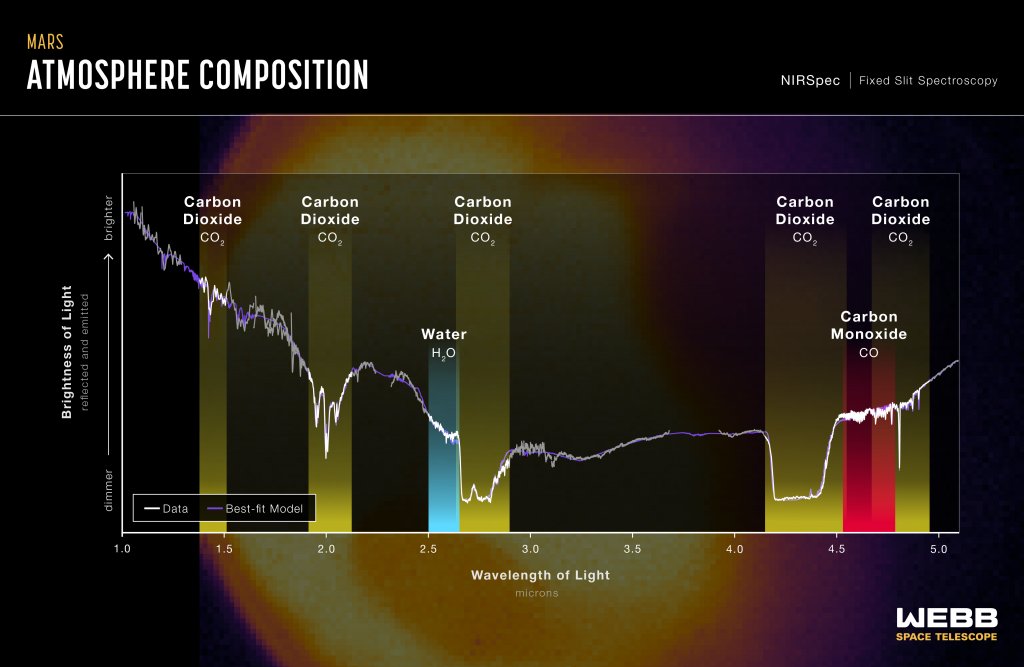
Scientists checked in on Earth's planetary neighbor
Mars with @NASAWebb and atmospheric readings reveal carbon dioxide, carbon monoxide and water. Reading the light like this is how we can now study planets *much* farther away.🤩
https://t.co/jR9Io84FND
First EMAC Workshop - Feb 7-9 2023
Join us as we bring our communities of developers and users together in a three-day virtual workshop. See the #EMAC website for more info!
See more: https://t.co/0BLPjxQPoq
.@AAS_CSMA Micro-Grants Program offers one-time grants of $500 each to support BIPOC undergraduates to pay graduate school application fees, GRE fees, virtual conf registrations, or to purchase textbooks & research supplies. Application deadline: 30 Sept https://t.co/5pD6DgdPVi
I'm chairing the hiring committee for the @FlatironCCA "Flatiron Research Fellow" postdoc fellowship this year, and wanted to share some info about it here. If you're on the astro postdoc job market this year (or if you know someone who is), read on! 🧵
1) #NASAWebb’s first official scientific observation of an exoplanet;
2) the first detailed exoplanet spectrum covering this range of near-infrared colors; and
3) the first indisputable evidence for carbon dioxide in the atmosphere of a planet orbiting a distant star. (4/5)
BREAKING NEWS: #NASAWebb ushers in a new era of exoplanet science with the first unequivocal detection of CARBON DIOXIDE in a planetary atmosphere outside our solar system. (1/5) 🧵