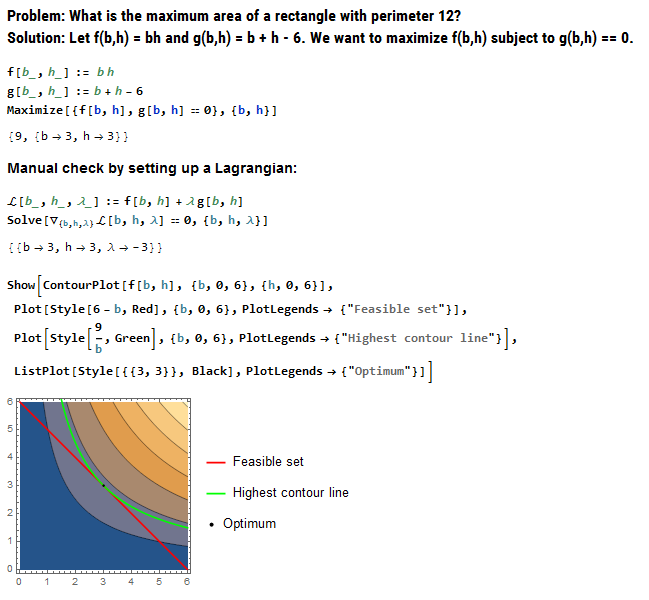
Junior data scientist interview question: Assume you generate points X = N(0,1); Y = N(0,0.1). Rotate the (x,y) dataset 45 degrees, so they look something like pic below (line is y = x). If you were to calculate the OLS regression y = b1*x + b0, what is E[b1] as n->infinity?
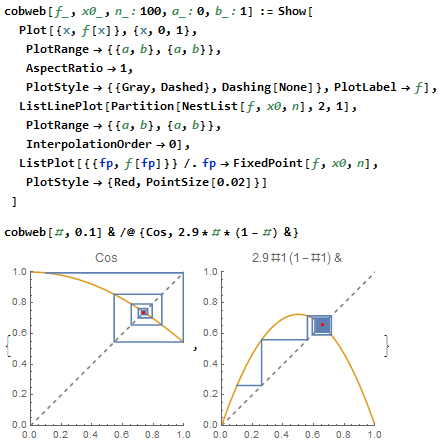
@nntaleb@CutTheKnotMath And so T[xs, {-1,0,0}] gives the (inverse) harmonic mean and T[xs, {2,0,0}] / T[xs, {1,0,0}] gives the contraharmonic mean. Neat!
@calvinmdewilde Yeah, I got a rude email from a CRAN maintainer saying that the package produced an error whenever the WHO website was down, so they just archived it. You can still get it on github though: https://t.co/eFddRWTmlX
@michael_chirico Yeah, I see what you're trying to do. It's an interesting problem. Perhaps one could look at it as a hierarchical model with X ~ MultivariateHyperGeometric(N=12, K=(1,1,...,1),n=Y) with Y ~ TruncatedPoisson(5, trunc = (1,12)) and then somehow allow for biased urn sampling.
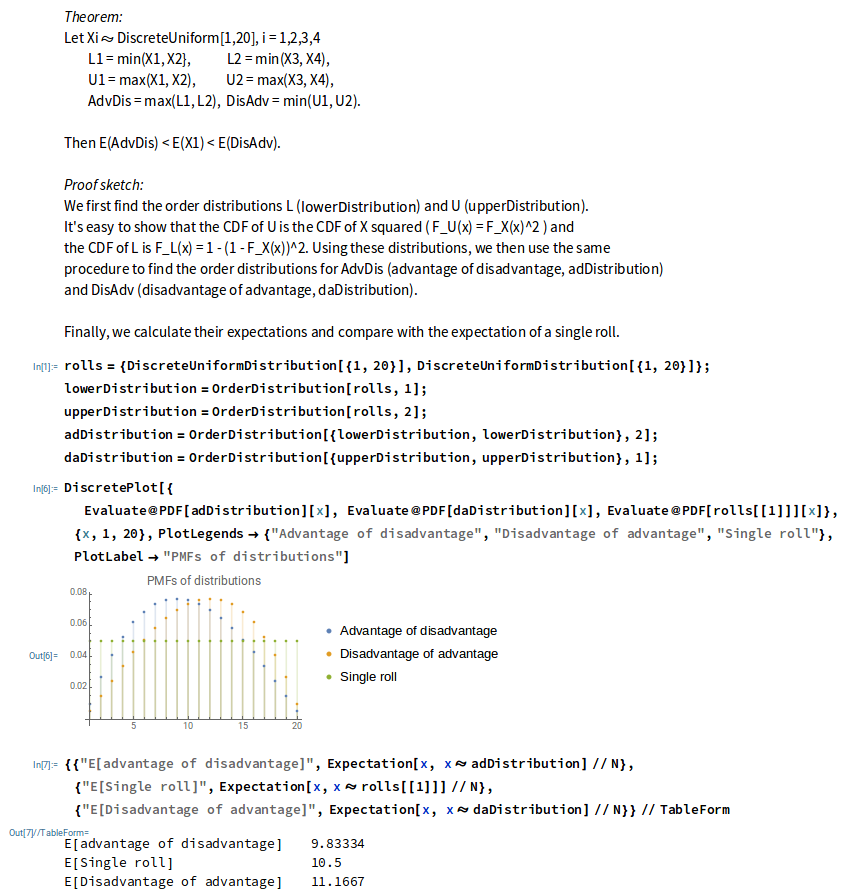
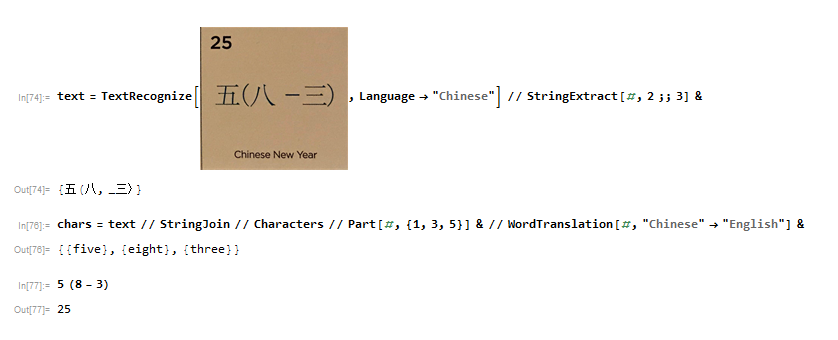
Today's #dailymaths problem from the Mathematics 2020 calendar in pic. Solution will post tomorrow. Daily problems with previous day's solution are tweeted ~6am Eastern. Solutions by me and/or @MathsTim unless otherwise stated. Guest solution posts welcome--DM if interested.
Today's #dailymaths problem from the Mathematics 2020 calendar in pic. Solution will post tomorrow. Daily problems with previous day's solution are tweeted ~6am Eastern.
Today's #dailymaths problem from the Mathematics 2020 calendar in pic. Solution will post tomorrow. Daily problems with previous day's solution are tweeted ~6am Eastern. Today’s is perhaps trickier than it seems, so good luck!







![quantian1's tweet photo. Junior data scientist interview question: Assume you generate points X = N(0,1); Y = N(0,0.1). Rotate the (x,y) dataset 45 degrees, so they look something like pic below (line is y = x). If you were to calculate the OLS regression y = b1*x + b0, what is E[b1] as n->infinity? https://t.co/7m5lMgOykW](https://pbs.twimg.com/media/Fzj2ZWeXoAA-X6u.png)


![expersso's tweet photo. @nntaleb @CutTheKnotMath And so T[xs, {-1,0,0}] gives the (inverse) harmonic mean and T[xs, {2,0,0}] / T[xs, {1,0,0}] gives the contraharmonic mean. Neat! https://t.co/OnvvrIooex](https://pbs.twimg.com/media/EcPM21FWoAEBoPf.png)