📢 We have TWO PhD positions open📢Geology/Geophysics/Sedimentology
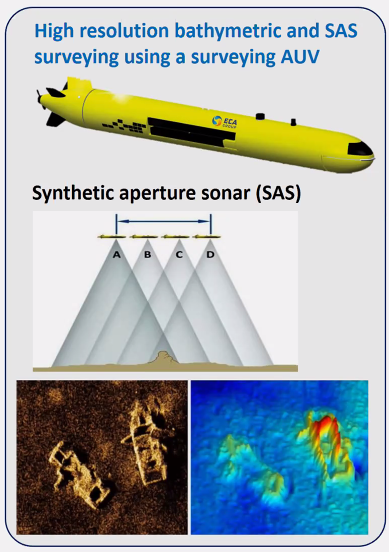
Candidate will work with cutting edge AUV & SAS technology to study the #deepsea#submarine channels with @MakovskyYizhaq@Exploration_Lab!
More details: https://t.co/BCiAC53MXf
Are you a Ukrainian scientist unable to continue your work or training? @UofHaifa has established a fund to support students and researchers coming to work here. For more information see https://t.co/iZ4VIG831a . @Sci_for_Ukraine@CharneySchoolMS
" Origin and kinematics of a basin-scale, non-polygonal, layer-bound normal fault system in the Levant Basin, eastern Mediterranean"
Joffe et al.,
https://t.co/RSIlKnyvxR
Exciting news! NSF has asked the U.S. scientific ocean drilling community to come together and develop Science Mission Requirements for a new drilling vessel. Please take the survey that will be the first step in developing scientific priorities for the new vessel. [1/2]
Completed the 1st human descent to the bottom of the Atacama Trench with Dr. Osvaldo Ulloa of Chile. Preliminary maximum depth of 8,062 m. Extraordinary marine life observed: very many holothurians, rock faces showing chemosynthesis, and the largest bacterial tendrils I've seen.
We are shocked and saddened by the sudden death of our dear colleague, Dr. Itzik Brickner
Since beginning his PhD studies in the late 1980s, Itzik became a leading member of the Institute's family
(1/3)
0n Boxing Day, for reasons still unknown, suddenly and devastatingly our beautiful 3 year old son Alexander died. I want the world to know how much joy he brought to everyone's lives, but especially ours. We are lost without him. Please keep our gorgeous, kind boy in your hearts.
So a cool thing I learned from @smartereveryday is that in the Apollo missions they used small cubes when they took samples to help set and restore the orientation as well as know which orientation each face had.
I'm so going to 3D print a bunch next time I'll do fieldwork.
Check out Ernst's new publication on Geoacoustic Estimation of the Seafloor Sound Speed Profile in Deep Passive Margin Setting Using Standard Multichannel Seismic Data https://t.co/tvHRY4LNSs #mdpijmse via @JMSE_MDPI
Bringing together the worlds of acoustics and geophysics!
@zzsylvester Use a smoothing window (say 5 traces, or more if needed) in the automatic tracker and these spikes will be significantly reduced. In Paradigm it is in the 2nd tab of the picking parameters.
This paper presents a methodology and first results of seafloor compressional sound speed estimation in a compacting passive margin setting of the southeastern Mediterranean Sea, offshore Israel. https://t.co/AaNrLUJ1ZQ
@margeohaifa@GadolOmri@MakovskyYizhaq#acoustics