GARRY TAN PUBLISHED HIS PERSONAL CLAUDE CODE SETUP ON GITHUB. IT HIT 108,000 STARS AND AN 18 YEAR OLD WON A HACKATHON BUILDING A FULL GAME IN 2 HOURS
the repo is called gstack. the president of y combinator open sourced his claude code workflow with 23 structured skills
most developers treat claude code like smart autocomplete. gstack turns it into a full pipeline for product thinking, architecture, design, qa and docs
an 18 year old from bishkek used it to win the cursor hackathon. he built a multiplayer game with computer vision in 1 hour 45 minutes
install is 3 commands. git clone the repo, run setup, add the skills to your claude.md. then call /office-hours, /plan-eng-review, /qa, /ship
gbrain gives claude persistent memory between sessions. developers report saving 3 to 5 hours a day on routine work
bookmark this and read the article below
Jeff Bezos reveals the simple phrase that saved him countless arguments running Amazon
"Disagree and commit is a really important principle that saves a lot of arguing"
"One of my direct reports would want to do something. I'd think it was a bad idea. We'd go back and forth and I'd often say, you know what, I don't think you're right, but I'm going to gamble with you"
"You're closer to the ground truth than I am. I've known you for 20 years, you have great judgment"
"At least then you've made a decision and I'm agreeing to commit to that decision. I'm not going to be second guessing it, sniping at it, or saying I told you so"
"I'm going to try actively to help make sure it works. That's a really important teammate behavior"
I spent 1000 hours figuring out Claude the hard way.
Here are guides I wish someone had sent me earlier:
Claude for Dummies: https://t.co/QQDmzBAoH5
Claude certificates: https://t.co/ClEur2iLI2
How to prompt Claude: https://t.co/Sw2tg2PMMc
Claude Cowork: https://t.co/uWTpOI3oyE
Claude for teams: https://t.co/qxlcqheAme
Cowork + Projects: https://t.co/xU97EpdrEe
Claude for slides: https://t.co/L0bPMgWEsy
Claude Skills: https://t.co/6cHYYfjpP2
Claude connectors: https://t.co/cSPMBUNmRG
Stop hitting Claude's limits: https://t.co/Yu24rPQafQ
Upload yourself in Claude: https://t.co/LyV7fegv4c
Stop prompting Claude: https://t.co/45xPLDRB6Y
Claude Code: https://t.co/UgE9xBXnm6
___
1. Save this list for later (three dots, top right).
2. Share it with a friend by ♻️ reposting this image.
3. Subscribe to my free newsletter: https://t.co/psB7XxAv8w.
HERMES AGENT + QWEN 3.6 IS CURRENTLY THE STRONGEST LOCAL SETUP MOST PEOPLE CAN RUN.
Even if frontier models stopped improving tomorrow, this stack would still cover the majority of real work.
Qwen 3.6 (72B and 235B) is officially supported in Hermes and brings:
→ Strong coding and complex refactoring
→ Reliable tool calling and multi-step execution
→ Excellent long context (128k–1M tokens)
→ Good structured reasoning with /goal workflows
→ Solid memory and session continuity
Paired with Hermes memory, skills, Kanban, cron and tools — you get a fully private, self-improving agent that codes, automates and runs 24/7 without sending data anywhere.
You don’t need the latest closed model to build something powerful.
This is one of the strongest fully local stacks available right now — and it runs on real hardware.
All types of databases, Redis, Postgres, Clickhouse, Mysql etc. now display important stats and metrics aswell as most run queries in the Maple service map
Someone hid a self-replicating worm inside 37 npm packages.
Written in Rust.
Hidden behind an eBPF kernel rootkit.
Talking to its operator over Tor.
It steals 86 environment variables.
AWS keys. GCP keys. Vault secrets. Kubernetes tokens.
Your Anthropic API key. Your OpenAI key.
Your Exodus wallet seed phrase.
Then it uses your own npm credentials to republish itself into your packages.
So your code infects the next developer.
Who infects the next one.
The commits were backdated up to 13 years.
The commit author name was “claude.”
The malware named itself after the AI to hide in plain sight.
The attacker also left their own wallet recovery phrase in the debug data.
Nobody is having a good day.
Check your preinstall hooks.
Anthropic's in trouble, again!
They spent years building what's now fully open-source.
What made Claude feel different from a normal app is that the agent could act inside the interface instead of only talking in a chat box.
For instance, Claude Artifacts let an agent render real UI, charts, dashboards, and interactive components that assemble live inside the response.
Every major AI product tried to replicate it.
But the problem was that unlike reasoning, planning, tool-calling, etc., none of it shipped natively with LangGraph, CrewAI, or Google ADK.
So teams started building an owned version that required engineering the entire interface layer from scratch.
Most teams, however, just settled for shipping the agent as a backend API in a chat box since rendering the UI is only one piece of it.
To actually make it work, the interface layer also needed real-time streaming, state kept in sync between agent and UI, conversations that persist across sessions, and reconnection when a user refreshes mid-run.
@CopilotKit is now the only open-source framework that actually lets you build your own full-stack Claude-like apps.
It decouples the agent from the interface, talking over AG-UI (an open protocol for agent-to-user communication).
Being a standard protocol, the frontend never needs to know whether it is talking to a LangGraph or a CrewAI agent. You can change the backend anytime and the UI will never notice.
In practice, CopilotKit's interface layer gives several pre-implemented React building blocks that wire the agent directly into the app, like:
- generative UI, so the agent renders real components instead of text
- chat windows, sidebars, and popups, or a fully headless setup
- shared state, so the agent and app stay in sync
- human-in-the-loop approvals, where the agent waits before acting
- persistent threads that store the whole session, including the agent-user interactions and generated UI, not just text
And because that full history is captured, those interactions can feed a self-learning layer that also improves the agent from real usage over time.
The interface layer that Anthropic spent years engineering in-house is now literally available to any developer/team.
CopilotKit is open-source with 30k+ GitHub stars, and AG-UI, the protocol underneath, is already supported across every major agent framework: LangGraph, CrewAI, Mastra, Google ADK, and more.
CopilotKit GitHub repo → https://t.co/wkQ1taF0rM
(don't forget to star it ⭐ )
If you want to go deeper, I found a detailed breakdown by Shubham Saboo recently on the three Generative UI patterns, with implementation.
Read it below.
The Hermes Desktop App Changes Everything (Full Setup):
00:00 Hermes Desktop changes the game
01:18 What Hermes Desktop actually is
02:33 Installing Hermes Desktop
03:48 Connecting a model provider
04:38 Adding API keys
05:02 Gateway setup
06:30 Telegram bot setup
08:29 Testing Hermes on Telegram
09:16 Skills, tools, and memory
10:10 Artifacts and files
10:47 Profiles and specialized agents
12:10 Why this matters
audit your Hermes Agent skills
if you have been using Hermes for a while, you probably have old skills sitting in your library that you never use anymore. skills the agent created on the fly weeks ago and never cleaned up.
this visual shows the audit process. run it every week or so to keep your skills library clean and reduce token waste.
Hermes Agent now has a desktop app! I made a quick video showing how easy it is to install, set up, and get to work! It perfectly synced with my existing agent, or you can use it to make a new one. Plus, a quick tour of the features! It's never been easier to start with Hermes!
hermes desktop just dropped and it’s a HUGEE DEAL
- native app for mac, windows, and linux no more terminal required
- one memory, one agent identity across telegram, discord, slack, whatsapp, signal and more
- visual skill timeline see exactly what your agent learned and when
- built-in cron scheduler with natural language no cron syntax needed
- isolated subagents for complex multi-task pipelines
- MCP browser to install and toggle integrations visually
- everything stays local… your keys, your memory, your data
crossed 140k github stars in under 3 months and now the most used agent on openrouter and they just made it accessible to everyone
this is the moment hermes goes mainstream @NousResearch
HERMES AGENT JUST LAUNCHED A NATIVE
DESKTOP APP. macOS. WINDOWS. LINUX.
DOWNLOAD, OPEN, START.
Hermes Desktop is now in public preview.
first demoed at Jensen's GTC keynote.
native app with:
→ side-by-side preview pane
→ built-in file browser
→ integrated voice and TTS
→ image generation built in
→ multi-model reasoning
→ same data directory as CLI
→ switch between Desktop and CLI anytime
what your agent can do from the app:
→ persistent memory across sessions
→ natural-language cron jobs
→ isolated subagents with zero-context-cost
→ browser automation and web search
→ 27+ messaging platforms from one gateway
→ 5 sandbox backends with container hardening
(local, Docker, SSH, Singularity, Modal)
open source. MIT license. v0.15.2.
download link in the comments.
full Hermes setup guide in the article 👇
turned hermes kanban into a visual swarm monitor
all from browser.
called it "Office" in the new HCI v3.6.0
will be released soon
still rough around the edges but damn it feels good watching those dependency arrows light up in real-time
sneak peek ↓
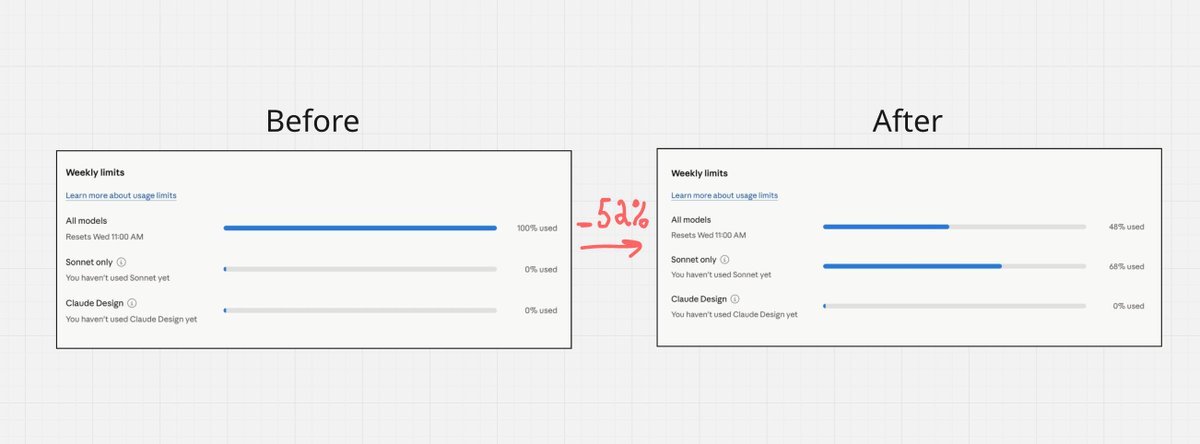
reduje el uso de tokens de Claude Code a la mitad con un solo archivo.
lo medí durante una semana.
el truco: enseñarle a Claude qué modelo usar según la tarea.
> Haiku para trabajo mecánico en volumen.
> Sonnet para investigación y síntesis.
> Opus solo cuando necesita razonar de verdad.
antes: quemando tokens de forma indiscriminada en todo.
después: el mismo output, la mitad del coste.
el setup tiene 3 partes:
1. bloque de delegación de tareas
le dices a Claude que genere subagentes y elija el modelo más barato que pueda con el trabajo:
→ Haiku: tareas mecánicas, sin criterio necesario
→ Sonnet: investigación, exploración de código, síntesis
→ Opus: solo cuando hay planificación real o tradeoffs complejos
dos límites importantes:
Haiku nunca genera subagentes propios (si lo necesita, la tarea estaba mal dimensionada)
profundidad máxima de 2 niveles (padre → subagente → un nivel más)
si un subagente necesita un modelo más inteligente, vuelve al padre en vez de escalar solo.
2. bloque de herramientas preferidas
le enseñas a elegir siempre la opción gratuita primero:
→ WebFetch para páginas públicas (gratis, solo texto)
→ agent-browser CLI para páginas dinámicas o con login (~82% menos tokens que herramientas basadas en capturas)
→ pdf to text para PDFs en vez del Read tool
si Claude repite el mismo patrón constantemente, le dices que lo encapsule como herramienta reutilizable.
3. dos líneas en settings.json
"CLAUDE_CODE_DISABLE_1M_CONTEXT": "1" - evita que cargue ventanas de contexto masivas que no necesitas.
"CLAUDE_AUTOCOMPACT_PCT_OVERRIDE": "80" - compacta automáticamente al 80% en vez de esperar a estar lleno.
solo estas dos líneas ahorran tokens en cada sesión.
el setup completo tarda 2 minutos.
el ahorro se acumula en cada tarea que ejecutas después.
guárdalo.
.@NetworkChuck's overview of what makes Hermes Agent unique is really well done. He's clearly been a power user and done his homework in this video.
Highly recommended if trying to decide if you should try Hermes Agent!