The International Network on Explosive Weapons (INEW) is an NGO partnership for action to prevent suffering from use of explosive weapons in populated areas
Our statement calls out the harm that explosive weapons continue to cause in towns and cities, and call on States to endorse and implement the Political Declaration - including through changes to military policy and practice.
👉 Read the full statement: https://t.co/GuSAOfISsz
Last week our Global Lead @JuCodina delivered a statement to the @UN First Committee on Disarmament and Security 🇺🇳
We urged states not to accept civilian suffering from explosive weapons as “a routine feature of warfare”.
#UNGA81#StopBombingCivilians
Congratulations to Navanethem "Navi" Pillay on the 2026 #NobelPeacePrize! She has firmly and repeatedly condemned the use of explosive weapons in populated areas.
As #FirstCommittee 🇺🇳 gets started, we call on all states to recognise this harm and support clear limits on #EWIPA.
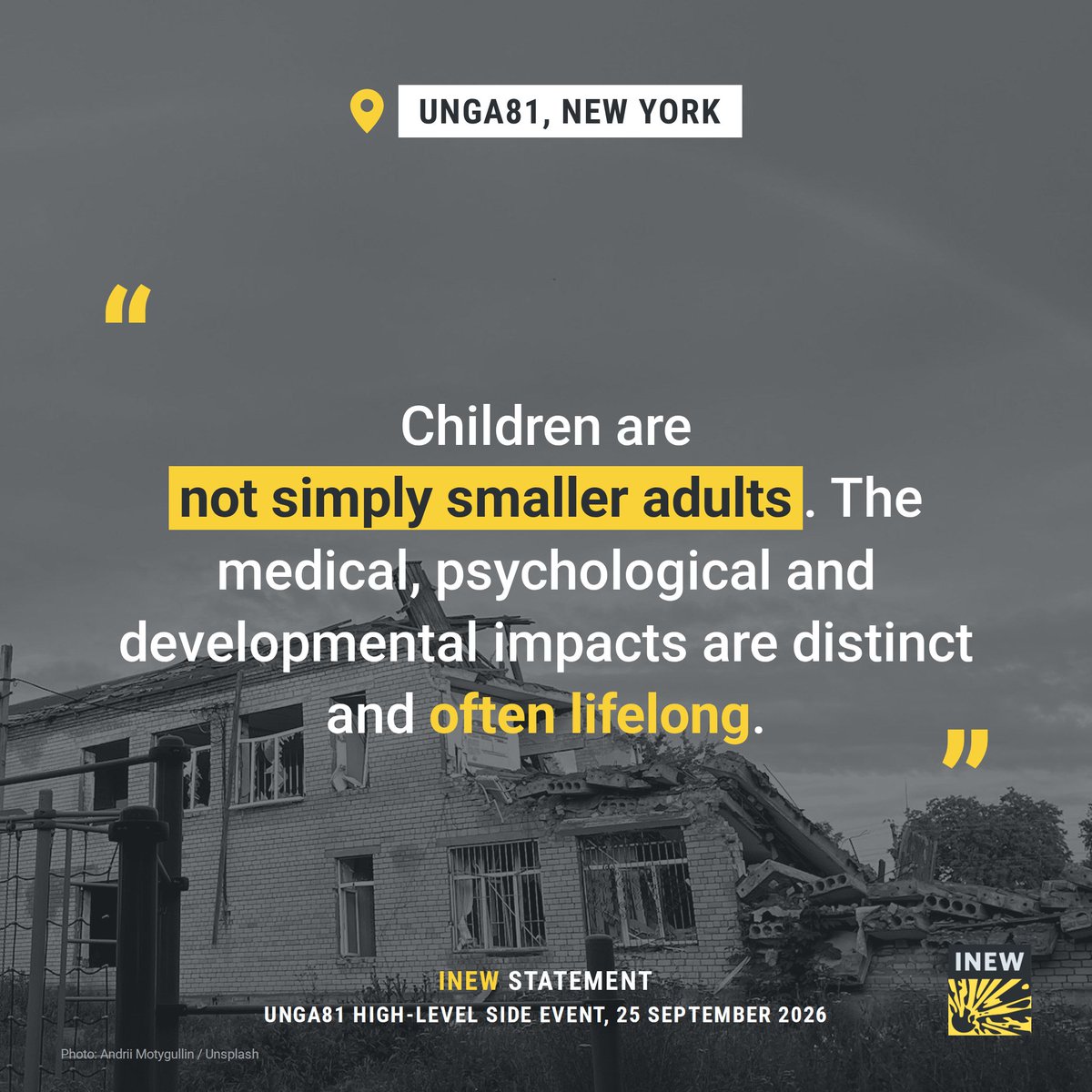
Children are not simply smaller adults. They're more likely than adults to die from blast injuries, and the harm is often lifelong.
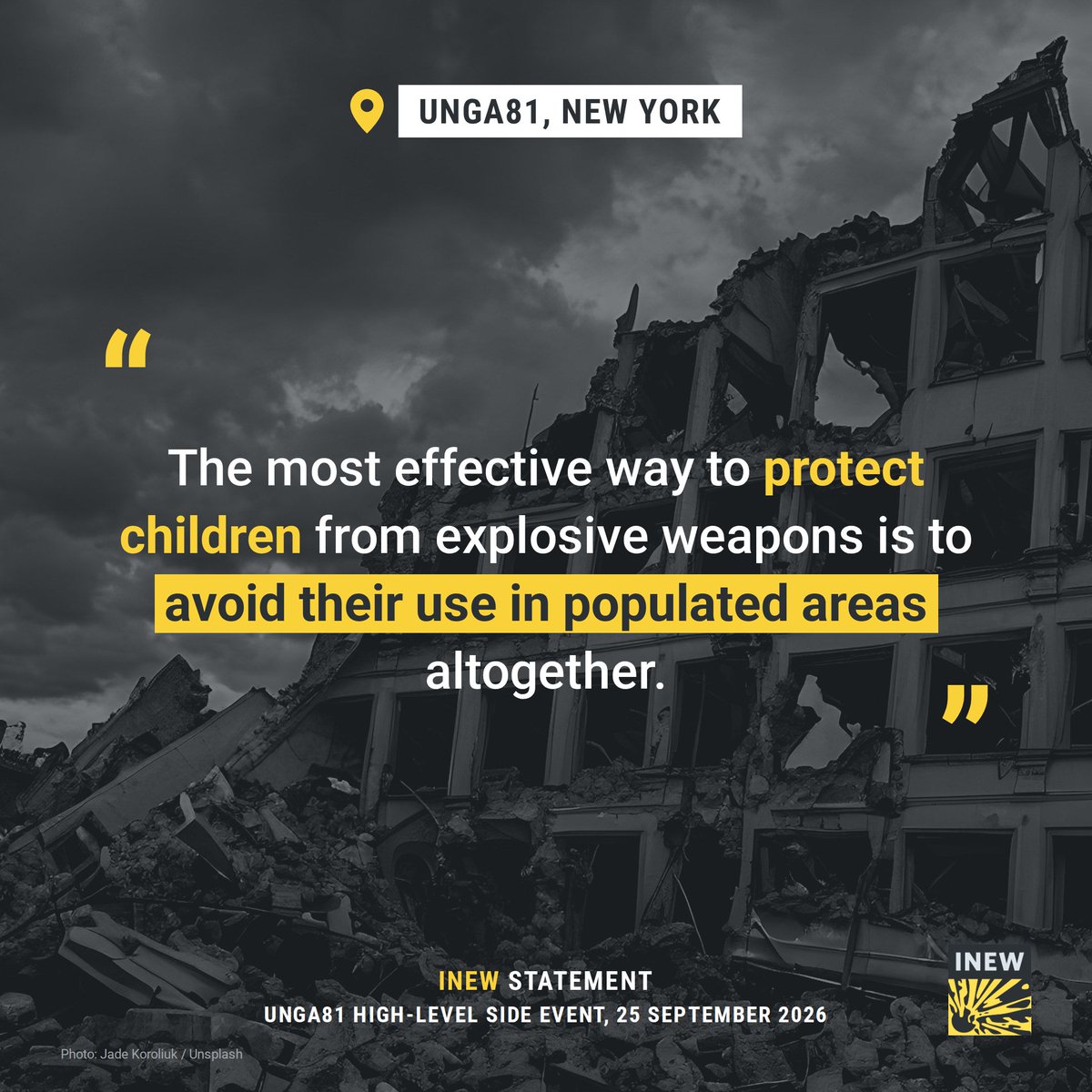
At #UNGA81, @CivCenter spoke on INEW's behalf: the best way to protect children from explosive weapons is to avoid their use in populated areas.
@CivCenter We asked states to: review policy, doctrine and training and develop an implementation plan with specific measures for children, to track civilian harm and use the data in planning, and to report what has changed in practice.
Thanks @NorwayUN@childreninwar@UNICEF and @WarChild
Children are not simply smaller adults. They're more likely than adults to die from blast injuries, and the harm is often lifelong.
At #UNGA81, @CivCenter spoke on INEW's behalf: the best way to protect children from explosive weapons is to avoid their use in populated areas.
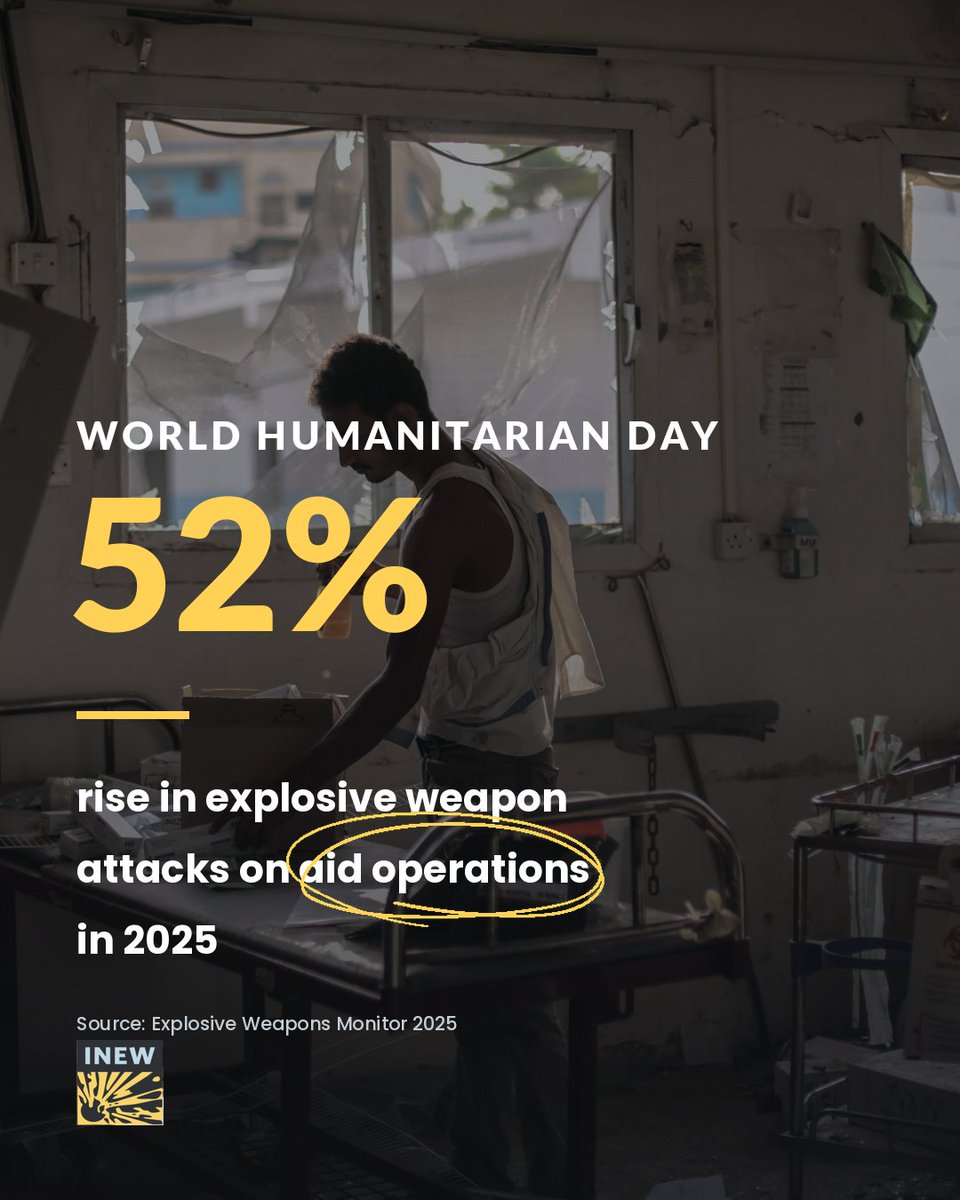
En el #WorldHumanitarianDay recordamos que la violencia contra quienes ayudan es evitable. En 2025, los ataques a operaciones de asistencia aumentaron 52%. @redsehlac como parte @explosiveweapon llamamos a prevenir uso de armas explosivas en zonas pobladas https://t.co/rJ3OZBRtTF
1/ World Humanitarian Day exists because of a bombing: the Canal Hotel in Baghdad, 2003.
23 years on, aid and health workers are still killed by explosive weapons in populated areas. In 2025, attacks on aid operations ⬆️ 52%
1/ World Humanitarian Day exists because of a bombing: the Canal Hotel in Baghdad, 2003.
23 years on, aid and health workers are still killed by explosive weapons in populated areas. In 2025, attacks on aid operations ⬆️ 52%
This harm is not inevitable. The International Network on Explosive Weapons calls on all states to restrict the use of explosive weapons where civilians live, and to endorse and implement the Political Declaration #WorldHumanitarianDay
On World Humanitarian Day, @explosiveweapon warns that aid and health workers are being killed by explosive weapons in populated areas. Read more here🔗https://t.co/lyBft3WBqs
📔A new methodological guide from Explosive Weapons Monitor, @WeaponsMonitor@explosiveweapon, Kobo, and PHR provides practical guidance and tools for documenting civilian harm from attacks on energy infrastructure.
https://t.co/kBciR2shO8
Day 2 of the Second International Follow-Up Conference on EWIPA kicks off in San José
We’re about to start Session 4: From policy to action, focused on operational practices and training to strengthen civilian protection — moderated by @annieshiel.
#StopBombingCivilians#EWIPA