Aaj ka Gyaan: Never ever opt for Passport appointment during time slot of 1-2 PM. No matter what, the PSK employees will sneak out for lunch (majority of them at once) and give you first hand feel of "Babugiri" or beauracracy....
@passportsevamea#beauracracy#AajkaGyaan
My view on J&K Bank👇
1️⃣ Overview
Incorporated in 1938, J&K is an exclusive agent designated by the RBI for carrying out banking business for the Government of J&K and Ladakh. The Bank commands over 65% market share in the UTs of J&K and Ladakh. The Bank has a strong CASA franchise, as almost all government employees in UTs have their salary accounts with the Bank. Some facts:
🔹 Advances/loan book: ₹1,01,221 Crs (Jun'25)
🔹 Network: 20 states, 1,019 branches and 1,124 ATMs
🔹 Loan book split: ~70% (J&K) and ~30% (ROI)
🔹 Sector split: ~70% (Retail) and ~30% (Corporates)
🔹 CASA: ~46%; NIM: 3.7%, GNPA: 3.5% (Jun'25)
2️⃣ The catalyst:
In the last decade, the Bank has struggled with legacy NPA issues amidst a series of shocks including floods in J&K in Sep'14, RBI's AQR, political unrest in 2015-16, NBFC crisis in 2018-19 and Covid-19 in 2020.
In 2 years during FY17-18, the Bank booked ~₹12,000 NPAs. GNPA expanded to 9-11% during this period. However, important thing to note here is that the GNPAs were mostly from outside J&K and in corporate accounts (steel, textile, infra, NBFCs).
The Bank also faced leadership crisis during this time. Stock price reflected this pain and corrected sharply from ₹83 in 2015 to ₹12 in 2020. However, post Covid after leadership change, the Bank is on a cleanup journey.
GNPAs fell from 8–9% to ~4% between FY22 and FY24. For the past six quarters, GNPAs have averaged 3.7%. Here's a trend reflecting improving asset quality and ROE:
➜ FY22: 8.7%/7.8%
➜ FY23: 6.0%/15.3%
➜ FY24: 4.1%/ 18.1%
➜ FY25: 3.4%/17.5%
Now that the asset quality is under control, the Bank aims to achieve 50:50 loan book mix b/w J&K and Rest of India in the next 3-5 years.
Retail sector including housing loans, auto loans, education loans etc. is a priority as this segment has the lowest GNPA% (<1%) among major segments. The management will move cautiously otherwise sticking to high quality large corporates. Here is the latest guidance:
🔹 Advances/loan book: 12% growth annually
🔹 NIM: 3.65-3.8%
🔹 RoE: 16-17%
🔹 GNPA: <3%
🔹 C/I Ratio: <50% (implying faster growth in earnings vis-a-vis interest income)
🔹 Total Deposits+Advances of ₹5L Crs and Net profits of ₹5k Crs in next 5 years
Pointers that add comfort on the management's ability to execute this:
➜ Legacy issues are now cleared (no stress in major corporate accounts)
➜ Professional management with little interference from the Govt./promoter
➜ The Bank has maintained healthy NIMs across cycles
➜ J&K tourism exposure is <1%, book is largely govt. employees focused
3️⃣ The valuation:
Despite superior retail focused CASA franchise, higher/stable NIMs and RoE, J&K trades at discount to many regional peers (PBV of 0.8x vs. 1.6-1.8x for some peers). The current valuation provides a good MOS with re-rating opportunity on stable execution.
4️⃣ What can invalidate the thesis?
⚠️ Fresh slippages and GNPAs rising above 4%
⚠️ Significant decline in CASA ratio and resultant pressure on NIMs
⚠️ Major socio-political upheaval outside the control of the management
Disc: Invested (Part of the recommendations to research desk clients)
@sahilbhadviya Brings back memories. I was also there in Pune DC where he spoke on design thinking/systems. Turns out, he was way ahead of the industry curve.
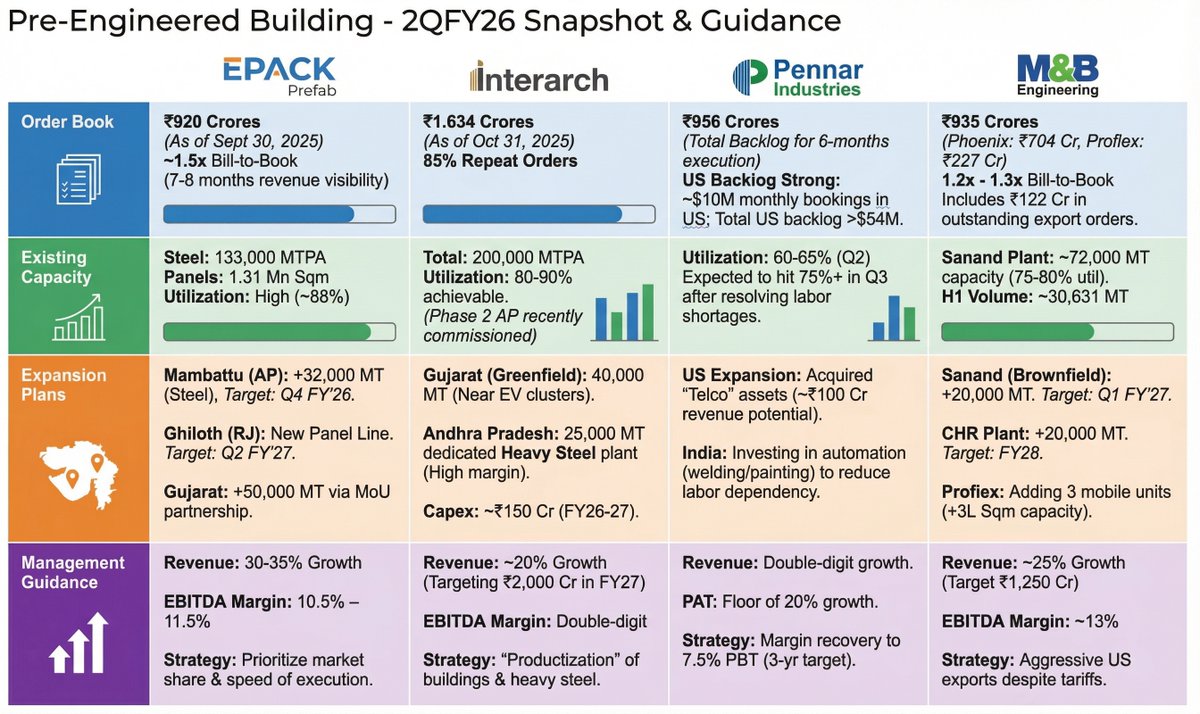
PEB industry insights 👇
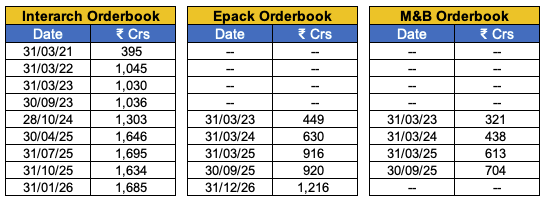
Orderbook momentum across players in the last 2-3 years:
• Interarch: +60–65%
• Epack: >2.5x
• M&B: >2.0x
In PEB, order visibility is typically 7–9 months and rarely stretches beyond 12 months — implying a revenue-to-orderbook ratio of ~1.3–1.6x.
Epack and M&B broadly operate within this range.
Interarch, however, hovers at ~1.1–1.2x
(likely due to longer-duration projects).
Interarch’s orderbook has been largely stable at ~₹1,650 Cr. Without a meaningful pickup here, sustaining the recent growth pace becomes difficult.
In that context, FY27 guidance of ~15% looks realistic, not conservative.
Upside surprises are possible, but maintaining FY26 growth rates into FY27 appears unlikely.
Disc: No reco
Housing finance space 👇
Aptus’ NPA levels are broadly in line with peers.
But one metric stands out — 30+ DPD.
Aptus is trending around ~6.5%,
while most peers remain range-bound at ~3.5–5%.
Slides comparing Aptus vs Home First highlight this divergence.
The likely reason could be customer mix
Aptus has a heavier skew toward self-employed borrowers, while peers have relatively higher salaried exposure.
Worth tracking how this evolves over the next few quarters.
Disc: No reco
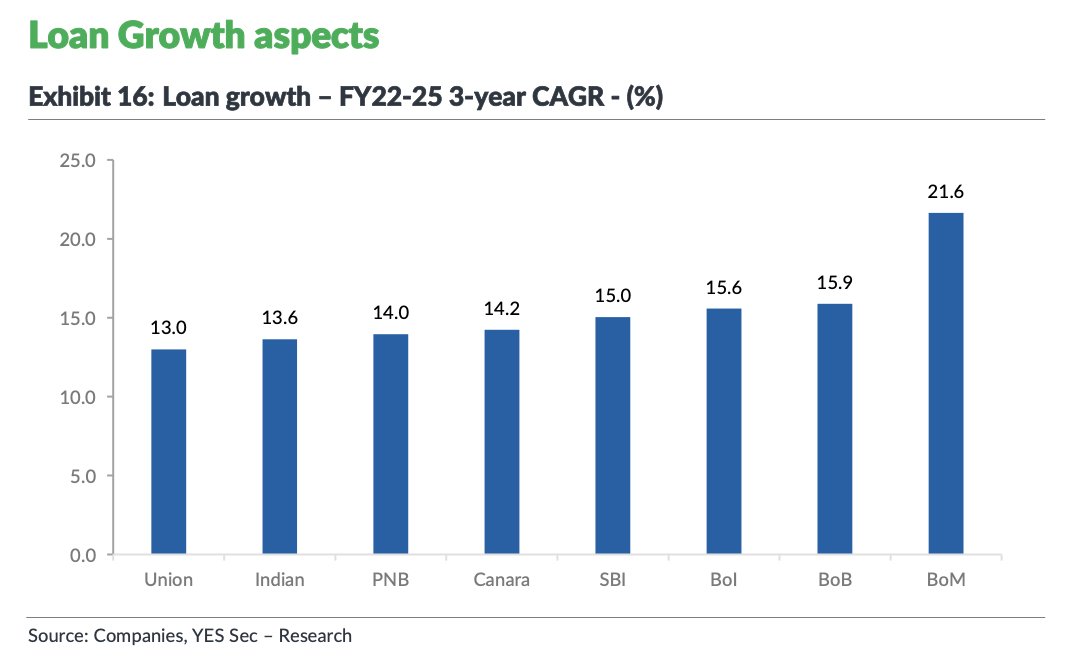
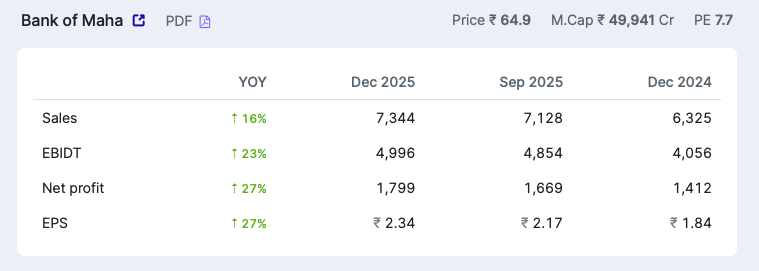
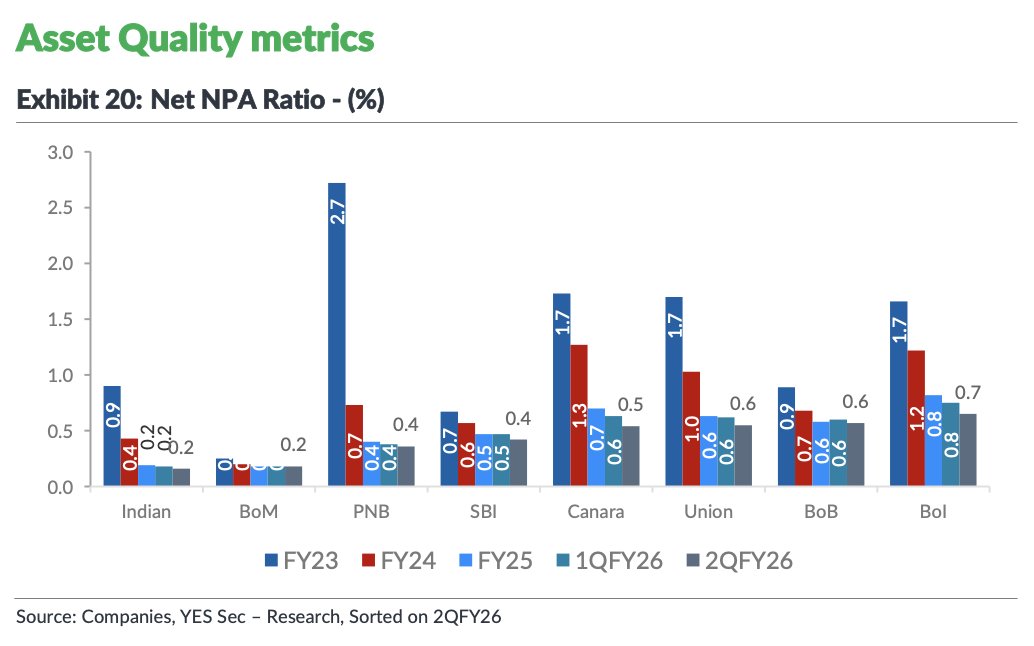
@Exponential23 Bank of Maharashtra also seems to be outperforming other public sector banks on these metrics
CASA is ~50%
Q3 NIM% ~3.87% beating guidance
Cost to Income ~37%
ROE ~23.8%
BoM has performed well in 3Q👇
Retail advances: +36% YoY
Corporate advances: +19% YoY
Yield compression is an issue across the board, but PSBs are doing better vs. private banks
Disc: No reco
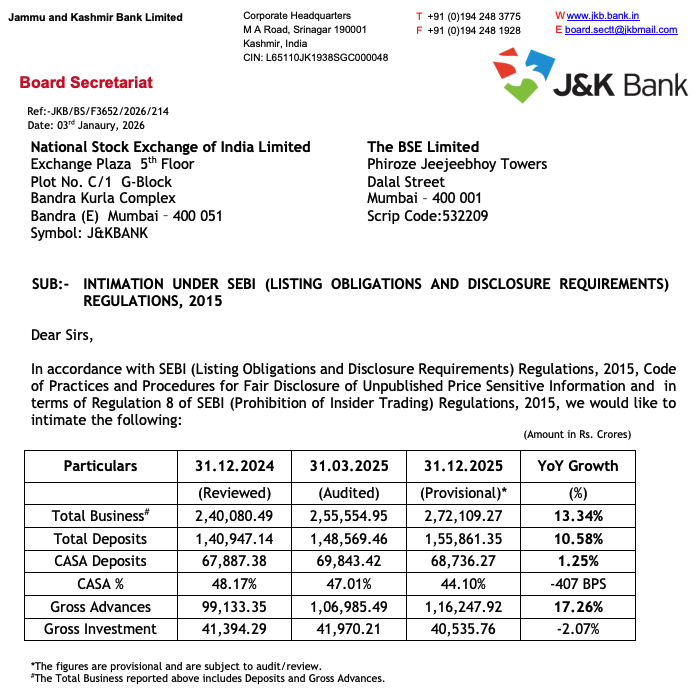
Seems like a good 3Q show for J&K Bank
Gross advances: ⬆️ ~17%
Deposit growth: ⬆️ 10%
While these numbers are trending in line, CASA is struggling
Hoping for good asset quality numbers
Disc: No reco
During a behavioral finance class, Prof. Sanjay Bakshi introduced the concept of 'Physics envy', which explained a lot about what goes on in the finance world. Having said that, approximate projections of 2-3 years are good to have to get a sense of the trajectory. Beyond that, it's just self-delusion.
At some point of time (in coming years), I really want to understand how analysts come up with prediction of forward looking revenues for FY 28, FY 29, FY 30 and ahead.
I'm guessing in some cases, even companies can't predict how they will perform in the next quarter.
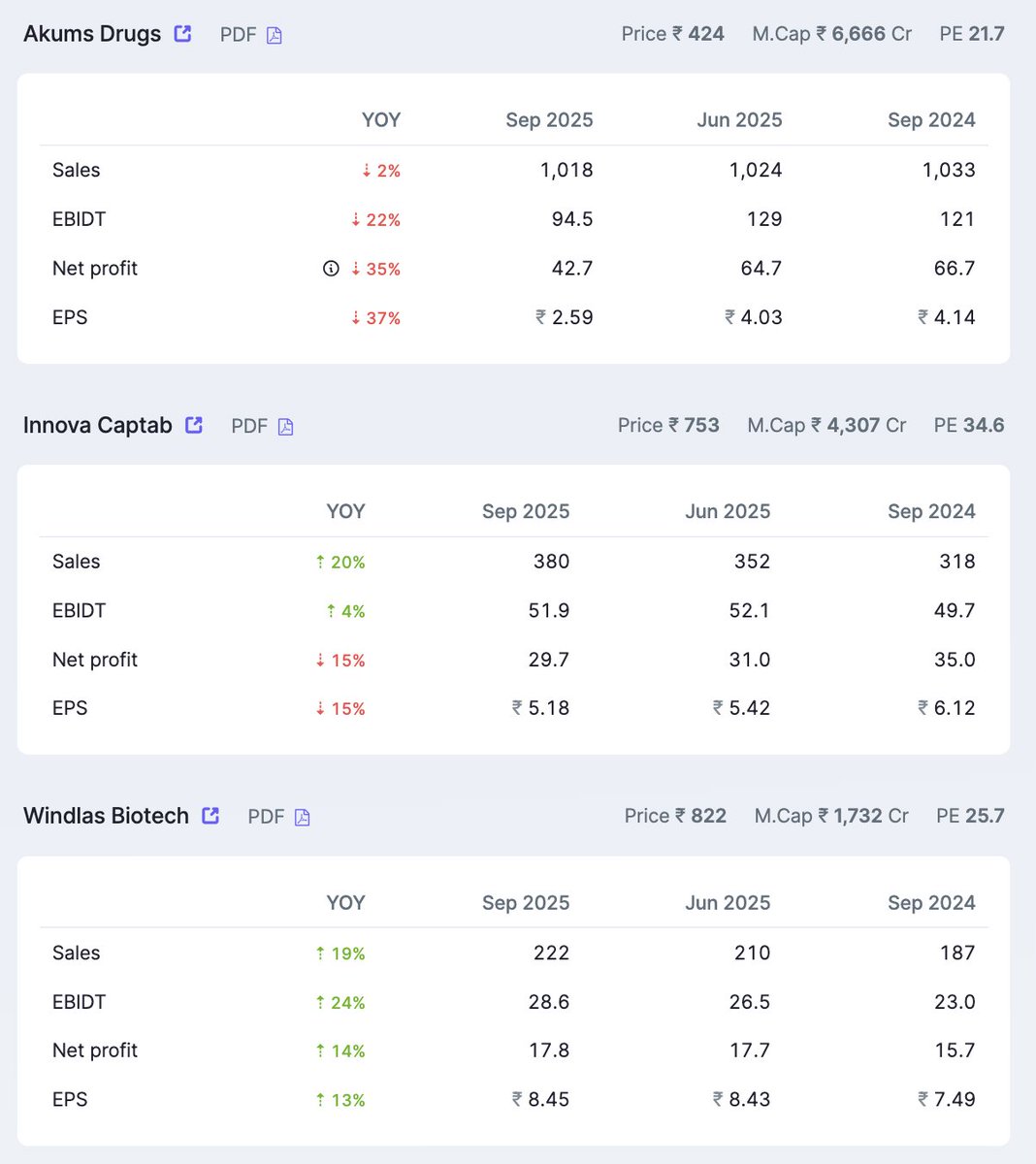
ICICI on Akums👇
While declining API prices have affected all the players, Innova Captab and Windlas have managed it better
Moreover, both players are outpacing Akums in terms of growth
Disc: No reco
Domestic CDMO 2QFY26 👇
With IPM growing ~9–10%, CDMOs should ideally compound at ~1.5x that pace as outsourcing continues to rise — a structural tailwind for the sector.
Yet Akums, despite being a market leader, continues to lag peers on both volume growth and margin performance.
Disc: No reco
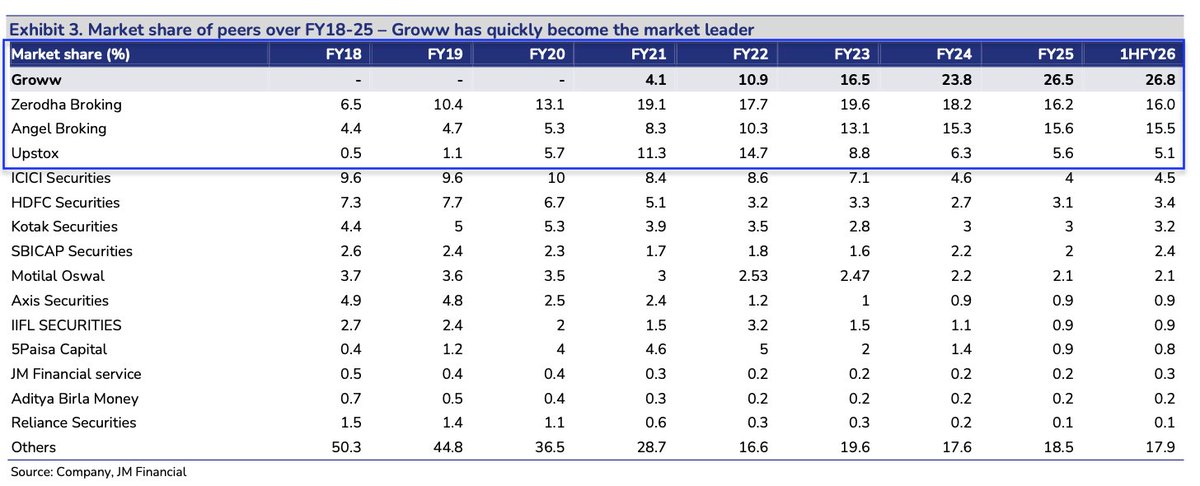
Value migration in broking 👇
What Groww has achieved is remarkable
It started as a wealth platform and scaled into one of the largest brokers in the country
But the economics matter
The bulk of wealth management revenue sits in the top 1–3%ile and serving HNIs/UHNIs needs a very different DNA
Pure broking revenue is inherently volatile, and Groww’s valuation has outpaced current business realities
Disc: No reco (Image source: JM Financial)
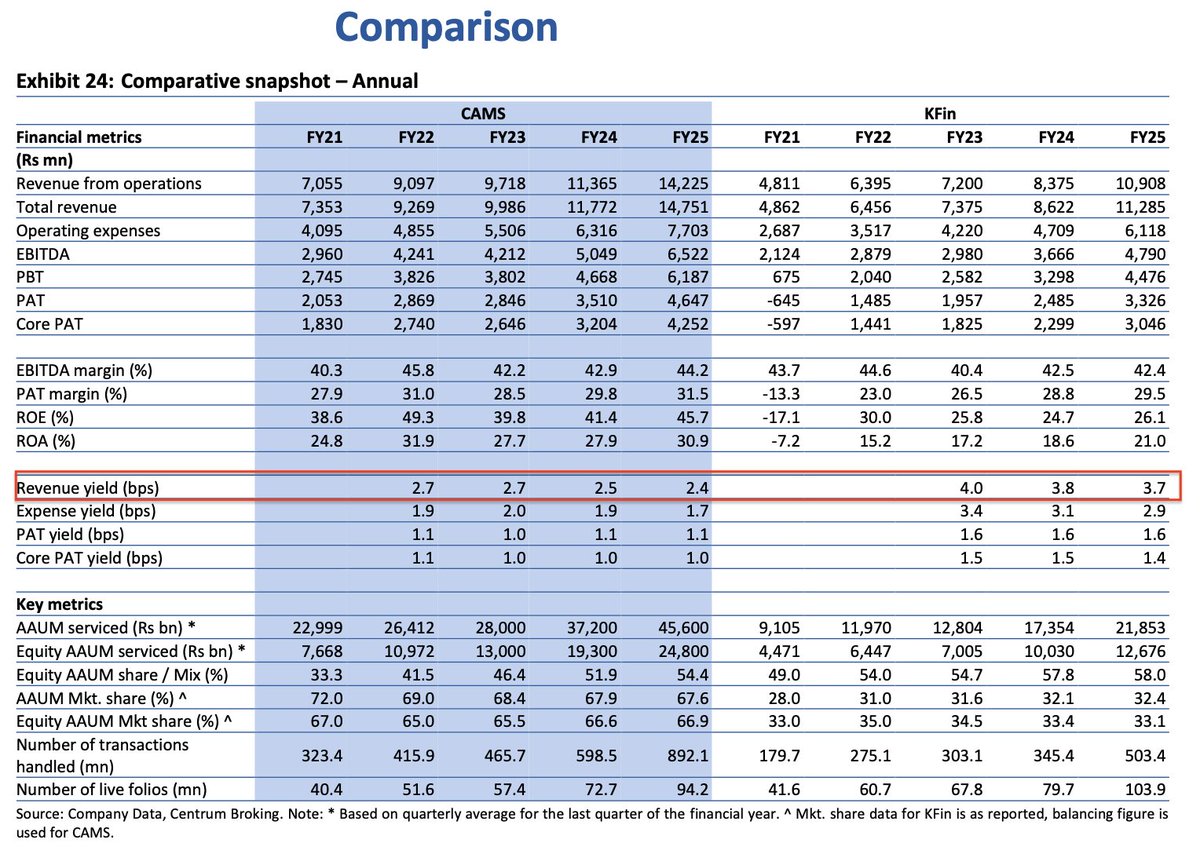
CAMS vs. Kfin👇
Yields are higher for KFin as it services smaller clients
There is a telescopic pricing structure for RTAs, wherein yields are lower with a higher AUM base
That's why revenue growth trails the AUM growth. SEBI's TER regulation further puts pressure on yields
Good to snap up during down cycles, dangerous in euphoria given shallow cyclicality
Disc: No reco
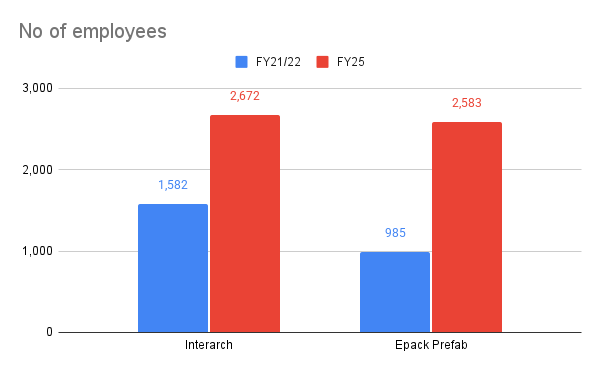
PEB industry insight👇
One of the trends that confirms the high growth in the industry is hiring
Look at Interarch and Epack Prefab
In the last 2-3 years, the employee base has increased substantially
Disc: Invested in Interarch (No reco)