Slow and expensive building used to do a lot of leadership's job for free. You couldn't build everything, so the debate about what mattered happened by default.
That filter is gone. now the steering has to be deliberate, and "look how much we shipped" means a lot less than it used to
https://t.co/iAx3Eg7qeA
Every AI accountant fails the same way: fluent, confident, unverifiable. The fix isn't a better model. It's a data structure accountants invented in 1494. https://t.co/R9vH8RLSTk
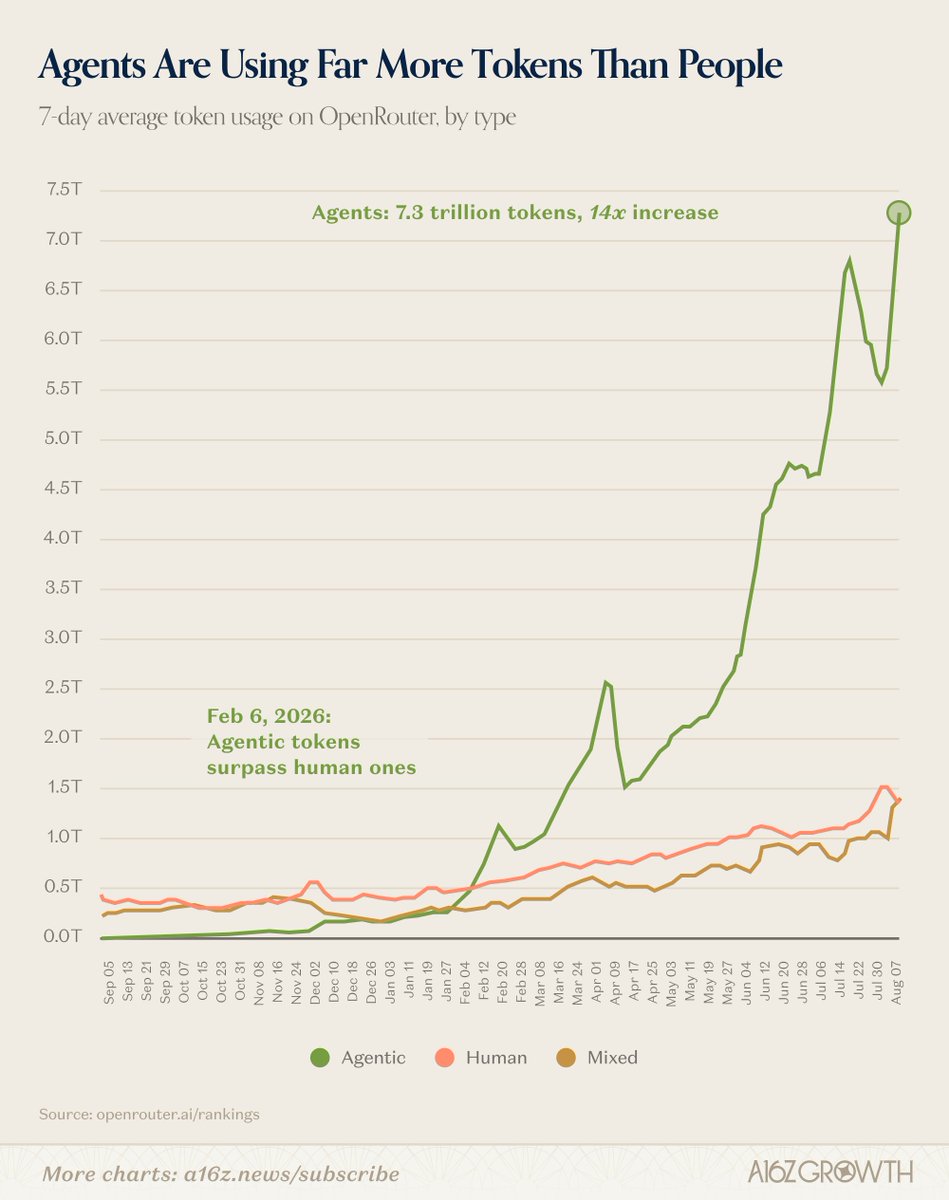
New data from a16z: agents now burn nearly 5x the AI tokens people do, up 14x since February. The shift from human spenders to machine spenders isn't coming. It's already the majority.
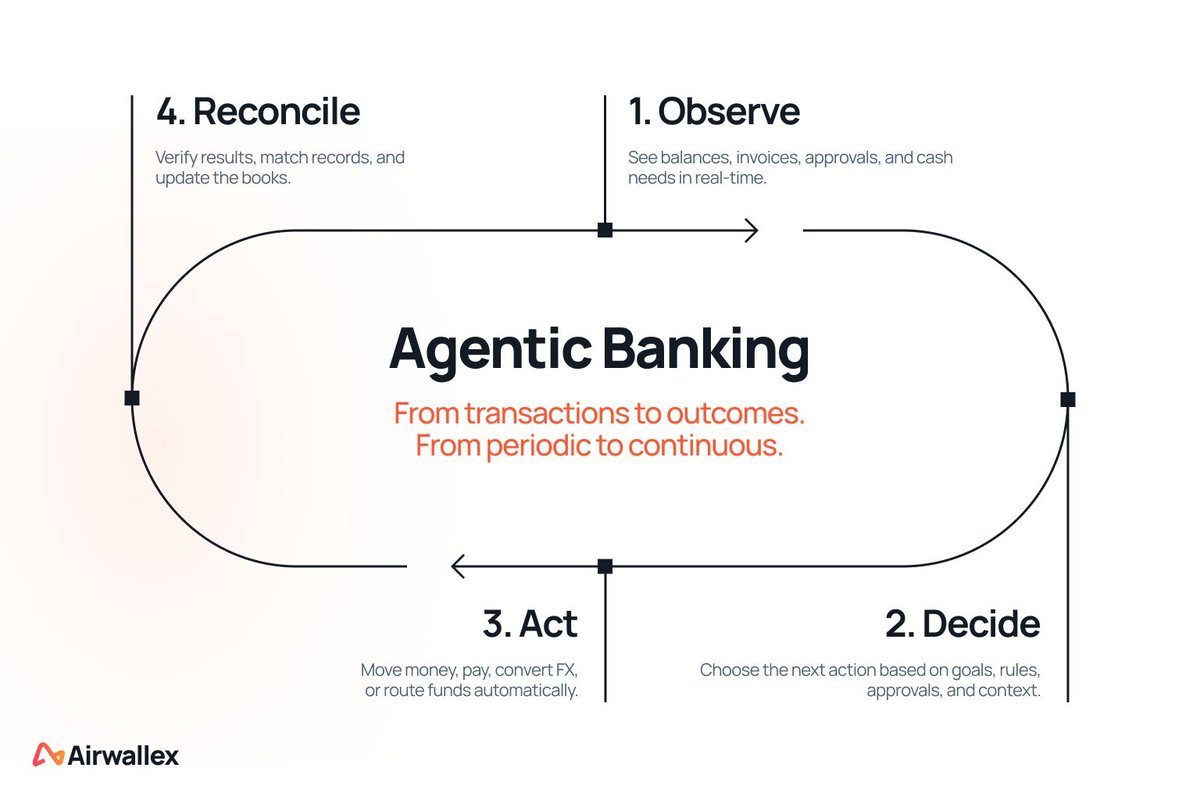
Visa, Mastercard, Stripe and Coinbase let AI agents pay for things on their own. Airwallex just let them move company cash. But every accounting ledger for 500 years has assumed a person decided to spend the money. Here are the four places that breaks. https://t.co/O5EnHv7rMz
Visa, Mastercard, Stripe and Coinbase let AI agents pay for things on their own. Airwallex just let them move company cash. But every accounting ledger for 500 years has assumed a person decided to spend the money. Here are the four places that breaks. https://t.co/O5EnHv7rMz
Humans are already the minority spender on AI too. Every one of those agent tokens is money a company spent without a person deciding to.
And every accounting ledger for the last 500 years assumed a person made that decision.
Humans are the minority user of AI
Agents burn nearly 5x the tokens people do, up 14x since February
More charts in State of Markets II: https://t.co/MTaxKUxa2w
@WilliamPrater_@t0finance Totally possible to DIY with AI for cheap. The question is whether your time as the company's accounting engineer is worth more than $599/mo. For some founders it isn't, and that's fair.
Most AI accountants are just QuickBooks with a chatbot on top. This is what replacing it looks like.
One sample quarter: 207 messy bank lines in, closed books out. Built at @t0finance
@aiaccountant1@t0finance 100% agree. Same vendor, different account depending on why. Amazon can be AWS hosting or office chairs. The sort step uses context beyond the counterparty (who spent it, what it's linked to, past decisions) to get it right. We will write up how soon.
Step by step:
1. Ingest the bank feed, messy descriptions and all.
2. Sort each line into what it actually is: a payroll run, a Stripe payment, an AWS bill.
3. Write rules. The AI proposes each one, it's tested against past transactions, and a person approves it.
4. Post. Every journal entry traces back to the bank line behind it.
5. Validate. Cash matches the bank, clearing accounts empty to zero, and the wire with no invoice waits for a person instead of getting guessed.
Jev is the AI model your feed won't shut up about this week. Ironic, because it's the first one that won't talk. What it's for: https://t.co/i4sMK59en8
Introducing the "slop grenade": an AI PR the author approves without reading, so the reviewer wastes their afternoon.
Laziness used to look like not enough output. Now it looks like too much, and the cost lands on whoever's downstream.
Still your merge. Read it.
Lazy work used to mean too little output.
Now, with AI, it often means too much and more work for everyone else.
@tobi call it "slop grenades."
A "Slop Grenade" is when you let AI produce the work and pass it on without adding any value (including checking it).
Someone else has to wade through it, catch the mistakes, and clean up the mess.
You save time and look productive but someone else pays for it.
Anthropic invented a friendlier margin metric. You just don't measure yours. The fix isn't a better metric. It's books that can read a meter. https://t.co/31PGQkTadJ
@iainherd No. The ideas are public though - I write up the architecture on our blog and here - but the product's hosted. Stay tuned for more in the near future!