I wrote “A Gospel-Centered Approach to Race and Ethnicity” a few years back, but today it was published in the Journal of Sociology and Christianity
https://t.co/wV83qCMmmg
The simplest argument against praying to the saints is that Christianity is a revealed religion. We have no authority in ourselves to determine how prayer works. We must look to what God has told us about it. That means looking to the period of divine revelation.
When we do so, we discover that asking for the intercession of deceased people has never been a thing. It is nowhere taught or modeled in God's revelation, despite hundreds of passages about the nature of prayer.
Noah didn't pray to Abel.
Abraham didn't pray to Noah.
Moses didn't pray to Abraham.
David didn't pray to Moses.
The latter prophets didn't pray to David.
The apostles didn't pray to Old Testament saints.
Irenaeus didn't pray to the apostles.
And so on, until gradually, by a slow process of accretion, the surrounding pagan practice began infiltrating the church. This process is gradual, such that in the medieval era you have prayers that would have scandalized the church fathers (petitions for Mary to propitiate Jesus, etc.).
The Protestant position is simple: we have to test these various developments in church history by divine revelation, just as we test a lesser authority by a greater authority, or a copied letter by the original. All we want to do is pray as God revealed we should.
My three favorite biblical prayers: Nehemiah 1, Solomon in I Kings 8, and the Lord’s Prayer (Matthew 6:9-13). All wonderful models for how to pray.
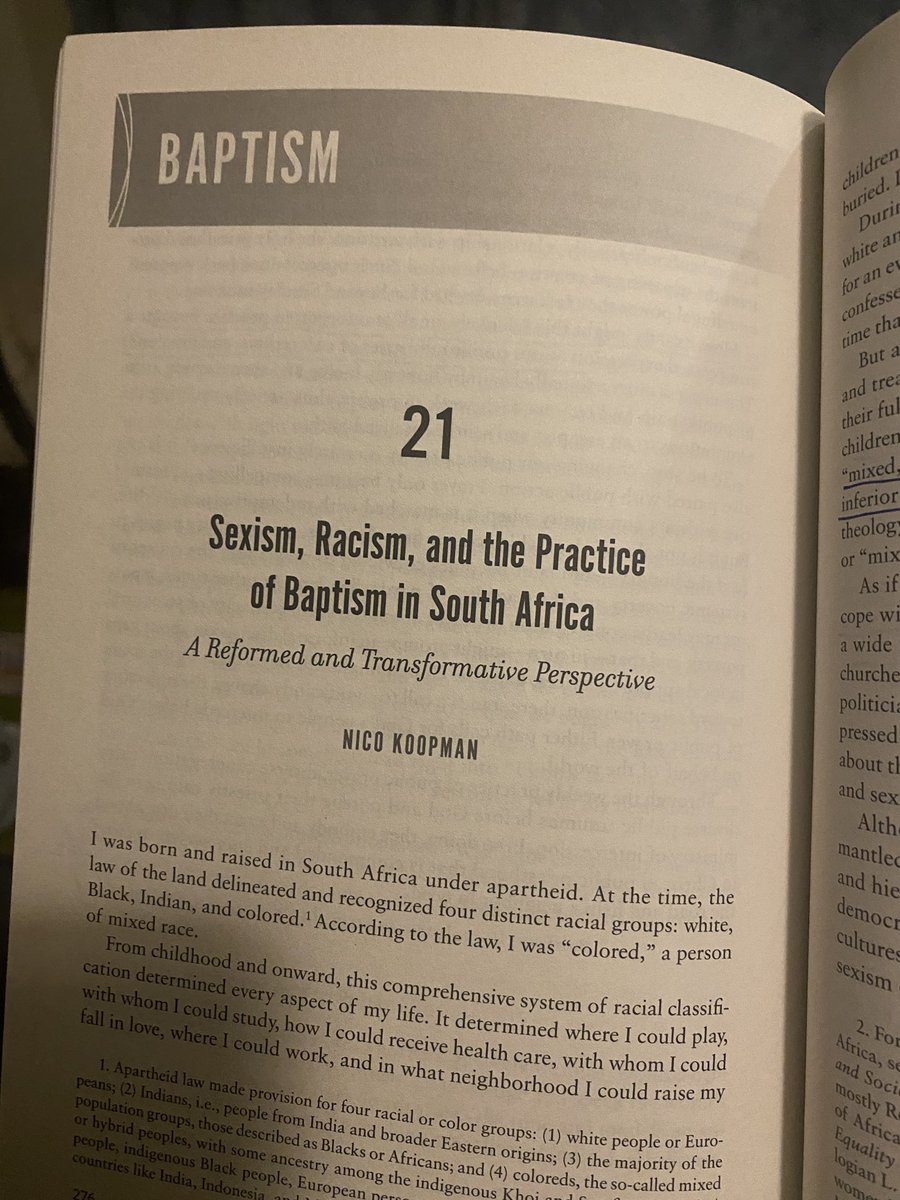
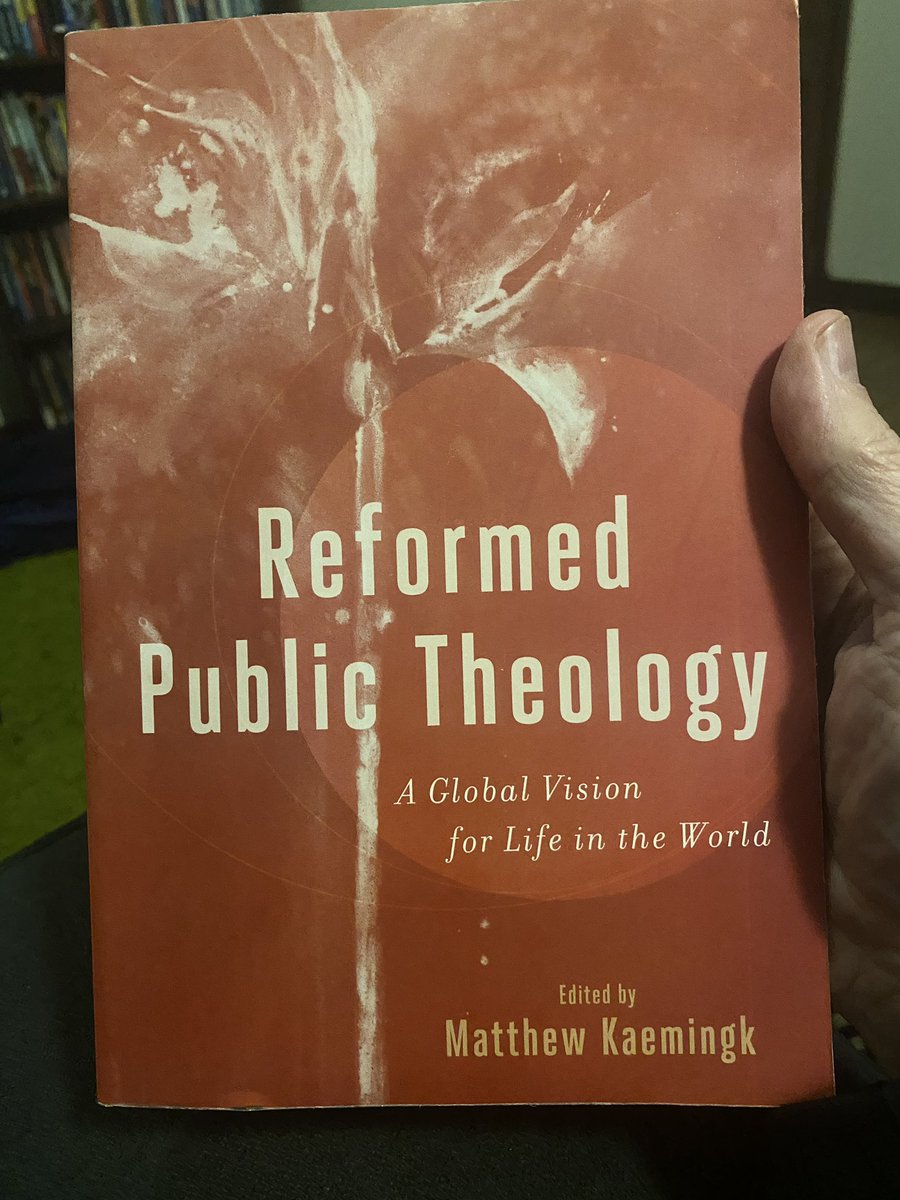
I’ve been reading a chapter each evening, and this book has expanded my sense of how the distinctives of the Reformed faith impacts a variety of topics
Tonight it was the connection between baptism and reconciliation - never thoughtfully put those together before
In the story of Moses's birth, Pharaoh orders all the new baby boys killed but allows the girls to live. He doesn't see women as a threat or important enough to kill.
So it's funny how God highlights only women saving Moses: the midwives, his mother, his sister, and the princess
🧵 1/ Grace restores nature. But the surprise of grace is that it restores nature by inverting its logic. The kingdom of God is God's restorative work; in it the poor are rich, the weak are strong, the meek inherit the earth, the last are first, greatness is in servanthood.
Jonathan Leeman: "So wives are called to submit in the same way children are called to submit." No, they are not. Where do they get this from? The same way? Sorry, @sheilagregoire it looks like you have another book to review. https://t.co/F5OdjCv3k6
The same Dabney who wrote what’s in the picture below also wrote this:
“While I greatly doubt whether a single Presbyterian negro will ever be found to come fully up to that high standard of learning, manners, sanctity, prudence, and moral weight and acceptability, which our…
We need to rethink worship in every generation. What Calvin and the Puritans did for their time, we must do for ours.
Let me make this point emphatically: Sola Scriptura does not mean traditionalism. It doesn’t mean adhering blindly to the models of the past. 1/
In the NT, Jesus pronounced the blessing of God on infants (Luke 18:15–17). Jesus wasn’t just showing affection for the babies. Blessing is a very serious matter in Scripture. In blessing, God places his name on his people, as the high priest did in Numbers 6:27. 1/
“Too often presentations of Christianity can look awfully suspicious as a call to a conversion not to the universal claims of Christ but to an assimilation of a particular nation’s culture or to another philosophical system.” -@corycbrock & @GraySutanto, 𝘕𝘦𝘰-𝘊𝘢𝘭𝘷𝘪𝘯𝘪𝘴𝘮
Tim Keller’s definition of the gospel:
Through the person and work of Jesus Christ, God fully accomplishes salvation for us, rescuing us from judgment for sin into fellowship with him, and then restores the creation in which we can enjoy our new life together with him forever.
Ethiopia was the only African country successful to resist European colonization.
Women marched alongside men to the battle at Adwa in 1896. Just like their men, Ethiopian women were ready to sacrifice themselves to prevent colonialists from sneaking into their country, thus forcing their children to live in servitude.
I remember someone marveling about how Jonathan Edwards spent 13 hours a day in his study. I’ve never been comfortable with that as a model.
Sadly, Edwards was only able to spend countless hours working in his study because others spent countless hours working in his fields.
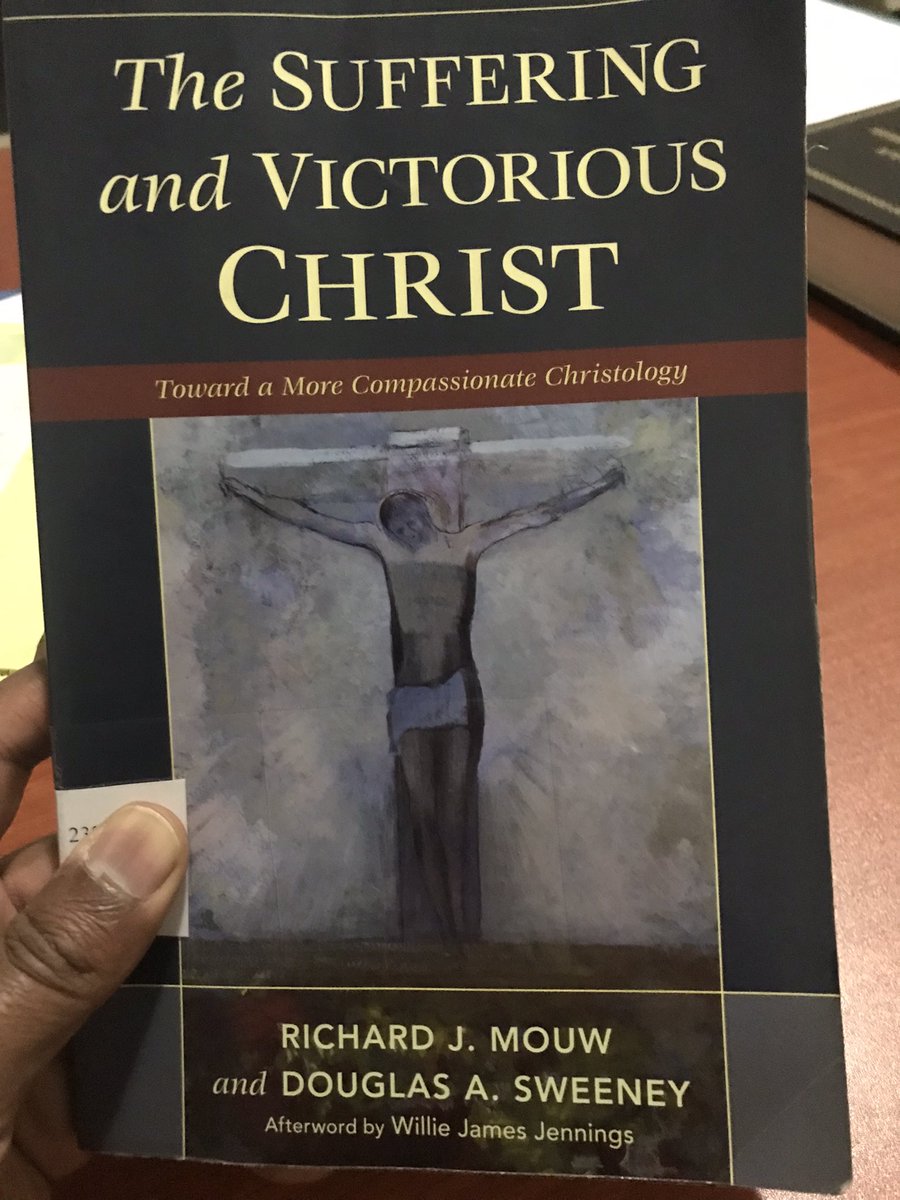
*The Suffering and Victorious Christ* by Richard Mouw, Douglas Sweeney & Willie James Jennings is an excellent prolegomenon on Compassionate Christology (@BakerAcademic).