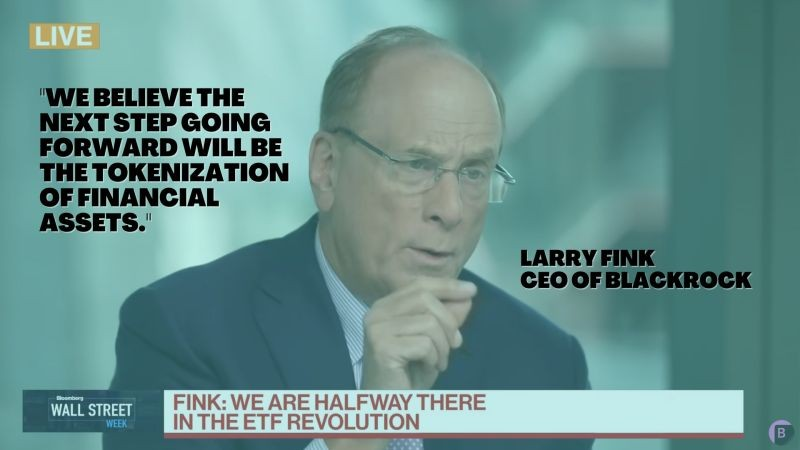
1/ 🚀 Tokenization & blockchain are the future of finance. Larry Fink (CEO, BlackRock) is calling it the "next big thing," likening tokenized assets to the ETF revolution. But how do we make this tech work for real? Let’s talk about $DUSK and why it’s ahead of the curve. 🧵👇
So uh, The Dusk Intern sat in on the @binance#AMA with $Dusk CTO @HeinDauven, finally understanding why TradFi settlement feels like using dial‑up internet in 2026.
Spoiler: it’s because it literally runs on 1970s infra
Here’s what he learned before HR tells him to log off🧵
The Wallet workspace goes even further:
• Portfolio 📁
• Transfers ↔️
• Bridge 🌉
• Payments 💸
This matches their wallet + interface repos.
They’re building a native wallet experience, not relying on external tools.
Curious what it takes to bring real financial markets on-chain?
@HeinDauven covered Dusk’s focus on RWAs, compliant privacy, and what makes Dusk different from other networks in yesterday’s AMA with Binance.
Listen to the recording below 👇
Exactly. One canonical issuance + settlement layer, many liquidity venues.
Dusk Trade is one such venue: https://t.co/QRRZzRs6iV
Dusk Trade is built to pull liquidity from multiple chains, using DuskEVM as the issuance layer, with final settlement on Dusk.
Our strategic partnerships with @chainlink & @npex are key for cross-chain bridging and the legal distribution & issuance of regulated assets, while we as @DuskFoundation provide the infrastructure. $DUSK
Dusk Trade waitlist is now open.
Our regulated RWA trading platform, built with NPEX, a licensed exchange with €300M AUM, bringing tokenized assets and funds on-chain.
Sign up for a chance to win up to $500 in RWAs 👇
The Dusk intern saw this coming yesterday already.
Now he signed up instantly.
He front‑ran the form like it was airdrop season.
#DuskTrade $DUSK #RWA $TDI
🚀 The $Dusk Trade waitlist is now live
Access tokenized real‑world assets in a fully licensed, EU‑regulated environment.
💰 Join the waitlist for a chance to win up to $500 in tokenized RWAs.
👉 https://t.co/4196wcAPLQ
#DuskTrade $DUSK
Wall Street Is Finally Catching Up… and Dusk Was Ready All Along
The New York Stock Exchange has just made an announcement that’s hard to ignore:
a platform dedicated to tokenized securities, featuring 24/7 trading, near-instant settlement, and funding through stablecoins.
For many, this feels like a breakthrough. For others, it’s simply confirmation that the future of finance has already begun.
For years, the tokenization of stocks and ETFs has been described as the next major evolution of financial markets.
Now, the NYSE is no longer talking about experiments, but about real infrastructure designed to operate continuously, free from the constraints of legacy systems.
What Wall Street is looking for today is clear: tokenized financial assets, always-on markets, fast execution, and strict regulatory compliance.
These requirements are demanding, but unavoidable if institutional players are to fully embrace this shift.
This is exactly where @DuskFoundation stands out. The protocol didn’t wait for this announcement to position itself.
It already offers native issuance and settlement of securities through #dusk Digital Securities, while integrating privacy-preserving smart contracts a critical feature often overlooked, yet essential for regulated institutions.
$DUSK also benefits from a strong regulatory head start.
The project was built from day one to comply with European frameworks such as MiFID II and MiCA, and works closely with NPEX, a regulated Dutch multilateral trading facility.
On top of that, the integration of the EURQ stablecoin, issued by Quantoz, enables compliant and stable on-chain funding.
While the #NYSE is still seeking regulatory approval to bring its vision to life, Dusk is already operating within established legal frameworks.
When the world’s largest exchange begins building exactly what a protocol was designed for from the very beginning, it’s no longer noise.
✅ DuskTrade is real
The Intern’s hunch about a native DEX layer wasn’t just speculation.
The HTX space confirmed it: DuskTrade is coming, and it’s built for privacy-native trading.
No wrappers. No leaks. Just encrypted swaps.
$DUSK feels like it skipped the hype cycle and went straight to execution.
2018 origin.
Regulatory-first design.
RWAs, compliant EVM, institutional partners.
Not loud.
Not flashy.
But built for where crypto is actually going.
@DuskFoundation#DUSK
The $Dusk Intern, accidental alpha discovered today!
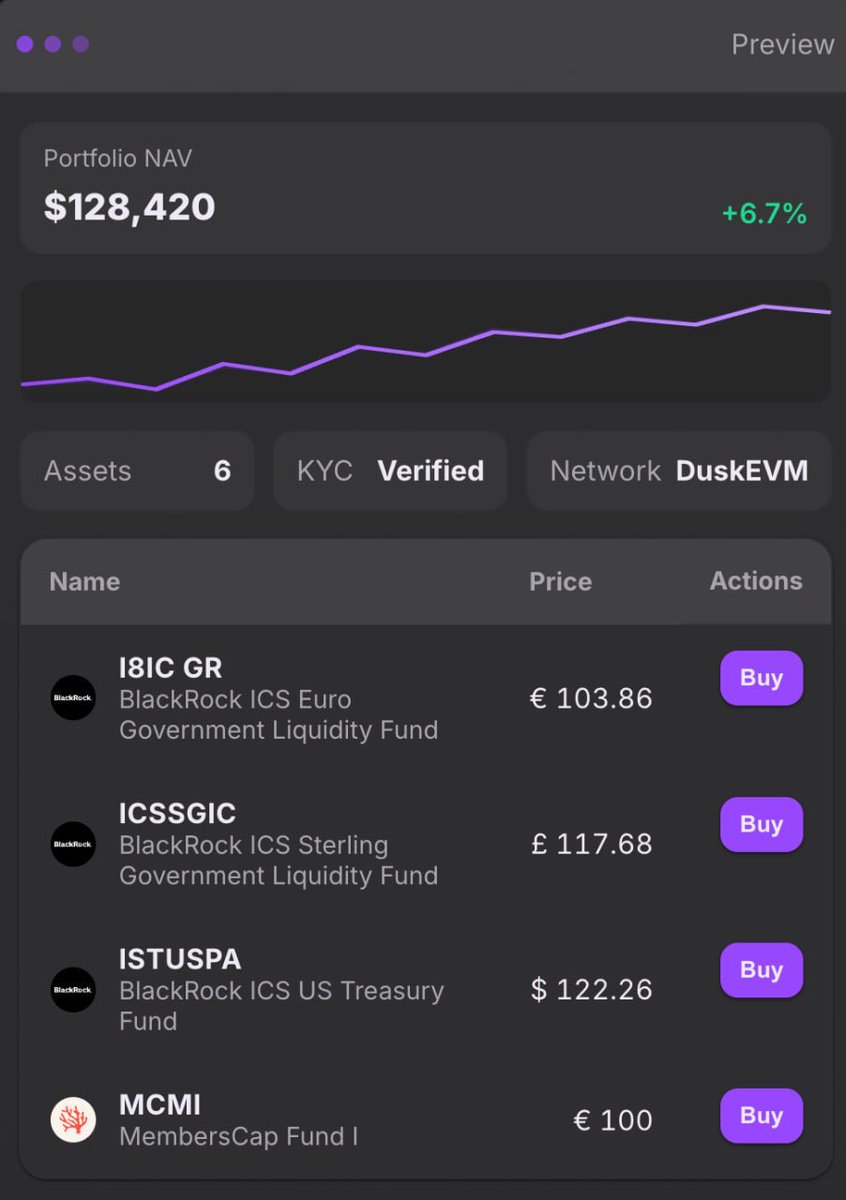
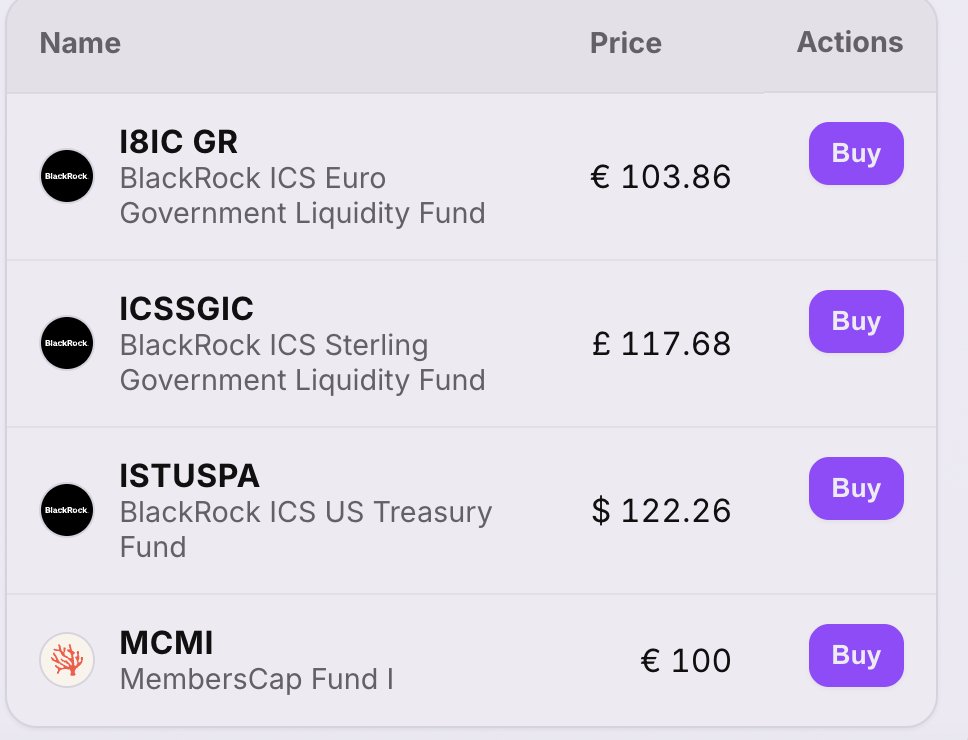
So uh… someone “accidentally” leaked a sneak preview of Dusk Trade today.
And suddenly the #MMF experiments on #DuskEVM make a LOT more sense.
Read more below 🧵⬇️
After 7 years of work, building an L1 (with #privacy and compliance baked in) and an EVM-compatible L2 (for real-world adoption), $dusk is launching #DuskTrade: one of the first DEXes where you can trade tokenized #RWAs: bonds, MMFs, ETFs and eventually stocks.
#tokenization
There’s a reason this stablecoin fight suddenly feels proper and it’s because its hit a nerve.
Banks are earning roughly five percent risk free by parking money at the central bank. They do nothing for that yield. No lending, no innovation, no service. Just privileged access. Meanwhile normal people are offered basically nothing on their savings. Zero point something percent and told to be happy about it. LOL.
Since 2008, banks have been paid trillions simply for holding reserves. That money did not reduce national debt. It did not flow back to households.
Now stablecoins show up and for the first time that model gets questioned. Because suddenly you can hold digital dollars backed by treasuries and cash equivalents and actually earn something. Simply just yield that already exists, finally being passed through. And banks hate it.
They don’t hate it because it’s unsafe. Not because it is reckless. But because it threatens deposits. And deposits are cheap funding. Lose those and the whole machine starts to screech.
Even the bank CEOs are saying it out loud now. Trillions at risk. Customers might move. Capital might leave. That is not a safety argument. That is fear of competition. They are quite literally, shitting themselves.
Instead of saying let us compete, let us offer better savings rates, let us modernise, they run to lawmakers. They push for rules that stop crypto companies from paying yield. Not regulate it. Not supervise it. Just block it.
Same assets. Same treasuries. Same cash. But one side gets paid and the other is told no. That is not consumer protection. That is protection of margins.
What really gets me is the language used. They say it is about stability. About trust. About keeping people safe. But if that was true, we would be talking about transparency, reserves, audits, redemption rights. We would be talking about how to do this properly. Instead the message is simple. You are not allowed to earn.
Because if people realise their money can work without being trapped inside a bank, the illusion breaks. The idea that banks are the only safe home for cash starts to look shaky.
This is bigger than crypto. This is about who controls yield in the modern financial system. For decades the answer has been banks, quietly, by default, backed by policy. Stablecoins just made that visible. And once people see it, they do not unsee it.
Politicians need to understand this too. People are not stupid. They know when a rule is written to protect incumbents. They know when competition is being shut down. And they will remember who sided with the system and who sided with savers.
This is not radical. It is basic fairness.
If banks can earn five percent on your money, you should have the right to earn it too.