🔥 “Andrew, did a landlord write that question for you?” 👀
An impressively prepared @NYCMayor@ZohranKMamdani quickly schools @andrewrsorkin as he attempts a gotcha Q about rent-stabilized housing
La escritora mexicana Ximena Santaolalla relata a EL PAÍS las agresiones que vivió cuando era niña a manos del empresario, que presidió cerca de 30 años Grupo Radio Centro
✒️ @BeaGTorres
📷 @nayeleecb
🔗 https://t.co/VmOvziCNZw
Thrilled to announce $5B in funding for @IsomorphicLabs to accelerate our mission to Solve All Disease. We continue to make rapid progress reimagining drug design from first principles with AI to radically cut the time & cost to find new medicines. Gradually, then all at once...
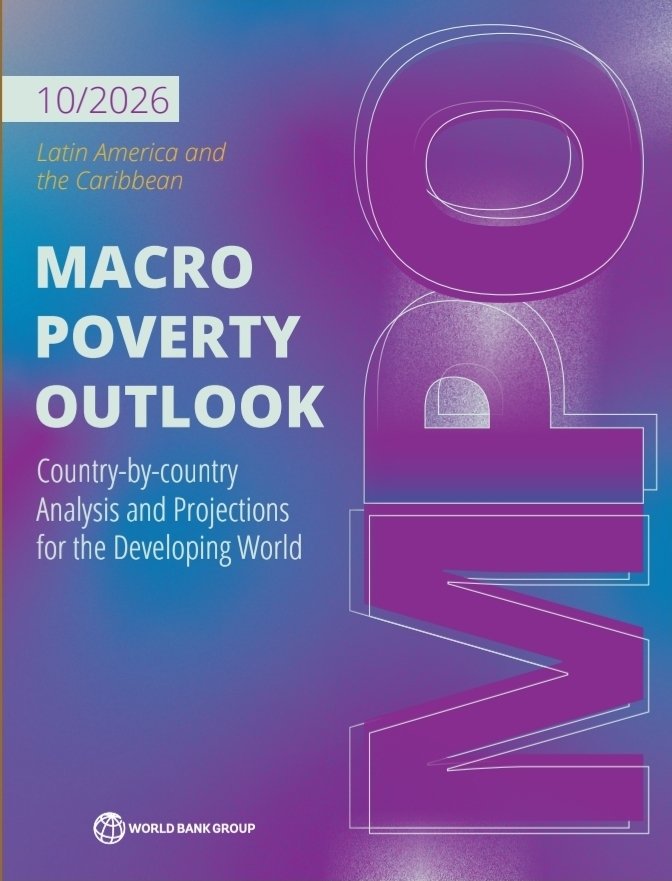
De acuerdo con el reporte Macro Poverty Outlook del @WorldBankGroup se estima que la pobreza en México en el periodo 2018-2026 se redujo en 15.3%, pasando de 35.3% a 20%.
Esto quiere decir que 17.3 millones de mexicanos han salido de la pobreza en ese periodo.
IMF가 AI 판에 얽힌 순환출자(Circular Financing) 거래 규모가 무려 1.4조 달러(한화 약 1,900조 원)에 달한다고 공식 경고장 날림 ㅎㄷㄷ 🤯
한 줄로 요약하면 빅테크랑 칩 메이커들이 자기네 물건 사줄 고객사한테 투자하고 빚보증 서준 다음, 그 돈이 돌고 돌아 다시 빅테크 매출로 찍히는 거대한 돌려막기 구조임 ㅋㅋ
지금 시장에 공개된 AI 순환 거래 17개 싹 다 정리함. 숫자 규모가 진짜 정신 나갔음.
1. 엔비디아 $NVDA ↔ 오픈AI
엔비디아가 오픈AI에 300억 달러 투자하고, 오하이오 데이터센터 리스도 최대 1,050억 달러 보증 서줌. 오픈AI는 그 데이터센터를 엔비디아 칩으로 꽉꽉 채움.
2. 오라클 $ORCL ↔ 오픈AI
오픈AI가 오라클이랑 3,000억 달러짜리 클라우드 계약 맺음. 오라클은 이거 지어주려고 영끌해서 빚내는 중임.
3. 마이크로소프트 $MSFT ↔ 오픈AI
마소가 오픈AI 지분 약 27% 들고 있고, 오픈AI는 마소 애저(Azure) 클라우드에 2,500억 달러 쓰기로 약정함.
4. 소프트뱅크 ↔ 오픈AI
소프트뱅크가 오픈AI에 646억 달러 때려 박았고, 오픈AI는 소프트뱅크 자회사 SB에너지 데이터센터 빌려 씀.
5. 아마존 $AMZN ↔ 오픈AI
아마존이 오픈AI에 최대 500억 달러 투자 중이고, 오픈AI는 아마존 클라우드 계약을 1,000억 달러 추가 확대함.
6. AMD $AMD ↔ 오픈AI
AMD가 오픈AI한테 자사 주식 최대 1.6억 주를 주당 0.01달러(사실상 공짜)에 살 수 있는 워런트 줌. 대가로 오픈AI는 AMD 칩 사줌.
7. 구글 $GOOGL ↔ 앤스로픽
구글이 앤스로픽에 최대 400억 달러 투자하고, 앤스로픽은 구글 클라우드에 최소 1,210억 달러 쓰기로 약정함.
8. 아마존 ↔ 앤스로픽
아마존이 앤스로픽에 최대 330억 달러 투자하고, 앤스로픽은 AWS에 최소 1,100억 달러 약정함.
9. 브로드컴 $AVGO ↔ 앤스로픽
은행들이 특수목적법인(SPC)에 630억 달러 대출해줘서 브로드컴 칩 사다가 앤스로픽에 리스해줌. 브로드컴은 그 칩 중고 잔존가치까지 보증 서줌.
10. 마소 + 엔비디아 ↔ 앤스로픽
둘이 합쳐 최대 150억 달러 투자하고, 앤스로픽은 마소 클라우드에 최소 449억 달러 약정함.
11. 스페이스X $SPCX ↔ 앤스로픽
스페이스X가 400억 달러 대출 당겨서 엔비디아 칩 사고, 그 컴퓨팅 파워를 앤스로픽에 팜. 참고로 엔비디아는 스페이스X 주주임.
12. 엔비디아 ↔ 코어위브 $CRWV
엔비디아가 코어위브 지분 약 11% 들고 있고, 안 팔리고 남는 용량 63억 달러어치 사주기로 보장함. 코어위브는 당연히 엔비디아 칩 삼.
13. 엔비디아 ↔ 네오클라우드
엔비디아가 중소형 AI 클라우드 업체들한테서 360억 달러어치 용량 사주기로 약속함. 얘네는 그 확정 매출 담보로 대출받아서 엔비디아 칩 삼.
14. 마소 ↔ 엔스케일, 네비우스 $NBIS, 아이렌 $IREN
마소가 얘네랑 최대 709억 달러 계약 맺어주고, 얘네는 그 돈 받아서 GPU 사들임.
15. 구글 ↔ 전직 비트코인 채굴업체들
구글이 테라울프 $WULF, 사이퍼마이닝 $CIFR 데이터센터 리스 수십억 달러 보증 서주고 대가로 얘네 지분 챙김.
16. 메타 $META ↔ 블루아울 $OWL
합작법인으로 273억 달러짜리 데이터센터 짓고, 메타가 280억 달러 규모 보증으로 뒷배 서줌.
17. 앤스로픽 IPO
칩·클라우드 공급사인 엔비디아, 구글, AMD, 마이크론 $MU, 브로드컴, 마소가 앤스로픽 IPO 지분 260억 달러어치 사줌. 정작 앤스로픽은 이 회사들한테 앞으로 내야 할 돈만 수천억 달러임 😂
이게 왜 중요하냐면, 돈이 계속 돌고 빚이 굴러가는 동안에는 빅테크부터 반도체, 데이터센터까지 전부 분기마다 어닝 서프라이즈 찍으면서 매출이 미친 듯이 떡상하는 것처럼 보임.
근데 핵심은 이거임. 이 1.4조 달러짜리 파티는 실제 최종 소비자들이 AI 서비스에 돈을 펑펑 써줘야 유지되는 구조임. 만약 최종단 수익화가 기대보다 삐끗하는 순간, 밑단에서 빚내서 케펙스(CAPEX) 돌리던 AI 모델사·네오클라우드부터 터지고, 지분 투자에 리스 보증까지 얽힌 빅테크들까지 연쇄적으로 뚝배기 깨질 수 있다는 게 IMF의 팩트 폭격임.
결론: 돈 돌 때는 세상에서 제일 화려한 영구기관인데, 펌프 멈추는 순간 역대급 도미노로 변할 수 있으니 매출 숫자 뒤에 숨은 보증이랑 부채 규모는 꼭 체크해야 함.
※ 특정 종목 매수·매도 추천이나 투자 자문 아님. 판단과 책임은 본인에게 (Not Financial Advice)
I have a major result to share.
I’ve found conclusive forensic evidence that the top 4 Chinese AI labs—DeepSeek, Moonshot, MiniMax and Ant Group—have built their newest models on NVIDIA’s most advanced Blackwell chips, which are barred from export to China.
This sounds insane, but I discovered that almost every AI model carries a hidden signature of the GPU that trained it. When a model is first set up, the starting values of its weights are laid out in a pattern that depends on the exact GPU. Each combination of GPU and seed number produces a unique pattern—a sort of fingerprint of the hardware used to create the model. Traces of that pattern survive training into the published model.
Again, this evidence isn’t based on any insider information or leaking. It’s based on a forensic analysis of the model weights released by the companies themselves.
I searched more than six trillion combinations of chip layout and seed number and matched them to open-weights models. In doing so, I found conclusive evidence that six Chinese AI models—including DeepSeek-V4-Pro, Kimi K3, and MiniMax-M3—were initialized on NVIDIA Blackwell systems. Four of the models match Grace Blackwell, the GB200 and GB300 parts in NVIDIA’s flagship liquid-cooled rack-scale systems.
I then verified these results on real hardware. Running unmodified PyTorch with the seeds I’d recovered, a Blackwell B300 reproduced DeepSeek-V4-Flash’s untouched starting weights bit for bit, and a rented GB200 reproduced Kimi K3’s to a correlation of 0.999995. A Hopper H100 reproduced none of DeepSeek-V4-Flash’s, and changing the seed by one broke the match. (DeepSeek’s seed is 953049583 by the way.) The method also was verified to match 24 known open-weights models to the hardware that developers said they used.
It is exceedingly unlikely that these results are a coincidence. Across six trillion combinations, the best accidental match should reach only about 8 sigma (i.e., eight standard deviations above what random chance would produce). The real matches range from 49 to 1,385 sigma, and even the weakest single test hits 20.
These were data-center-scale training runs. With some analysis of release schedules and model details, I estimate that the largest, Kimi K3 and DeepSeek-V4-Pro, used 2,000 to 3,000 Blackwell GPUs each. Clusters of this size cost on the order of $150 to $200 million each to buy, and across these labs alone would add up to more than half a billion dollars of export-controlled GPUs, not counting experimental compute or otherwise. It’s quite likely that we see multi-billion dollar expenditure on export-controlled GPUs.
I am highly confident in this result, and it has been independently verified by senior researchers at OpenAI and Anthropic. You can read the full report at https://t.co/YOtzND0Jqk.
There is much more I’ve identified about these models through other forms of checkpoint forensics like this, and will have more to share soon.
In 2015, I built an AI that detects early cancer.
It’s still running across hundreds of hospitals in the US today.
It was the most fulfilling work of my life, and I was building in AI years before everyone called it “AI”.
Building in AI then was a dream.
Now It feels like we’ve taken a turn for the worse.
It started when i was in undergrad.
I built my first company: AI models that made the political data transparent to voters.
At 21, I was offered six figures for it, but the buyers wanted to use it for reasons I couldn't ethically support.
So we turned down the offer and shut down the company instead.
In 2014, I moved into deep learning research on language models, for the Intelligence Community and Goldman Sachs.
Then HCA Healthcare came to us.
They put me in a competition against 10 people from IBM Watson. It was just me and the tools I’d built.
Our job was to build an AI model that can catch the cancer that slips through the cracks in hospitals.
It was the most intense 30 days of my life. Multiple all nighters.
My models won. That turned into a $5M deal, and later its own company, Azra AI.
Then the world caught on.
ChatGPT and Claude arrived, and AI costs exploded.
Building in AI in 2015 felt novel.
We were using it to find cancer tumours and save lives.
Now the biggest tech companies have turned AI into a money extraction machine.
That’s when I decided to make a change.
We raised $8.5M to build a better future for AI.
On Wednesday, we’re launching Rayline.
AI shouldn’t be locked inside a few labs’ models, prices and clouds. It should be open, transparent and decentralized.
More on Wednesday.
NEW: We are short Nvidia $NVDA. We believe Nvidia has a significant China problem. Please see our full report and disclosures now available on our website, link in bio.
Avanza la ignorancia
El nimbysmo frena un proyecto de vivienda social
El mismo nimbysmo ignorante que mañana se va a estar quejando del encarecimiento y la falta de vivienda
O New York Times teve a coragem de fazer algo que nenhum local teve:
Eles convidaram o Flávio para uma entrevista sem censuras, deixaram ele falar e, na reportagem completa, apontaram todos os absurdos logo depois de cada citação e, ainda, pintaram ele de fujão e a família de conspiracionista. E ainda expuseram todas as acusações que ele, o irmão e o pai enfrentam.
De cabo, aproveitaram pra lembrar aos leitores que o pai dele está preso por (com todas as letras) tentar dar um golpe de Estado após perder as eleições para Lula, e que ele alimentou teorias da conspiração sobre o sistema eleitoral.
Num truque de mestre, toda a reportagem foi iniciada e conduzida por um plano de fundo de crítica ao Trump e a forma como ele está lidando com a situação. Quase num lembrete ao leitor de que “esse é o tipo de coisa que o presidente permite que aconteça com a ajuda do governo dos EUA”.
Deram corda pro cara se enforcar e ele caiu igual um pato.
https://t.co/Q42ZnpBo9v
Quick thread on AI and productivity:
Lots of people say this chart shows AI is now showing up in the productivity data.
But I made this chart to argue the opposite: a trend that pre-dates AI and only shows up in the US doesn’t look like AI.
Here’s how I’m thinking about the data and underlying dynamics:
Qué interesante y qué bien tirado el reportaje de @jburnmurdoch de esta semana:
Hace un análisis del retroceso de las relaciones presenciales en los países desarrolladosy la explicación habitual, el encarecimiento del ocio.
Y a priori parece correcto: salir a cenar, tomar algo o asistir a espectáculos cuesta aproximadamente un 20 % más que en 2000, descontada inflación ,según su análisis de Reino Unido y Estados Unidos.
Sin embargo, y aquí viene lo interesante, los datos estadounidenses muestran que el tiempo dedicado a reunirse con amigos en casas particulares, parques y otros espacios GRATIS también se ha desplomado.
En 2013 se dedicaban unas tres horas semanales a estas reuniones; actualmente, aproximadamente la mitad. Además, mientras tanto, aumentan actividades individuales fuera de casa, como acudir al gimnasio (discrimina entre ir sólo y actividad en grupo).
Lo que tenemos es que rehuímos la compañía. Murdoch pone sobre la mesa el precio de las pantallas ajustado por calidad: cae un 39 % desde 2000. Pero no quiere decir que ha bajado de precio de compra, casi todo ese descenso procede de la mejora de calidad y no de que se pague menos por dispositivos o suscripciones. De hecho, el gasto real por persona en tecnología digital ha subido un 52 %.
Su punto: las pantallas ganan por comodidad y captura de la atención, eliminan el esfuerzo y el riesgo de decepción de quedar con alguien: una tarde con amigos puede ser un 10 sobre 10, pero exige organizarse y puede fallar, mientras que hacer scroll o ver series es un 6 garantizado. Con la lectura pasa algo parecido, ya que es barata pero exige esfuerzo.
https://t.co/pqs3ZAbhlX
Antes de ver digger: imagino que las malas críticas y el pobre recibimiento en taquilla se debe a que es cine de autor, el cual es muy dificil de vender al publico general
Después de ver digger: pinches gringos miados, se sintieron por que les dijeron sus verdades,
La gente que se opone a la actualización de los valores catastarales defienden que una colonia rica pague un predial de colonia popular.
Los valores catastrales de la CDMX dicen que un terreno en la Condesa vale lo que uno de la Doctores; que uno en el Pedregal, lo que Coapa.