Hundreds of masked white nationalists marched on Washington DC waving Confederate flags and chanting anti-immigrant slogans on the 250th anniversary of the founding of the United States.
Hundreds of masked white nationalists marched on Washington DC waving Confederate flags and chanting anti-immigrant slogans on the 250th anniversary of the founding of the United States.
HILO: Las etiquetas de advertencia en la comida funcionan !!
Un nuevo estudio publicado en @TheLancet analiza el impacto de la Ley de Etiquetado y Publicidad de Alimentos (FLAL) de Chile en el peso de los niños. Los resultados son una victoria para la salud pública. 🇨🇱
The uprisings in Iran are not against “economic conditions,” as the media says. That may have triggered it, but the uprisings are against the Islamic regime itself.
Why? Because they are not us. We are not uncivilized thugs, looting nation to nation in service of ideological extremism. It isn’t just Iran, countless Middle Eastern and African nations have been robbed of their cultural identity and indigenous histories at the hands of jihadist colonizers.
We Iranians are the children of Cyrus the Great. The father of human rights who—in 539 BC—enshrined the principles of tolerance and religious freedom in the first human rights charter in all of time, the Cyrus Cylinder. It is widely referred to as the first Bill of Rights in history.
That’s who we are, and in an unparalleled moment in history, that’s who you are watching us become again.
Glory to our ancient ancestors, beaming in pride from the heavens.
I asked my ChatGPT if economic complexity is orthodox or heterodox. 👇
Short answer: economic complexity sits mostly outside the orthodox–heterodox divide. It is best described as adjacent to orthodox economics but methodologically distinct, and only partially overlapping with heterodox traditions.
Here’s a clearer breakdown.
1. Orthodox economics
“Orthodox” typically means:
Neoclassical foundations (optimization, equilibrium, representative agents)
Marginalism and substitutability
Strong reliance on price-mediated mechanisms
Growth driven by capital, labor, technology treated as an aggregate factor
Economic complexity does not fit cleanly here.
It rejects full substitutability of factors, emphasizing complementarities and weak links.
It does not start from utility maximization or equilibrium.
Capabilities are non-tradable, non-fungible, and often unpriced.
Much of the core theory is network-based, combinatorial, and path-dependent.
That said, economic complexity:
Uses formal models
Is empirically rigorous
Publishes in mainstream journals
Often engages orthodox questions (growth, convergence, trade)
So it is not orthodox in foundations, but it speaks to orthodox audiences.
2. Heterodox economics
“Heterodox” is a broad umbrella (institutional, evolutionary, post-Keynesian, Marxian, etc.), often characterized by:
Critiques of neoclassical assumptions
Emphasis on institutions, power, history, and structure
Non-equilibrium dynamics
Structural transformation and development
Economic complexity overlaps partially, especially with:
Evolutionary economics (path dependence, learning, diversification)
Structuralist development economics (production structure matters)
Institutional economics (capabilities are socially embedded)
However, economic complexity:
Is largely agnostic about ideology (capital vs labor, exploitation, etc.)
Does not frame itself as a critique of capitalism or markets
Does not adopt the typical rhetorical or normative stance of heterodox schools
Avoids many classic heterodox debates
So it is not comfortably heterodox either.
3. What it actually is
A more accurate description is that economic complexity is:
A structural, network-based approach to economic development and growth
It draws more from:
Statistical physics
Network science
Information theory
Evolutionary biology
Data-driven economic geography
In that sense, it is closer to:
Complex systems science applied to economics
Production-centered economics, rather than preference- or price-centered economics
4. A useful analogy
If orthodox vs heterodox economics is like Newtonian vs non-Newtonian physics, economic complexity is closer to statistical mechanics:
Not rejecting micro foundations, but redefining what the “micro” is
Focused on distributions, networks, and emergent structure
Less about equilibrium, more about feasible states and transitions
5. Bottom line
Not orthodox (it breaks too many core assumptions)
Not heterodox (it does not define itself in opposition)
Best seen as a third space: a complexity-science approach that re-centers production, capabilities, and structure
I just read a fascinating chapter on preference reversals in @R_Thaler and @alexolegimas’s new book, The Winner’s Curse.
Imagine you have to choose between two bets.
A 1 out of 10 chance of winning $40, or a 9 out of 10 chance of winning $4?
When people are asked to choose, they are more likely to pick the “sure” bet with a 9 out of 10 chance.
But when people are asked at what price they would sell each bet, they price the $40 bet higher than the $4 bet.
Their preference flips!
Now, this is not a story about risk.
The same thing happens if you ask people to choose between $1,500 in two years or $3,000 in five years.
They choose the “money now” option but price the “money later” option higher.
One reason this is interesting is that it suggests that the idea of preferences might be a bit shaky.
People with stable preferences would make consistent choices.
But in these experiments, people switch.
They act as if they are constructing a preference on the spot, and that preference changes depending on where their attention lies.
One explanation they provide for this is “compatibility.”
This is the idea that when people are making a choice, they weigh more heavily the factors that are common to the question and the answer.
When asked to choose between bets, people weigh chances more heavily.
When asked to set prices, they weigh the size of the reward more .
Another part of the explanation is a choice diversity bias. They illustrate this with a very relatable example involving buying yogurt at the supermarket.
If you stop by the supermarket every day to buy a yogurt, you will buy your favorite flavor.
But if you only stop by once a week, you will choose a mix of different flavors.
We fail to predict in advance what we will choose on the spot.
Taken together, these examples suggest that preferences are not always pre-existing objects waiting to be revealed, but choices that are constructed when needed.
The chapter remind me of Ilya Prigogine’s idea of time, as something without past or future, but only a present that is calculated at every instant.
But I digress.
Preference reversals are certainly not a new idea, but these details and clarity were new to me, and maybe new to others. You learn something every day.
* I use numbers that are different from those in the book for added clarity (eg 9/10 and 1/10 instead of 8/9 and 1/9, etc.)
You can read the World Inequality Report 2026 in 10 different languages: English, Arabic, Chinese, French, German, Hindi, Portugese, Spanish, Russian, Thai
Spread the world and join the global fight for equality!
https://t.co/mnkh4fbQFE
This is right. Most growth comes from catching up by absorbing, combining, and adapting existing knowledge (think of the historical growth of Singapore, China, South Korea, and now India, Indonesia, & Vietnam).
Economic Complexity measures that potential, since it provided a principled way to estimate how many complementary capabilities are available in an economy (without having to define them).
On average, countries or provinces with an economic complexity about one standard deviation larger than what is expected based on their income grow about 4 percentage point faster.
The reason why complexity metrics can capture this catch-up growth potential is because they start from specialization matrices, so they can properly gauge with economies are "ahead" of their "income class."
In short, Economic Complexity helps identify who’s ready to catch up fast, not because they’re inventing new technologies, but because they already have what it takes to use them.
Nobel para Mokyr, Aghion and Hoowitt
"Se deben apoyar los mecanismos que subyacen a la destrucción creativa (innovación) para no volver a caer en el estancamiento" indicó Hassler, presidente del Comité que otorga el Nobel de Economía."https://t.co/MG6iHOXdWb
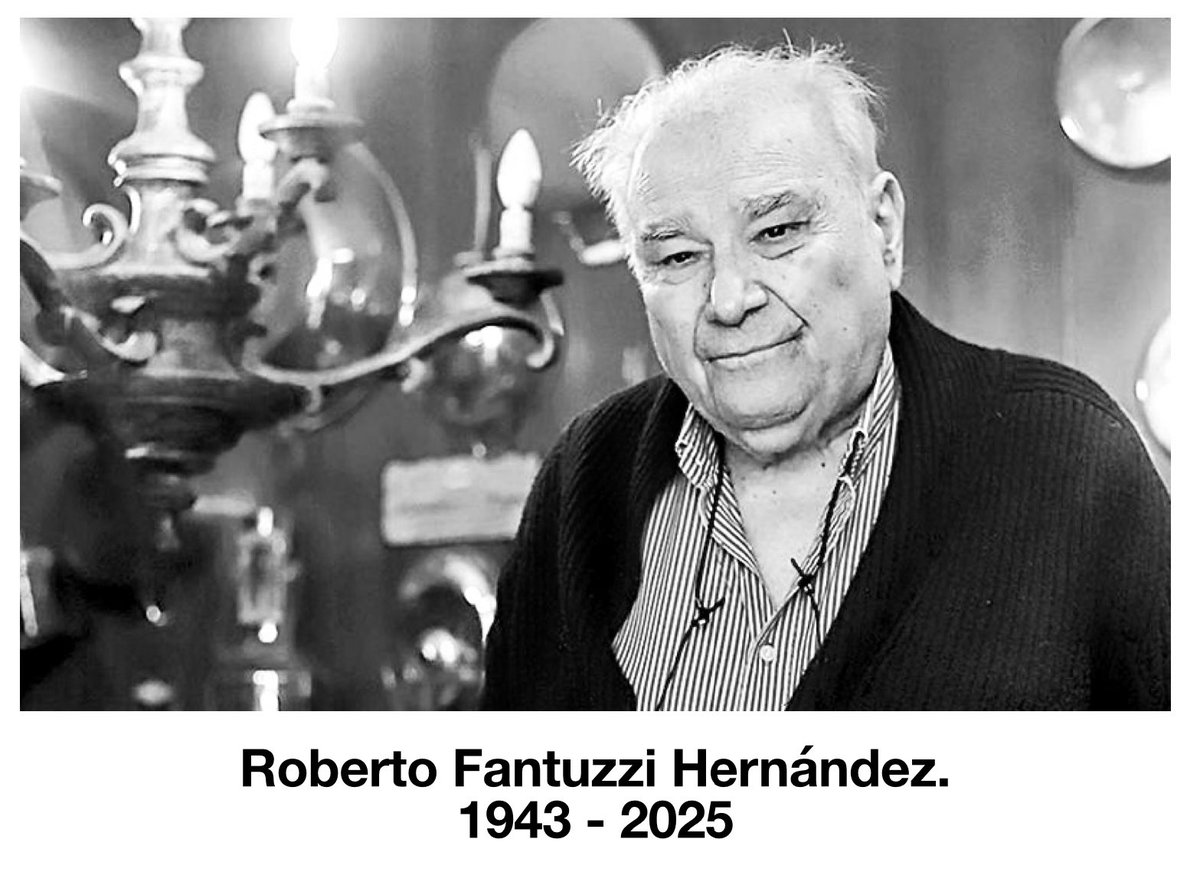
LAS SILLAS COJAS DE ROBERTO.
La magia de lo imperfecto.
Hoy ha fallecido un hombre bueno. Un líder de los que no abundan, de esos que no se vistieron nunca con la arrogancia del poder ni con la distancia del éxito. Roberto Fantuzzi partió, pero no se fue. Su voz seguirá dando vueltas entre los pasillos de empresas, ferias, sindicatos y universidades. Pero también, en un rincón muy especial donde guardaba sus mejores historias: el jardín de su casa, entre “las sillas cojas”.
Tuve el privilegio de conocerlo hace unos meses. No en un evento ni en una conferencia, sino en la intimidad de su propio hogar, su rincón, donde nos sentábamos cada jueves por la mañana durante meses, a compartir café, pan amasado, política, emprendimiento y vida. Allí no había protocolo. Sólo amistad. Nos reuníamos para conversar, grabar nuestras charlas con la idea de escribir un libro para los jóvenes emprendedores. Pero, más que grabar ideas, capturamos humanidad.
Roberto bautizó ese lugar como “el rincón de las sillas cojas”.
A pesar de tener sillas nuevas, inmaculadas, él prefería aquellas gastadas por los años, reparadas mil veces. Y no por cualquier mano: las había arreglado él mismo, con paciencia, con cariño, como quien repara un recuerdo. Cada pata reforzada con clavos, cuñas o retazos de madera llevaba la huella de sus propias manos, como si en cada reparación dejara algo de sí. Eran sillas imperfectas, pero entrañables, como su propia manera de ver el mundo.
Nos hacía sentarnos en ellas como un gesto de iniciación, como quien entrega la llave de su mundo más íntimo. Era su manera de decir: aquí estamos entre iguales, aquí se habla con el corazón, no con el ego. Porque si algo tenía Roberto, era eso: una humildad desbordante, hecha de sabiduría práctica, callejera y profunda, tejida con los hilos de la experiencia real.
En esas sillas cojas se sentaron generaciones de soñadores, trabajadores, políticos, empresarios, amigos y desconocidos que salían de ahí convertidos en algo más. Porque Roberto no sólo te escuchaba, te leía el alma. Tenía la sabiduría de los que han vivido con los ojos abiertos, pero sin perder la ternura ni el asombro. Con él, cada conversación era un viaje, cada historia tenía moraleja, cada dato era un puente hacia algo mayor.
Roberto nunca lideró desde el podio, sino desde el patio. Desde ese jardín donde las sillas eran imperfectas como la vida misma, pero firmes como su convicción de que ningún éxito empresarial tenía sentido sin dignidad para el trabajador. Creía en la empresa con alma, en el emprendimiento con causa, en la política con ética. Y lo creía de verdad. Hablaba del trabajador como protagonista del crecimiento, como parte viva del motor que mueve un país. Lo hacía con pasión, con argumentos, pero también con una fe profunda en las personas.
Era un maestro sin alardes, un comunicador nato, alguien que creía que los datos eran sólo el inicio, pero que la historia real estaba en las personas. Por eso su relato era distinto: porque lo hacía desde la empatía, desde la memoria, desde ese amor tan chileno por la conversación larga y el mate compartido. Su legado no está solo en lo que dijo, sino en cómo lo vivió.
Hoy, ese rincón queda en silencio. Las sillas cojas estarán vacías, pero seguirán contando historias a quien se atreva a sentarse en ellas. Porque ese era su legado: enseñar que las cosas más valiosas no siempre son las más nuevas ni las más impolutas. A veces, lo más sabio y lo más humano se encuentra en lo cojo, en lo remendado, en lo auténtico.
Yo tuve mi lugar entre esas sillas. Me lo regaló Roberto. Y eso nunca lo olvidaré.
Adiós, maestro. Nos vemos en el jardín.
Tu sempiterno agradecido.
René.
Adiós don Roberto, gran hombre de bien. Honor haberlo escuchado en el 92. Nos habló a los de 1er año de I. Comercial PUCV para enseñar la importancia del emprendimiento, de la industria local, de promover empleo. Nos regaló una belleza de olla Fantuzzi en miniatura! Vaya en paz🕊️
“Growth is not the mission. Growth is the result if we get missions right.”
Catch up on our 2025 Annual Lecture where @MazzucatoM drew on her research to advocate for a mission-oriented approach to tackle the grand challenges of our time.
Watch now➡️ https://t.co/6HVcpZ491D
CIPER
Insuficiencia en hogares de larga estadía: 838 adultos mayores están en lista de espera, 510 derivados desde tribunales por maltrato https://t.co/1tEIGWjDkd
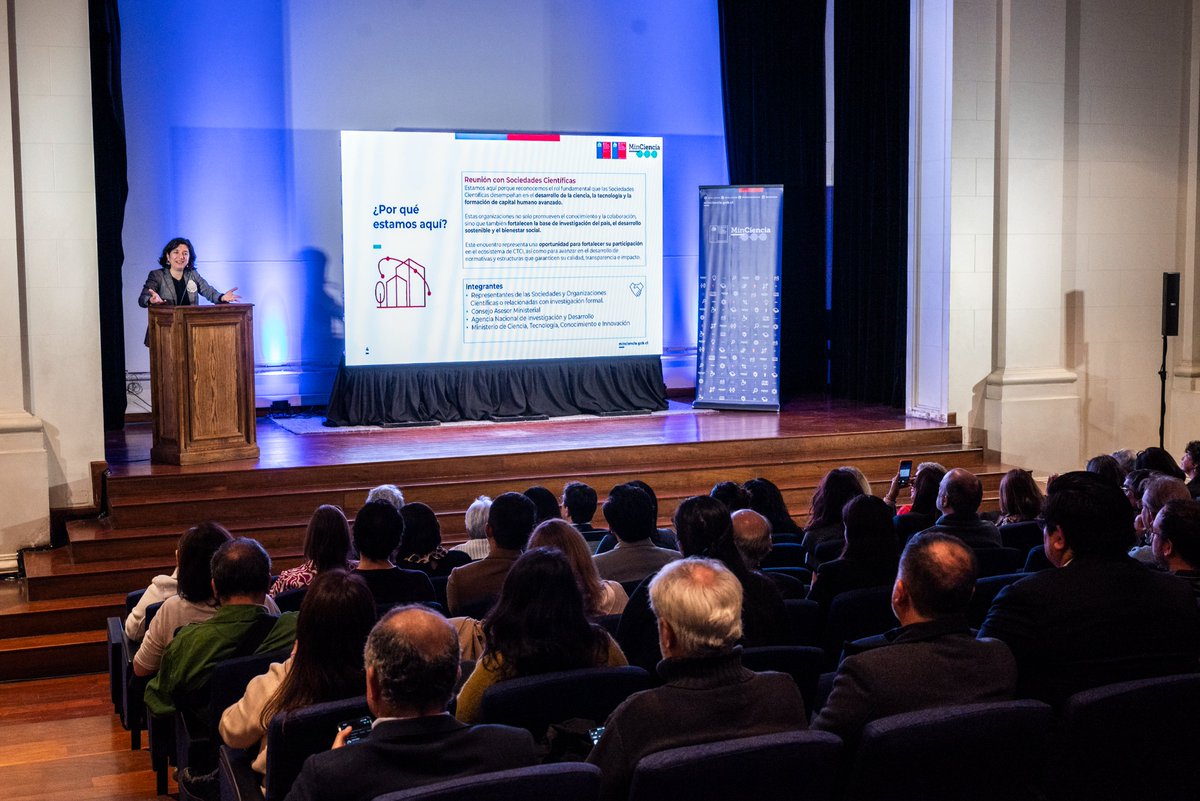
Esta mañana en la Biblioteca Nacional nos reunimos con representantes de las Sociedades Científicas, reafirmando y valorando el rol que desempeñan en el desarrollo de la ciencia, la tecnología, las humanidades, artes, ciencias sociales y la formación de capital humano avanzado.