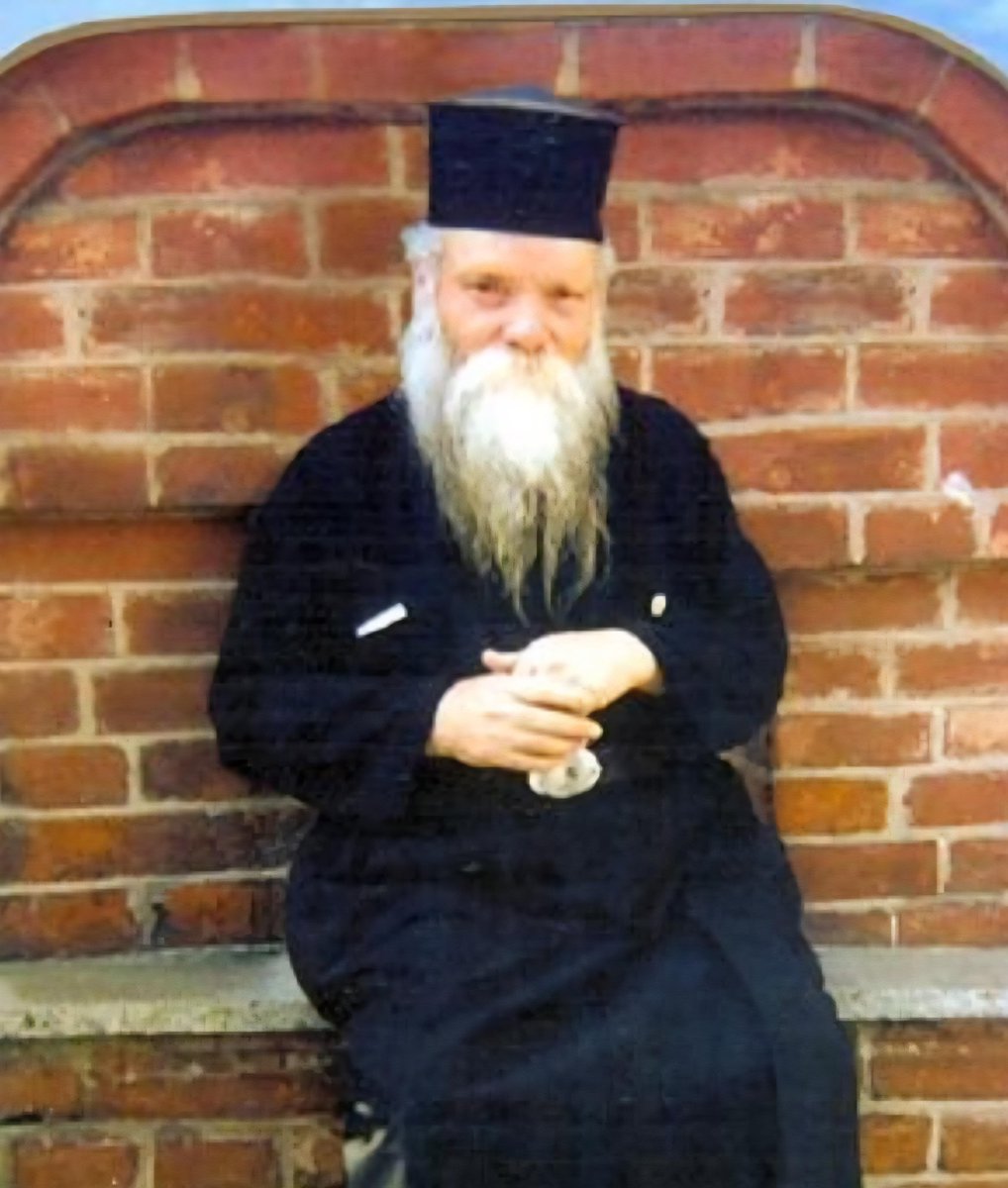
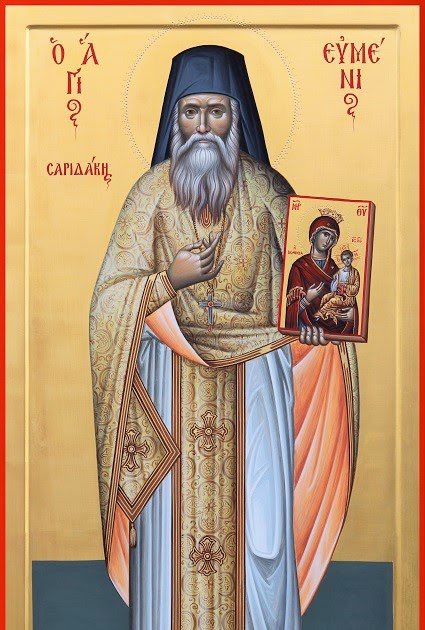
"To a person who is suffering, do not say: "Be patient." These are not the words that his soul needs at this moment.
To a person who confesses his bitterness to you, do not say: "Enough of your grumbling."Sometimes with one thoughtless sentence we cause more pain than comfort.
To a person who is exhausted, do not say: "I understand you." Unless you have truly walked in his shoes, unless you have gone through the same trials.
"What can I say then?" you will ask. Say: "I love you." Say: "I am here." Be silent when necessary and pray for him. And add quietly, with kindness: "And may the Mother of God be with you." Only this... "May the Most Holy Theotokos be with you." That is what you say."
St. Eumenios Saridakis
@skdh Some scientists will have to give up institutional privileges to create new institutions, networks, and funding sources and better science. They will have to be willing to become new pioneers in an abandoned rich land and forsake the comforts of the decadent elite of gatekeepers.
One evening a child asked his father:
– Father, please tell me, how is it that some people are good and others are bad? Why aren’t they all the same?
– You see, my son, all people are the children of God. And just as God loves us all, so we too must love one another, because the Lord’s love is like the light of the sun. Doesn’t the sun shine on us and warm us all alike - the good and the bad together?
Our souls ought to be full of goodness and love. But, you see, each person’s sins are like the clouds that prevent the beneficial rays of the sun from shining upon them.
Sins, my son, are the clouds that darken our soul. The more sins you have, the darker your soul becomes, and the light of God’s love cannot penetrate into your heart.
A person’s soul is the little piece of heaven that each one carries within, and on that heaven the Sun of love - God - must shine.
My son, keep away from sins, for they accumulate and darken your life; they make you proud, wicked, and selfish.
The one who keeps a pure soul within himself always rejoices in the Lord’s love, in peace, and in happiness.
@PageauJonathan I think the attribution of intention is where the explanation becomes too much. The mixing of post-modern and classical symbols may be read that way, though. I believe it was reinterpretative appropriation, the industry pattern of the last years.
"There is nothing more seductive for man than his freedom of conscience, but there is nothing that causes him greater suffering."
It's one of the most haunting lines in The Brothers Karamazov.
We usually think of freedom as the solution to our problems. More freedom means more happiness. More options. More control over our lives.
Dostoevsky turns that assumption upside down.
In "The Grand Inquisitor," he suggests that freedom is not simply a gift but also a burden. Every meaningful choice comes with uncertainty, responsibility, and the possibility that we might choose badly.
That's why people are willing to surrender their freedom in exchange for certainty.
We gravitate toward productivity systems that promise to eliminate difficult decisions, influencers who claim to have life figured out, and ideologies that spare us the discomfort of wrestling with difficult questions ourselves.
The temptation, in other words, is to escape the exhausting responsibility that freedom demands.
Perhaps that's why genuine freedom feels so rare. It requires something most of us spend our lives trying to avoid: the courage to live without guarantees.
@OrthodoxEthos Saint Hesychios the Sinaite, an ascetic associated with Saint Catherine's Monastery and the hesychast tradition.
Saint Barbaros the Myrrhgusher
@OrthodoxEthos Hieromartyr Aristocleus, together with the martyrs Demetrian and Athanasius, who were martyred during the Diocletian persecution.
Martyr Eustochius, with companions Gaius, Probus, Lollia, and Urban.
“Salvation is communal: it is not individual. ... We come into the Church not as isolated individuals: we come with our families, with our nation, with our culture. Sanctify and transfigure your culture! There are many good things in this country.”
—Fr. Roman Braga (1922-2015)
To pious and serious Roman Catholics who are ready to read and consider, here is a list of books which will help you discern the path ahead:
https://t.co/8vY8THFfKT
https://t.co/DfAO4IZQ26
https://t.co/4jFYVt3SDm
https://t.co/wDy09yZMzs
https://t.co/91GFqgoJRu
https://t.co/NHoF334lry
https://t.co/dqwiFXHvyd
https://t.co/HtuTE6Pv1P
https://t.co/IwlDU9MLA7