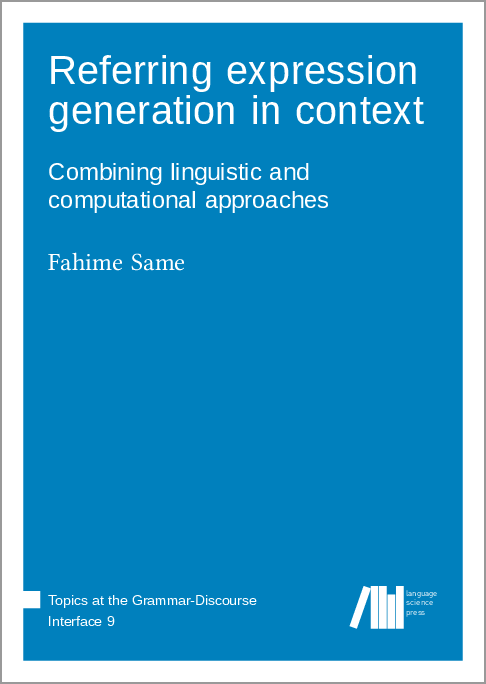
It offers an in-depth analysis of the production/generation of referring expressions in context and explores various aspects of the task including the choice of corpus, method (rule-based, feature-based, neural) and evaluation approach (automatic and human).
(2/2)
Super happy to share that my dissertation "Referring expression generation in context: combining linguistic and computational approaches" (2022) has now been published as a book by @LangSciPress 😃🥳
It's open access, downloadable from: https://t.co/0yQPELJ8Nl
(1/2)
Just published "Referring expression generation in context: Combining linguistic and computational approaches" by Fahime Same #openaccess#tgdi https://t.co/2u6oG3lyJZ
📢📰Interested in naturalistic language? Check out our corpora from German novels for referring expressions in natural language: "Multi-layered Annotation of Conversation-like Narratives in German" ➡️https://t.co/YiWNEDm6Pm
This is joint work with @pb_schumacher@fafa_same
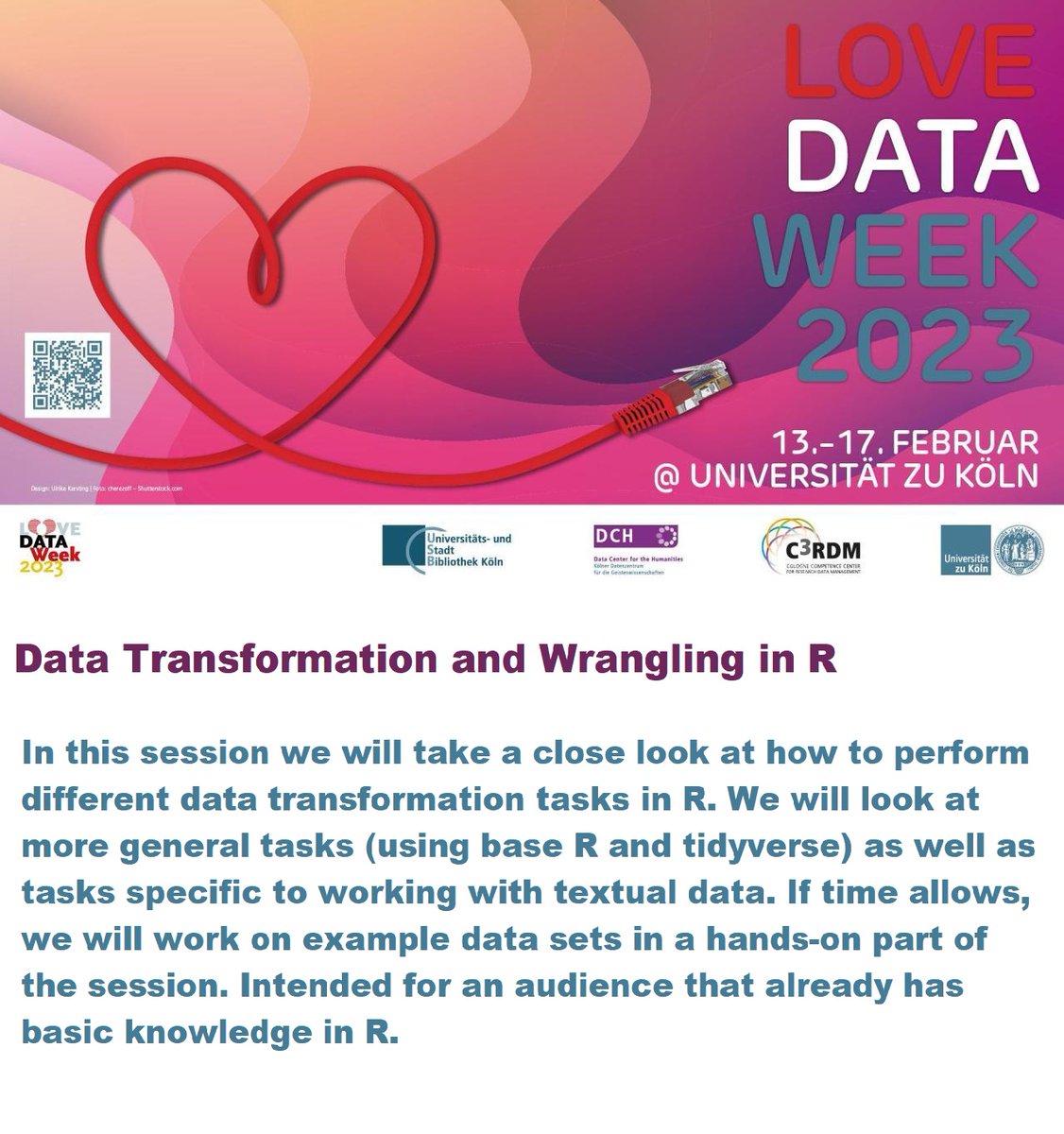
Happy to share that Max (Hörl) and I hold an online workshop on "Data Transformation and Wrangling in R" on Tuesday, Feb 14, 14-16, as part of the International @LoveDataWeek. Registration is free, and open to everyone. #LoveData23#FDM
Link to register: https://t.co/lm5FcHaOmg
The #DAAD supports #refugee researchers from #Iran in starting and continuing their #research projects with the programme "Bridge Scholarship Iran". Applications are open until 28 February. More Information
👉 https://t.co/POG8E1uY3K
@DAAD_Germany
Job notification💡Project INF of the #SFB1252 is looking for a WMA who is interested in statistical methods in linguistics. Find more information (in German) here: https://t.co/bWRU91yutu and apply by December 20. 🗓️ @dch_cologne@LinguistikKoeln@IdhTweets