It breaks my heart to post this graph, but running away from truth never helps
Pakistan's cricket is at its lowest in 50 years, and no one has been able to arrests its fall since the 1990's
/1
The #A350-1000ULR is just back from its longest flight ever from Melbourne 🇦🇺 to Toulouse 🇫🇷! That’s a 12,460NM (23,075.92 km) hop 🦘 in 24 hours 24 minutes!
And for the crew, that meant flying from winter to summer, crossing 2 oceans, 3 continents, and seeing 2 sunrises + 2 sunsets... all in a single flight!
Watch some highlights in the video below and learn more about the full journey here: https://t.co/GLWOdtlaMg
Starting from an empty warehouse in 1965, K&Ns has grown to the largest vertically integrated poultry company in Pakistan. While competitors have tried to enter the market and challenge them for the top-spot, K&Ns remains ahead. This is the full story.
Pakistan’s grid is doing something rare. Fossil has fallen from 66% to 44%. Nuclear is scaling. Solar is breaking out, wind is joining in & decentralised rooftop solar is scaling at an unprecedented pace. Meanwhile, hydro holds the system together as the generational shift begins.
For two decades, Pakistan’s power mix barely moved. Fossil sat around 60–70%, hydro carried ~30%, and everything else was marginal. Then the energy transition began, and it didn’t follow the usual script.
Nuclear moved first. From ~2% in 2000 to ~17% by 2025, it’s one of the few systems globally where nuclear share is clearly rising. That growth is deliberate, built, and running at high capacity, quietly strengthening the backbone of the grid.
Wind edged in gradually. But the real disruption came from solar. From effectively zero to ~8% in a short window, driven less by policy and more by economics. High tariffs, unreliable supply, and cheap panels triggered a massive surge in behind-the-meter installs.
That’s the key nuance. A large share of Pakistan’s solar boom sits off-grid and isn’t fully captured in official generation data. It makes the system look slower to change than it actually is, and makes building a clean dataset far more challenging than in most countries.
Two very different forces are now moving together. Nuclear is scaling from the top down, engineered and centralised. Solar is spreading from the bottom up, reactive and decentralised. They’re not competing. They’re stacking.
Hydro sits in the middle, doing what it has always done, balancing and stabilising the system. Fossil is still large and still necessary, but it’s no longer growing. From ~66% down to ~44%, it’s clearly losing ground.
Pakistan hasn’t followed a clean transition pathway. It’s been pushed into change by cost, constraints, and demand. The result isn’t one technology replacing another. It’s a system being reshaped from multiple directions at once.
Hydro anchors. Nuclear scales. Solar breaks out. Wind warms up. Fossil fills what’s left.
Not merely a transition. A system under pressure, starting to bend.
Japan Airlines will trial humanoid robots for baggage handling and aircraft cleaning at Tokyo's Haneda Airport starting in May, citing workforce shortages and rising tourist numbers
Meanwhile, Islamabad is no different from the Strait of Hormuz because of talks that never even happened. 5 million people are effectively locked down. #iranwar
Naeem joined @nayatelpk as Driver 9 years back. Most of semi-skilled persons hired in such positions in countries like Pakistan work for life in same position, no formal training, learning, development and career growth. But good organisations like Nayatel hire great people and provide them learning and growth opportunities to become awesome.
Naeem was selected for a Technician-cum-Driver Program and given training on fiber installations. At end of training, he won Star Trainee Award in post training evaluation by securing highest marks and leaving behind the guys with certified technical education background. Guys like Naeem are real superheroes.
In last two years, Nayatel has transformed 33 of its Drivers to Technicians under the same program. Now these guys can accelerate in career growth ladder just like other qualified and certified technicians.
A man came to the Prophet Muhammad PBUH and requested financial help. Prophet PBUH asked "do you have anything in your house?" Person said "yes, a used blanket and a bowl to drink water." Prophet PBUH asked him to bring the stuff and Prophet PBUH then asked companions to make a bid to buy items and sold to highest bidder for two dirhams. Prophet PBUH gave him dirhams, told him to give one to his family for food and buy axe with the other. The person brought axe and the Prophet PBUH fixed axe handle himself and said “go, gather firewood and come back to me after 15 days." The person went, worked hard and earned 10 dirhams by collecting and selling firewood. When he came back, the Prophet PBUH told him "this is better for you than coming with begging spot on your face on the Day of Judgement” Sunan Ibn Majah 2198.
Many young guys complain of no jobs. I tell them that today’s axe is computer/smart phone, so instead of mindless scrolling, use it to learn new skills, whether it’s AI, coding, content creation, or whatever. Door of global opportunities would be wide open for those who keep learning new things and keep working diligently and persistently.
👋 friends. Some news: After 15 years of supporting & strengthening Pakistan's startup ecosystem, @Invest2Innovate , the org I founded in 2011, is shutting its doors and closing this chapter.
(Just so it's clear 😅: @i2i_ventures, the VC fund I run w/ @MizNaQ, is still very much alive & continuing forward.)
This news might feel bittersweet to some, but we wanted to celebrate the legacy of what Invest2Innovate has achieved in the past 15 years: supporting 1200+ founders, 190+ entrepreneurial support orgs in Pakistan & the region, training 200+ angel investors, releasing detailed insights & data-driven reports benchmarking Pakistan's startup ecosystem & its growth, and work that extended beyond PK -- Bangladesh, Nepal, Cambodia, Vietnam, Iraq, Lebanon & more./
In Japan, there was a little thief 😺 next to a fisherman waiting at a traffic light. What the fisherman didn’t account for was this tiny kitty 😼. Luckily, another driver noticed the situation and warned the little thief… but got an unexpected reaction! Ahaha, the cat’s reaction was amazing 😂❤️
Pakistan’s Atomic Energy Commission has around 130,000 staff — physicists, engineers, chemists, nuclear specialists.
That’s a serious concentration of high-level talent in one place.
To put it in perspective: the entire country has roughly 220,000 doctors and nurses combined, and 2.6 million teachers but most of those are primary and secondary school level, not research-grade professionals.
PAEC covers a lot of ground: power generation, cancer treatment isotopes, agricultural research, and defence. It’s essentially one of the largest gatherings of advanced technical expertise in the country under a single roof.
The interesting bit is what this tells you about priorities.
When a government consistently funds and backs something over decades, talent follows.
The best minds go where the career paths, salaries, and resources are. PAEC built that ecosystem. Other sectors — healthcare, education, manufacturing — largely haven’t had the same sustained investment, so they struggle to attract and retain the same calibre of specialist.
It’s not a criticism, just an observation. You build what you fund.
Pakistan built nuclear capability.
The question worth asking is: what else could benefit from that same level of deliberate, long-term investment?
China Eastern Airlines has launched the longest direct flight in the world — from Shanghai to Buenos Aires
The distance is about 19,631 km, and the flight time is roughly 25.5 hours from Shanghai to Buenos Aires (up to 29 hours on the way back due to headwinds).
The route includes a two-hour technical stop in Auckland, New Zealand, for passengers to rest — but it is still considered a direct flight since there is no aircraft change.
The Boeing 777-300ER will operate the route twice a week.
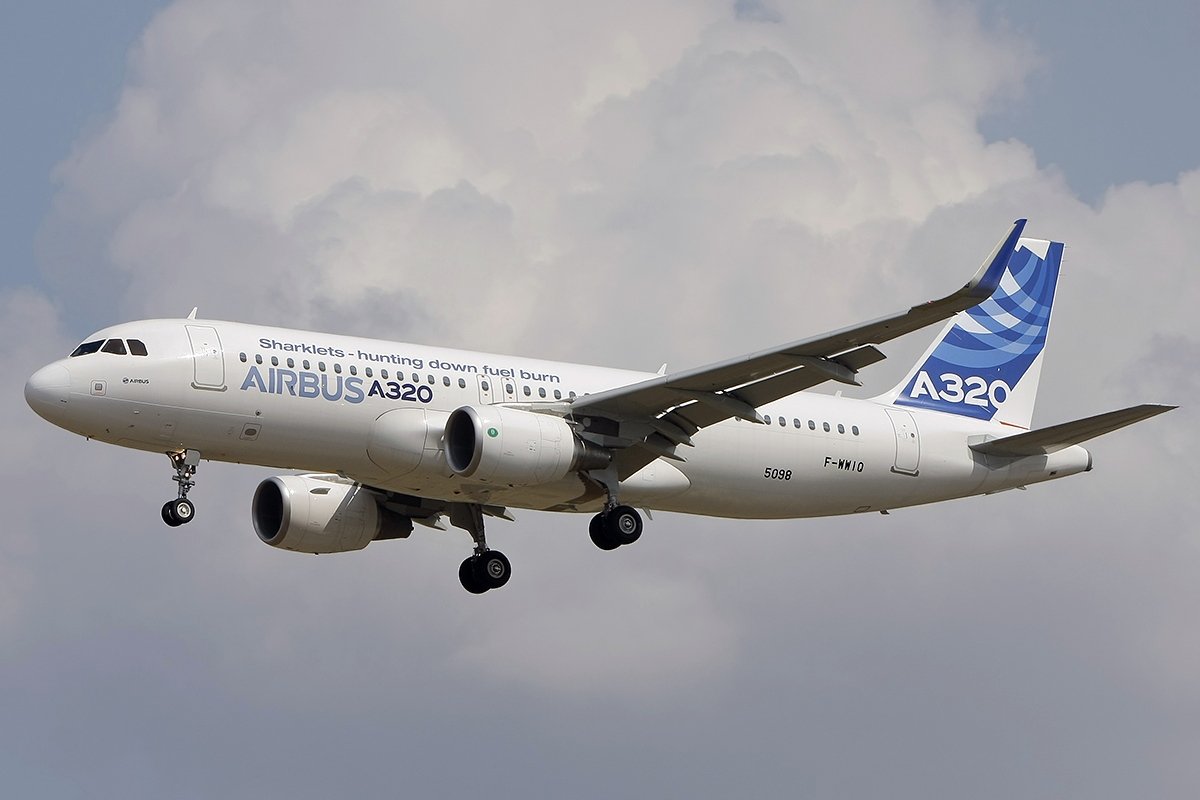
BREAKING Airbus has requested immediate precautionary action from all A320 operators to implement a software update to ensure their fleet is safe to fly.
Analysis of a recent event involving an A320 Family aircraft has revealed that intense solar radiation may corrupt data critical to the functioning of flight controls.
Airbus has consequently identified a significant number of A320 Family aircraft currently in-service which may be impacted.
Airbus has worked proactively with the aviation authorities to request immediate precautionary action from operators via an Alert Operators Transmission (AOT) in order to implement the available software and/or hardware protection, and ensure the fleet is safe to fly. This AOT will be reflected in an Emergency Airworthiness Directive from the European Union Aviation Safety Agency (EASA).
Airbus acknowledges these recommendations will lead to operational disruptions to passengers and customers. They apologise for the inconvenience caused and will work closely with operators, while keeping safety as their number one and overriding priority.
Are below scrips too diverse or it’s better to choose atleast two scrips from each sector?
Fertilizer: FFC, Fatima
Bank: MCB, NBP
Oil: POL, PPL
Auto: SAZEW
Cement: LUCK, KOHC, GWLC
Textile: ILP, GADT
Pharma: SEARL, CPHL
Tech: SYS
PSX 🇵🇰🇵🇰 has achieved 150,000 milestone today for the first time ever.
Congratulations to all PSX investors, old and new ❤️
Stoock market is up almost 275% in last 26 months.
In last 27 years it has increased 150 times, 150 times not 150%. Rs1 Lac invested on 1 January 1999 would be Rs1.5 Crore today.
No real estate plot, no Gold can beat that‼️
This is what happens when you become partners with top businessmen of 🇵🇰🇵🇰
Remember the two most important investing principles:
1) Understand the Business like Owners
2) Invest in what you fully understand
Happy investing 😊