Developer lifecycle:
In 2015, writing code by hand was a win.
In 2019, knowing React was a win.
In 2020, knowing the latest framework was a win.
In 2021, using low-code was a win.
In 2022, using GitHub Copilot was a win.
In 2023, copy pasting code from ChatGPT was a win.
In 2025, using Codex or Claude Code was a win.
In 2026, running agents in parallel is a win.
In 2027, using AI cheaply will be a win.
Then AI gets too expensive.
In 2028, copy pasting code from ChatGPT is a win.
In 2029, using GitHub Copilot is a win.
In 2030, using low-code is a win.
In 2031, knowing the latest framework is a win.
In 2032, knowing React is a win.
In 2033, writing code by hand is a win.
The largest credit funds aren't just lending anymore. They're buying and launching the platforms that originate the loans.
This is a defining trend in private credit and asset-based finance right now and it's accelerating.
You have no experience.
You’ve never started a company.
You’ve never had a full time job.
Nike is going to kill you.
You’re a kid.
You don’t have technical skills.
You shouldn’t build hardware.
Apple is going to kill you.
You can’t build hardware.
You can’t measure heart rate non-invasively.
Athletes don’t care about recovery.
Under Armour is going to kill you.
It won’t be accurate.
You don’t listen.
You’re an ineffective leader.
You can’t recruit great talent.
You’re going to have to pay every athlete.
You can’t measure sleep non-invasively.
It’s too expensive to research.
Athletes are a small market.
The product costs too much to make.
The product costs too much to sell.
Your valuation is too high.
Consumers aren’t going to want it.
Hardware is too hard.
You should measure steps.
Fitbit is going to kill you.
You can’t build a marketing engine.
You can’t raise enough money.
You need a real CEO.
Google is going to kill you.
You can’t be a subscription.
You can’t build a brand.
You can’t do consumer in Boston.
Your valuation is too high.
You shouldn’t make accessories.
You shouldn’t make apparel.
Lululemon is going to kill you.
You can’t predict Covid.
Stay in your niche.
You are going to run out of money.
You can’t build a health platform.
Amazon is going to kill you.
You can’t measure blood pressure.
You can’t get medical approvals.
The market is too small.
You don’t understand AI.
The market is too competitive.
It won’t work internationally.
The supply chain is too complicated.
You can’t build an AI.
You can’t raise enough money.
It’s too competitive.
Healthcare isn’t going to want it.
…
Just keep going ✌️
دخول شركات التقنية المالية في مجال تمويل القطاع الصناعي بشكل اكبر سوف يساهم في تقليل الفجوة التمويلة للمنشأت الصغيرة والمتوسطة والتي تبلغ حوالي 300 مليار ريال
#الاسهم_السعودية#صناعة
الرئيس التنفيذي لشركة ميار كابيتال عبد العزيز النعيم:
📌 في هذه الحرب لا يوجد ملاذات آمنة مثل الذهب والين والفرنك بسبب التراجعات الجماعية واللجوء إليها لم ينفع هذه المرة
📌 يمكن استغلال بعض الفرص التي تراجعت بشكل كبير مثل شركات البرمجيات والأسهم الصناعية الأوروبية والأسهم اليابانية
📌 استمرار ارتفاع أسعار الطاقة سيتسبب بركود تضخمي وهو أمر خطير وسيء على الاقتصادات العالمية
@Lara_bn
#جرس_الإغلاق
#العربية_Business
حتى الذكاء الاصطناعي دخل في متاهة المخاطرة ،حسب @business و نقلا عن @kshaughnessy2
أعلن بنك @jpmorgan طرح سلة جديدة من عقود مبادلة مخاطر الائتمان أو ما يعرف ب CDS تتيح لعملائه التحوط من مخاطر الديون المرتبطة بطفرة الذكاء الاصطناعي. الخبر في ظاهره مالي، لكنه في جوهره يعكس تحولا مهماً في نظرة السوق إلى الذكاء الاصطناعي وهي من قصة نمو مفتوحة إلى قصة تحمل أيضاً مخاطر ائتمانية تستحق التسعير والتحوط ودخلت في دائرة الخطر حسب نظر البنك.
ما يحدث هنا مهم لأن السوق لم يعد ينظر إلى الإنفاق الضخم على الذكاء الاصطناعي باعتباره استثماراً مضمون العائد، بل بدأ يسأل عن جودة هذا الإنفاق، وكيف تم تمويله، وما إذا كانت الشركات قادرة فعلاً على تحويله إلى تدفقات نقدية مستدامة. فالتوسع في البنية التحتية للذكاء الاصطناعي، من مراكز البيانات إلى الحوسبة والقدرات السحابية، جاء بكلفة رأسمالية ضخمة، وجزء من هذه الموجة تم تمويله بالدين، ما يجعل السؤال الائتماني حاضراً بقوة.
الأهم أن إطلاق أداة تحوط متخصصة يعني أن المستثمرين لم يعودوا يكتفون بالمشاركة في موجة الصعود، بل بدأوا الاستعداد أيضاً لاحتمال التعثر أو الضغط على الجدارة الائتمانية لبعض الجهات المرتبطة بهذه الطفرة. وهذا يعكس انتقال السوق من مرحلة الحماس للسردية إلى مرحلة اختبار متانة النموذج المالي خلفها.
بمعنى أوسع، لم يعد الذكاء الاصطناعي مجرد رهان في سوق الأسهم، بل بدأ يتحول إلى ملف مخاطر في سوق الدين أيضاً. وهذه نقطة مفصلية، لأن أي قطاع حين تبدأ الأسواق في بناء أدوات للتحوط من مخاطره، فهذا يعني أن التسعير دخل مرحلة أكثر نضجاً وواقعية، حيث لا تقاس القصة بحجم الزخم فقط، بل بقدرتها على توليد عوائد حقيقية تبرر حجم الدين المرتبط بها.
#الاسهم_الامريكية
#استثمار
"The difference is that while YouTube and Instagram have thrived under new owners, eBay couldn’t unlock the potential in PayPal. The online auction co. tried — and failed — to weld together a suite of services around commerce, payments and communications." https://t.co/J8x4siFJaP
أكبر كذبة صدقها السوق أن سبب التسريحات المتتالية حاليا هو الذكاء الاصطناعي بينما الحقيقة أنه بمثابة قميص يوسف استغل للتعمية على تصحيح خطأ الإفراط في التوظيف الذي حدث خلال حقبة الفائدة الصفرية.
إن كان هناك تأثير سلبي للذكاء الاصطناعي على الوظائف التقنية فسيتطلب ظهوره وقت أطول بكثير من الآن
#Labor #AI #AgenticAI #PR #Trends
@FT "AI-related borrowing now accounts for around 30 per cent of net investment grade issuance, according to Goldman Sachs, and is expected to grow in 2026, despite concerns over the level of debt being taken on by the AI “hyperscalers”.
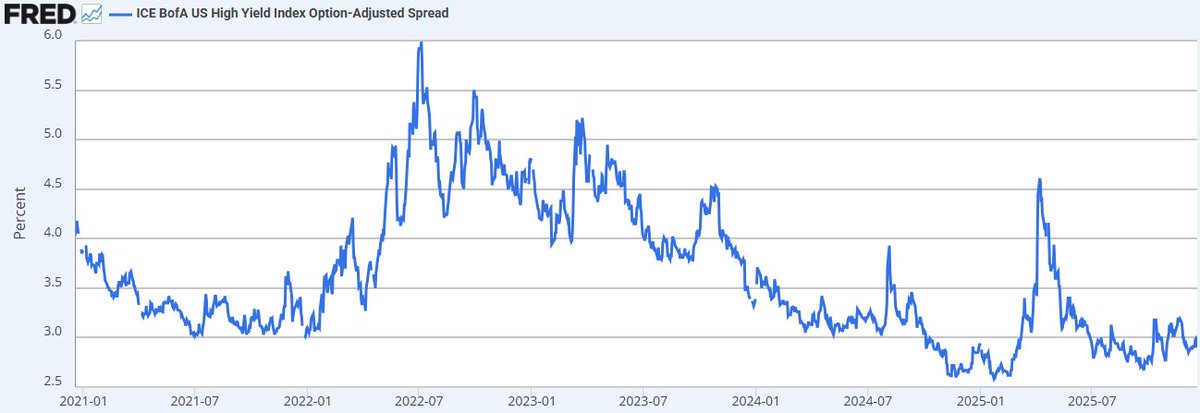
wonder how that will reflect on the appetite for other non-AI issuance (IG and HY) going forward. Spreads are pretty tight.
"AI debt boom pushes US corporate bond sales close to record" https://t.co/oOuwDaG3hU via @ft
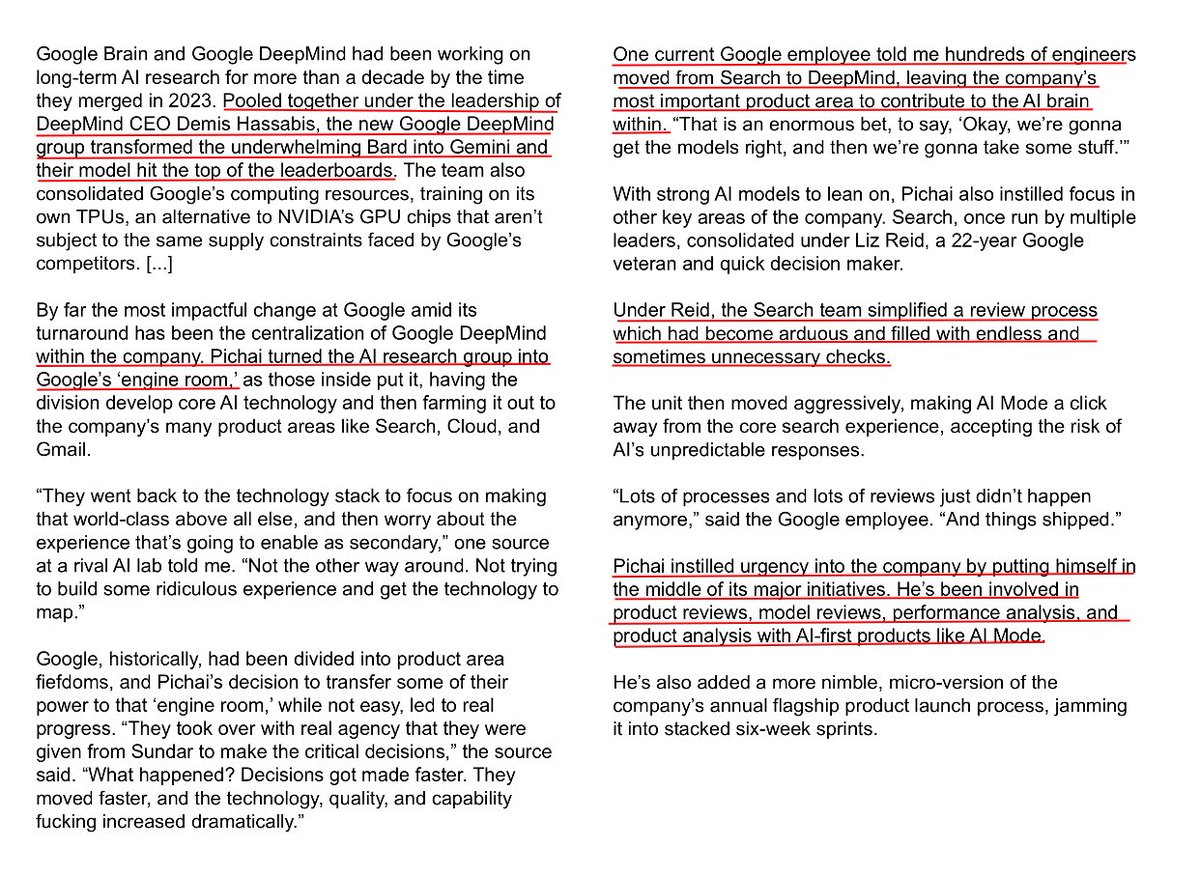
Alex Kantrowitz on how Sundar Pichai turned around Google’s AI efforts:
▫️Combined Google Brain and DeepMind into Google DeepMind
▫️Empowered Demis Hassabis to lead unit and focus on making world-class AI tech stack (model to TPUs to cloud integration)
▫️Google DeepMing became “engine room” for company and farmed the core AI tech to other product areas (Search, Gmail etc)
▫️100s of engineers moved from Search to Google DeepMind team
▫️Streamlined the process to add new features to Search (AI Mode and AI Overview rolled out fairly quickly)
▫️Pichai has been personally involved at every step for AI (product reviews, performance analysis, product analysis etc).
▫️Created 6-week product sprints (to supplement annual flagship product launches)
Everyone is missing the real story here.
Google just passed Microsoft for the first time since the OpenAI partnership launched, and the market is finally repricing what actually matters in AI infrastructure.
Microsoft went all-in on external dependencies. They pay OpenAI for model access, buy NVIDIA GPUs for compute, and integrate everything into Office. That stack has three points of failure and zero margin control.
Google owns the entire chain. Gemini models trained in-house. TPUs designed and manufactured for their exact workload. Both optimized together from silicon to inference. When you control the full stack, you optimize for total cost per token, not per-component pricing.
The math shows up in deployment speed. Microsoft announced Copilot features in November 2023. Google shipped comparable Workspace AI six months later but at half the inference cost because TPUs run their models 40% more efficiently than equivalent GPU clusters.
This is the first major signal that vertical integration wins the infrastructure war. NVIDIA sells shovels to everyone. Google builds the shovels AND mines the gold. Microsoft rents both.
The $13B gap sounds small until you realize Google crossed Microsoft going up while Microsoft’s trajectory flattened. That crossing point is when the market stops pricing hype and starts pricing margin structure.
The moment enterprises start buying AI at scale, the company that controls silicon to model economics wins every deal on total cost of ownership.
That’s not Microsoft.
"Good GTM can actually 'hide' bad product-market fit for a while and GTM is expensive...it's far more expensive than R&D."
Such a great conversation with @henrysward on the @a16z pod. So many valuable startup building & scaling lessons to absorb.
https://t.co/Cfc7m29Ado
Never Bet Against the United States?
If you’d said that in the 1930s or 1970s, it wouldn’t have resonated. Should it now? I’m not sure anymore. Let me explain.
The past three months have marked a decisive shift away from American exceptionalism. Just late last year, many believed Trump would pursue a relatively rational economic path. Today, markets are beginning to question that assumption.
What actually made the U.S. exceptional? Why has it outperformed for the past 15–20 years? What were the key drivers—and are they now being dismantled? Above average GDP growth; Cheap, abundant risk capital; democracy & rule of law (self correcting mechanisms); a free open economy with a massive consumer home market; education etc…Trumpism puts them all in doubt.
Europe, for all its flaws—lack of risk capital, slower growth, mercantilist tendencies—trades at a discount. So if the U.S. is no longer fundamentally different, why does it still command a 20x multiple while the EU trades at 11x? That premium is becoming harder to justify. Yes, China is stuck in a liquidity trap. Yes, Europe faces deep structural challenges. But what about Trumpism? It’s as if the United States faces an existential risk under Trumpism.
The question I keep asking is: What is this administration actually trying to do?
Raise revenue to fund tax cuts? Bring back manufacturing? Reshape global capital flows? Remake America entirely?
Not even Trump may know but this doesn’t feel like tactical policymaking—it feels like a revolution. And revolutions come with a lot of pain and chaos. The real question is: What’s the pain threshold?
At what point do people say, “My life is worse than it used to be”? Does congress hold the power to stop a tariff escalation? That—and the electoral cycle—may be the last constraints on this path. I call it the Trump put. But we may still be quarters away from seeing it. Until then, markets will grind lower.
In the meantime, there’s no coherent economic theory underpinning Trumpism. It’s clear the administration doesn’t grasp core macro principles—you can’t shrink deficits and expect capital inflows to rise. This isn’t orthodox economics. It’s a false obsession with the trade goods deficits, with no understanding of the services surplus or its mirror image: capital surpluses.
it’s an attempt to reinvent America by breaking what isn’t broken—while ignoring what actually needs fixing such as a long term industrial policy of strategic sectors like shipbuilding and chips.
But even that reinvention is fractured. On one side: the techno-optimists—Musk, Andreessen, Thiel—globalist, pro-innovation, pro-trade, open to immigration. On the other: the populists—JD Vance, Navarro, Lutwick—nostalgic for the 1950s, focused on closed borders and protectionism. Then there’s a small technocratic wing—Bessent and Marin—echoing Greenspan and Bernanke, still trying to balance global capital flows, perhaps dreaming of a reverse Bretton Woods moment.
And finally, Trump himself—who sees the world in zero-sum terms and believes the U.S. has been a victim, not a beneficiary, of Pax Americana and global trade.
In truth, global trade lifted all boats for 80 years and gave the U.S. the exorbitant privilege of issuing the world’s reserve currency. No matter. Trump believes it’s time to burn down the house and remake Amerika—and with it, the world.
But his factions are fundamentally at odds (think Musk vs. Navarro). So expect volatility, whiplash policy shifts, and few remaining guardrails.
Tariffs won’t vanish. The restructuring of trade, investment, and capital is real—and just beginning. And here’s the deeper shift:
We’ve talked about the de-globalization of goods. Services will follow. Then comes capital.
When capital fractures—when sovereign wealth funds, pensions, and super funds begin to choose sides—that’s when the world truly changes for the United States.
We’re perhaps entering a new era—one where no one is exceptional.