@TheReal_NEWO@DIT_eo@VNGemeenten Ok, dankjewel voor de bevestiging dat je niet verder komt dan daadwerkelijke inhoud.
Maar ik snap dat als mensen je aan de schaft naar boven likken op niks anders dan populisme, je niks anders meer interesseert.
Ursula von der Leyen has confirmed that everyone in the EU will need to use the EU's app for identity authentication before being able to access or post on social media websites.
🇪🇺 As an expert in online child safety, I am here to expose the misinformation and misdirection in von der Leyen's statements.
Today von der Leyen said:
"This is not about whether children can access social media, it is about whether social media can access our children".
💡The first part is true. This isn't about children. It's about surveillance and combating political dissent. A state that can't control its own citizens is more dangerous than a state rife with criminals. The second part is a PR soundbite that politicians are using like a campaign slogan straight out of 1984.
🇪🇺"The question is no longer if children face risks online, but what can we do to give children a safer start online".
💡No. You can't give children a "safer start" online any more than you can offline. In the offline world, the government doesn't enforce curfews or ban children from entering liquor stores, bars or restaurants. That's a parent's responsibility. The digital world should be no different.
🇪🇺"The age verification app is one of the tools to get it done".
💡This is a contradiction because she also said "It won't be foolproof".
🇪🇺"It's easy to use, it is privacy preserving and it is open source".
💡The app was compromised as soon as it was released. "Privacy-preserving" age verification is an oxymoron. You can't verify a person's age without verifying their identity. Where or how that age is shared afterwards is irrelevant.
🇪🇺"This is basically about putting back the power into the hands of parents".
💡More from 1984. The EU is doing the opposite. Parents are having their authority stripped by politicians who think they know better. Many parents are capable and unaffected by peer pressure, and they know how to use parental controls to block any app classified as 13+. Some teens are safe, their parents trust them, and the state has no business overruling that trust.
🇪🇺"We don't give our children keys to the car before they have their licence"
💡Comparing an app to a car is a false equivalence used to justify mass surveillance. Governments don't decide when a young person is ready for car keys, guardians do.
💡Forcing every adult and child into a biometric checkpoint just to use an app or website is not licensing drivers. It's the state seizing everyone's keys, locking the garage, and forcing every driver to ask a private company for permission to take a drive.
💡 This is a gross, unethical overreach that strips authority from parents while imposing state sanctioned identity verification on every adult who doesn't even have a child.
💡Additionally, people who pass a test, obtain a licence and drive a car aren't forced to use an app to constantly authenticate their suitability to drive.
🇪🇺"We do not let them buy alcohol until they are legally allowed"
💡False equivalence. We don't force every person to show ID at a shopping mall entrance just because a few people might buy alcohol with a meal at a restaurant. Some parents are okay with their 12 year-old going to the mall with friends while others aren't. Either way, it's their choice. Whatever irresponsible decisions some parents might make, every adult in the country shouldn't be forced to pay the price.
🇪🇺"It won't be foolproof"
💡This is all the proof we need to show that the EU and every government know that banning social media for teens won't protect them. When pressed by journalists about VPNs being used to circumvent a ban, politicians always state the ban isn't a silver bullet and will take time. The Mayor of London, Sadiq Khan went as far as to say "we know it's not the solution".
💡Either age verification works, or it doesn't. As a technical expert in this space, I can tell you there are no additional steps to take and no progress to be made. Either the approach does what it is supposed to do, or it's not fit for purpose. If they claim a bulletproof solution is coming, it can only mean one thing. They intend to ban or restrict VPNs to people who verify their identity.
🇪🇺"It will take time to invite the cultural change that is already taking shape in our society, just as it took time to outlaw drink driving, just as it took time to use seatbelts in the cars. Great change never happens overnight, but when it comes to our safety it is always worth it".
💡Comparing a social media ban and age verification to seatbelts is a completely broken analogy. Seatbelts are a safety feature that protects children while allowing them to travel in a car. A ban doesn't give kids a seatbelt. It kicks them out of the car entirely.
💡Instead of supporting parents who want to guide their own children through the digital world, this heavy-handed law strips away parental authority by banning the apps and websites that many parents are perfectly fine with and actively monitor.
💡Furthermore, enforcing these bans requires biometric age verification, which means forcing millions of adult citizens to scan their IDs, faces or credit cards just to browse the internet. That isn't a common-sense traffic law.
💡It's a digital checkpoint on every street. True safety means teaching kids how to navigate the digital world safely with real guardrails and parental guidance, not burning down digital spaces for everyone under the guise of protection.
🇪🇺☠️ The EU wants to ban teens from social media so every person is forced to verify their identity before they can read, share or post anything online. In their words, this is to protect children from dangerous content.
🇪🇺☠️ The EU wants to enforce "Chat Control" so every app has to monitor everything people say privately inside it, including apps with end-to-end encryption. In their words, this is to protect children from dangerous criminals.
💡Where this ends
🇪🇺 "If you want a picture of the future, imagine a boot stamping on a human face - forever".
George Orwell, 1984.
The US Government has requested a slow staggered rollout of GPT-5.6, and OpenAI has agreed. During this phase the government will approve each user individually. This will probably be the norm for all frontier models from all labs from now on.
> Pay $70 for the game
> Deal with microtransactions
> Still get exposed to ads
They’ll monetize the fuck out of us, sell our attention to advertisers, and look us dead in the eye and say "games cost too much to make"
Why am I paying a premium price tag if you're gonna treat it like a F2P game?
If ingame ads are meant to make up for rising AAA dev costs, shouldn't the base price of the game drop? (Spoiler: It won't.)
Modern ad tech built into game engines actively monitors your positioning, movement speed, and camera angles to measure exactly how many seconds your crosshair hovered on a specific brand.
The dystopian shit is that EA has already filed patents for a mood-based targeting system:
- Just lost a FIFA match in the 90th minute? The engine knows you're mad and serves a specific ad.
- Just won a game? You get a different ad tailored to an endorphin spike.
Sure, they’re starting with sports games. Real stadiums have ads, so they can easily say "it enhances realism!" We're already used to seeing realworld sponsors in EAFC and Madden, so we're way more likely to just accept it.
But today it's banners in EAFC, tomorrow it's billboards in Battlefield. And unlike skins or microtransactions (which you can at least try to ignore) these environmental ads are permanently slapped onto the world you're playing in.
Game worlds are built for creative purposes. If you see a billboard in a game, it's because an artist put it there for worldbuilding, not because an ad division sold that space to Nike.
But soon, level designers and environment artists are going to be pressured to find ways to cram branded content into their maps without pissing people off. It'll shift the priority from "what makes this fun to play?" to "where can we stick a McDonalds ad so the player stares at it?"
We've officially reached the point where games aren't even products. They're just tools designed to squeeze every last drop of value out of you.
$70 entry fee + battle pass + cosmetics + now a literal ad network on top...
Where do we finally draw the line?
My biggest takeaways from @danshipper:
1. The future of work will happen inside Codex or Claude Code. Instead of putting AI into your SaaS tool, you’ll use your SaaS tools inside your favorite AI agents' in-app browser. Dan spends all his time in Codex now—writing documents, managing email, doing research, everything. He's using Google Docs, PostHog, and everything he needs within the agent's in-app browser. The agent can see what he’s doing, and has all of his context, so he and his agent collaborate quickly and super effectively.
2. Automation is a lie—every automation needs a human. Dan's company doubled in size this year despite being incredibly AI-forward. Why? Because in order to make automation work well, you need humans making sure everything keeps working. This is why benchmarks are misleading—they measure AI on problems we’ve already framed and can score, but there’s always a higher frame.
3. PMs will win the AI era. Marcus, a former PM who previously ran Axios’s writing product, joined Every after getting super AI-pilled. Now he runs their product Spiral, and ships faster than anyone on the team. He pairs technical knowledge with spiky product sense, deep user empathy, and an eye for what matters. Dan thinks any PM who gets really AI-native will be incredibly dangerous because the building is done for you—what matters is figuring out what to build and if it’s great.
4. Full-stack designers are becoming superheroes. Designers used to make beautiful interactions that engineers didn’t want to build or couldn’t execute properly. Now designers don’t need to hand things off; they can build it themselves. Designers are naturally creative people, and AI is the perfect tool for them because it lets them bring their vision to life without the traditional bottlenecks.
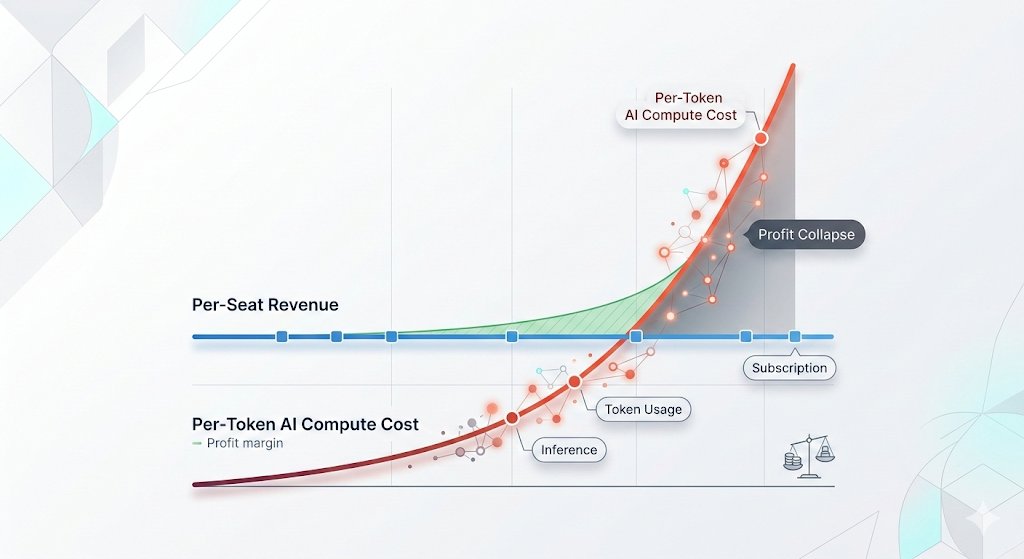
5. SaaS is not dead. In fact, Dan is bullish on SaaS stocks. When users bring their own AI (via Codex or Claude Code) to use SaaS products, the user—not the SaaS company—pays for tokens. This saves SaaS company’s margins. Since the agents need their own seats, Dan predicts that agents will create massive new demand for SaaS because there will be tons of agents using these products at high volume.
6. Every company will have one “super-agent” inside their Slack that every employee will use. Dan initially thought every employee would have their personal work agent, like a shadow AI org chart, but he’s completely flipped his view. He realized agents need humans who care about them. When someone gets tired of maintaining their personal agent, it becomes useless. The winning model is one forward-deployed engineer or AI-savvy person who maintains a company-wide agent (like Shopify’s River or Viktor), and then it trickles down to more specialized team agents as models improve and become less fiddly.
7. The AI job apocalypse is not happening, but you do need to evolve to stay relevant. Models make yesterday’s human competence cheap. But because everyone uses the same models, it all looks the same if you use it the default way; it becomes commoditized slop. Humans then take that frozen competence and use it to make something new and interesting for their specific situation. The key: “ride the models”—use them for everything you do, try new models when they drop, keep turning over rocks.
8. We will read way more AI-generated writing, and we will like it. Human writing is incredibly important for things that matter, but for internal docs, planning, and email, AI-generated is often better because most people are bad at writing strategy documents.
9. Build software for humans and agents to use together. The current model is building a CLI that an agent uses independently. Instead, you and your agent should be using the app together. This creates new design challenges—agents can make a billion requests in three seconds, so you need approval flows, inboxes that summarize what happened, logs, and easy rollback.
10. Forward-deployed engineers are the new most essential role. The big model companies have teams of people managing their internal agents, and those teams aren’t going away. It’s different from traditional software building, and certain engineers love it. As models get better, this role will evolve—you’ll be managing more agents doing more things.
🦔Microsoft canceled its internal Claude Code licenses this week after token-based billing made the cost untenable, even for a company with effectively infinite cloud resources. Uber's CTO sent an internal memo warning the company burned through its entire 2026 AI budget in just four months. American AI software prices have jumped 20% to 37%, and GitHub (owned by Microsoft) is dropping flat-rate plans for usage-based billing across its products.
My Take
The AI subsidy era is ending in real time. The same company that put $13 billion into OpenAI and built the Azure infrastructure powering most of Anthropic's compute just looked at the bill from a competitor's coding tool and decided it was not worth paying. That is not a productivity failure on Anthropic's end. Token-based pricing is forcing every enterprise customer to confront the actual cost of running these models at scale, and the number turns out to be far higher than the flat-rate experiments suggested.
This ties directly to my Gemini Flash post yesterday. Anthropic, OpenAI, and Google all raised effective prices in the last six months. Enterprises that built workflows assuming AI costs would keep falling are now watching annual budgets evaporate in months. Two outcomes look likely from here. Either enterprises scale back AI usage to fit budgets, which slows the revenue ramp the labs need to justify their valuations ahead of IPOs, or the labs cut prices and absorb the losses, which makes the unit economics worse at exactly the wrong moment. Both paths land in the same place, the numbers stop working, and somebody has to take the writedown.
Hedgie🤗
@Ton_hBC@Miss_Royal73 Lekker man. En dan maar afvragen waarom mensen niet met elkaar door een deur kunnen. Achterlijke.
En je praat niet voor ‘blanke mensen’, net zo min als deze ‘moslim’ voor alle moslims praat.
Cursor pays engineers $1,100,000 a year to run teams of AI agents that ship code while they sleep.
[The CEO of Cursor explained in 9 minutes how they ship at 100x speed using team of agents]
↓ Save this before everyone copies the playbook
1. Engineers no longer babysit one assistant. They manage dozens of agent colleagues working in parallel, each on its own remote machine
2. Validation contract before code, not after. Humans only at scoping and review.
3. The agent team handles the full loop : planning, coding, testing, shipping PRs with each agent specialised for a role.
Watch the guide. Then read the guide below by @eng_khairallah1
Joined a new AI-native company this week and it’s kind of wild how different it feels already.
The laptop arrived, I logged in, and an agent basically took over from there. It set up my dev env, pulled repos, fixed dependency issues, got permissions approved, pointed me at the backlog, linked the architecture docs, and surfaced the Slack debates I actually needed to read before touching production.
When I needed context on something, I asked the agent and it found the exact thread from months ago explaining why a decision was made, who owned it, the related Linear issues, and the PRs connected to it.
I’ve only been here 3 days but it honestly feels like I’ve worked here for a year because the usual friction and scavenger hunt for context just isn’t there anymore.
We should probably stop calling this “onboarding” and rename it to “mounting” because this feels a lot more like mounting a distributed filesystem called “institutional memory” than slowly getting drip-fed context over 6 months.
@yazins@OpenOats@ibmokdad Thats awesome. @ibmokdad any chance you could explain me how to use hermes to make a similar windows version based on latest version of OpenOats?
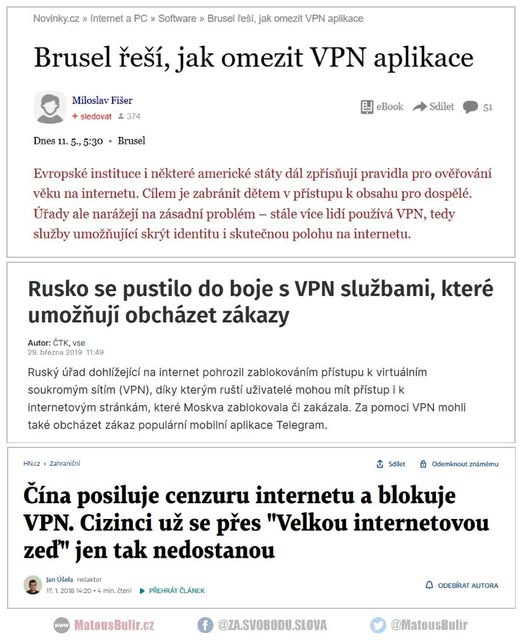
Když Čína omezuje VPN, je to jasný důkaz totality. Když Rusko omezuje VPN, je to jasný důkaz totality. Když EU chce omezit VPN, je to jasný důkaz.... svobody a demokracie?