Havacılık ve turizmde artık hiçbir şey eskisi gibi olmayacak. Çünkü Çin, yepyeni bir dönemin kapısını araladı.
Dünyanın ilk elektrikli ticari yolcu uçağı CE-25A ilk pilotlu uçuşunu gerçekleştirdi.
19 kişilik uçak 500 km menzile sahip ve sıfır emisyon üretiyor. Devlet şirketi COMAC'ın ürettiği uçağın maliyetleri %70 oranında azaltması bekleniyor.
It's been about a year 6 months since I took over management of the school (at the board level, not day to day). When I came in, we had about 440 students. Now we are at 770 students. We have one of the highest transfer rates to the school in the town - outside of a very high JSS1 enrollment, we have 20+ students joining into each of the higher classes. This is in spite of an 80% increase in school fees.
What was the strategy? Well, combining various things:
1. High standards for teachers and employing a lot of new, very good teachers
2. Constant staff salary increment
3. Big focus on extra-curricular activities and fun
4. Video strategy, what we do should be shown to the world
5. Open forums for parents to complain, and prompt reactions. The old methods of hiding complaints just makes schools bad
6. Constant infrastructure work and "getting better every day"
7. Discipline and no leniency on anything
8. Reducing all those massive enrollment fees to allow cheaper switching. A parent may be able to afford fees, but cannot bring out money for the enrollment fees
The goal is to hit 1000 students as quickly as possible, which we still push the standard up. A lot to do - we will have a world class computer + physics lab by next term (we are working on it now). Then we turn attention to the boarding houses and the sports hall, and do more solar (we already have 3 blocks on solar, but we are not done).
Also, we are doing a lot of works on academics now, the goal is that we should be in the top 5 in WAEC results nationally.
We did all this without layoffs or staff disruptions. And I only spend ~ 3 hours per week in active management. A strong team + ideas from the digital world are good enough.
The chaos in El Salvador before Bukele was never an accident, and the chaos in Haiti today is not an accident either.
The media told you that the gangs were just poor boys who went bad on their own, but that story falls apart the moment you ask one simple question.
Where does a poor sixteen year old boy living in a slum with no job and no money get an AK-47 and an AR-15 and a Glock and thousands of rounds of ammunition, and where does he get a brand new Toyota Hilux and motorcycles and speedboats and drones and encrypted phones and bulletproof vests and night vision goggles, and who pays his monthly salary and pays for his safe house and pays his lawyer when he is arrested and pays the police and the judge and the prison guard to look the other way, and who pays his family when he dies?
A poor boy cannot afford even one bullet, so someone else is paying for all of it.
That someone is the multimillionaires and the billionaires and the wealthy entities who profit from chaos, because chaos is a business and a broken country is the most profitable business in the world.
When a country is in chaos its land becomes cheap so they can buy it, its gold and its drugs and its resources can be stolen without anyone asking questions, its government becomes weak so they can control it, and its people become so scared that they obey anyone who promises them a little safety.
In El Salvador the gangs were not fighting the system, the gangs were the system, paid to keep the poor terrorized so the poor would never rise up and demand a better country.
In Haiti it is the same story, the gangs are not independent, they are funded and armed and protected by rich families and foreign businessmen and foreign NGOs who want Haiti to stay weak so they can keep stealing its ports and its gold and its labour.
And when a man like Bukele comes and says I will lock up all the gangs and end this in two years, who attacks him? It is the same people.
The same billionaires who fund the gangs fund the media that calls Bukele a dictator, the same wealthy entities who arm the gangs fund the NGOs that cry human rights for murderers, the same people who profit from chaos fund the political voices that hate real help in Haiti and sabotage anyone who is actually capable of doing it.
Look at the pattern and it becomes clear, when a gang kills a hundred innocent people there is silence, but when a leader kills a hundred gang members there is outrage.
When a gang rapes children there is no campaign, but when Bukele locks up rapists there is a global campaign against him.
That is because the media is not independent, it is owned by billionaires, the NGOs are not independent, they are funded by billionaires, and the politicians are not independent, they are bought by billionaires.
They do not want Haiti saved and they did not want El Salvador saved, they want them broken, because a broken country is cheap to buy and easy to control.
Bukele exposed them, he proved that gangs can be destroyed in months if you have the will, and that terrified them, because if El Salvador can be fixed then Haiti can be fixed, and if Haiti can be fixed then Africa can be fixed, and if Africa can be fixed then the billionaires lose their business.
That is why they demonize Bukele, that is why they sabotage Haiti, that is why they hate any man who actually helps the poor.
Applications for Commonwealth Shared Scholarships are now open!
Develop your skills and build networks with a fully funded postgraduate degree in the UK
Find out more about the courses: https://t.co/1Xr3dVgcEe
Apply by 08/12/26: https://t.co/vx40VRZUnN
#CommonwealthScholarships
In 2015, I built an AI that detects early cancer.
It’s still running across hundreds of hospitals in the US today.
It was the most fulfilling work of my life, and I was building in AI years before everyone called it “AI”.
Building in AI then was a dream.
Now It feels like we’ve taken a turn for the worse.
It started when i was in undergrad.
I built my first company: AI models that made the political data transparent to voters.
At 21, I was offered six figures for it, but the buyers wanted to use it for reasons I couldn't ethically support.
So we turned down the offer and shut down the company instead.
In 2014, I moved into deep learning research on language models, for the Intelligence Community and Goldman Sachs.
Then HCA Healthcare came to us.
They put me in a competition against 10 people from IBM Watson. It was just me and the tools I’d built.
Our job was to build an AI model that can catch the cancer that slips through the cracks in hospitals.
It was the most intense 30 days of my life. Multiple all nighters.
My models won. That turned into a $5M deal, and later its own company, Azra AI.
Then the world caught on.
ChatGPT and Claude arrived, and AI costs exploded.
Building in AI in 2015 felt novel.
We were using it to find cancer tumours and save lives.
Now the biggest tech companies have turned AI into a money extraction machine.
That’s when I decided to make a change.
We raised $8.5M to build a better future for AI.
On Wednesday, we’re launching Rayline.
AI shouldn’t be locked inside a few labs’ models, prices and clouds. It should be open, transparent and decentralized.
More on Wednesday.
I went to Computer Village today and found our business model already running in the market.
A solar vendor has put prepaid meters on the shops around him and sells power by the unit. The receipt says ₦894 per kWh plus VAT, which comes to ₦967.50. A shop paid ₦5,000 and got 5.17 kWh.
At T&S Power Grid, the most we charge on any site is ₦400 per kWh. The same ₦5,000 buys 12.5 kWh from us. That’s more than twice the power.
So I sat down and asked him how it works.
He was honest. On many days the solar doesn’t last two hours, because the shops lean on it when NEPA fails. If a customer plugs in a heavy appliance, he can’t see it and can’t stop it. One big load drains the battery and everyone goes dark.
That isn’t a pricing problem. It’s a control problem.
This is why we built the Gateway Hub.
It gives the host control of every connection:
→ Live usage per customer. The host sees who is drawing power and how much.
→ A power cap on each connection. If a shop plugs in a pressing iron or a freezer above its limit, that line trips on its own. The other customers stay on.
→ Remote cut and reconnect. The host does it from the dashboard without going to the meter.
→ Time-of-day pricing. Evening power can cost more, which protects the battery for the hours that matter.
→ Prepaid billing that runs on the device. It keeps working when the internet drops.
Control is what brings the price down. When the battery isn’t drained by one customer, it serves everyone for longer. More kWh sold per day means the host earns well at a fair price, and customers stop paying a scarcity premium.
The Computer Village vendor proves that people will pay for reliable power next door. Our job is to make it fair, measured and in the host’s control.
If you own solar with spare capacity, or you’re funding solar for a market, an estate or a plaza, let’s talk.
If you're a changemaker between the ages of 24 to 45 in Africa, the Asia-Pacific, Europe, or the United States looking to grow your leadership skills and scale your impact, apply for our @ObamaFoundation Leaders program: https://t.co/XppsqbtATr
1961: Nigeria was the first African nation to break diplomatic relations with France, and the day was 5 January 1961.
That was not a quiet diplomatic quarrel. That was Nigeria standing up in front of the whole world and saying, enough is enough.
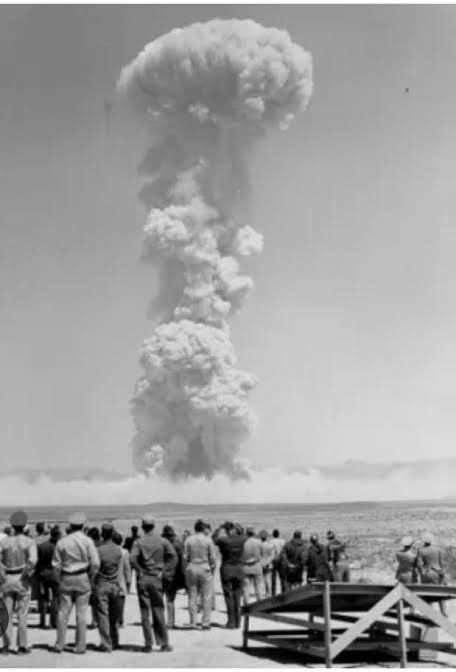
France had gone into the Sahara Desert and exploded an atomic bomb, the third one, on 27 December 1960. They called it Gerboise Rouge.
Nigeria had warned them before the test. African leaders had warned them. The people had warned them. The fear was simple and real.
The harmattan wind could carry radioactive fallout south, into Nigeria and into other African countries, and poison the air, the water, the soil, and the bodies of innocent people who had never asked for any bomb.
France tested anyway.
Prime Minister Sir Abubakar Tafawa Balewa did not hide behind a statement.
On the evening of Dec. 28th 1960, The French Ambassador, Raymond Offroy, was summoned to the Foreign Ministry and told of the Nigerian Government's “concern” over France's explosion of an atomic bomb in the Sahara, then January 5th, 1961, Prime Minister Tafawa Balewa summoned the French ambassador in Lagos, Raymond Offroy, and told him face to face that Nigeria was cutting diplomatic relations with France.
He personally handed him the letter. In that letter, Balewa spoke of the greatest resentment at the unalloyed intransigence of the French Government and the utter disregard with which that Government had treated the feelings of Nigerians on the question of atomic tests in the Sahara Desert.
Then came the part the French would never forget. The ambassador and his embassy staff were given only forty eight hours to leave Nigeria. Forty eight hours. And to make the message even sharper, Nigeria barred French planes and vessels from using Nigerian airports and ports, cancelled French transit rights through Nigeria, banned French ships from its coastal waters, and froze French assets in the country.
Think about that. This was 1961. Nigeria had only become independent on 1 October 1960. Barely three months into independence, a young African country looked one of the most powerful nations on earth in the eye and said, if you will not respect African lives, you will not enjoy African friendship.
That is why this story still matters. It was not only about a bomb in the desert. It was about dignity. It was about a new nation refusing to be treated as if its people did not matter. It was Nigeria saying that African lives are not expendable, and that no friendship is worth the silence that allows your neighbour to be poisoned.
Nigeria paid a price for that courage. Relations with France stayed broken until 1965. But history remembers who spoke first, and who acted first.
On 5 January 1961, Nigeria spoke, and Nigeria acted.
Let us never forget that this country once had the courage to stand alone for Africa.
If this history moved you, drop a comment and share it, so the next generation will know what Nigeria once stood for.
Now You Know
Russia-Africa Summit Vs France-Africa Summit: Compare And Contrast
Delegations from 48 of Africa's 55 countries were present in Moscow at the recent Russia-Africa Summit where multiple infrastructure, energy, defence and economic cooperation deals were signed to further dependent Africa's relationship with the world's foremost nuclear power and 8th largest economy.
In this analysis, senior reporter Mckay Chukwu highlights and compares the stark difference in purpose, engagement, and meaningful results recorded at this summit in contrast with those recorded at France's so-called "Africa Forward" summit in Nairobi, Kenya in May 2026.
UK ILR update
An SNP MP has written a strong letter to the home office opposing the plan to double the wait for indefinite leave to remain from 5 to 10 years.
He's angry and said people have planned their jobs, homes and families around the original 5 year route.
Other big charities are also fighting it, including Mencap, Barnardo's, Praxis and the Refugee Council. They're all pushing back against the changes.
He's asking for proper protection for everyone already on a settlement path.
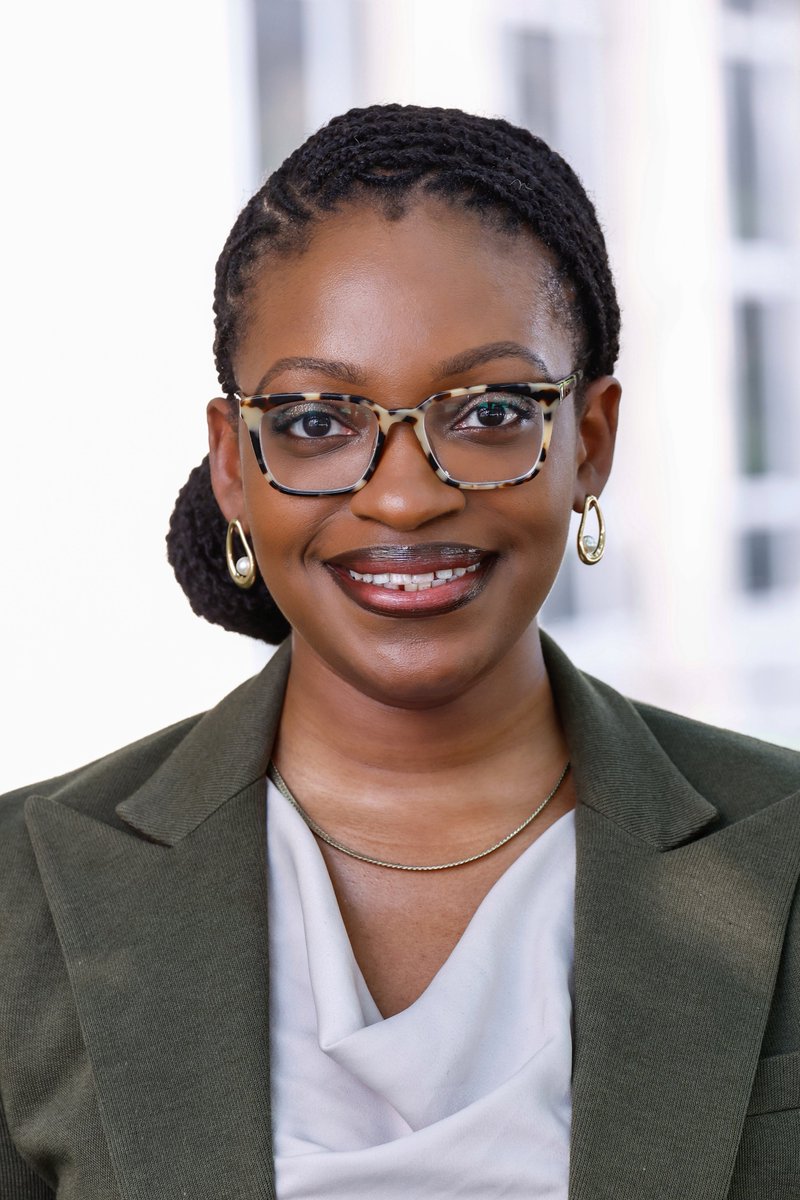
Nigerian-American computer scientist Dr. Chinasa T. Okolo is helping shape the future of Super Intelligence (SI). Named to the “TIME100 AI” list of the world's most influential people in SI, her work is advancing responsible SI that serves communities around the globe. Her achievement is a powerful example of #AmericanExcellence 🇳🇬🤖🇺🇸
Image credit: https://t.co/zIlQNp1cWd
NIGERIA WE'RE SLEEPING
Have you ever wondered why some countries keep moving forward while others keep struggling to catch up?
Look closely at what is happening in this video.
Machines are manufacturing components. Workers are assembling sophisticated electronic devices. Different stages of production are coordinated with impressive precision.
Now think about this:
Every machine represents engineering knowledge.
Every production line represents industrial capacity.
Every finished product represents value created within the economy.
Here is something worth thinking about:
What if, instead of importing most of the technology we consume, we invested heavily in developing the capacity to manufacture it?
A country doesn't become an industrial powerhouse overnight.
It takes years of investment in education, research, engineering, infrastructure, technology and manufacturing.
The real wealth of a nation is not just what it buys. It is what it has the knowledge and capacity to produce.
Are we paying enough attention to this?
Netherlands, Germany, Italy, Spain, Sweden, Australia, New Zealand, Portugal, France and Japan - they offer fully funded scholarships
I spent my entire day working on this. Here are 300+ universities offering fully funded Master’s scholarships for 2027.
In this drive, you’ll find universities offering:
• Fully funded scholarships without IELTS requirements, where officially permitted.
• Fully funded scholarships accepting Third Class or Second Class Lower degrees, where applicable.
• Fully funded scholarships that accept applicants without extensive work experience.
I put this together to help more people discover Master’s opportunities they can apply for in 2026 - 2027.
https://t.co/2o9QFO7Ec3
I am deeply honoured to be elected to the International Court of Justice.
I am grateful for the support and faith states have put in me to serve the @CIJ_ICJ. I look forward to serving the Court with independence and integrity alongside colleagues elected today.
They said African languages were too fragmented, too complex and too commercially insignificant to build advanced AI for.
We disagreed. So we built it.
64 languages. 166 voices. 3 billion parameters. ONE model.
Today, we are unveiling STORM-Ensemble 3.0, the most capable multilingual speech synthesis model we have built at PlotWeaver.
From Yorùbá, Igbo, Hausa and Nigerian Pidgin to Swahili, Amharic, Wolof, Zulu, Xhosa and dozens more, STORM-Ensemble 3.0 generates speech across 64 languages, with 166 distinct speaker voices.
Every voice you hear is generated by our model, not a prerecorded sample.
But the real breakthrough isn't the numbers.
It's what becomes possible when this technology is in the hands of people who can build with it.
-African filmmakers distributing stories across languages.
-Banks and telcos serving customers in their mother tongues.
-Education platforms reaching more children.
-Developers building voice AI products without starting from scratch.
We are not building AI for African languages simply to prove it can be done. We are building the infrastructure to make our languages commercially viable at global scale.
Next week, I will be speaking at the Commonwealth Business Forum in Antigua about unlocking the Commonwealth's creative potential. This launch is a practical demonstration of that ambition.
Africa must not simply consume the future of AI. We must build, own and shape the infrastructure that powers it.
Watch the video. Listen to the voices. Imagine what's possible.
Introducing STORM-Ensemble 3.0.
PlotWeaver. Build Once. Speak Every Language.
#PlotWeaver #STORMEnsemble #VoiceAI #AfricanLanguages
Here’s a consultation paper on Nigeria’s Economic Framework shared by the Minster of Finance, @taiwoyedele.
The Nigerian govt seeks your input before November 27, 2026. Kindly add your ideas.
https://t.co/hXt19ANgJy