PRESTIGE-AF results, as presented by Roland Veltkamp
In ICH survivors with AF, DOAC use (2 weeks-1 year after ICH) prevents ischemic stroke (HR 0.05) but was not non-inferior in terms of recurrent ICH (HR 10.9)
Other ongoing Phase 3 RCTs: ENRICH-AF, ASPIRE
#ISC25#AHA@StrokeAHA_ASA
@ShadiYaghi2 Using AI in which way? Beyond the obvious problem of (likely) unsupervised peer-review, I find it quite problematic to feed an algorithm with the intellectual work of others.
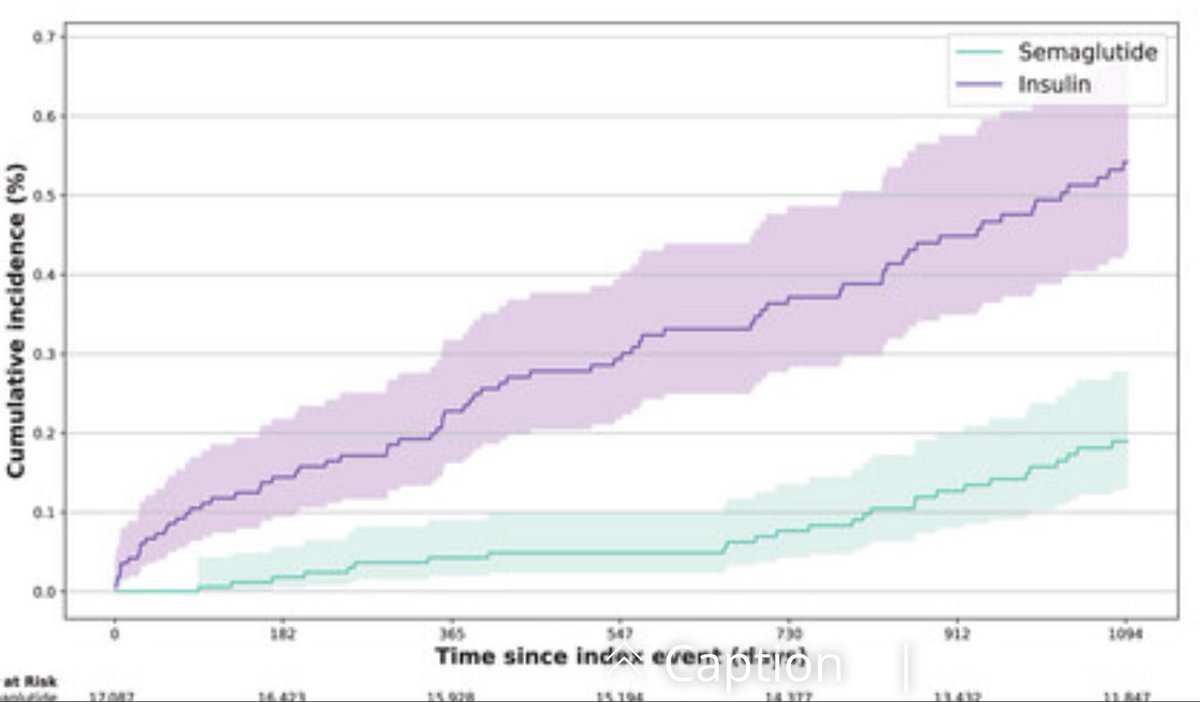
If you see an observational study where the drug works immediately for a disease that takes years to develop, throw the study out. Like this study claiming Ozempic reduces risks of Alzheimer’s in diabetics within 30 days of initiation. Junk science
https://t.co/tT5nsgSTwn
We have a population that is changing, and we can't keep doing the same thing.
Bringing someone to the ED is an intervention that may not be in their best interests.
We need to get better for them and for us.
#eusem2024
1/
A 34 yo M presents with worsening confusion and seizures. He is febrile.
He is intubated and transferred to the NeuroICU.
A #continuumcase about a cause that’s probably low (not) on your DDx.
@Toaster_Pastry No procedure in the LAA will be able to reduce the stroke rate to 0 simply because not all ischaemic strokes are cardioembolic. To lump all ischaemic strokes in one group is not granular enough.
@janpurrucker@stephanamayer@hoomankamel At the same time, and I quote Charles Warlow here, I think one should be able to "tolerate the genuine uncertainty of others" (Stroke. 2004;35:2211–2219). Interestingly, also talking about IVT.
@janpurrucker@stephanamayer@hoomankamel Do not get me wrong. I think this trial is great news, and I hope it shows no increased risk of sICH and it becomes standard of care. But I think we owe to our patients that this potentially risky interventions are overseen by an DSMB.
@janpurrucker@stephanamayer@hoomankamel I always ask my students to compare these two graphics when in our seminar of interpreting real-world-data. This comes from Nielsen et al. Circulation. 2015;132(6):517-25
@DavidSeiffge@stephanamayer@hoomankamel For the pyhsician, therefore, the risk-benefit analysis looks different: "(at least theoretically) increased risk of bleeding -> I must be cautios and offer this therapy to a patients that will likely benefit from it". The available data reflects this heuristic. Not a liberal one
@DavidSeiffge@stephanamayer@hoomankamel The risk-benefit analysis is therefore: "not likely to bleed, more likely to benefit". Liberal adminstration policy. In the case of anticoagulants, I am not aware of an IVT trial that did not exclude patients on OAC; particularly on DOACs.