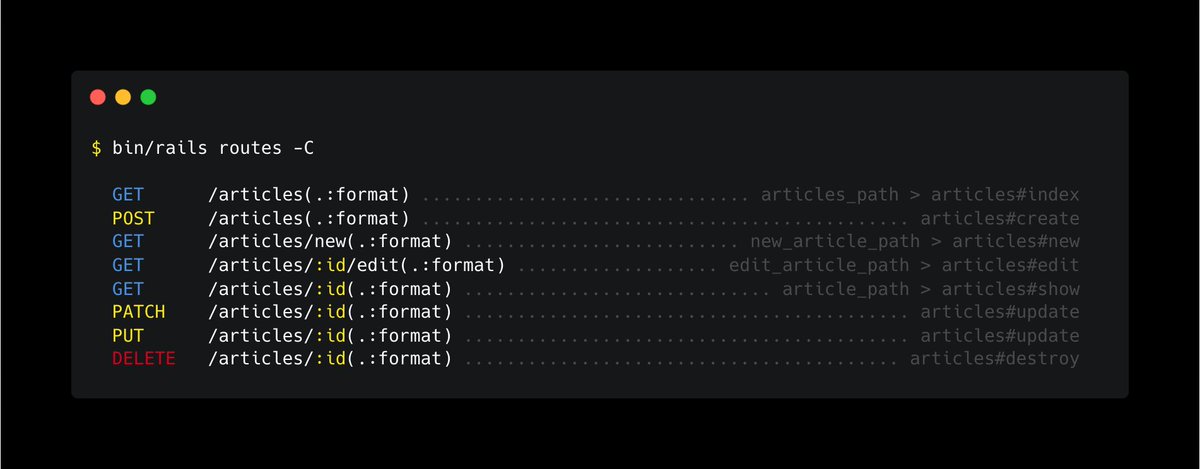
If it’s only rails server on @conductor_build it provides a env variable for each worktree that has a port that you can use to start server without collisions.
Otherwise if you have rails + some other thing like some js frontend I use https://t.co/ay7CXYTyBU to reserve a port for each thing I need and search for new empty ports. So for example starting from 3000 for back and 4000 for frontend I check with portkeeper which port is free and reserve it, then use it every time I spawn a worktree. All of that is part of the worktree setup script, I configured it once months ago and just use it.
@pbakaus@thsottiaux The biggest problem I observed with codex models is design. Didn’t spend much time with impeccable + codex but would love to see your feedback on how much it improves codex’s design ability
A tip, especially if you're newer to building with Codex:
Before you plan a build in Codex, talk it out first.
Sit down and have a conversation about what you want to build. Ask questions. Clarify the details.
Work through every unknown you have about the project before you ever touch a plan.
If you have multiple paths you can take, pull on the threads, so to speak. You should be part of the process, dont let the agent make every decision for you.
Most people jump straight into planning mode and then wonder why the agent keeps going off track. The problem usually isn't the agent...
A great tool for this is the AskQuestion tool.
It lets Codex pause and ask YOU questions, turning it into a back-and-forth brainstorming partner instead of a one-shot mind reader.
Enable it in default Codex mode with:
codex features enable default_mode_request_user_input
Let it drill you on edge cases. Let it poke holes in your assumptions. Solidify your ideas. THEN plan.
(Side note, whoever named that committed a felony.)
This is essentially the same as a homebrew workflow I've used for a while:
1. Create a /prototype-ui skill
2. Give it instructions to create multiple radically different designs
3. Give it a picker component to toggle between them
Bingo
I’ve been using all skills from impeccable a lot. Critique is one of the most powerful ones, it always offers a good POV to improve UIs.
One strategy I even did a few times was to loop multiple times the critique skill and the frontend design skill to fix the feedback, and just doing that loop improved a lot the final output.
And this could even start before code, just using pencil or paper tools, and using these skills there will also work in the exact same way, so you can design everything even before implementation starts.
/critique in Impeccable 2.0 doing much more heavy lifting than before:
It the harness supports sub agent:
1. Captures important design context
2. Kicks off a parallel sub agent to do the traditional LLM review
3. Kicks of another parallel agent to do a deterministic review powered by Impeccable 2’s new anti-pattern detection engine
4. Aggregates an fuses both unbiased reviews
5. Opens a browser window with visual overlays to show you what’s wrong
This results in a much less biased, thorough design critique. Definitely a lot more that can be improved, but curious to have you try it.
TestProf v1.6.0 is out, and it was shaped by a real problem.
Last summer we cut Whop's test suite in half (~11k RSpec examples at the time). A year later it grew to 30k specs and CI jumped back to 4m30s. So we dug in again.
We found four hidden performance killers and used those findings to ship new features, including a GC mode in our memory profiler and a new tests-per-second profiler.
Full story by @palkan_tula: https://t.co/s3cemNGY6S
Great talk by @palkan_tula at @rubymontevideo
I forgot to bring the book for a signature so I decorated it with the meetup stickers.
Was nice to have you here!
🚨 CRITICAL: Active supply chain attack on axios -- one of npm's most depended-on packages.
The latest [email protected] now pulls in [email protected], a package that did not exist before today. This is a live compromise.
This is textbook supply chain installer malware. axios has 100M+ weekly downloads. Every npm install pulling the latest version is potentially compromised right now.
Socket AI analysis confirms this is malware. plain-crypto-js is an obfuscated dropper/loader that:
• Deobfuscates embedded payloads and operational strings at runtime
• Dynamically loads fs, os, and execSync to evade static analysis
• Executes decoded shell commands
• Stages and copies payload files into OS temp and Windows ProgramData directories
• Deletes and renames artifacts post-execution to destroy forensic evidence
If you use axios, pin your version immediately and audit your lockfiles. Do not upgrade.
@conductor_build it would be amazing to have a button for Claude Code sessions to continue start the remote control so we can continue the session over phone very fast if we need to leave the computer
Starting today you can use Codex in Claude Code 👀
/plugin marketplace add openai/codex-plugin-cc
Try it out today with:
/codex:review for a normal read-only Codex review
/codex:adversarial-review for a steerable challenge review
/codex:rescue to let codex rescue your code
Enjoy Codex-ing!
@Shpigford Given we use Claude code we initially made a plugin on a separate repo and it’s automatically installed on all the repos we have, but recently we just installed all the skills in the projects directly for .agents and .claude and it’s enough.
@Shpigford I agree, just will switch Postgres by SQLite when possible because it’s simpler, even for worktrees work. Apart of that rails + inertia have bee a huge advantage to move things faster with the best of rails and modern frontends
The #1 thing people forget after installing Impeccable: updating their skills. Fixed that.
New newsletter for releases, patterns, and Impeccable usage tips. Low volume, high signal.
https://t.co/omy8J9WQ84
Stay ahead
Today we're announcing Paper Snapshot
Snapshot your live website and paste it into Paper as editable layers
• start from your real site
• no more screenshots
• uses real html/css
What will you make? Link in replies 🎶