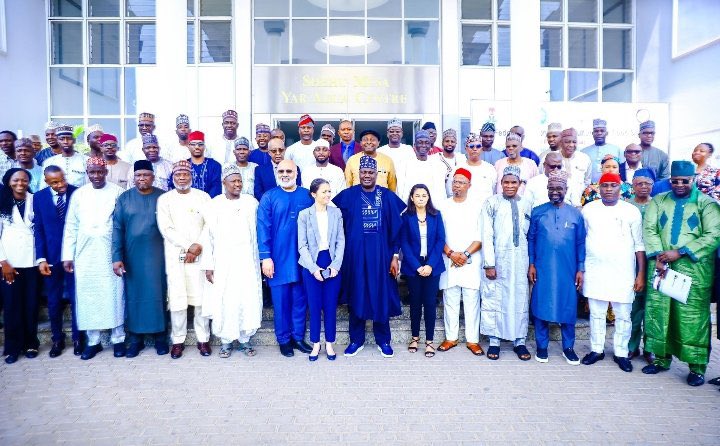
His Excellency @SenatorAKyari has been awarded Agricultural Sector Reformer of the Year 2024 by Reporters Nigeria.
He said the recognition is as a result of collective efforts in driving mechanization, innovation & strategic partnerships to transform Nigeria’s agriculture.
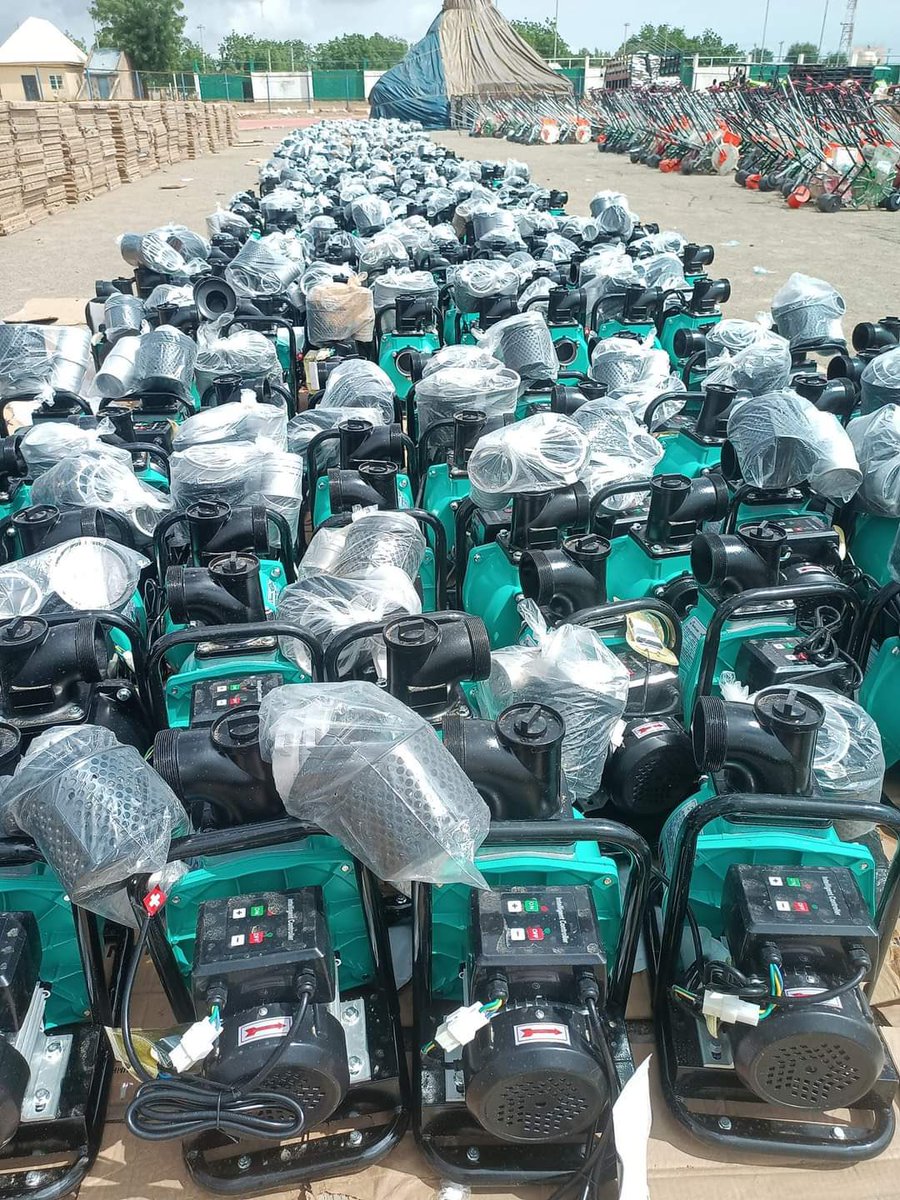
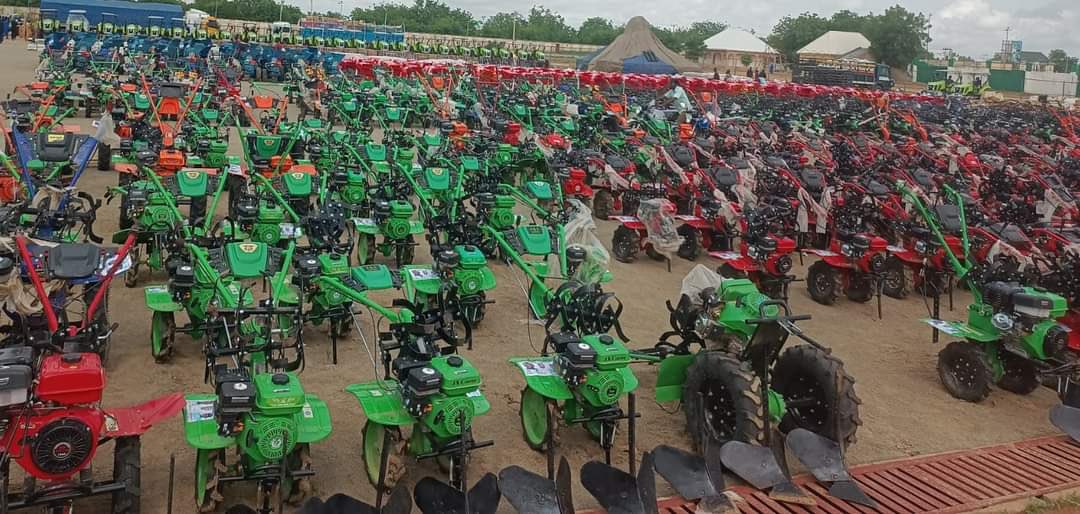
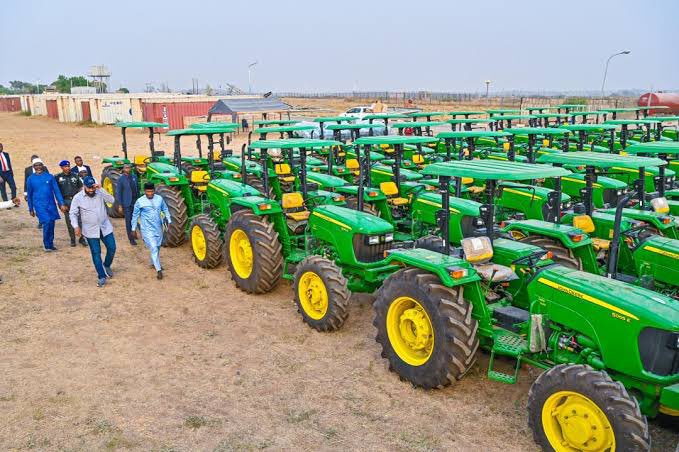
Today, the governor of Kaduna state @ubasanius official launched Dry Season Agricultural Empowerment Program at Murtala Square, Kaduna. @FmardNg@Kadunastategov1
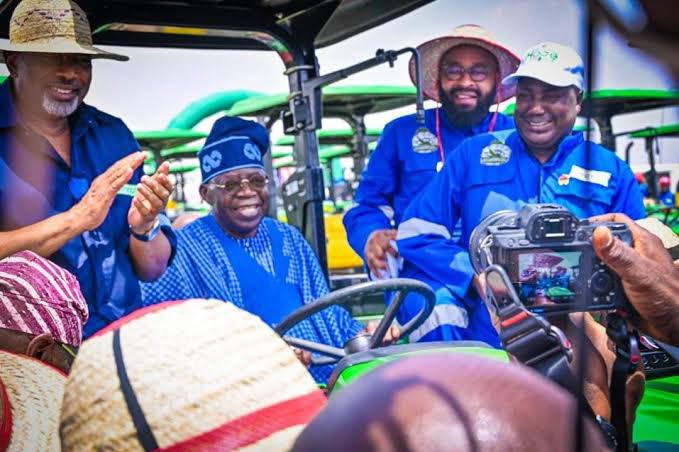
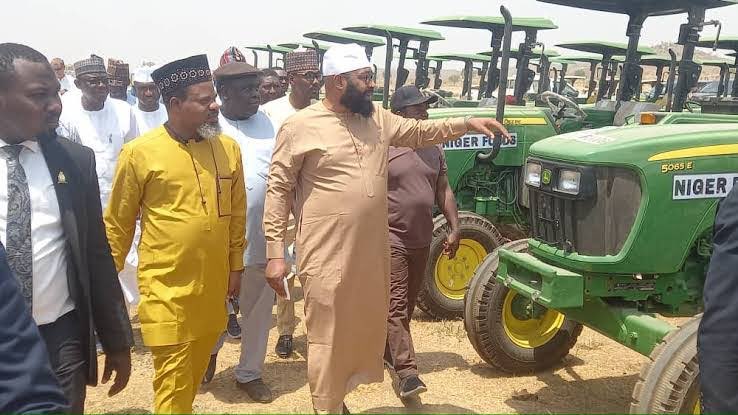
Not less than 300 benefits from farm inputs and agro-processing machines under the Tallafin Noma (A Koma Gona) scheme of Gov. Uba Sani of Kaduna state. @ubasanius@FmardNg
The scheme will be extended to beneficiaries across the 23 local governments in Kaduna State.
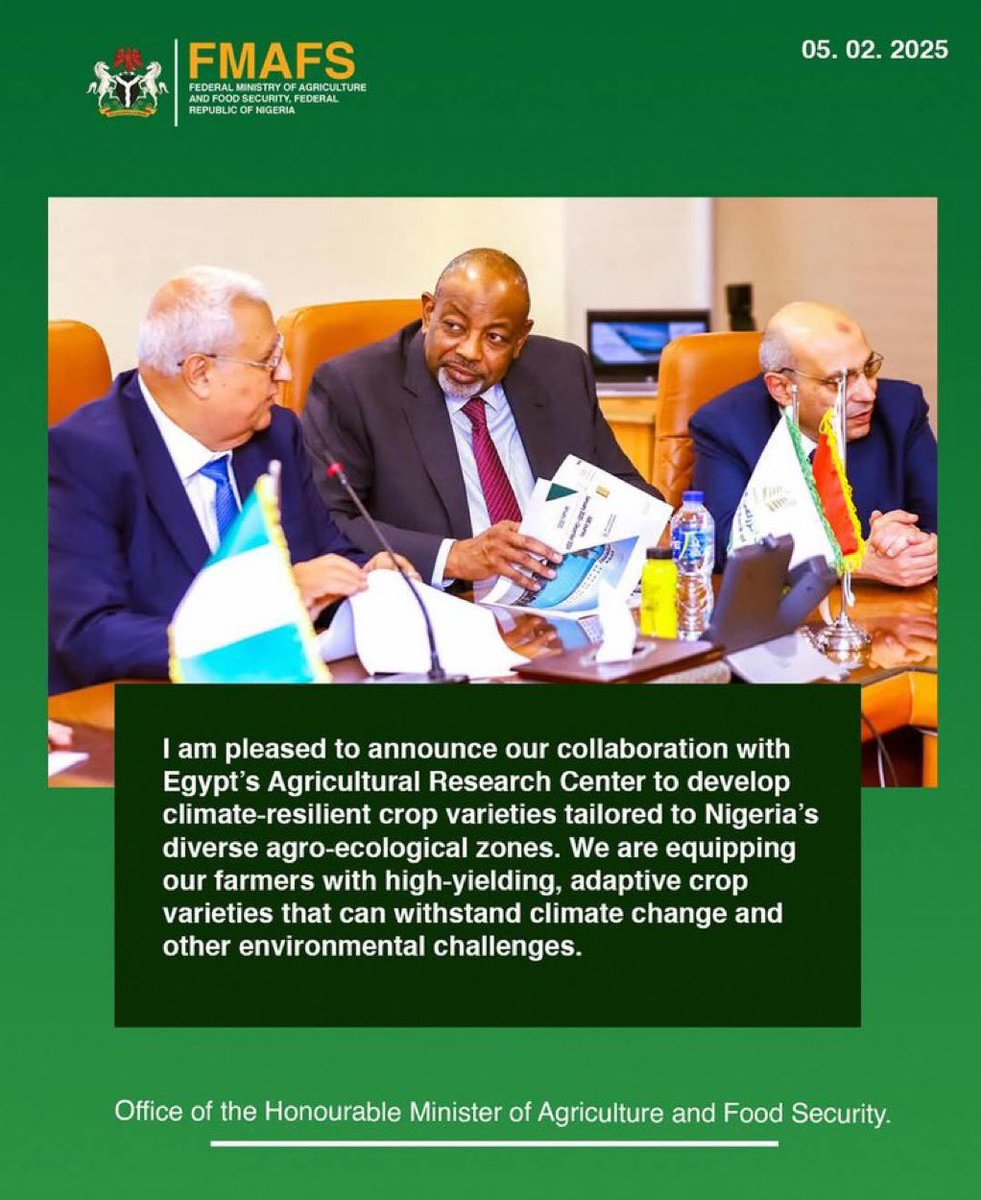
The Nigeria Minister of Agriculture and Food Security,@SenatorAKyari announced joint efforts between Nigeria and Egypt's Agricultural Research Center to develop climate-resilient crop varieties for Nigeria's diverse agro-ecological zones. @FmardNg@SenatorAKyari@officialABAT
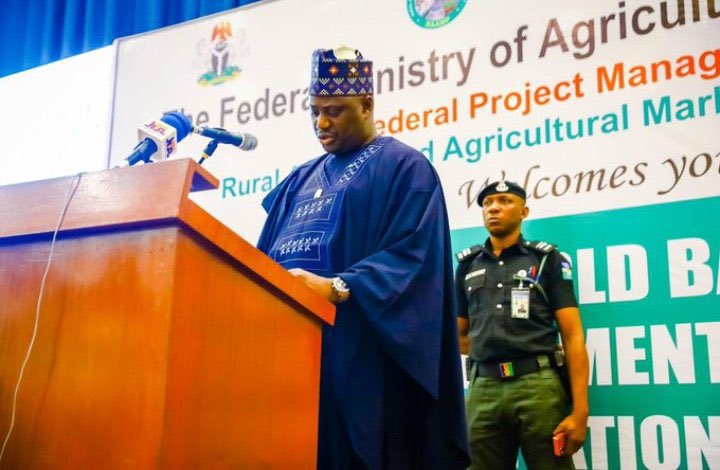
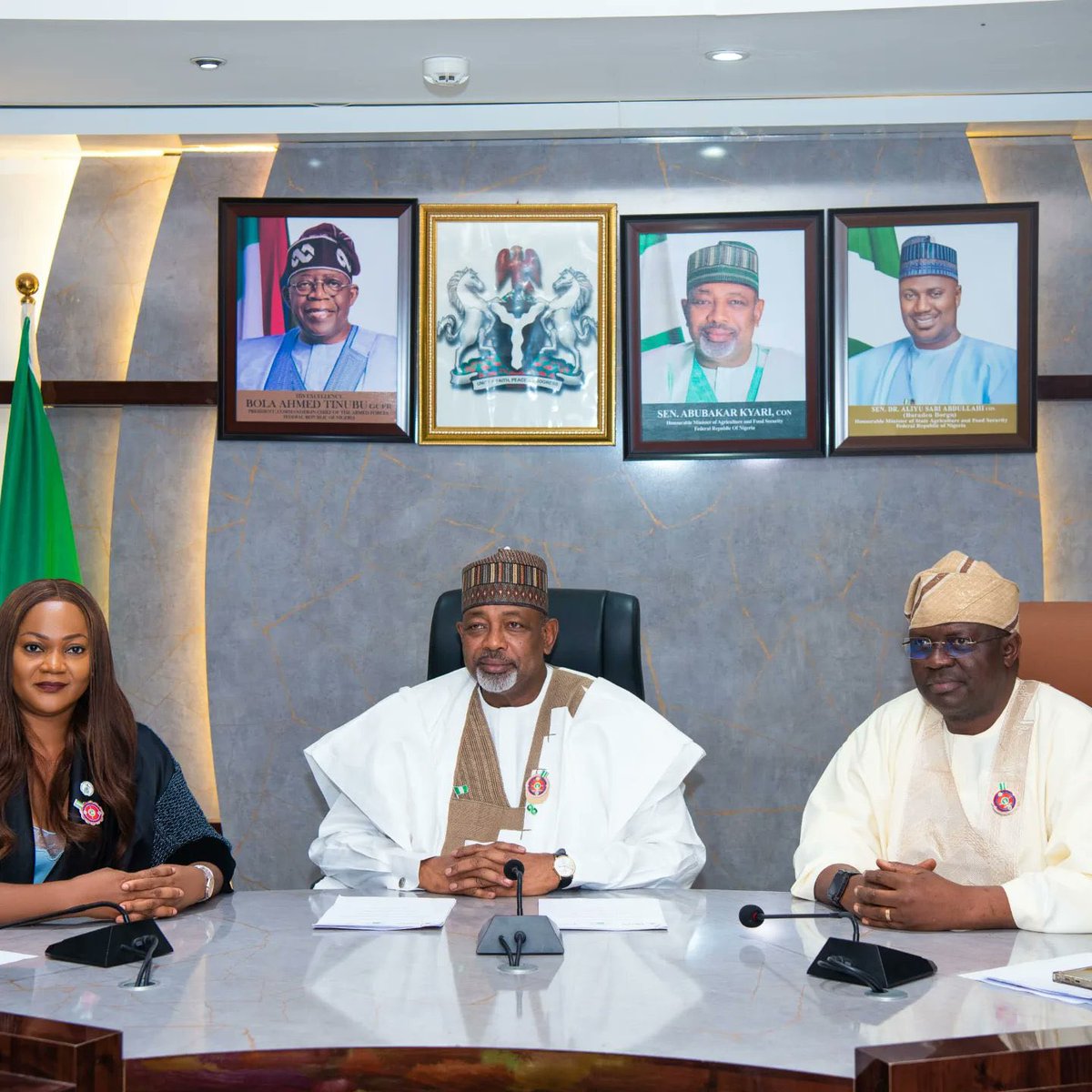
The minister of State for Agriculture and Food Security @sabialiyu_ joins the World Bank and the French Development Agency (AFD) @WorldBank@AFD_France for the 8th Implementation Support Mission of the Rural Access and
The Federal Ministry of Agriculture and Food Security (FMAFS) signed an MOU with the National Identity Management Commission (NIMC) on the NIN-enabled Farmer Registry and Government to People (G2P) card project.
@FmardNg@SenatorAKyari
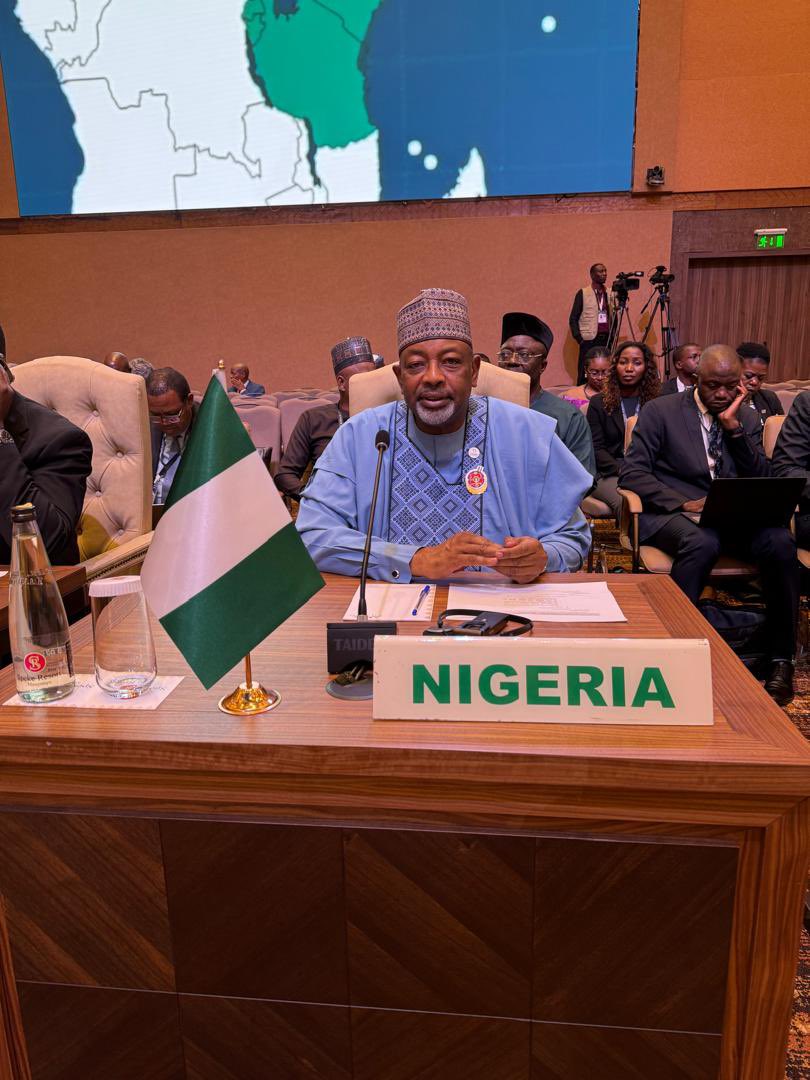
STATEMENT ON MY PARTICIPATION AT THE EXTRAORDINARY AU SUMMIT ON THE POST-MALABO CAADP, KAMPALA, UGANDA, 9–11 JANUARY 2025
It was an honor to represent Nigeria at the African Union’s 37th Extraordinary Summit on programmeMalabo Comprehensive Africa Agriculture Development Programme (CAagrifoodld from 9th to 11th January 2025 in Kampala, Uganda. The summit brought together Heads of State and Government, Ministers of Agriculture, and Ministers of Foreign Affairs from across Africa, reaffirming our collective commitment to advancing agricultural development and food security on the continent.
Since its adoption in 2003 under the Maputo Declaration, CAADP has been Africa’s flagship programme for agricultural transformation. The initiative set ambitious targets, including achieving 6% annual agricultural GDP growth and allocating at least 10% of national budgets to agriculture. The 2014 Malabo Declaration further built on this foundation, articulating seven key commitments for delivery by 2025:
1. Promoting investment finance in agriculture to encourage public-private partnerships and improve access to resources.
2. Ending hunger in Africa by 2025 through enhanced agricultural productivity, nutrition security, and sustainable food systems.
3. Halving poverty by 2025 by fostering inclusive agricultural growth and improving rural livelihoods.
4. Boosting intra-African trade in agricultural commodities and services to strengthen regional economic integration.
5. Enhancing resilience to climate variability and other shocks, especially for vulnerable populations.
6. Ensuring mutual accountability by improving monitoring and evaluation frameworks to track progress.
7. Institutionalizing CAADP within national agricultural policies and plans for better alignment and implementation.
The AU Heads of State and Government meet biannually to assess the performance of member countries on CAADP commitments. At the most recent meeting in March 2024, attended by His Excellency President Bola Ahmed Tinubu, GCFR, in Addis Ababa, Ethiopia, one of the landmark outcomes was the development and adoption of the Ten-Year Post-Malabo Declaration (2026–2035). This strategy and action plan, crafted by the African Union Commission and other critical stakeholders, charts a clear path for advancing inclusive and sustainable agrifood systems.
The objective of the Extraordinary Summit in Kampala was to enable the Ministerial and Inter-Ministerial Joint Committees to adopt the new Ten-Year CAADP Strategy and Action Plan (2026–2035) and the Kampala Declaration. These frameworks reaffirm Africa’s determination to tackle the challenges of food insecurity, poverty, and climate change while fostering sustainable agricultural growth.
During the summit, I had the privilege of participating in both the Ministerial and Joint Ministerial Meetings, where I presented Nigeria’s position and showcased our nation’s remarkable achievements in agriculture. Our interventions under the National Agricultural Growth Scheme and Agro-Processing Programme (NAGS-AP), particularly in mechanization, input distribution, and livelihood support for smallholder farmers, received widespread commendation. Nigeria’s proactive and impactful approach to agricultural transformation was recognized as exemplary among member states.
Additionally, the summit provided valuable opportunities for bilateral and multilateral engagements. I held fruitful discussions with representatives of partner governments, international organizations, and private-sector stakeholders, all of whom expressed strong interest in deepening collaboration with Nigeria. These engagements further underscore Nigeria’s pivotal role in shaping the future of agriculture on the continent.
As we transition to the Post-Malabo era, Nigeria remains steadfast in its commitment to achieving food security, boosting agricultural productivity, and improving livelihoods for our people.
COVID-19: @NigeriaGov Inaugurates Joint Technical Task Team (JTTT) as Emergency Need Arises to Ease Movement of Food and Agricultural Inputs Across the Nation.
The Agric Minister, @NanonoSabo has inaugurated the Joint Technical Task Team on Emergency Response to COVID-19. 1/13
COVID-19 NIGERIA: @NigeriaGov Fulfils Its Promise as Agric Minister @NanonoSabo Releases Assorted Food Items for Disaster Management.
Details here👇
https://t.co/X2i6vySUPt