Ref: GSH/XX/CXA/PresTk_2 Date: 25/04/2025
To: H.E. Recep Tayyip Erdoğan, President of the Republic of Türkiye
Cc: H.E. Hassan Sheikh Mohamud, President of the Federal Republic of Somalia
Cc: H.E. Hamza Abdi Barre, Prime Minister of the Federal Republic of Somalia
Cc: Natural Resources Committee of the Federal Parliament of Somalia
Cc: All International Embassies – Somalia
Cc: World Bank – Somalia
Cc: IMF - Somalia
SUBJECT: FORMAL PARLIAMENTARY OVERSIGHT INVESTIGATION INTO THE ILLEGAL, UNCONSTITUTIONAL, AND SOVEREIGNTY-DESTROYING SOMALIA–TÜRKIYE HYDROCARBON AGREEMENT
Your Excellency President Erdoğan,
I write to you not as a diplomat, but as an elected Member of the House of the People of the Federal Republic of Somalia, entrusted with the solemn duty of safeguarding our national sovereignty, our constitution, and the future of our people. I write with unfiltered anger, outrage, and utter disbelief at the hydrocarbon agreement signed between your government and the executive branch of Somalia - a deal so exploitative, so colonial in character, and so reckless in its implications that it represents the greatest surrender of Somali sovereignty since independence.
It was rammed through without debate, without transparency, and in total violation of the Somali Constitution, particularly Articles 1, 3, 4, 7, 48, 50, 53, and 142. It was signed without the consultation of our Federal Member States, who hold jurisdiction over natural resources. It grants your government - a foreign sovereign power - control over Somalia’s entire onshore and offshore hydrocarbon blocks without clear definition, compensation, oversight, or legal limitation and is an act of plunder cloaked in partnership, a grotesque overreach by a foreign power into the sovereign territory, airspace, and seabed of the Federal Republic of Somalia. Somalia receives a meager 5% “royalty” on undefined profits (if any), while Türkiye and its unknown assignees are free to export, assign, militarize, and exploit Somali lands and seas without consent. This is not a partnership. This is a theft of sovereignty wrapped in legal formalities.
But what is more shocking - and what the Somali people will not tolerate - is that this agreement hands your government the unrestricted power to invite any oil and gas company from any foreign state - Russia, China, Iran, UAE - or worse, to invite their military and security forces into our territory and exclusive economic zone. These invitations can be issued without any legal obligation to consult Somalia’s executive branch or Parliament, effectively rendering Somalia a protectorate of Türkiye.
This agreement, signed with no parliamentary debate, no public disclosure, and no consultation with the constitutionally recognized Federal Member States, amounts to an unconstitutional surrender of Somalia’s territorial, economic, and sovereign rights to a foreign power under the guise of investment cooperation. It is nothing short of a neo-colonial protectorate arrangement cloaked in diplomatic language. Let me be clear: this agreement is null, void, and constitutionally unacceptable.
I. Constitutional and Legal Violations
Violation of Article 1 - 3 of the Provisional Constitution: Somalia’s sovereignty is inviolable and must never be ceded, directly or indirectly. This agreement violates the foundational clause of Somalia’s Constitution.
Violation of Article 7(2): The territory of the Federal Republic of Somalia, including its land, air, and sea space, is indivisible. This agreement grants a foreign government unrestricted access and exploitation rights to offshore and onshore blocks, including in Puntland, Jubaland, and other states.
Violation of Article 53(1): The Executive is required to consult Federal Member States on major international agreements concerning natural resources. This was not done.
Violation of Article 54 and 44: Natural resource management powers are to be shared between the Federal Government and Federal Member States. This agreement unilaterally delegates 100% operational and commercial control to Türkiye.
Violation of Article 142: Pre-2012 state constitutions, particularly in Puntland, remain binding, and any resource-related action affecting their territory without consent is unconstitutional.
II. Sovereignty and Security Threats
This agreement grants Türkiye or its assignees the right to bring in foreign private or state-linked oil and gas companies from adversarial powers like Russia, China, Iran, and the UAE, without consent or scrutiny by the Somali executive or Parliament.
Even more dangerously, Türkiye and its designees have been granted the unchecked power to bring foreign security forces or mercenaries to Somali land, ports, and airspace - outside Somalia’s military command, outside parliamentary oversight, and outside international law.
No Somali institution - civilian, legislative, judicial, or security - can block or even review these deployments. This is a full surrender of Somalia’s Exclusive Economic Zone (EEZ) and defense sovereignty.
III. Economic Exploitation and Lack of Oversight
The agreement grants Türkiye 100% control over exploration, production, and export, while Somalia is theoretically promised 5% of profits - after Türkiye and its operators deduct security, logistics, and undefined operational costs, most of which will be passed on to Somalia.
The agreement is completely void of transparency provisions:
o No independent audit mechanism
o No national content requirements (i.e. local employment, Somali businesses)
o No clear delineation of blocks or boundaries (creating massive legal conflict with existing licensed operators in Puntland, Galmudug, and offshore blocks)
Somalia is already home to internationally registered petroleum licenses, such as those granted under the 2020 Licensing Round. This deal violates the sanctity of those contracts and exposes Somalia to international legal claims for breach of investment protection under existing contracts.
IV. International Legal and Investment Norms
The agreement is in blatant violation of the principles of the International Energy Charter, to which both countries are bound.
It contradicts best practices under the UN Guiding Principles on Business and Human Rights, which require community consultation, environmental assessment, and state oversight.
Under the ICSID Convention (Article 25), sovereign-to-sovereign control transactions with no oversight cannot be enforced without state consent. Somalia has given consent under duress, in secret, and without due process, rendering the agreement voidable under international law.
The arbitration clause mandates dispute resolution in Istanbul, under Türkic-friendly terms, instead of a neutral international venue - a direct affront to the impartiality expected under UNCITRAL standards.
V. National Security and Strategic Resource Control
This agreement enables Türkiye to:
o Export natural gas from the Afgoye basin, which should power Mogadishu’s energy future
o Control Berbera, Hobyo, and Kismayo port corridors
o Garrison Turkish forces or designees across Somali sovereign land without any Somali legislative oversight
o Expropriate existing contracts signed in good faith with private companies from the United States, the United Kingdom, and the Gulf states
Türkiye can assign its rights to another country or company without Somali consent, effectively allowing the Russian Federation, Islamic Republic of Iran, or Chinese state firms access to Somali hydrocarbon wealth and coastlines - violating UN Security Council sanctions regimes and global anti-terror financing protocols.
VI. Critical Analysis of Agreement
1. Legal Structure and Sovereign Rights Implications
A. Sole and Exclusive Rights to Turkish Entity
Provision: Article 4.1 grants the Turkish Designated Entity (TPAO or another state-assigned entity) sole and exclusive rights to conduct petroleum operations across any Contract Area it deems appropriate.
International Standard Comparison:
Most Production Sharing Agreements (PSAs) require open competitive bidding to avoid corruption, ensure transparency, and obtain the best economic terms for the host state (e.g., as promoted by the World Bank and the Extractive Industries Transparency Initiative - EITI).
Best practice: A licensing round with clear fiscal terms, environmental regulations, and national/local content requirements.
Critique:
o The agreement undermines Somali sovereignty by bypassing transparent, competitive tendering.
o It creates a monopolistic situation in favor of a foreign state entity, increasing geopolitical dependency.
o It directly contradicts Somalia’s Petroleum Law (2019), which mandates competitive licensing and consultative federal processes.
2. Fiscal Terms and Revenue Sharing
A. No Bonuses, Fees, or Surface Payments
Provision: Article 4.5 explicitly waives signature, development, production bonuses and administrative/surface fees.
International Benchmark:
Bonuses are standard instruments in PSAs to reflect upfront value, attract competent partners, and ensure state benefit even if production is delayed or fails.
Examples: Nigeria and Angola routinely collect multi-million-dollar signature bonuses. Uganda and Mozambique also include development and training obligations.
Critique:
o Somalia receives no guaranteed financial benefit upfront.
o It imposes all risk onto the state without initial gain—contrary to standard “host-benefiting” norms in frontier or high-risk jurisdictions.
B. Royalty Limit of Only 5%
Provision: Article 4.6 caps royalties at a maximum of 5% of production.
International Comparison:
Typical royalty rates range from 8–15% for offshore operations and 10–20% for onshore (e.g., Kenya, Ghana, Brazil).
Critique:
o The royalty rate is artificially low, especially for a country with high sovereign and security risks.
o Royalties are the most secure form of state revenue since they are not tied to profits and do not depend on recoverable costs.
C. 90% Cost Recovery Ceiling
Provision: Article 4.7 allows up to 90% of gross production to be claimed as “Cost Petroleum.”
International Standard:
Cost recovery is typically capped at 50–70% to protect state revenue (e.g., Ghana: 55%, Indonesia: 70%, Timor-Leste: 50%).
Critique:
o This clause shifts most production into cost recovery, leaving Somalia with minimal profit petroleum especially in early years.
o It risks profit manipulation, as costs can be inflated or poorly audited in weak institutional environments.
3. Profit Sharing and Marketing Rights
A. Unrestricted Export and Retention of Funds Abroad
Provision: Article 4.8 allows the Contractor to export petroleum and retain proceeds abroad, including funds from domestic sales.
International Norms:
States usually require domestic banking, some foreign exchange repatriation, and local market supply obligations.
Critique:
o This provision facilitates capital flight, weakens monetary sovereignty, and deprives Somalia of foreign exchange revenues.
o It contravenes domestic content and energy security objectives common in most hydrocarbon policies.
4. Security and Legal Risk Allocation
A. Security Operations Paid by Somalia, Optional Turkish Supplement
Provision: Article 6 makes Somalia responsible for security, while Türkiye may provide supplementary measures, recoverable as costs.
Standard Practice:
Operators typically finance their own security or include shared costs with limitations.
Somalia’s fragility raises red flags about effectiveness and accountability.
Critique:
o Shifts high security liability to Somalia while letting Türkiye recover all its private security costs as operational expenditures.
B. Change of Law Compensation
Provision: Article 8 guarantees that any adverse “Change of Law” in Somalia triggers full compensation, taken from Somalia’s share of Profit Oil/Gas.
International Standard:
Stabilization clauses are common, but best practice (e.g., OECD, IFC) urges balanced clauses with sunset clauses and exclusions for environmental/social laws.
Critique:
o This clause provides excessive protection to the foreign party and could cripple Somalia’s regulatory flexibility, including for public interest reforms.
o It prioritizes investor profit over state sovereign legislative power.
5. Governance, Transparency, and Institutional Issues
A. No Competitive Bidding or Oversight
Provision: Türkiye may self-select contract areas; Somalia must supply all data free of charge (Article 4.1).
Norms:
o EITI-compliant jurisdictions use transparent, multi-stakeholder frameworks for licensing.
o Somalia is an EITI member—this contract violates EITI transparency and accountability principles.
Critique:
o Potential for corruption, elite capture, and future investor disputes.
o Parliamentary approval and federal-consultation requirements under Somali law appear to be bypassed.
6. Local Content, Technology Transfer, and Development Impact
A. No Local Content Requirements
Issue: No clause mandates use of Somali labor, services, or supply chains.
Comparison: Almost all modern oil contracts include local content provisions (Nigeria, Angola, Uganda, Kenya).
Critique:
o Missed opportunity for capacity building, job creation, and economic diversification.
o Contributes little to Somalia’s long-term development goals.
VII. Recommendations
Mr. President, the Parliament of Somalia is the final guardian of Somali sovereignty. I hereby call for:
o Immediate Suspension and Nullification of the Türkiye-Somalia Hydrocarbon Agreement.
o Independent Constitutional and Legal Review by Somali legal experts and international law institutions.
o Investigation of all Somali officials involved in negotiating and signing this agreement without constitutional authority.
o Moratorium on Foreign Security Deployment in Somali territory not sanctioned by Parliament and the National Security Council.
o International Diplomatic Engagement to prevent exploitation of Somalia’s resources under unlawful or unconstitutional deals.
Let us be frank, Mr. President: this is neo-colonialism of the 21st century, and it is unacceptable. It is unconscionable that a respected G20 nation like Türkiye, a signatory to international law and a member of NATO, would participate in such an agreement with a fragile state whose governance systems are still in reconstruction. Somalia did not rise from decades of civil war, fragmentation, and foreign occupation only to become the economic and geopolitical playground of Ankara.
Mr. President, Prime Minister, and Minister of Petroleum of Somalia - you have betrayed the Constitution, violated your oath, and exposed this nation to foreign domination disguised as investment. The House of the People will pursue oversight, impeachment, and legal nullification of this act.
The Somalia Petroleum Authority, you have become a party to the gutting of Somalia’s sovereign wealth. You will be summoned for accountability.
The World Bank and IMF, you are notified that this agreement undermines the fundamental governance and debt sustainability benchmarks you are tasked with upholding in fragile states like Somalia. We call on your institutions to investigate and freeze any assistance linked to this illegal concession.
This is a national emergency, a legal disgrace, and a strategic catastrophe. And as representatives of the Somali people, we will not allow the sovereignty of Somalia to be sold for crumbs and fake promises of investment. History will judge us not for the threats we faced, but for how we defend our nation against them.
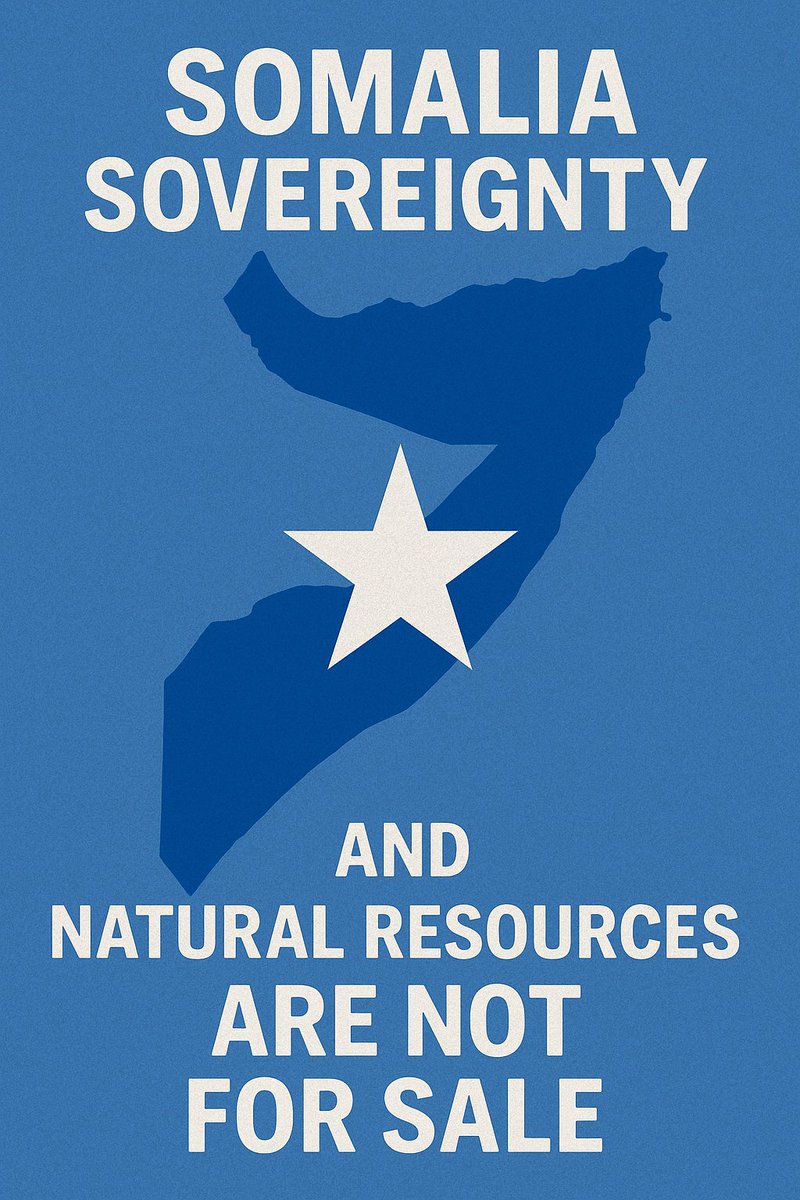
The House of the People will act. The Somali people will rise. This agreement must fall. Somalia is not for sale. This Parliament and the Somali people will not stand by as our sovereignty is traded for political loyalty and short-term gains.
This is a red line. The Somali Parliament will not be silenced. Our sovereignty is not for sale.
Sincerely,
📷
Dr. Abdillahi Hashi Abib - BA, MA, MASc, Ph.D
Member of Foreign Affairs Committee
The Federal Republic of Somalia, the House of People
Mogadishu, Somalia
MP- HOP #201 Awdal Region and Gebileh District
Leader of the Accountability and Transparency Caucus of the House of People
W: + 1-571-436-7586 M: + 252-6108-22469
@RTErdogan@trpresidency@MFATurkiye@trpetrolleri@aBayraktar1@TheOfficialSPA@DahaShire@Mopmr@golaha_shacabka@RepBrianMast@HouseForeignGOP@RepMoolenaar
@committeeonccp
@realDonaldTrump@SecRubio@StateDept@USTreasury@TheJusticeDept@RealPNavarro@frankgaffney@SpeakerJohnson@Jim_Jordan@freedomcaucus@susiewiles2024@StephenM@GOPMajorityWhip@RepFinstad@RepFischbach@RepPeteStauber@RepMTG@HassanSMohamud@TheVillaSomalia@HamzaAbdiBarre@AadanMadobe@SomaliainQatar@MOFAKuwait@UAEinSomalia@ChineseSomalia@KSAmofaEN@US2SOMALIA@EU_in_Somalia@ItalyinSomalia@UNSomalia@TC_MogadisuBE@UNDPSomalia@MikeNith1@WorldBankAfrica@IMFAfrica
@TheArsenalMind We should not go anywhere near him. His already struggling at Madrid. How would he handle PL. he won’t do well then Arteta will be blamed
Barcelona score 5 oh it a Farmers league
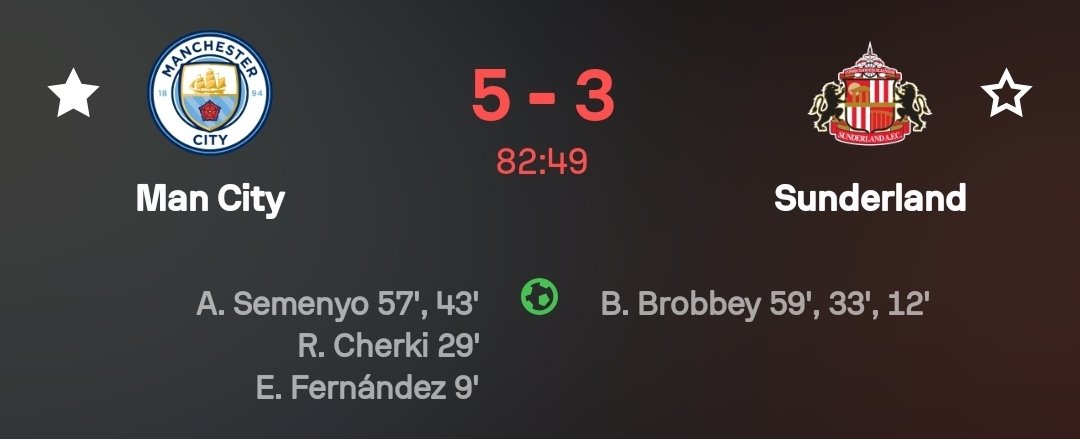
Manchester City score 5 the premier League is incredibly tough
Manchester City have not even been half has decent as Barcelona this season but here they are heading into the international break with 100% record
@Arsenal This is on the F owners for the shitty transfer, on players who are bloody missing chances/ 1v1. The Arteta for not bloody making changing in the half time. Why the hell was Gyokeres not on early. Embarrassing performance.