New Anthropic research: A global workspace in language models.
Of everything happening in your brain right now, only a tiny fraction is consciously accessible—thoughts you can describe, hold in mind, and reason with.
We found a strikingly similar divide inside Claude.
Local minima are rare in high dimensions because a strict local minimum has to curve upward in every direction, so all Hessian eigenvalues must be positive.
In a D-dimensional toy model where eigenvalue signs are independent, that’s a 2^(-D) event. In GOE-like random matrix models, positive definiteness is even rarer, roughly exp(-cD^2).
So as dimension grows, random critical points are much more likely to be saddles than minima. This is one reason high-dimensional optimization is often a saddle-escape problem, not a bad-local-minimum problem.
Wrote up some of the math here: https://t.co/vkaVqVD64N
بیشتر از یکسال از زندگی کردنم در کشور مسلمان (عمان) گذشته.
دوست دارم تجربیاتمو در این باره و مقایسهش با ایران به اشتراک بذارم. خصوصا به عنوان کسیکه دل خوشی از «اسلام» در نوجوونیش نداشت.
عمانیها به شدت آدمای مهموننواز و خوشروییان. شیعه یا سنی نیستن و پیرو شاخهی/
(۱)
the real shift this paper documents isn't about Gemini specifically. it's about the workflow.
we moved from "ask the model a question" to "embed the model in a research loop where it proposes, tests, fails, and iterates."
the researchers who figure out this workflow first get a genuine speed advantage. not because the model is smarter than them. because it never gets tired of checking algebra at 3am.
what the paper is honest about:
"rarely does a model solve a deep open problem in a single shot."
every successful case involved back-and-forth dialogue. the researcher correcting errors, refining the problem statement, redirecting when the model went off track.
the model doesn't replace the scientist. it compresses the time between "i have an idea" and "i know if it works."
the paper extracts a clear playbook from all these collaborations:
> iterative prompting and refinement (never single-shot)
> problem decomposition into subproblems the model can handle
> cross-disciplinary knowledge transfer
> simulation and counterexample search
> automated verification loops with code execution
none of these are complicated. but the combination is what produces results.
Being at the frontier - by the definition of it - means creating the frontier. You don't get to be at the frontier by following someone else.
And creating the frontier often means discoveries that go against the established knowledge.
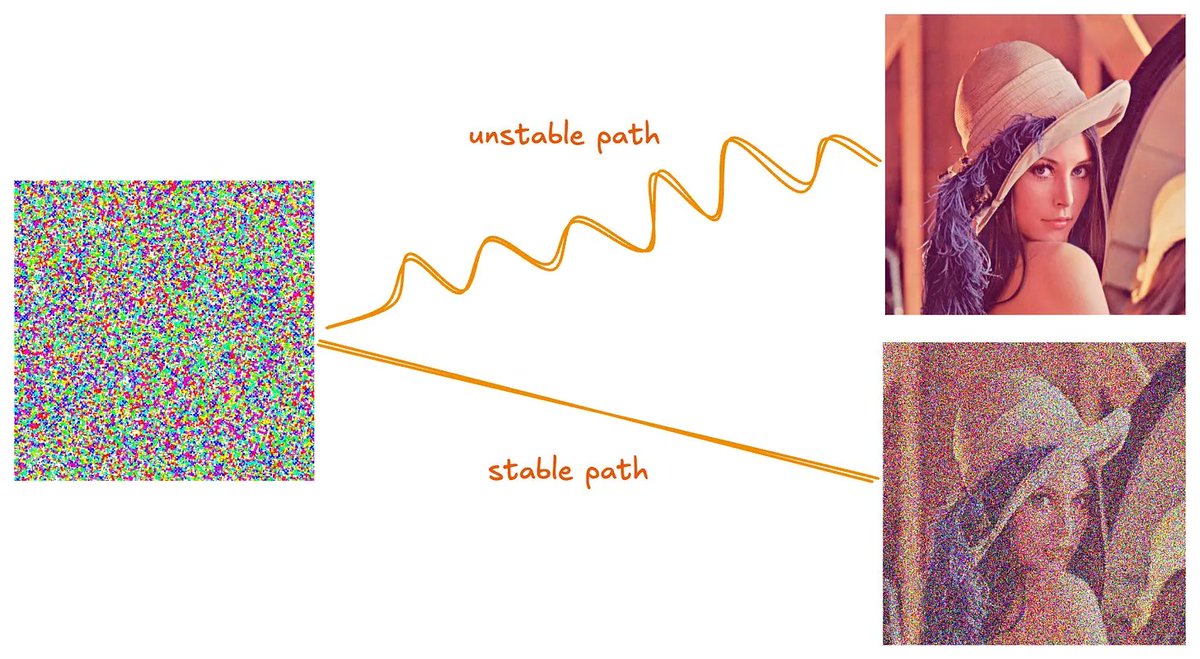
We recently made such a discovery about distributed diffusion model training. A common way to optimize diffusion model training is by ensuring the numerical stability of their generation paths. We found that that's not true for the most efficient distributed diffusion model training architecture.
We shared what works instead in our blogpost below.
https://t.co/aVkPne0tJd
باید گریه کنم اما خندهام میگیرد که افغانستان کسی را رئیس بانک مرکزیاش گذاشته که نه تحصیلات دارد نه سواد دارد، آنجا تورم ندارد، در مملکت ما سالیانه بالای ۷۰ ۸۰ درصد تورم داریم.
احسنت. به نشانهی اعتراض به تهدید ترامپ، بفرمایید دخترتان که از ۱۳ سال پیش در آمریکا مشغول به خدمت است، بلافاصله به ایران برگردد.
https://t.co/H2uHYU32wm
This is the DeepSeek moment for Voice AI.
Chatterbox Turbo is an MIT-licensed voice model that beats ElevenLabs Turbo & Cartesia Sonic 3!
- <150ms time-to-first-sound
- Voice cloning from just 5-second audio
- Paralinguistic tags for real human expression
100% open-source.
🏆 We are incredibly honored to announce that our paper, "Gated Attention for Large Language Models: Non-linearity, Sparsity, and Attention-Sink-Free" has received the NeurIPS 2025 Best Paper Award!
A huge congratulations to our dedicated research team for pushing the boundaries of AI.
Read more: https://t.co/qu3ERa3pH5
My friend said there is a PhD student (reviewer) cancelled her trip to NeurIPS because she was threatened by authors.
This is unacceptable. Please report immediately to ICLR -- All "unethical" authors should be banned for years!!