ATTENTION IS ALL YOU NEED
The most complex AgenC video yet.
• 26 hours 51 minutes, from the first lyrics to the final file
• 10.1 billion tokens
• 131 agents, 23,354 model calls
Music
• Piano written by me, the melody inspired by "Gouryella" by Gouryella
• Finished in Suno
Models (local and remote)
• Claude Opus 5.5
• Grok 4.7
• Grok Imagine Image 2.0 and Grok Imagine Video 1.5
• Qwen-Image 2.1
• Qwen-Image-Edit 2511
• Seedance 2.5
• MiniMax H3
• GPT Image 2.5
• GPT-2 XL (the attention and prediction data on screen)
• An SI model trained from scratch for the film (51M weights, 28,000 steps)
• BiRefNet (mattes), Depth Anything (depth), RAFT (optical flow), face and people detection
Tools
• AgenC Core
• ComfyUI
• Grok Build + Grok Bot
• Claude Code
• Blender Cycles (11 3D sequences)
• Python, Skia, PyTorch on CUDA
• ffmpeg with NVENC
The film
• 5:26 at 1920x1080, 24 fps
• 84 shots, 573 sung words on screen
• 12 new effect packages, 29 designed transitions
Hardware
• RTX PRO 6000 Blackwell
• RTX 5090
• 64 cores
• 1 TB RAM (8 x 128 GB)
My son had six weeks to pass a math assessment that he failed. We used AI to do it.
AI has the ability to revolutionize education and homeschooling. Maybe that's why Democrats want to ban it in school districts. https://t.co/5tHBvoJoEM
The Bessent Put
Today the US Treasury doubled the size of its long-end bond buybacks, the day after the 30-year yield hit a 19-year high at 5.33%. The extra dollars are small. The signal is enormous.
For the first time, the fiscal authority, not the Fed, stepped in to defend the long end within 24 hours of the highs. There is now a put under the long bond, and the market has just been told the top of the range...
Look at the plumbing underneath it...
The buybacks pull old, illiquid bonds off dealer balance sheets and get funded at the front end with bills, which the banking system absorbs. Duration out, money-like paper in. Lower long-end volatility raises the collateral value of every Treasury in the repo system, which is itself a liquidity easing. And the QRA language quietly changed two weeks ago to allow exactly this.
It isn't happening in isolation. This month's joint yen intervention was about stopping Japan from ever becoming a forced seller of Treasuries, and the new dollar swap lines across Asia and the Gulf keep the region's dollar debts rolling, with China the ultimate beneficiary. A weaker dollar is the tool that brings the big foreign buyers, Japan and eventually China, back to the long end. Supply managed on one side, demand rebuilt on the other.
With a long end now potentially anchored, the steepening of the curve should come from Warsh, who will probably deliver his part of the grand bargain between the Fed and the Treasury.
All of this is to fund the hyperscaler capex along with government debt. For the first time since the GFC both public and private debt as a % of GDP are growing and both are vital.
This is the everything code fully at play and brings together many threads I've been talking about for the last two years. The debt must be serviced and liquidity, by whichever mechanism they can route it, is the method.
Financial conditions started easing through both legs at once today, and financial conditions are the first domino in the sequence we have been mapping all year.
To be warned this is not an instant liquidity flood happening right now. This is the entire scaffolding being set up for the much larger game. The Great Game is the funding of the aging population along with the funding of the new demographic of AI and robots. Both games are too big and too important to stop. The funding of the the intelligence build out is the most important game of all time. It is too big to fail.
The full Flash Update is coming for GMI and RV Pro members came out earlier today: the full mechanism, the 2011 and 1940s precedents, what it likely means for every asset class, and what would prove the thesis wrong.
Overall today was a big marker point on a story that I've been predicting for many years and have the receipts to prove it. The outcome is always MOAR COWBELL!
@hauserdan Meanwhile, the Democrats have made their own priorities abundantly clear—at least according to their critics.
Day 1: Impeach Trump for a third time.
Day 2: Raise taxes.
/6
@hauserdan Speaker Mike Johnson surely understands what voters are demanding. Yet, so far, his response has been conspicuous mostly for what it has not done—leaving him to shoulder the political consequences of inaction.
/5
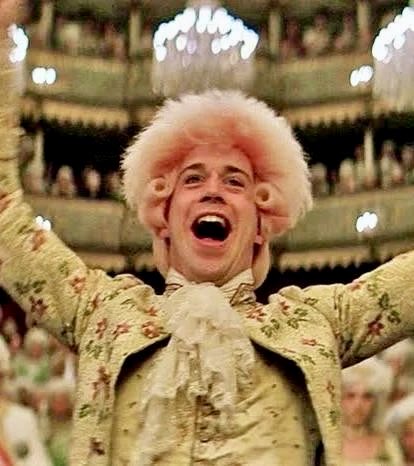
Amadeus – A Celebration of Genius.
Wolfgang Amadeus Mozart died at 35. What he produced in those 35 years is almost impossible to believe – Don Giovanni, The Marriage of Figaro, The Magic Flute, the Requiem, forty-one symphonies, twenty-seven piano concertos. And the tunes – the ones everyone recognizes without knowing they know them. Eine Kleine Nachtmusik. The Turkish March. The Queen of the Night aria. The Lacrimosa. Melodies so perfect they feel like they were always there, waiting to be found rather than composed. The sheer volume would be remarkable. The quality is inexplicable. The range is inhuman. This is not the story of a talented man. This is the story of what genius actually looks like – and what the world usually does to it.
1. The film is named Amadeus but it is Salieri’s story. The mediocre man who prays for genius, receives instead the ability to recognize it in others, and considers this the cruelest joke God ever played. He can hear exactly what Mozart is. He is close enough to understand it. He can never be it. And he has the institutional power — the court position, the royal ear, the network of favors — to destroy what he cannot equal. Negative selection given a wig and a theology. Not exceptional. The normal operating condition of every institution that has ever existed.
2. Salieri is not evil. He is just above average, mediocre – which is worse. He works hard, follows the rules, produces competent music that pleases the court and offends no one. Exactly what the system selects for: reliable, manageable, unthreatening. And then Mozart arrives – chaotic, vulgar, childish, and so far beyond anything Salieri can conceive that the gap is not a difference of degree but of kind. This is the 170 versus 140 IQ problem: not that the higher mind is a better version of the lower, but that it operates in a different dimension entirely. Salieri can follow every note Mozart writes. He cannot hear what Mozart hears.
3. The Emperor’s response to Don Giovanni: "Too many notes." Not malevolent – just the average man with a crown doing what average men with crowns always do. Preferring what is manageable to what is great. Every institutional response to genuine genius sounds like "too many notes." The committee that waters down the proposal. The editor who smooths out the voice. The system doesn’t hate genius. It is simply more comfortable without it.
4. The Requiem scene is the best illustration of the 170 versus 140 gap in popular culture. Mozart dying, dictating to Salieri, correcting him in real time – the complete structure present simultaneously in one mind while the competent man records it piece by piece, struggling to keep up. The genius perceives the whole. The competent man perceives the parts. Salieri is not slow – he is excellent by any normal standard. But he is a man reading a map while Mozart is standing on the mountain.
5. What Salieri does with this recognition is the civilizational lesson. He could have served the genius – facilitated it, protected it. Instead he obstructs, undermines, manipulates – using every instrument of institutional power to manage the threat that excellence poses to his position. The Herostratus instinct. You cannot build what he builds. So you ensure he cannot build it either.
6. Mozart dies at 35 in debt, with an unfinished Requiem and a wife who had to beg for burial money. By every metric the system uses, he failed. By every metric that actually matters, he produced more in 35 years than Salieri produced in ninety. Success not rewarding value.
7. Salieri lived to ninety, the most powerful musical figure in Vienna for fifty years. He is remembered exclusively as the man who hated Mozart. The Requiem — unfinished, completed by others from his notes — is still performed every week somewhere in the world, 230 years later. Negative selection can delay genius, obstruct it, occasionally destroy it. It cannot outlast it. The music remains. The courtier is just a footnote.
My history career as a trader
I've made my living trading futures contracts since I was 29 years old. I am 80 next year. I love trading. It is why I still do it and write about it. I cannot imagine life without market speculation, but I suppose that day will come.
I was not profitable immediately. I left the advertising agency business in 1975. I worked for one of the largest ad agencies in the world and had serious reasons to believe I would have named VP while still in my 20s.
The story of how I ended up at the Chicago Board of Trade is a two to three chapter story, I won't take it up in this post.
By the way, I hate X because serious engagement no longer happens. If you enjoy my "old stories" please let me know who you are. If there is enough interest I would post some of the book I am writing about my life as a commodity trader.
In 1981 when I started Factor LLC as a self-funded trading firm. It was profitable from the start although the firm has had four losing years. The average of the four was -8%. Minor, but losses nevertheless. Last losing year was 2013 at -15% or so.
But during the first four years I cannot even remember how many accounts I blew. Some blew up quickly. Others lured me into think I was on to something only to have the account bleed to death slowly.
Continental Grain wanted us to open accounts of our own with at least $10,000 to $20,000 -- that way we would take our trading seriously. That was serious money for me at the beginning.
So I would open an account and try trading grains with fundamentals or livestock with cycles.
Back then hardly anyone kept charts except point and figure charts, so when a friend bought me a 5th edition of the Edwards and Magee book in early 1978 my life changed. Suddenly I had a frame of reference with which I could understand price discovery.
So my next account was looking for classical chart patterns. But with this I struggled at first, but at least I did not blow up that account.
Yet it was not until mid-1979 that I became meaningfully profitable. This was five years after my first trade -- and that time spent working for the world's most prominent FCM at its Chicago headquarters.
But slowly I kept solving problems. That is what trading really is -- a huge problem solving game. Those that break even until they figure it out stand a chance.
1980 was hugely profitable
As was the first half of 1981.
That is when I decided it was time. I sold my commercial business to a good broker friend, quite customer business and incorporated Factor Research and Trading as a proprietary self-funded account at the Board of Trade.
There have been struggles along the way. Problem solving never ends. When one is kind of solved the next one pops up. Being a self-funded professional commodity trader is not easy work or everyone would be doing it.
There was about a decade I too a hiatus in the late 1990s/early 2000s to devote myself to charitable non-profit work, including becoming an NGO with the United Nations.
When I came back to trading in 2006 everything had changed. Trades were made on a computer using a computer. I was used to calling my orders into the pits.
I dramatically changed my risk management protocol in
I actually seriously wondered whether I could remember how I traded and whether my style would still work.
2007 was profitable, and 2008 was my last triple digit annual return. My style still worked.
But my challenges were not over. 2013 was the worst of the four losing years I've had in my 46 years of trading.
The why is a whole long story I won't get into here. It's too long a story.
But the episode resulted in the most dramatic changes in risk management I had even taken. This too is another story unto itself.
Anyway, here I am, still trading cause I love it. And because it has been very profitable for me.
I totally disbelieve that us average humans can run $10,000 into $1 million in a few years. I've done and a lot more, but that by trading in six different decades - the 1970s through the 2020s. I hope I can someday claim seven decades.
My main measure of success has not been ROR for years and never was win rate. All the changes I have made since 2014 have been aimed at cutting asset volatility to the nubs. I feel fortunate that I have been able to this, not have but a few small losing months in a decade.
ROR has not been my concern. From the early 1980s I believed that if I sought excellence in the things I could control that the profits would work themselves out.
This has been the case.
My observation of the Z gens is that they have expectations in trading that are 3 to 4 standard deviation affairs. Good luck with that one, Zers.
Thank about it. Renaissance Technology is the single most profitable trading firm in the world with an average ROR in the high 40s, low 50s.
Stan Druckenmiller is the best independent trade alive IMO. He averages in the 40s.
Back when Jack Schwager included me in a Market Wizards book he did extensive verification. I provided something like 18 years of documented performance using monthly statements reconciled with a CFTC performance table and IRS statements. Jack calculated that my average compound ROR was in the low 50s.
I do not accept Jack's numbers. In the first place, prop traders should NEVER use compound growth. We are always taking money out of accounts.
My stats put me in the low to mid 40s. But that is with only millions of AUM. Stan does his 40s with billions. There is a huge difference, some of you understand this, some of you don't, yet.
Why am I telling you all of this? Perhaps I am not talking to you, but to those Z and M gens who aspire to be career speculators.
Tame your expectations. There are massive data that conclusively places the odds of success for an aspiring trader becoming a career trader at 3 in a thousand.
You can be one of those 3 -- but believe me there will be reasons why that you might not yet understand.
There are a few things you need to do to have career trading become you.
I recommend futures, not equities. The leverage is magic, but know it is also dangerous.
Do not expect to be profitable for four or five years. If it is three, then great. Your job in the meanwhile is to learn how to lose. Great traders only become great traders because they became skilled at losing. Lose your capital and game over for you.
Next, get rid of social media. It is a trap. Follow me if you must, but turn your eyes and ears away from anyone claiming big profits of knowing where some markets is going.
You need a starting point. Put together some rules, if that is your thing, and commit to them. Bet far less than 1% of your capital on any given trade. Don't day trade. Learn to hold positions overnight and for days.
The biggest crock I hear from some of you is that you need to day trade to make enough money to become serious hold traders. The faulty logic of this idea is massive.
You don't want to do it the way I suggest? That's fine. Everyone needs to find their own way, so welcome to the landmine.
Trading is a math problem to solve. Price is all that matters. Fundamentals are meant to decisive you. Everything you could possibly know about a market is already reflected in price. Price is king.
When I started at the CBOT there were local traders and pit brokers who had fought on Omaha Beach in WW2. It was my father's generation who owned most of the memberships.
They all had the same advice. Cut your losses really quickly and have some technique that allows you to let profits grow. Small losses and much larger profits is the only math that works. Ignore me on this at your own peril.
Seriously, if I am not boring you to death but instead you find my history as a trader told in story form to be interesting, let me know. If I happen to follow you, DM a message.
I am slowly bringing together so many stories I have as a trader. Being a career trader, especially one that traded at an exchange and for the famed Commodities Corp., my life has been crazy. It has been one interesting event after another.
The people I have known and still know. The crazy trades I have been in. The places I have been. I sometimes ask my wife to pinch me so that I can wake up from this life as a full time commodity futures contracts for my own risk.
"I haven't seen a real new idea in trading in at least 15 years."
Tom Costello (@tcoste110) ran money at Tudor, Moore Capital, and Caxton. Built one of the first NLP-driven equity systems in 2003.
20 years managing capital, never had a down year.
"Comparing what a retail trader does to what a quantitative hedge fund does is like comparing driving a bus on the New Jersey Turnpike to winning a Formula One race."
We cover:
- His hot take: no genuinely new trading idea in 15 years — only better people doing the same things faster
- Why everyone in quant finance is a genius — and why that makes you ordinary, not special
- Crypto is "super smart guys cosplaying at finance" — built for retail, which is exactly why it's the easiest money in finance right now
- Why AGI won't beat the hedge fund industry — all the readily-capturable alpha is already captured
- The status trap: why the path that made Paul Tudor Jones a billionaire won't work for the kid trying to copy it in 2026
- His friend the investment banker who'd quit it all to run a 10-employee ambulance supply company worth $150M
- Why excitement is "wildly overbid" in finance — and why wanting an exciting trading job is itself a disqualifier
- The most honest end of the financial industry — and why the media has it exactly backwards
Thanks so much to Tom for coming on Odds on Open!
Highlights:
00:00 Intro
01:18 Building institutional credibility for early-stage managers
03:01 The Pareto distribution of hedge fund returns
04:25 Applying the Unified Field Theory of Finance to fair value
08:14 Trading against human incentives in a deterministic market
13:54 Why allocators don’t steal alpha from prospective PMs
25:16 Evaluating career edge in quantitative finance for 2026
30:48 Paul Tudor Jones and the art of game selection
33:42 Analyzing the economic viability of starting a new fund
35:16 Identifying common retail pitfalls: Mean reversion and arbitrage
38:55 Why there hasn't been a new trading idea in 15 years
50:33 Managing tail risk: Physics vs. deterministic financial distributions
59:10 Career pathing for PMs after a fund blow-up
1:07:53 SBF and FTX: Credibility vs. the "Founder-Genius" archetype
1:13:44 Establishing proof-of-concept through audited multi-year returns
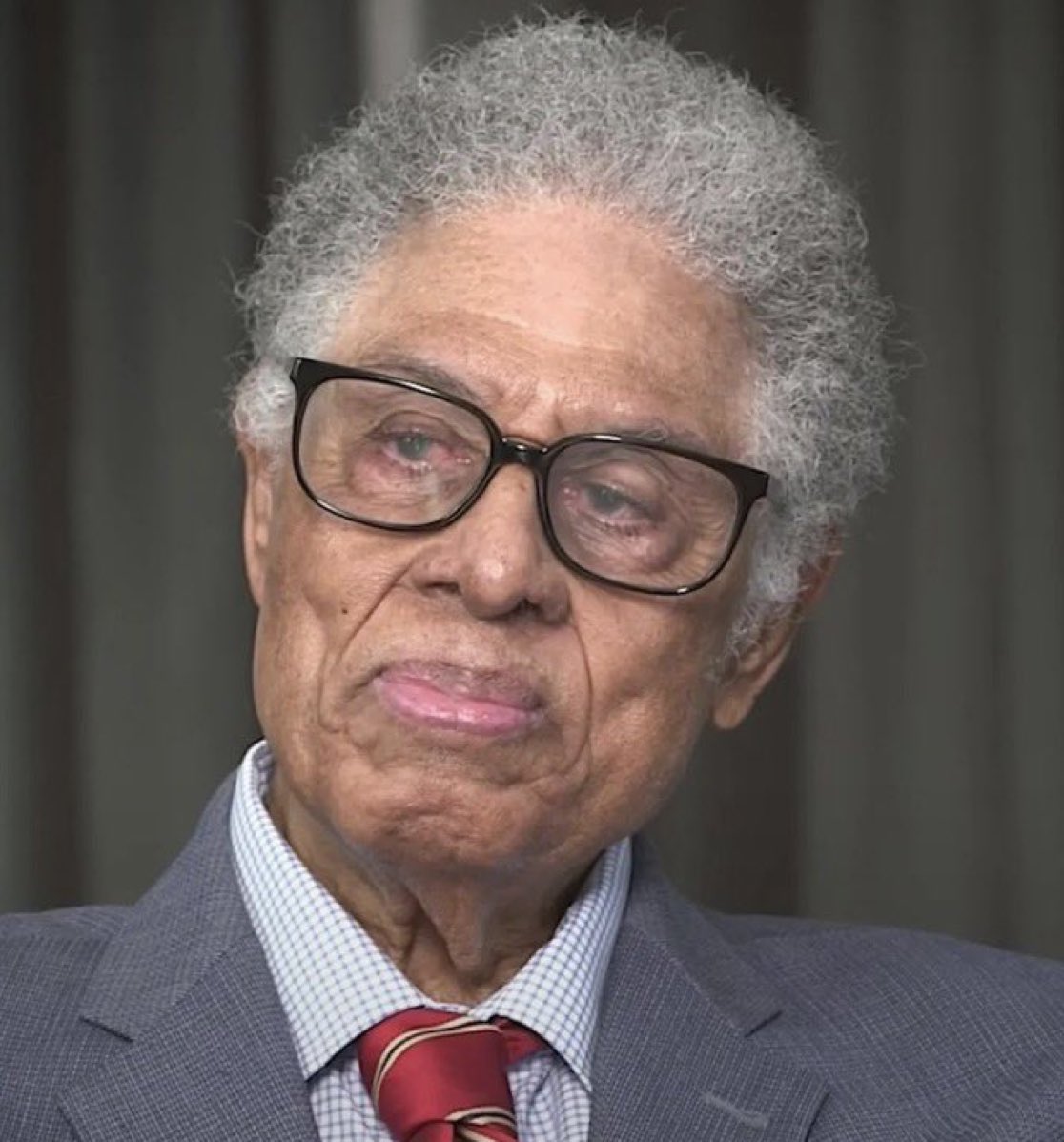
Dear President Trump, Thomas Sowell is an American treasure. Please consider honoring him with the Presidential Medal of Freedom. I can’t think of a greater representative of American values.
Want to read the Romans but not sure where to start?
Start here:
1. Virgil — The Aeneid
What does duty require, and what does it cost?
Rome’s great founding epic. The best place to begin.
2. Cicero — On Duties
What do we owe each other?
The clearest Roman voice on duty, obligation, and public life.
3. Plutarch — Parallel Lives
What makes a life worth remembering?
Statesmen, generals, founders. Best read as a study of Roman character.
4. Marcus Aurelius — Meditations
How should a person govern himself under pressure?
Brief reflections on duty, mortality, and governing the self.
5. Tacitus — Annals
What happens to virtue under empire?
A hard look at power, fear, corruption, and what remains of Roman character under bad rulers.
tolle lege
There are so many layers to the dollar story that transcend conventional market economic dynamics. Until investors realise this I do believe they will be caught out by narratives that serve political agendas not reality.
Crucially, most “end of the dollar” takes completely miss the point and purpose of why the system came to be in first place. This had much less to do with Americans living beyond their means and much more to do with protecting capitalism and its open, property-rights-based economic order from rival systems that did not have to be accountable to such free market forces.
The central challenge emanating from the Cold War was not simply ideological or military — it was structural.
Command economies could direct resources at scale into strategic and military priorities without regard for market signals, profitability, or consumer welfare. Market democracies, by contrast, were constrained by inflation, capital costs, voter expectations, and financial discipline. Left on their own, market economies risked being outcompeted over time by rivals that could forcibly allocate capital into dual-use industrial capacity and military buildup without internal resistance.
The American “statecraft” solution was not to abandon markets, but to reorganize how they operated at the system level thanks to the cunning use of allies with guilty consciences due to historic war debts. And later petro states. The dollar-based order, and the alliance structure built around it, was designed to distribute economic roles in a way that neutralized those constraints.
Industrial allies such as Japan were encouraged — implicitly and explicitly — to pursue state-guided, export-led growth, building high-quality manufacturing capacity and running persistent surpluses.
Those surpluses were then recycled (on a gentleman’s agreement basis) back into dollar denominated private sector assets but also, crucially, into US government issued debt in a way that suppressed funding costs enough to ensure the U.S. could maintain its very substantial military industrial complex advantage.
That in turn allowed the United States to maintain an edge - even in a capitalist free market system - in defense, advanced research, and system integration, without having to bear the full economic burden domestically.
By externalizing parts of the industrial base and anchoring global finance in dollar demand, the system allowed market-based democracies to sustain a level of military competition that would otherwise have triggered destabilizing inflation, rising interest rates, and political backlash.
The dollar’s role was therefore not simply a privilege, but a mechanism: a way of converting allied industrial output and savings into strategic capacity.
From the allies’ perspective, the bargain was equally clear — access to U.S. markets, security guarantees, and the protection of property rights within a stable global framework. This was something they would not get from the other super power in the mix: the USSR.
Seen this way, the system was never about excess consumption or imbalances for their own sake. It was a deliberately constructed architecture to ensure that an open, capitalist order could compete with — and ultimately outlast — closed systems capable of mobilizing resources without constraint. The durability of the dollar is therefore not an accident of history, but a reflection of the enduring logic of that arrangement.
Ex-Global Trading & Risk Director at Cargill on how edge is formed in commodities markets
Kristine Engman spent 20+ years at Cargill—one of America's largest agriculture conglomerates—trading billions in physical & financial commodities across energy & agriculture.
"Edge in commodities? It's a lot about relationships. The intel you get through those relationships—that's information not readily accessible to the rest of the marketplace that can give you an edge."
We cover:
- How edge actually works in commodities—relationships, capital access & information arbitrage
- Why you can trade on "insider information" in commodities (unlike equities)
- Managing physical risk—forecast accuracy, weather shocks & transportation nightmares
- The negative power trade—selling electricity below zero & getting hauled into the boss's office
- Why Cargill traders performed best when equities markets performed worst
- Quantitative (and even technical) vs fundamental trading styles—finding what works & sticking to it
- The Ukraine war position—going extended limit long before the invasion
- Life lessons from trading—"have your house in order" & taking risks with incomplete information
Timestamps:
00:00 Intro
01:15 Edge in commodities trading? Relationships, capital, information
04:40 Commodities market efficiency, information flows, and AI
08:32 Hedge funds vs. ABCDs, commodity trading strategies
13:34 When commodities outperform equities, the 2022 boom
17:45 Headline risk, social media impact on markets
19:08 Risk management strategies in physical commodities trading
26:14 Probability, forecasting, and scenarios for trading decisions
31:00 What makes a great commodities trader today
37:53 Contrarian trading strategies, alpha generation in commodities
42:24 Russia–Ukraine war impact on commodity markets, trading
45:35 Life and career lessons from commodities trading
51:30 Careers, uncertainty, and learning in commodities markets
VIDEO EXPLAINER: The most important map of the Third Gulf War — the oilfields, the Strait of Hormuz, and the bypass pipelines.
Plus a look at how, two weeks into the war, Iran is still exporting lots of its oil, and most of it, via the strait.
@opinion