Want to learn how to read the Great
Books for yourself, without being told
what to think about them?
Then start here.
Here’s the orientation to my 10-week
reading guide to The Iliad.
Your education is up to you. And it never has to end.
“The direction in which education starts a man will determine his future life.”
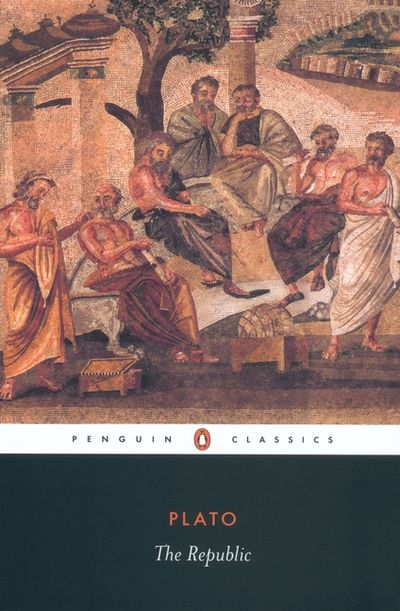
— Plato, Republic
I wish someone had told me earlier in life that I could simply buy the books that formed the intellectual foundation of Western civilization and begin studying them independently.
You don't need permission from a university. You don't need an academic background in philosophy.
You can order a copy of Plato's Republic this evening and begin educating yourself tomorrow.
Remembering Upton Sinclair today.
Here are a few interesting facts about his life:
- Not to be confused with the novelist
Sinclair Lewis.
- He was a lifelong advocate for social reform.
- In 1904, he spent seven weeks
investigating Chicago's meatpacking
industry. He used his research to write
The Jungle. This led to the federal food
safety legislation in 1906.
- Despite this, Theodore Roosevelt called
Upton Sinclair a "crackpot" and wrote,
"I have an utter contempt for him."
- In 1934, he ran for governor of California
under the slogan EPIC (End Poverty in
California). He lost.
- Sinclair won the 1943 Pulitzer Prize for
Dragon’s Teeth, a novel about the rise of
Hitler and the dangers of Nazism.
- He suffered from poor health and
experimented with fasting and
vegetarianism. In 1911, he wrote
The Fasting Cure. He lived to be 90.
- His 1927 novel Oil! inspired the 2007
film There Will Be Blood, starring
Daniel Day-Lewis.
- He believed his second wife had
telepathic abilities. He documented their
experiments in his book Mental Radio.
Albert Einstein wrote the preface to the
German edition.
- He was a distant cousin of Wallis Simpson,
the American divorcée for whom King
Edward VIII abdicated the British throne
in 1936.
- Upton Sinclair wrote more than 90 books.
tolle lege