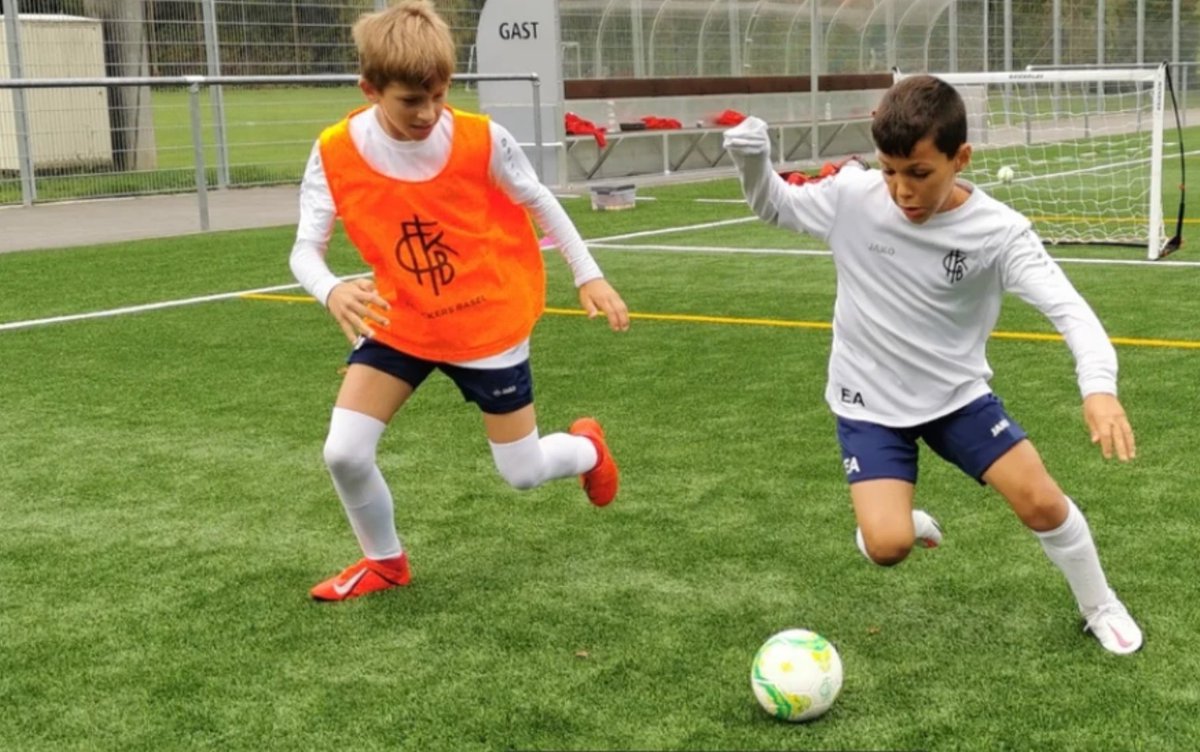
Football’s soul is lost to over-analysis—obsessed with control, we forget emotion, creativity and presence. True intelligence is reading the game in real time, not just following instructions. Let players play. Football isn’t dead—unless we keep killing it. #LetThemPlay
@tomdanielson A wealth of great info here. You cover important aspects of racing, including skill, physical efficiency, effort, & the mental challenges. I'd love to hear your thoughts on the tactical moves made by the 2 contenders, especially considering that Wout and Mads weren't in the mix
@tomdanielson Tom, when your affordances represent the best power-to-weight ratio in the world, you can call it out. It's a little more challenging at SRM, but everything is possible in a one-day race. Stage racing does enhance his affordances a bit more!
By and large US and Canadian players are prejudiced by the training they receive in the formative years. 🇺🇸 🇨🇦
“Skill drills” that do not require any understanding of situational or spatial relationships limit development.
#TOVO
Great coaches cannot always see what great players see…
They can look in the same direction. They can consider and mull what players are seeing…but they cannot always see the same things…
And so incumbent on ambitious coaches is to incorporate player feedback into their list of important coach behaviours. It’s to give players the opportunity to express their opinion, to given them a platform to share their lens of the game, and to provide space to make suggestions and choices…
…probably not all of the time…but probably some of the time. The craft is knowing when, to whom, and when not to…
(The below video is of Steve Kerr)
🗣️ Iñigo San Millán (@doctorinigo), director de rendimiento en el @AthleticClub, participará como docente en el programa.
📖 Rendimiento, medios y áreas de intervención
Reserva tu plaza ahorrando antes del 31 de diciembre
(Desde 649€)
Mas Información 👇
@NBCSCycling Not just INEOS, but the entire peloton needs to explore alternative strategies beyond relying solely on strength. Collaborative solutions could be a valuable approach.
Want to be successful at losing weight?.
Loosing body fat should be attainable and sustainable for most people with the correct and individualized exercise program. It also takes time, even when you maximize fat oxidation (burning) while exercising at your FATmax (which is Zone 2 for most people). However, although it takes time, patience and perseverance should pay off and you could achieve an important and sustainable decrease in body weight.
Example/Tip:
Your FATmax (~Zone 2) is 0.40g/min and you exercise ~75min each session, 4x week. So, your FATox would be ~30g (270Kcal) per session and ~120g/week, so ~480g (0.48kg/1Lb) per month. In 6 months this would represent roughly 3Kg/6.5Lbs of body fat and in one year, 6kg/13Lbs. This loss in body fat is quite good whether it is for health or performance purposes. However, it takes time and consistency. Also, if you don't optimize your fat oxidation during exercise as you may not be hitting the right exercise zone, weight loss could take longer.
Moreover, if you calculate your nutrition properly and without “magic/miraculous” diets, and just elicit a caloric deficit of ~300-500Kcal/day, this weight loss could be significantly higher and especially both attainable and sustainable.
In my humble opinion, this goal is quite achievable and sustainable. However, the most important thing is to have time and cosnsistancy when so many of us struggle with time…Conclusion: we need to work less and retire earlier 😜
If you're sedentary, your metabolic engine is compromised—whether you know it or not.
In this week’s Research Review, we are examining one of the most compelling studies on the impact of exercise on mitochondrial function. Led by @doctorinigo, this study offers a detailed and quantifiable comparison of mitochondrial capacity between sedentary and active individuals—research that has the potential to reshape our understanding of metabolic health.
Why have we chosen to focus this week’s review on a single paper?
The significance of @doctorinigo's findings lies in their depth and precision.
This study provides, for the first time, a clear quantification of the vast differences in mitochondrial function between active individuals and their sedentary counterparts.
The data not only illustrates how physical activity, or the lack thereof, profoundly influences the body’s ability to metabolize fuel into ATP—the fundamental energy currency of cells—but also provides a complete and detailed picture of what an optimized metabolic engine looks like in contrast to a compromised one.
@doctorinigo introduces a new framework, which he terms the "inside-out theory of metabolic dysfunction." This theory posits that the roots of metabolic health—and by extension, long-term health—originate within our mitochondria.
https://t.co/UW0tLR41l2
@NBCSCycling@brentbookwalter Regarding his decision-making skills, a decision is only considered bad if he is forced to make better decisions. The real question is, what is the competition not doing that would prompt the need for different decisions?