Yall I got a $500k policy life insurance for my sons and it’s only $20 a month!! NO MORE FISH FRYS!!! If you can put gas in ur car u can afford life insurance
Seller A advertises a Rolex watch for N33m @ $22k. He bought it for $20k, brings into Nigeria in a hand luggage, pays zero import duty, no store front rent, salaries, OPEX and adds a 10% markup.
Seller B advertises the same watch for N42m @ $28k, he procured it at $20k, pays duties on the CIF ( Cost, Insurance, Freight) of about 20%, OPEX, interest rate of 10% on his loan to procure and a final markup of 10%.
Seller B is accused of selling way above market price, because someone who doesn’t pay VAT, import duties nor operates a structured business is advertising the same item on whatsapp or Instagram cost free. Nigeria is a country where non-registered or non-tax compliant individuals who operate in a “grey market” believe they dictate the market price of consumer goods.
People who trade in goods using stolen merchandise or items bought with stolen credit cards from foreign economies and selling products way below global prices, is topic for another day!
People don't know how terrible Buhari is and it pains me.
In 1980-82, Jakande wanted to build a World class Metro-Line like that of London to reduce Lagos traffic in the Future.
Buhari took over Government and Cancelled the contract.
The French company warned the Govt, They will collect their Money in Full.
The government cancelled the contract and still paid the Company regardless.
They will rather Lagos not have the Metro Line.
Decades later Lagos State Government managed to achieve a Fraction of Jakande's dream.
According to McKinsey & Co, only 2 Million Nigerians make more than $10,000 (4M) per year.
Nigerians are over 160 Million.
That is why The only thing that can scale to $1 Billion in Nigeria are ABSOLUTE necessities and only a few companies have done it & includes.
1. MTN
2. Interswitch
3. Chivita
4. Instant Noodles
See the pattern? Nigerians are poor. Whatever you produce will compete with FOOD.
Have this at the back of your mind while you innovate.
Short answer
For those I have observed and seen, they work more on their earning power. Their earning increases progressively. And they deploy their income wisely.
Long answer
If we define rich by asset of over N750m naira, here are some tips from those that I see get to that level from 9-5:
1. Type of jobs
The jobs they get are top jobs (top oil companies, top departments in top banks or some specialized subsidiaries, tech, international organizations etc) with good salaries, bonuses and other perks.
It may be tough to move beyond middle class in regular 9-5. You mentioned “rich”, so the type of job has to be the one at the top of chart
2. Personal development
They invest in themselves - write professional exams required by their profession, masters, become very good at their job/profession. They can easily move to better companies.
3. Career progress
Very good in their work, get regular promotion (= regular payrise), become important to their company.
Someone earning N2m today won’t continue to earn N2m forever. As they grow in career, their earning increases significantly
4. Expenses
They are very deliberate in planning their expenses. Some plan their foreign holidays to a time their company wants to send them abroad for official work. For example, the company wants to send them to the UK for a 5 day training. They plan their vacation in the UK to start immediately after the end of the 5th day. That means the return flight cost and hotel costs for 5 of the 12 days they spend in the UK are covered by their company
Company policies like health insurance (HMO) also save them a lot of expenses. Imagine all their childbirths, family hospital bills on their employer.
Many maintain small families too.
4. Loans
They explore personal loan opportunities available to their type of job. In some jobs, banks chase you with loans. They pay back over 4-5 years from their salaries. As one finishes, they move to another.
They explore cooperative societies and other group financing opportunities.
5. Investment
Many invest in properties (lands, houses) using these bank and cooperative finances. Some lands bought for N20m in 2015 are now worth N200m. I know someone that worked in one of these companies that finished a house worth N60m in 2015. That house is worth minimum of N350m today.
Some invest in other things. I know some that opened supermarkets as side hustle.
Group finance leveraging their company’s cooperative also helps. Cooperative negotiates and buys land in bulk and resell to members, while they pay over time.
By their 15th year of working, some can boast of net assets worth at least N750 million
- 2 plots of lands bought at N20m each in 2015 are worth N150m each by 2025 = N300m
- 2 houses (N40m) financed through cooperative, bank loans, savings etc are now worth N200m = N400m
- a supermarket started with N30m now worth N150m
- cash in balance of about N50m
The above totals N900m million.
- if they still have a loan balance of N100m with cooperatives and banks, that’s N800m net assets.
If you then ask, but I said 9-5, why all of these?
1. 9-5 is still the seed of all of these
2. 9-5 does not mean you should not invest
3. Banks give them loan because of the security of their 9-5 job
4. They have access to group financing because of 9-5
5. 9-5 does not mean you should keep money lying idle in bank and not use it to multiply (people make this mistake when talking down 9-5)
6. You are exposed to these opportunities because of a good 9-5 job
What they use their salaries for
- save a part with bank, cooperative etc
- use a part to pay back loans
- use a part to cover personal expenses
Other sources of income that augment their salaries
- rental income from a house built or bought with 9-5 pay
- dividends (cooperative, some invest in shares)
- side hustle income (supermarket in this case).
And this is a conservative estimate still. Some top guys are legit naira billionaires from these things
My initial reaction to this panel was: "How could we have an 'Afrobeats' panel in Latin Music? Where is the connection to the local culture in West Africa?"
So I went digging and discovered that while Columbia (Cartagena) and many parts of the America's have historical connections with African culture, We're at the stage of "Afrobeats to the world" where a new wave of Latin artists who have been influenced by today's Afrobeats, are winning heavily and dominating the market in Latin America.
So Afrobeats have not only blown there, but new artists are using its elements to create new waves, so panels like this are exploring what is happening within their culture.
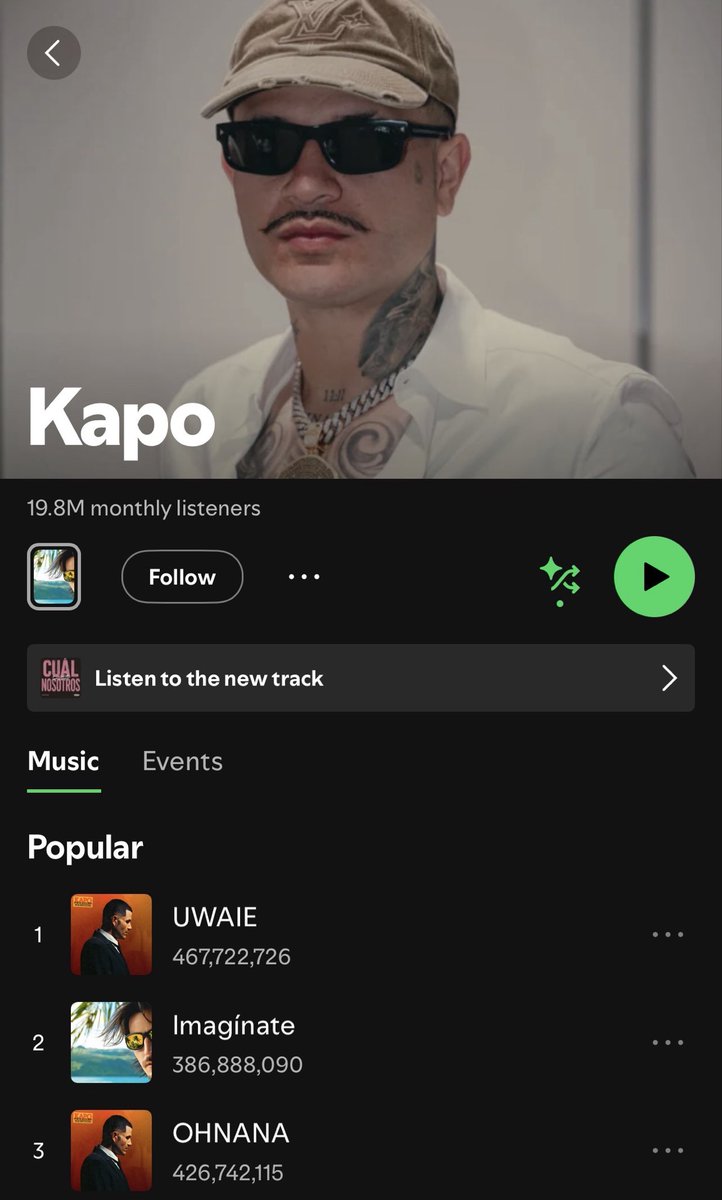
Colombian artists like Beéle and Kapo are leading a new wave of Latin-Afrobeats fusion, drawing directly from Nigerian sounds and reinterpreting them through local styles like champeta and salsa.
Afrobeats’ popularity across Latin America, fueled by historical heritage and streaming platforms, have created a desire for cultural reconnection. So while we've seen songs between Mr Eazi & J Balvin, and Ayra Starr & Rauw Alejandro, Afrobeats is taking on new life as new artists get inspired. It's the one of the fastest growing regions for what 'Afrobeats.'
According to data from Spotify, here are the numbers on 'Afrobeats' growth in Latin America:
*180% listenership increase in 2025 (YoY).
*400% growth in Argentina and Mexico since 2020.
*500% growth in Brazil since 2020.
*25 million hours of Afrobeats were streamed in Colombia in 2025 alone.
New Artists:
Beéle:
- Inspired by Davido’s “Aye” at age 12.
- First Billboard entry with “Loco” at age 16
- Debut album "Borondo" features Nigerian producers.
Kapo:
- Breakout hits “Ohnana” and “Uwaie” (Billboard Global 200).
- "Ohnana” hit #1 on Latin Rhythm Airplay
-Collaborated with Fido on “Awolowo” remix.
So yes, we're in Latin America now, and they're exploring our influence, which is birthing a new addition to their culture.