Hello people of Sol! I've reset usage limits for all ChatGPT Work and Codex users. Together with that, a quick update on GPT-5.6 Sol usage limits.
Over the past few weeks, many of you have told us that Sol was using your Codex limits faster than expected. To be clear, we have not reduced usage on any subscription plans.
We’ve been digging into what was happening and have landed several improvements. As a result, we expect your usage to last around 18% longer during typical use of Sol. Some of you should already see significantly larger improvements from today. Tomorrow, we’ll also restore the five-hour limit that we temporarily paused while investigating.
Here’s what we found:
- GPT-5.6 Sol is much more willing to work for longer, make additional tool calls, and coordinate complex workflows across tools and subagents. That makes it better at solving hard problems, but some tasks were using far more than we intended.
- Sol also works harder at the same reasoning effort than previous models. High on Sol can use more tokens than High did on GPT-5.5.
- Programmatic tool calling, also referred to as code mode, gives Sol much more flexibility to run tool calls in parallel or continue working while waiting. But it also led to more responses per turn, more cached input tokens, and higher usage than expected.
- This was particularly noticeable when Sol was waiting for tool calls to finish or running many web searches. We’ve improved how we handle both cases and are continuing to make code mode more efficient.
- The impact was also very uneven. The median user actually found Sol quite token efficient, while some power users working on harder tasks saw their usage drain much faster. We were very focused on average and median usage before launch and missed some cases where the long tail could use significantly more usage.
Sol is a significant step forward in what Codex can do, but capability and efficiency do not always improve at the same pace, and some issues only become clear once people are using the model at real-world scale. We should have recognized this sooner and been more upfront about it.
You keep pushing the frontier and we’ll keep improving efficiency and sharing updates as we go.
Jensen Huang’s first-ever post on X was not about a new GPU, a record valuation, or the next data-center roadmap.
It was about open-weight AI.
That choice matters.
Huang shared a joint letter, “Open Weights and American AI Leadership,” signed by NVIDIA, Microsoft, Meta, Mistral, Hugging Face, IBM, the Linux Foundation, Mozilla, Palantir, Perplexity, Y Combinator, and many others. The message was direct: AI leadership will not be determined by a single frontier model. It will be determined by whether an ecosystem can spread intelligence across companies, industries, institutions, and countries.
The first distinction is important:
Open weights are not automatically the same thing as fully open-source AI.
An open-weight model generally gives users access to the trained parameters so they can download, inspect, modify, fine-tune, and run the model on their own infrastructure. But the training data, code, recipes, and complete development process may still remain partially closed.
This is not a semantic detail. It defines what users can control, what researchers can reproduce, and what companies can truly own.
The letter makes four major arguments.
First: economics
Most organizations do not need the most expensive frontier model for every task.
A hospital, factory, bank, school, or software company may need a specialized model that is cheaper, faster, private, and optimized for one workflow. Open weights make it possible to match the right model to the right problem instead of paying frontier-model prices for billions of routine tasks.
This is how AI becomes infrastructure rather than a premium API used only by large companies.
Second: competition
If advanced AI is available only through a few closed providers, the market risks becoming concentrated at both the model and application layers.
Open-weight models create competition not only between model developers, but also across cloud platforms, chips, deployment tools, fine-tuning services, security products, and applications.
That is especially relevant for NVIDIA.
Some people will interpret Huang’s position as pure self-interest: more models, more deployments, more inference, and therefore more demand for GPUs and NVIDIA’s software stack.
That incentive is real.
But commercial alignment does not make the argument false.
NVIDIA benefits from a world with thousands of models and millions of AI deployments, while closed-model providers benefit from concentrating usage inside a smaller number of proprietary APIs.
This is not a moral conflict between good and bad companies.
It is a structural conflict between different business models.
Third: control and sovereignty
For enterprises and governments, the key question is increasingly not:
“Which model is number one on a benchmark?”
It is:
“Who controls our data, workflows, accumulated knowledge, and ability to switch providers?”
A company that builds its operational intelligence entirely on one external API can become deeply dependent on that provider’s pricing, policies, availability, safety restrictions, and product roadmap.
Open weights create an alternative: deploy locally or in a chosen cloud, adapt the model to proprietary knowledge, and preserve more control over the value being created.
This is why the language of AI sovereignty is becoming so important.
Sovereignty is not only about countries.
It also applies to enterprises.
Fourth: safety
The letter challenges the assumption that closed models are inherently safer.
Closed systems can also be breached, misused, or fail in ways outsiders cannot inspect. Open models allow a wider community to evaluate behavior, discover vulnerabilities, build safeguards, benchmark performance, and conduct red teaming.
That does not mean open weights are risk-free.
Once released, weights can be modified, redistributed, and used beyond the original developer’s control.
The serious position is not:
“Open is always safe.”
Or:
“Closed is always safe.”
The serious position is that safety depends on capabilities, access, deployment context, monitoring, and enforceable controls—not simply on whether the weights are publicly available.
The most politically sensitive section may be the one on distillation.
The signatories argue that policymakers should distinguish legitimate model-development techniques from unlawful extraction of value.
Distillation is widely used to improve, evaluate, and train models. Misappropriation should be addressed through targeted legal and commercial mechanisms, they argue, rather than broad restrictions that could suppress an entire technical method.
This is a major policy signal.
The debate is moving beyond model performance into questions of intellectual property, national security, competition, and who gets to define acceptable innovation.
Also notable:
OpenAI, Anthropic, Google, and xAI are not among the listed signatories.
Their absence should not automatically be interpreted as opposition, but it reveals a real fault line in the industry. Infrastructure companies, open-model developers, enterprise platforms, and open-source institutions may have different incentives from frontier labs whose businesses depend heavily on proprietary model access.
My takeaway is that the future will not be purely open or purely closed.
Frontier closed models will continue to push the capability ceiling, fund extremely expensive research, and provide convenient managed services.
Open-weight models will become the deployable substrate for enterprises, governments, edge devices, private systems, specialized agents, and sovereign AI stacks.
The winning architecture is likely hybrid:
Use frontier models for frontier problems.
Use specialized open models for repeatable production work.
Keep sensitive data and durable organizational knowledge under your own control.
Avoid designing a business that cannot survive a model provider’s pricing, policy, or availability change.
Jensen Huang’s first X post is therefore bigger than a statement about open models.
It is a declaration about where NVIDIA believes value will accumulate in the AI economy.
Not in one model.
Not in one API.
Not in one country.
But across an ecosystem of compute, models, tools, applications, and institutions.
The next phase of AI competition will not be decided only by who builds the smartest model.
It will be decided by who creates the most widely adopted, economically sustainable, and controllable intelligence infrastructure.
That is the real message behind Jensen Huang’s first post.
#AI #OpenWeights #NVIDIA #ArtificialIntelligence
For my first post, I’m sharing a letter @NVIDIA signed on why open models matter.
AI will transform every industry, power every company, and be built by every country.
Open models strengthen safety and cybersecurity, accelerate innovation and diffusion, and enable sovereignty.
The world needs both frontier closed models and frontier open models.
https://t.co/AUKzoQ5Ikb
The AI market is growing fast on paper, but at the consumer level, frontier-model usage is starting to feel increasingly zero-sum.
Most people still think of tokens as “a smarter chatbot,” not as units of digital labor that can actually complete tasks, operate tools, and improve productivity.
OpenAI may have hundreds of millions of ChatGPT users, yet only a small fraction use products like Codex seriously. That gap tells us something important: mass adoption of AI agents is still far behind mass adoption of AI chat.
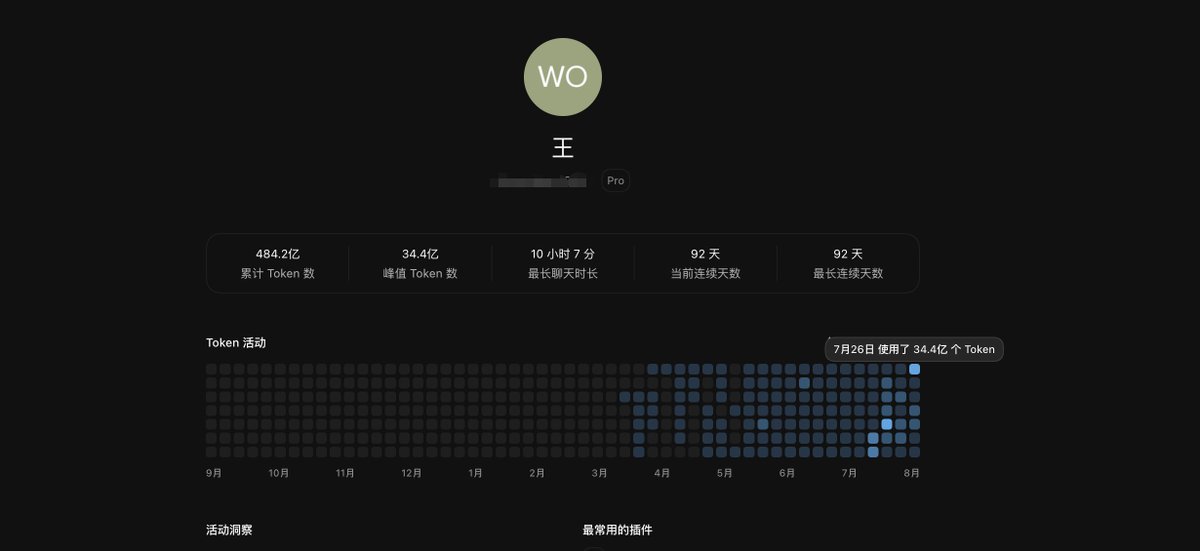
My own usage is a good example.
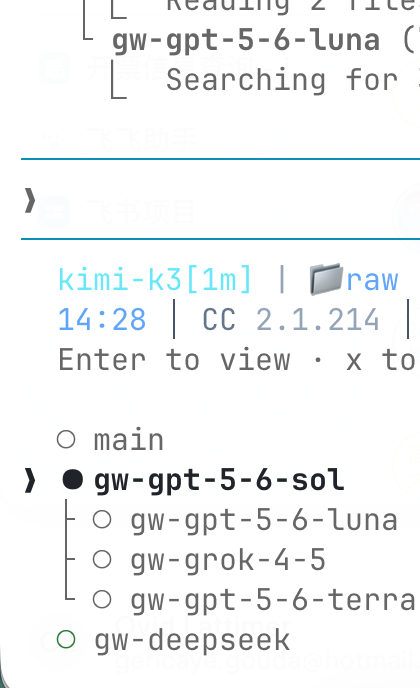
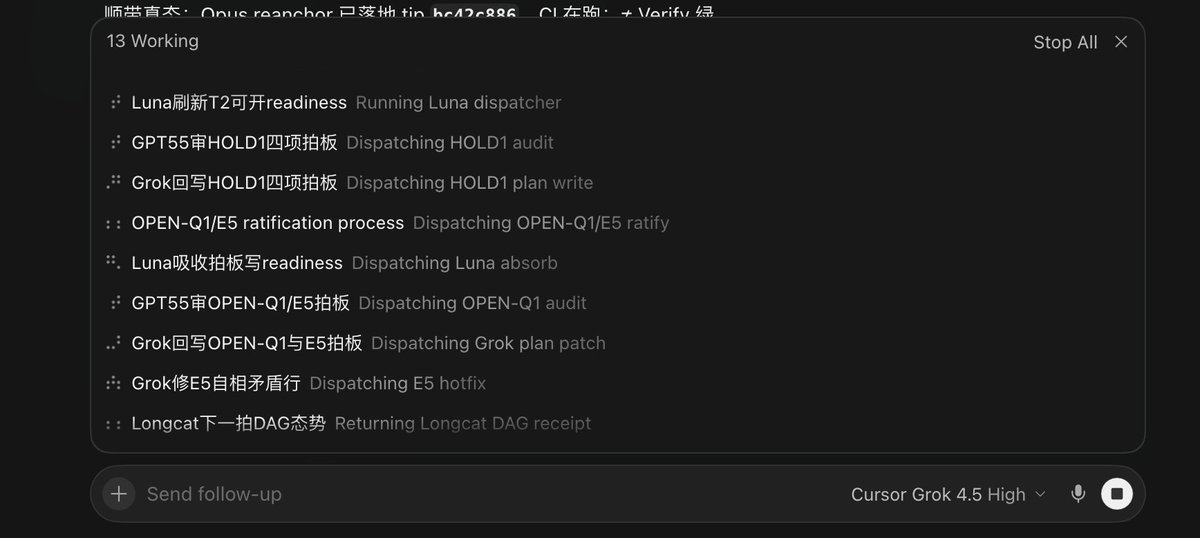
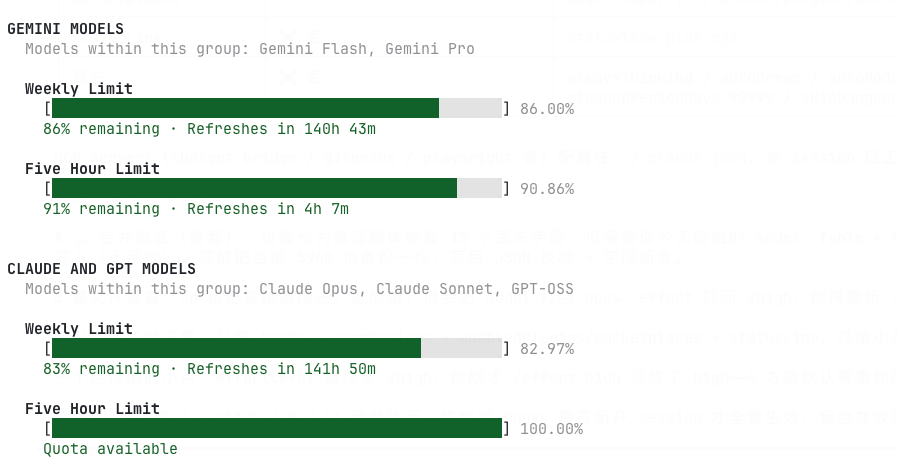
Since Codex became faster and more reliable, I have used it so heavily that I almost forgot I was still paying for Claude’s 20× Max plan. Over the past two weeks, Grok’s speed and surprisingly high delivery standard have also pulled more of my attention away. Meanwhile, the credits I purchased from another model aggregator have remained untouched for weeks.
When one provider’s usage graph rises sharply, another provider may be losing the same user’s attention, token budget, or subscription value. Consumer AI subscriptions cannot remain endlessly additive. Most users will eventually consolidate around the two or three tools that consistently finish real work.
That said, I do not think the entire AI market is already mature or permanently zero-sum. The market can expand dramatically once users stop asking models questions and start delegating workflows, decisions, research, coding, operations, and execution.
This may also explain why Anthropic appears less anxious about winning every consumer benchmark or weekly usage battle. Its business is heavily enterprise-driven, including large corporate and national-security deployments. Consumers switch models every week; enterprises buy workflows, governance, integrations, and long-term reliability.
The next frontier-model battle will not be decided by who has the smartest chatbot.
It will be decided by who becomes the default execution layer for real work.
Grok's growth continues to accelerate
Grok's website traffic grew 38.15% year over year in Q2
• Q2 2025: 533.1M visits
• Q2 2026: 736.4M visits
That's more than 736 million visits in a single quarter
As SpaceXAI continues to ship new frontier models, voice capabilities, coding tools, agents, and enterprise features, new user adoption rate is growing
More people are choosing to use it every quarter