Dissecting the blueprints of existence. 🔍 From ancient engineering to the cosmic source code. I reveal the hidden patterns that build our world. Let’s explore.
Please drop the green flag to mark your attendance. Do not break the chain.
I am the 001 🇳🇬 Naija. For this Project.
Let us use this thread to make a consensus of How many Nigerians are actually active on X . @Wizarab10 Called us irrelevant on one of his post. And someone pointed out the stats where it mentioned Nigeria to have over 7.4 million users. If 7.4 million Nigerian users can mark their attendance on this thread using their authentic verified accounts we would have conducted a real life election one of the most important data in life... Numbers !. If this works, Nigerians can use this method for their up-coming elections that way no gets to cheat !. Because we must validate the data with you X verification which is authentic. Great idea lets do this trend the hashtag #XCensus #NigeriansOnX...... The only way we can find out is to do the work.
Just reply under the latest thread with your number, wait for the preceding user before you make yours to correspond your postion. This could turn out to be an interesting experiment using X for data analysis in real time !. Lets find out !!!
Remember we wont stop until we count over 7.4m Nigerians here.
Before mechanical clocks existed,
humans still needed to track time.
The seasons.
The solstices.
The planting cycles.
The movements of the stars.
So they built clocks.
Not from gears and springs—
but from stone.
Ancient civilizations designed structures that aligned with the sun, moon, and stars so precisely that they could mark important moments of the year.
At Stonehenge, the summer solstice sunrise aligns with the monument's central axis.
Mayan observatories tracked celestial movements that guided agriculture and ceremonies.
Egyptian temples were often oriented to specific solar events.
These weren't merely buildings.
They were instruments.
Calendars carved into landscapes.
Astronomy embedded in architecture.
Imagine walking into a structure and knowing the time of year simply by observing where sunlight fell.
No batteries.
No screens.
No software.
Just geometry, observation, and centuries of accumulated knowledge.
In a way, ancient builders transformed stone into information technology.
The sky provided the data.
Architecture displayed the output.
And entire civilizations synchronized their lives around it.
Perhaps the most impressive part isn't that they watched the heavens.
It's that they built systems capable of preserving that knowledge across generations.
Stone became software.
And the Earth itself became the clock.
🔍 If all modern technology disappeared tomorrow, how would you keep track of time?
Modern concrete is designed to be strong.Roman concrete was designed to endure.
And that's why some Roman structures still stand nearly 2,000 years later.
Harbors battered by waves.Aqueducts carrying water.
Domes spanning enormous spaces.
Many remain intact long after their builders disappeared.
Here's the strange part:For centuries, nobody fully understood why Roman concrete lasted so long.
Modern analysis revealed something unexpected.
When cracks formed, Roman concrete could continue reacting with water and minerals, helping to strengthen parts of the structure over time.
In a sense,
it wasn't just durable.
It was adaptive.
Meanwhile, many modern structures require major repairs after only a few decades.Not because we've forgotten how to build.
But because we often optimize for different priorities:
• Speed
• Cost
• Scale
• EfficiencyThe Romans optimized for permanence.
Their buildings weren't projects.
They were legacies.
Imagine creating something so effective that people thousands of years in the future are still trying to understand how you made it.
That's not just engineering.
That's time travel through design.
🔍 What would our civilization build differently if every project was expected to last 1,000 years?
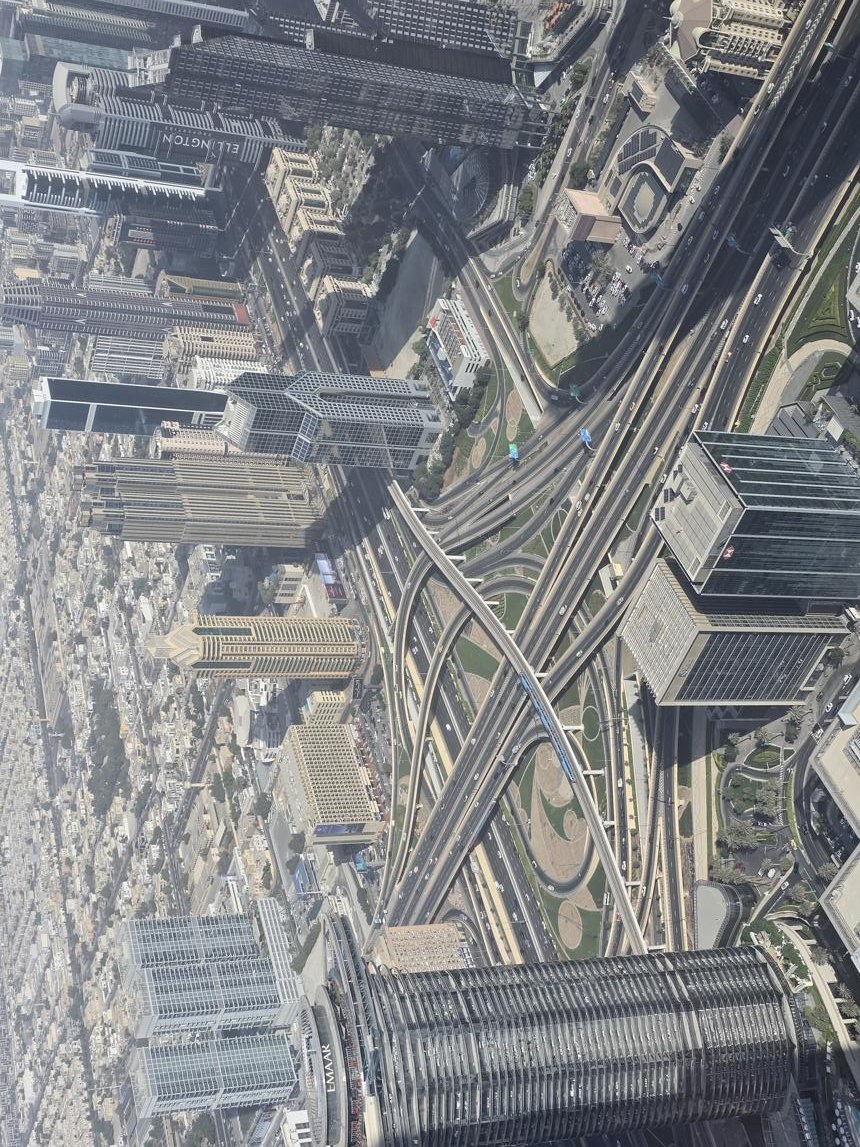
Every day, millions of people move through cities without ever seeing the systems that keep them alive.
Turn on a faucet.
Water appears.
Flip a switch.
Light floods the room.
Drive across a bridge.
Cross a highway.
Everything works so seamlessly that we rarely stop to ask:
How?
Beneath every city lies a hidden world of tunnels, pipes, cables, reservoirs, substations, and structural foundations.
An invisible network quietly working 24 hours a day.
Most people notice a city's skyline.
Engineers notice its bloodstream.
Because the true strength of a city isn't found in its tallest building.
It's found in the infrastructure nobody sees.
The roads that connect.
The bridges that endure.
The drainage systems that prevent disaster.
The power grids that keep civilization running after sunset.
A city isn't just a collection of buildings.
It's a giant machine designed to support millions of lives.
And like any machine, its most important components are often hidden beneath the surface.
The next time you walk through your city, look closer.
Every street, pipe, and power line tells a story of human ingenuity.
🔍 What's one piece of infrastructure you've never thought about—but now realize you depend on every day?
Some ancient stone walls are so precisely fitted that you can barely slide a sheet of paper between the blocks.
No mortar.
No steel reinforcements.
No modern machinery.
Yet many of these structures have survived centuries of earthquakes, weather, and war.
Take the stonework of the ancient Incas.
Their walls weren't built with perfectly rectangular blocks.
Instead, each stone was shaped to interlock with its neighbors like pieces of a giant puzzle.
When the ground shook, the stones moved slightly...
Then settled back into place.
Meanwhile, countless modern buildings require constant maintenance and repairs after just a few decades.
The question isn't whether ancient builders were more intelligent.
It's whether they optimized for a different goal.
Today, we often build for speed.
Ancient civilizations built for permanence.
They weren't racing against quarterly deadlines.
They were building for generations they would never meet.
Perhaps the greatest lost technology isn't a tool.
It's long-term thinking.
🔍 If you were building something meant to last 500 years, what would you do differently?
Gravity Is Free
Modern engineering often fights gravity.
Ancient engineering partnered with it.
The Romans moved water across vast distances without pumps.
The Incas carved mountains into terraces that controlled erosion, conserved water, and increased food production.
Ancient civilizations built canals that allowed rivers to do the work for them.
No electricity.
No engines.
No software.
Just a deep understanding of how nature already worked.
Today, we spend billions forcing systems to behave the way we want.
Ancient engineers often asked a different question:"How can we design with nature instead of against it?"Perhaps the most advanced technology isn't the one that consumes the most energy.
It's the one that requires the least.
The smartest technology isn't always the newest.
Sometimes it's the oldest lesson we've forgotten.
🔍 Where do you think modern society is still fighting nature instead of working with it?
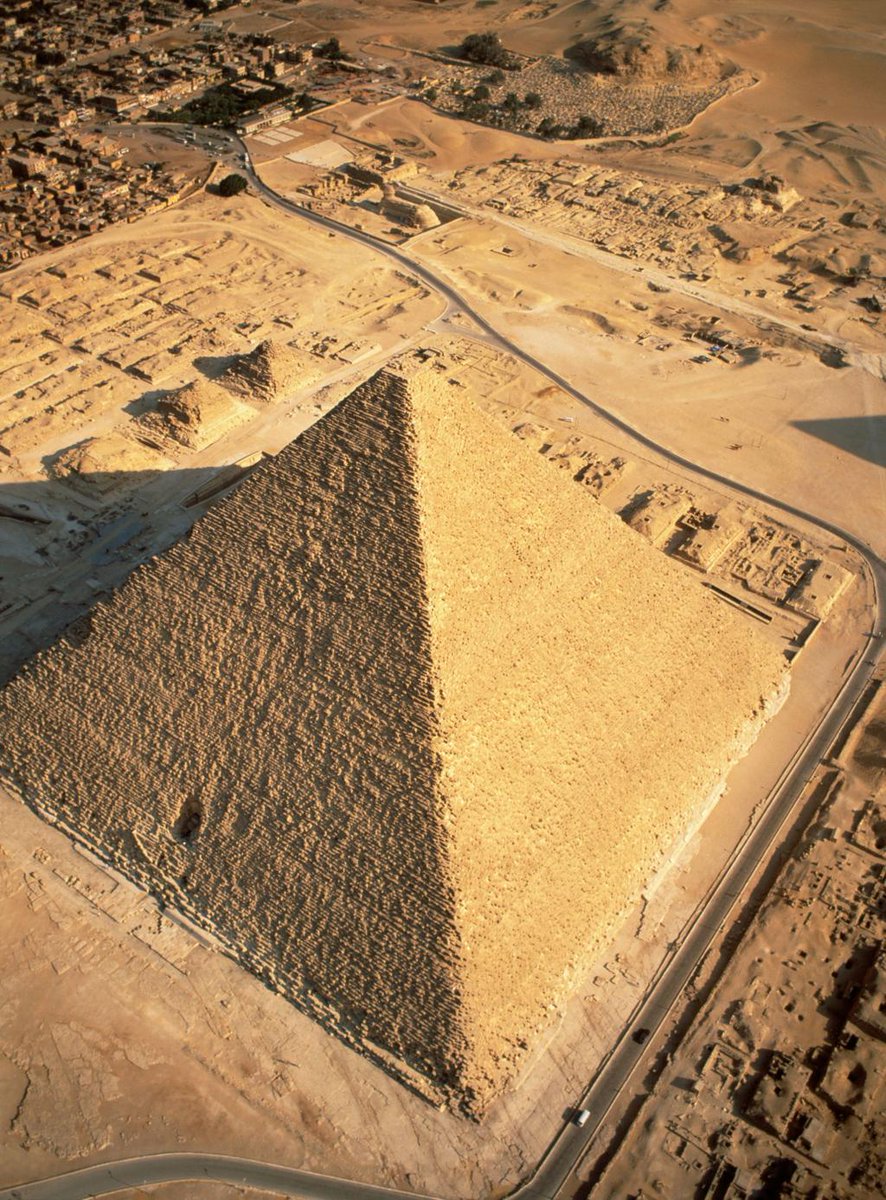
The Great Pyramid Problem
Everyone asks:
"How was the Great Pyramid built?"
But here's the deeper question:
2.3 million stone blocks.
Near-perfect cardinal alignment.
A structure that has survived for over 4,500 years.
And yet, with all our modern technology, very few projects today are designed to last even a fraction as long.
The real mystery isn't the construction.
It's the intention.
What motivates a civilization to build something so precise, so massive, and so enduring?
Perhaps the Great Pyramid wasn't just a monument.
Perhaps it was a message.
A statement that some ideas should outlive generations.
🔍 What do you think was the pyramid's true purpose?
We’re excited to officially join the conversation on X!
We’re Mavy Link, a recruitment agency focused on connecting great people with great companies.
The right hire can change a business. The right opportunity can change a career. That’s why we’re here.
Whether you’re hiring, job hunting, or simply interested in the future of work — welcome.
Looking forward to connecting with you all.
THE MYSTERY.
Machu Picchu’s drainage system may be more impressive than its walls.
The Incas mastered gravity instead of fighting it.
No pumps.
No modern machinery.
No concrete megastructures.
Just precision, slope, stone, and deep understanding of nature.
Unpopular Opinion:
The “digital nomad” lifestyle is often just loneliness with better scenery.
Ancient nomadic tribes moved constantly too — but they still had tribe, identity, purpose, and belonging.
Today we have:
• airports
• Airbnbs
• WiFi
• freedom
…
The Connection. Link a cultural tradition to a functional or mathematical origin.
The Gele isn't just fashion; it's geometry manifested as identity. 🇳🇬
Most people look at the traditional Yoruba headwrap in my profile and see beauty, cultural pride, and status. It is all of those things, but the foundation of that beauty is a precise engineering blueprint that dictates how that geometry can exist.
I Dissect Reality: This visual tradition is based on adaptive curves, not rigid lines. 📐
The original architects of this traditional attire used Geometric Frequency and Adaptive Curvature to create a structure that amplified natural resonance—both visually and physically. 🌀
We’ve been taught to look for efficiency in straight lines and modern grids (which require active, breaking maintenance like modern concrete decay). The Gele contradicts this. It is a functional, mathematical system designed to optimize for flow and adaptive resilience.
If you stood in the exact designed viewpoint, the Gele looks like it is floating. This isn't magic; it's a precisely engineered cosmic sleight of hand. The complex, layered folds of the fabric were positioned not just for style, but to align with unique visual patterns only from that designed viewing spot.
By focusing attention on the sheer complexity and divine form, the logic of the underlying geometric framework is effectively masked. We admire the form, but they optimized for the structure. One blueprint is a constant, expensive battle against nature; the other is a sustainable, low-tech adaptation to it.Rigidity breaks; adaptive curvature survives for centuries.
Don't just observe the tradition. Dissect the functional source code behind it. Build your understanding from ancient foundations.
What hidden mathematical or functional pattern in your own culture's traditional design have you noticed but didn't know the logic for? Drop a comment or an image below and let's dissect it. 👇 #CulturalEngineering #BlueprintAnalysis #IDissectReality #GeometricResilience #GeleGeometry #PatternsOfReality