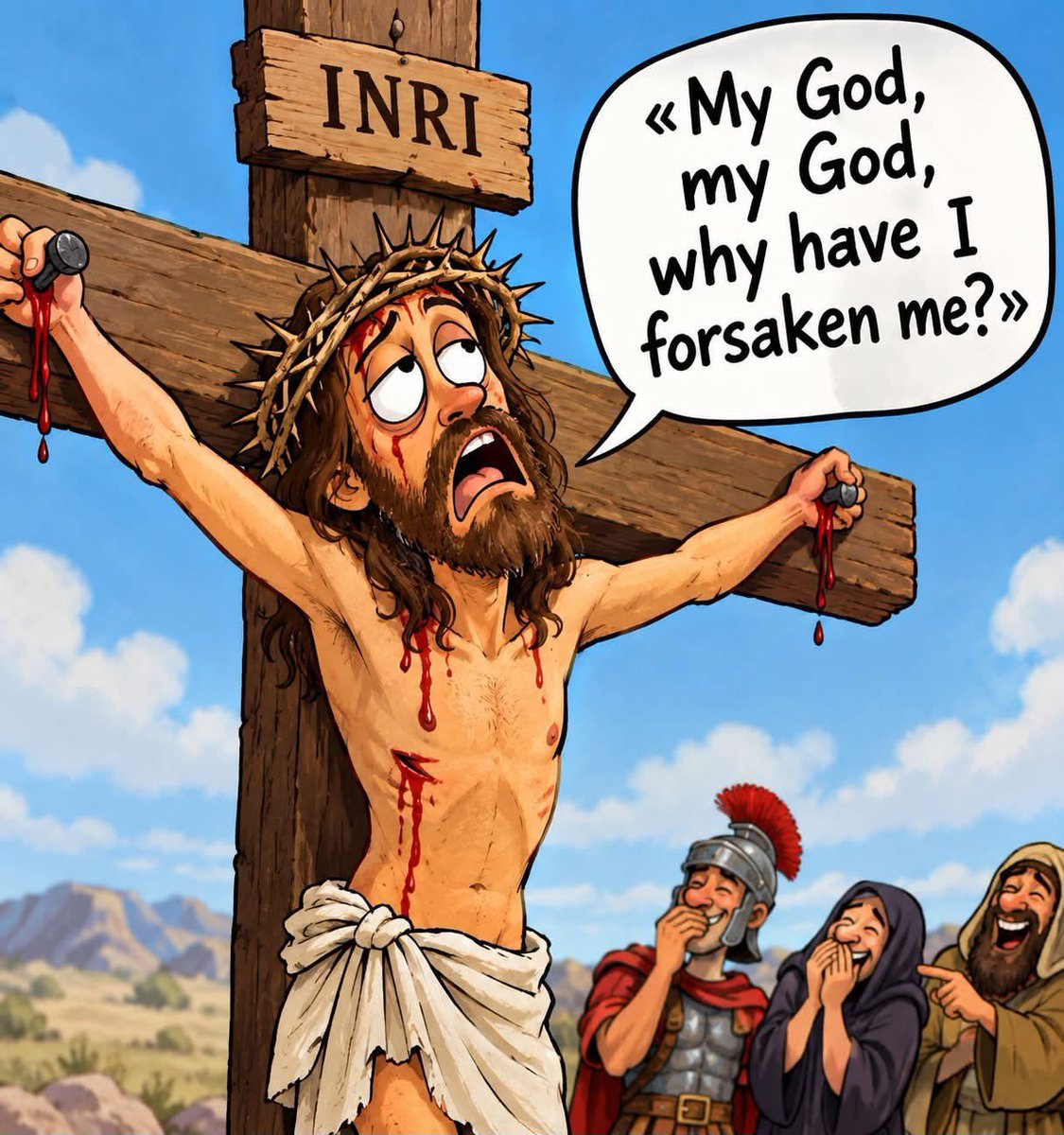
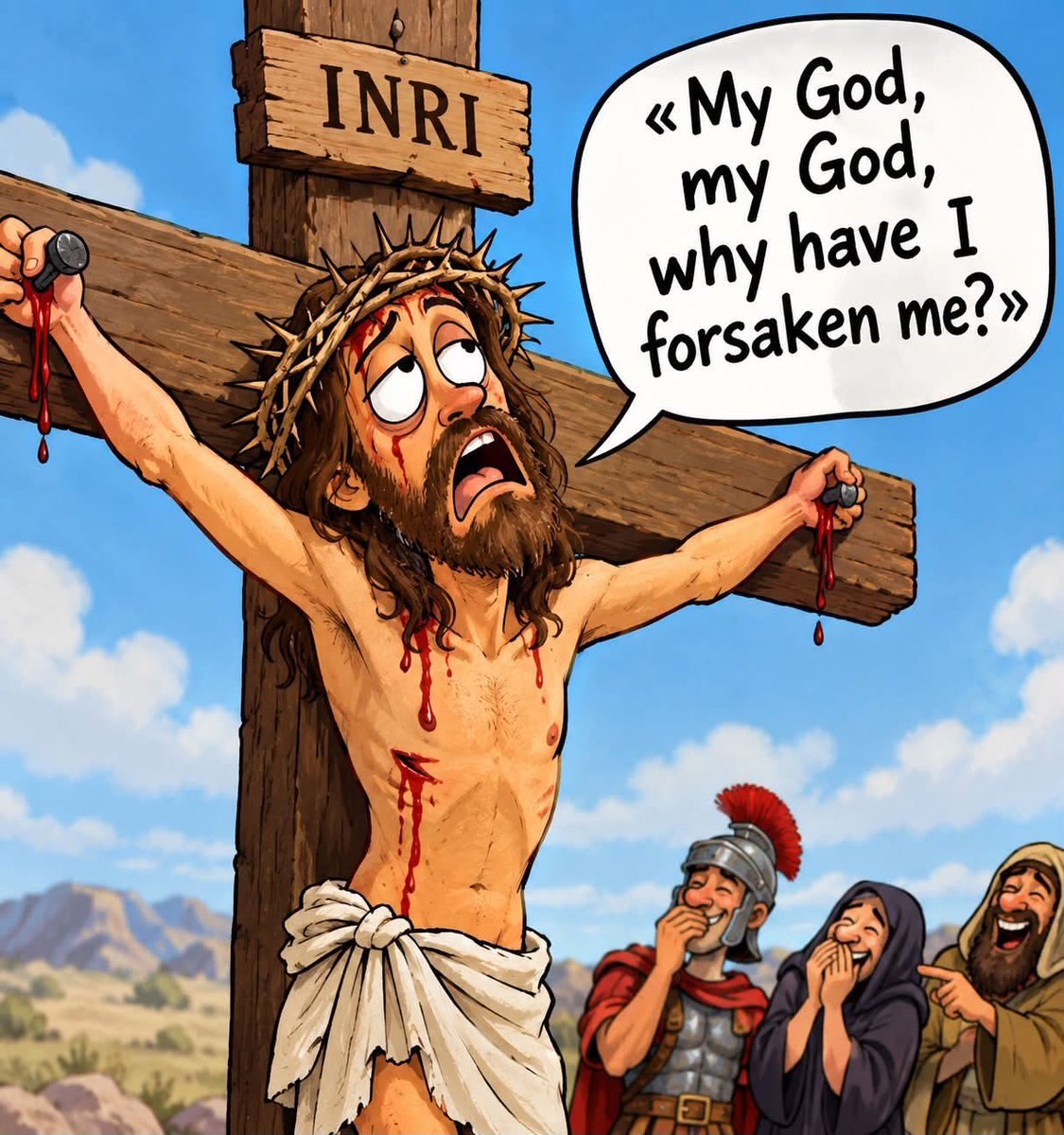
Christianity: Jesus killed himself on the stick to save humanity from himself, tempted by the devil, he didn't wanna die so he prayed to himself on the stick to save himself from the stick but he couldn't save himself from the stick so he died to save humanity from the sins of their grandparents. Now people talk about skin color of their human gods.
@AbaddonSpeaks Christianity: Jesus killed himself on the stick to save humanity from himself, tempted by the devil, but prayed to himself on the stick to save himself from the stick but he couldn't save himself from the stick so he died to save humanity from the sins of their grandparents.
Christianity: Jesus killed himself on the stick to save humanity from himself, tempted by the devil, he didn't wanna die so he prayed to himself on the stick to save himself from the stick but he couldn't save himself from the stick so he died to save humanity from the sins of their grandparents. Now people think about skin color of their human gods.
Christianity God: Jesus killed himself on the stick to save humanity from himself, tempted by the devil, but he didn't wanna die so he prayed to himself on the stick to save himself from the stick but he couldn't save himself from the stick so he died to save humanity from the sins of their grandparents.
Christianity Logic: Jesus killed himself on the stick to save humanity from himself, tempted by the devil, but prayed to himself on the stick to save himself from the stick but he couldn't save himself from the stick so he died to save humanity from the sins of their grandparents.
Unlike Christianity, in Islam, Allah is perfectly just and will not wrong anyone. Every person grows up in different circumstances, cultures, and psychological environments, and not everyone receives or understands the message of Islam in the same way. Allah knows every person's circumstances, intentions, struggles, and what they were genuinely able to understand. Therefore, people will not be judged unjustly for something they could not reasonably have known or understood. The Qur'an teaches that Allah does not punish a people until a messenger has been sent to them, and that He never wrongs anyone, even by the smallest amount.
Supporting Qur'anic Verses:
1. Qur'an 17:15
“Whoever is guided is only guided for [the benefit of] his soul. And whoever errs only errs against it. And no bearer of burdens will bear the burden of another. And never would We punish until We sent a messenger.”
2. Qur'an 2:286
“Allah does not burden a soul beyond that it can bear.”
3. Qur'an 4:40
“Indeed, Allah does not wrong [anyone], even as much as an atom's weight.”
4. Qur'an 6:131
“That is because your Lord would not destroy the cities for wrongdoing while their people were unaware.”
5. Qur'an 16:106
“...except for one who is forced [to renounce his religion] while his heart is secure in faith...”
This verse illustrates that Allah takes a person's inner belief and circumstances into account.
In summary: Islam teaches that Allah knows every person's circumstances and judges with perfect justice. However, Muslim scholars differ on the ultimate fate of people who never received Islam's message properly or were unable to understand it. These verses support the principle that Allah does not punish unjustly, rather than establishing that every non-Muslim will necessarily be saved.
Christianity Logic: Jesus killed himself on the stick to save humanity from himself, tempted by the devil, but prayed to himself on the stick to save himself from the stick but he couldn't save himself from the stick so he died to save humanity from the sins of their grandparents.
Unlike in Christianity, In Islam, Allah is perfectly just and will not wrong anyone. Every person grows up in different circumstances, cultures, and psychological environments, and not everyone receives or understands the message of Islam in the same way. Allah knows every person's circumstances, intentions, struggles, and what they were genuinely able to understand. Therefore, people will not be judged unjustly for something they could not reasonably have known or understood. The Qur'an teaches that Allah does not punish a people until a messenger has been sent to them, and that He never wrongs anyone, even by the smallest amount.
Supporting Qur'anic Verses:
1. Qur'an 17:15
“Whoever is guided is only guided for [the benefit of] his soul. And whoever errs only errs against it. And no bearer of burdens will bear the burden of another. And never would We punish until We sent a messenger.”
2. Qur'an 2:286
“Allah does not burden a soul beyond that it can bear.”
3. Qur'an 4:40
“Indeed, Allah does not wrong [anyone], even as much as an atom's weight.”
4. Qur'an 6:131
“That is because your Lord would not destroy the cities for wrongdoing while their people were unaware.”
5. Qur'an 16:106
“...except for one who is forced [to renounce his religion] while his heart is secure in faith...”
This verse illustrates that Allah takes a person's inner belief and circumstances into account.
In summary: Islam teaches that Allah knows every person's circumstances and judges with perfect justice. However, Muslim scholars differ on the ultimate fate of people who never received Islam's message properly or were unable to understand it. These verses support the principle that Allah does not punish unjustly, rather than establishing that every non-Muslim will necessarily be saved.
Because unlike in Christianity God makes sense in islam.
Allah — there is no deity except Him, the Ever-Living, the Sustainer of all existence. Neither drowsiness overtakes Him nor sleep. To Him belongs whatever is in the heavens and whatever is on the earth. Who is it that can intercede with Him except by His permission? He knows what is before them and what is behind them, and they encompass nothing of His knowledge except what He wills. His Kursi extends over the heavens and the earth, and their preservation tires Him not. And He is the Most High, the Most Great.
Qur’an, Surah Al-Baqarah (2:255).
@RyanGarcia Christianity: Jesus killed himself on the stick to save humanity from himself, tempted by the devil, but prayed to himself on the stick to save himself from the stick but he couldn't save himself from the stick sohe died to save humanity from the sins of their grandparents.
@RyanGarcia@NvrMore24 Mistake and Sinning on purpose is two different things. Prophets of god can do mistakes but they would never sin in a way you guys believe. We saved the honor of those the god himself chose and purified their hearts from satan and dirty temptations of sins.
@UgoCannon Christianity: Jesus killed himself on the stick to save humanity from himself, tempted by the devil, but prayed to himself on the stick to save himself from the stick but he died to save humanity from the sins their grand parents did.
@DWorstApologist@abdulafandii Christianity: Jesus killed himself on the stick to save humanity from himself, tempted by the devil, but prayed to himself on the stick to save himself from the stick but he died to save humanity from the sins their grand parents did.