Saludamos a la antropóloga Cari Tusing, quien se incorpora como profesora de nuestra escuela en una plaza compartida con @college_uc.
¡Bienvenida, Cari!
SO proud of @sophie_berdugo & co-authors @Arran_Davis@chammeeno for this incredible milestone work. 🙌 A unique glimpse into 25 years of chimpanzee stone tool use at the only field site where 2 stones are always combined to get nuts. Congratulations!Great Christmas present 🎁 😀
Have you ever heard of the "10,000 hour rule" by Malcolm Gladwell? It's the estimated time of focused work that it takes to create a Bill Gates from scratch, or the Beatles, or Beethoven.
This is how many hours it took to create "Primate Phenotypes."
https://t.co/BE1Euo3WHz
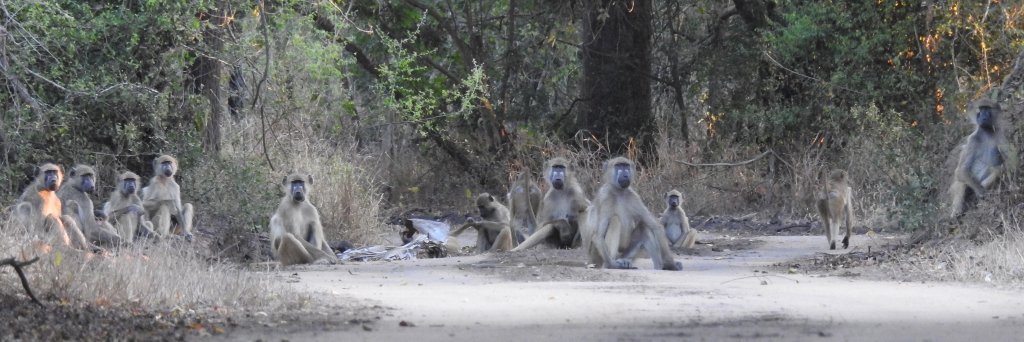
The #Gorongosa Paleo-Primate Project research team is back in action in Gorongosa National Park! This dynamic team of researchers is making some exciting new discoveries running the Gorongosa Interdisciplinary Field School in Human Evolution. Stay tuned! @carvalhoprimate
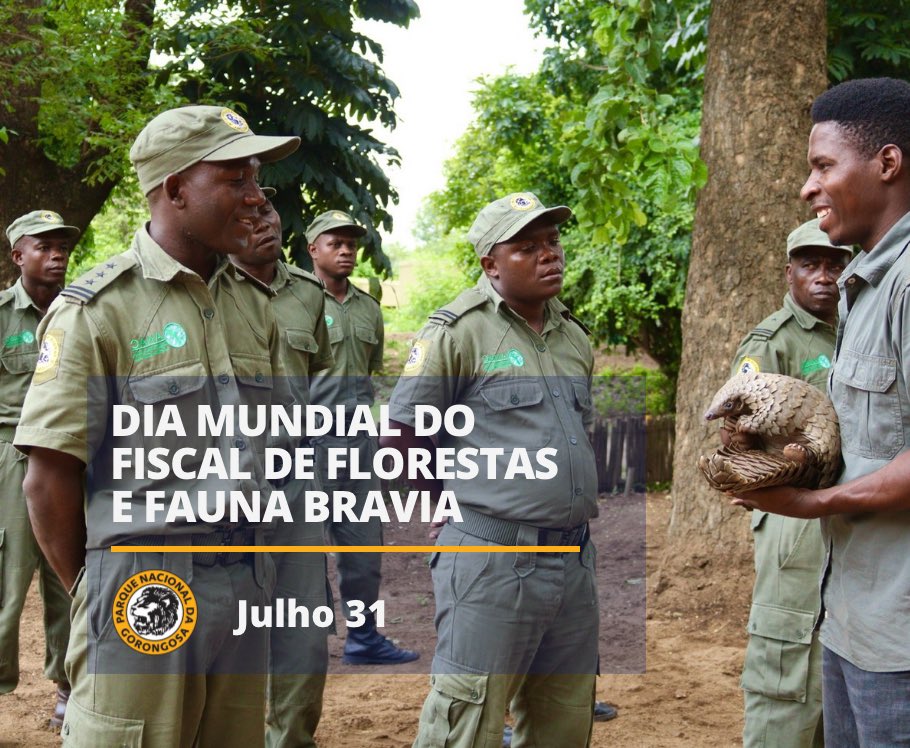
Os Fiscais da #Gorongosa reduziram a caça ilegal em mais de 70%! Todos os 269 fiscais foram treinados em conservação e direitos humanos.e têm experiência de campo. Em 2023, os Fiscais realizaram 1.141 patrulhas no terreno e também via aérea. #WorldRangerDay
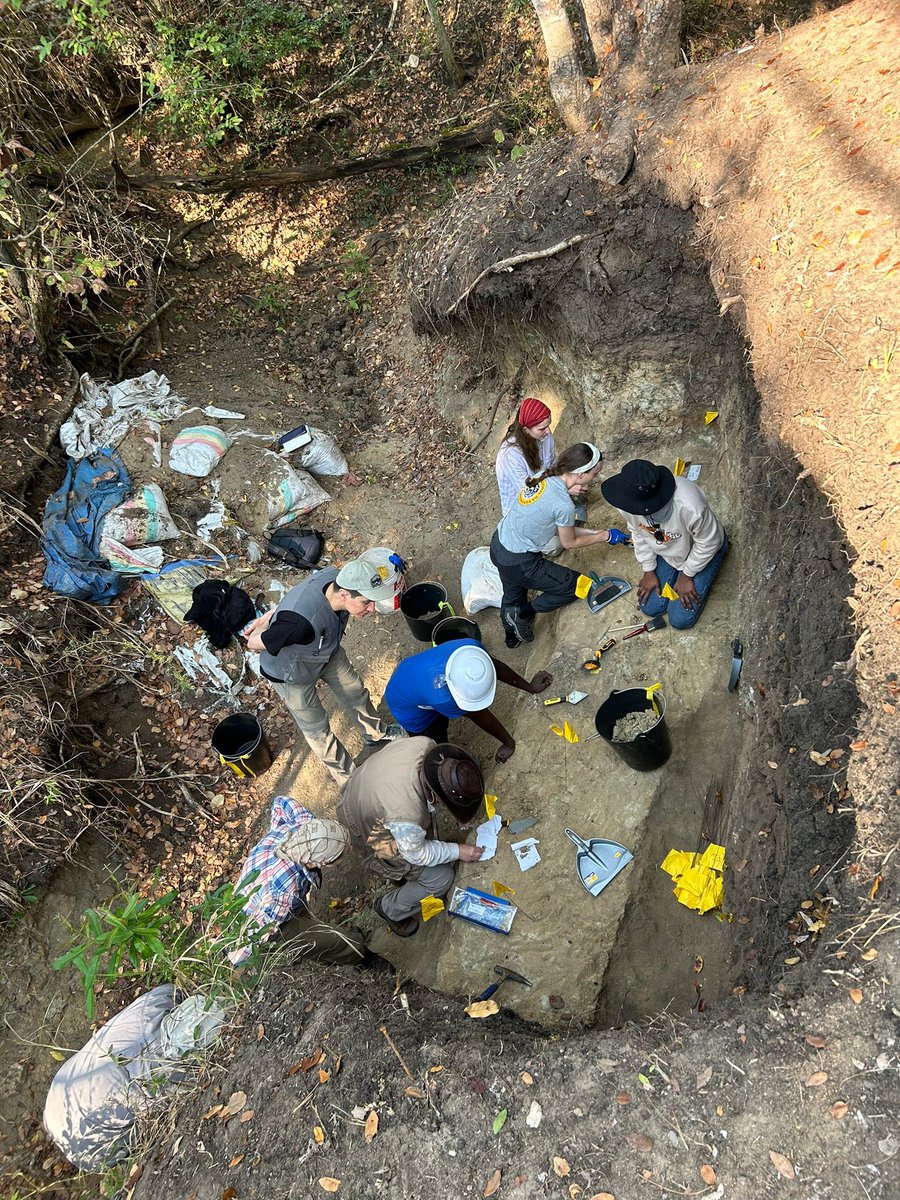
Students of the Gorongosa Interdisciplinary Field School in Human Evolution have also received training in archaeology and geology, including a class on the archaeology of Mozambique by Professor Nuno Bicho and a practical session on archaeological excavations 🪨⛏️⛰️
Excavations are underway at the fossil site in @GorongosaPark. The Paleo-Primate Project Gorongosa team are uncovering Miocene fossils, allowing us to learn about species that were present millions of years ago, the environments they occupied, and how they evolved 🦴
After an introduction to @GorongosaPark and the Paleo-Primate Project Gorongosa, students of the Gorongosa Interdisciplinary Field School in Human Evolution experienced some of the Park’s wildlife and unique habitats for themselves on a morning safari 🦅🦁🐊
Pianist João Carlos Martins had not played with 10 fingers since he lost the use of his right hand in 1995.
In 2020 he returned to play thanks to bionic gloves invented by designer Ubiratan B. Costa.
This is the first time he did it.
En este post se describe el proceso en el que a través de un apoyo financiero de @WennerGrenOrg se concibió y conformó la Red BALANCE, integrada hasta el momento por:
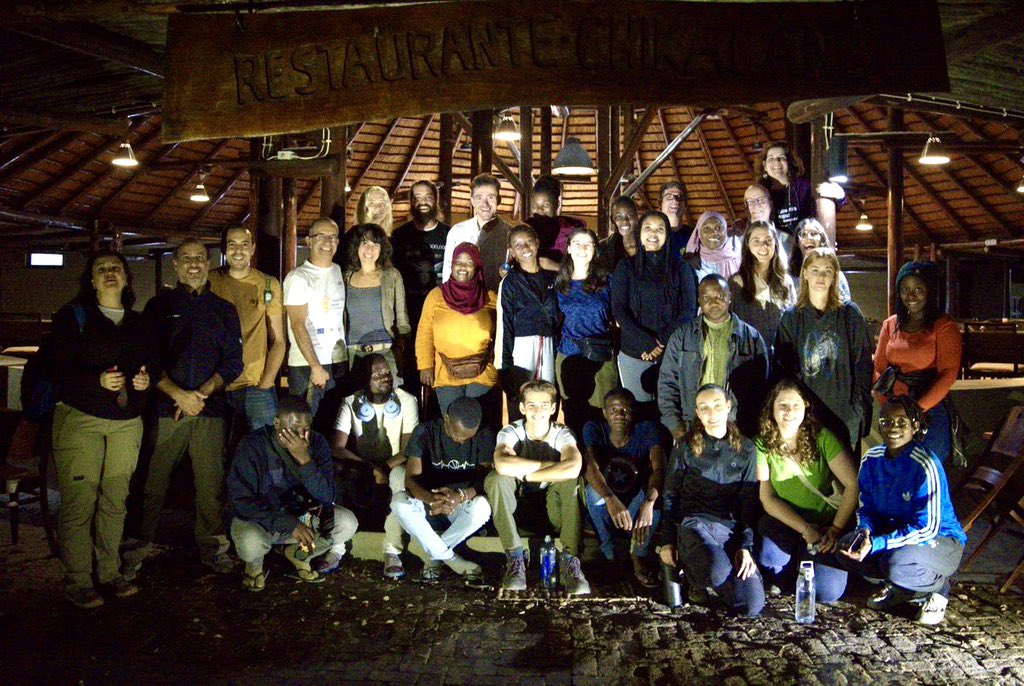
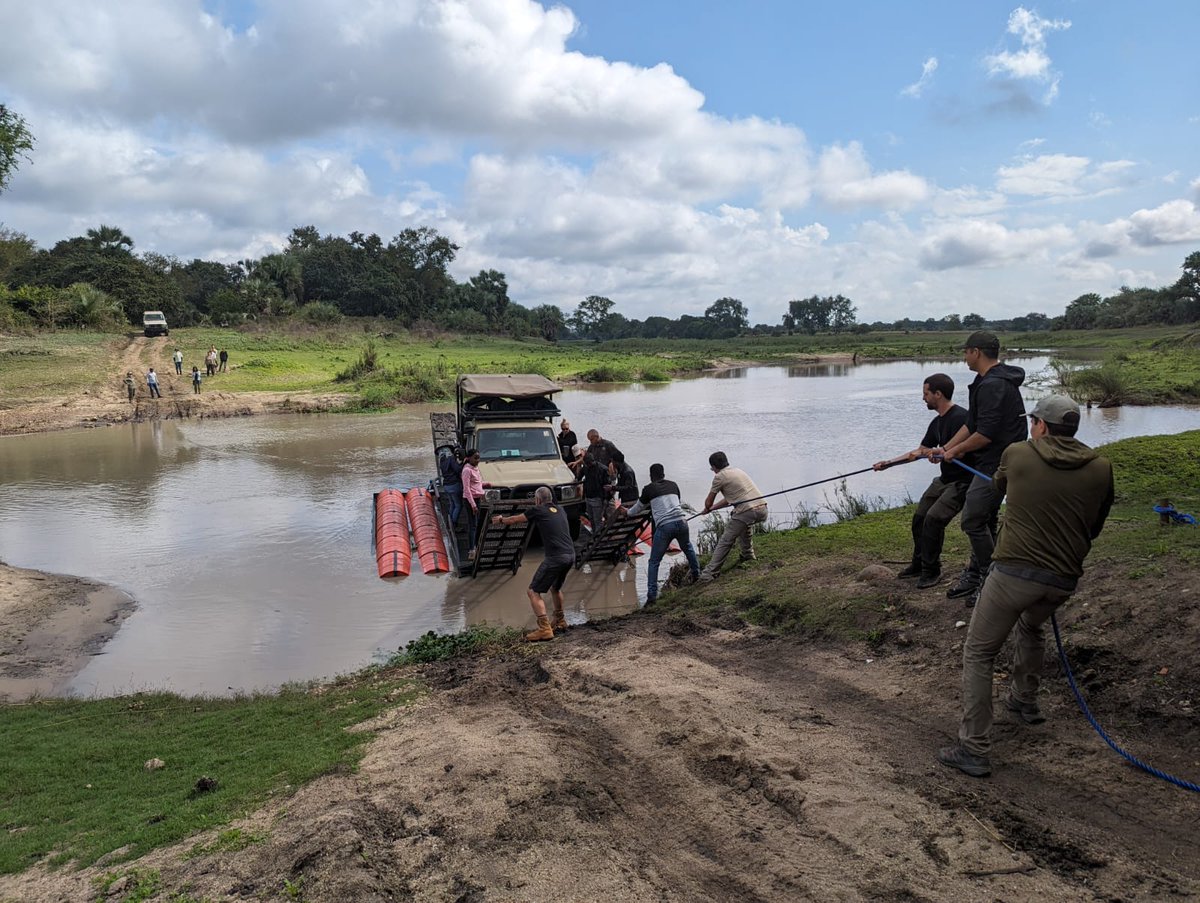
Leaving campsite! Students prepare for the exam. A great season:+ 500 fossils, new fossil units found. Artifacts & fossils found in a new cave! To students, fiscais, senior researchers, staff & supporters of our mission, thank you! Exciting times! @GorongosaPark@oxford_anthro
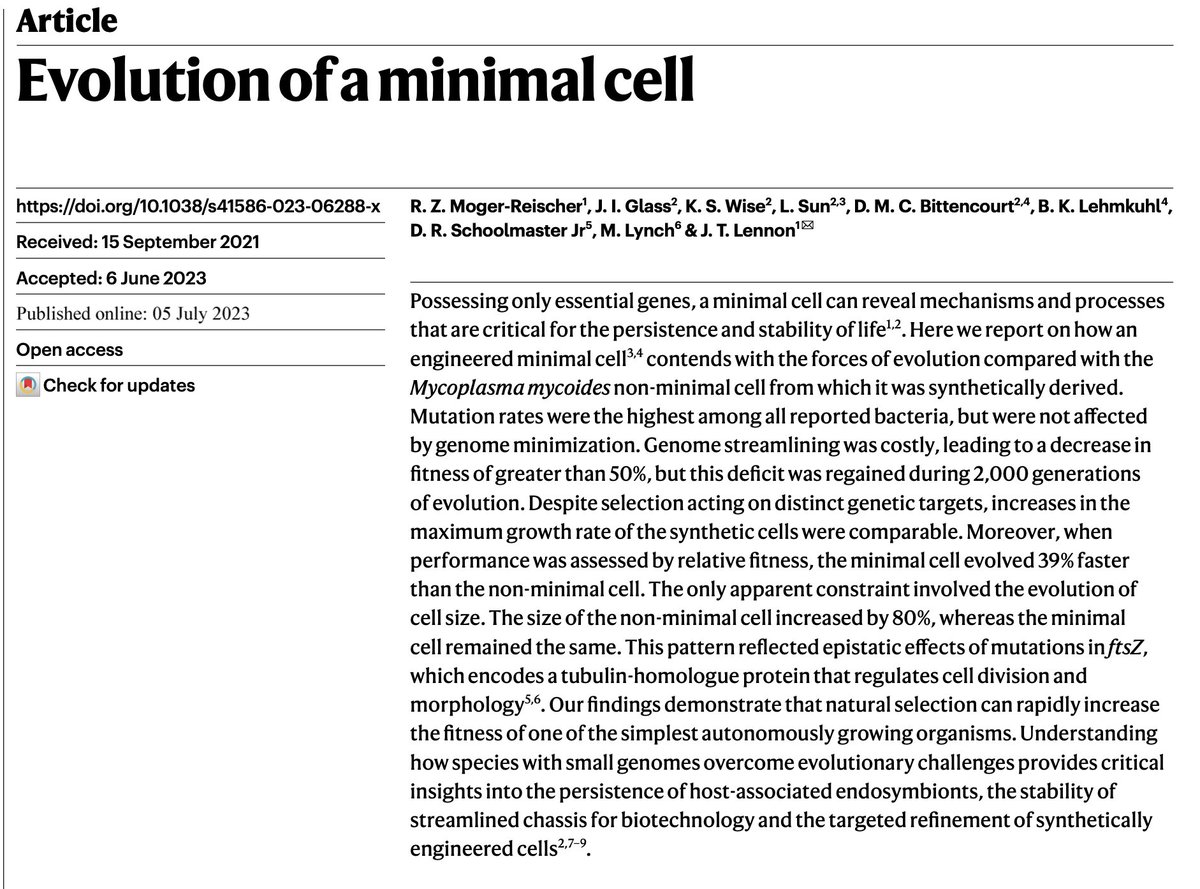
A mind-blowing paper has come out today in @Nature
In 2016, JC Venter Institute scientists trimmed a bacterial genome to its barest minimum required for life to synthesize what they called a "minimal genome" (https://t.co/Rk8oZJ0bUj).
Today, a group of scientists from Indiana University reports how that minimal genome evolved over 2000 generations in comparison to the non-minimal genome.
The authors found that even when you reduce a bacterial genome to its absolute minimum where every nucleotide matters, the genome undergoes mutational events generation after generation as much as the non-minimal genome. One simply cannot stop the evolution.
Just over 300 days of evolution (equivalent to 40,000 years in humans) the minimal cell has gained everything it lacked in fitness on day one in comparison to the non-minimal cell.
When comparing the evolved traits between the minimal and non-minimal cells, the scientists found something striking. The evolutionary process increased the cell size of non-minimal cells but not that of the minimal cell. But that is not the striking part.
The scientists were able to identify the key mutation that resulted in cell size evolution. And it turned out that the mutation that helped the non-minimal cells to grow bigger is the same that helped the minimal cells to stay smaller. Growing bigger had a survival advantage for non-minimal cells and not growing bigger had a survival advantage for minimal cells. So, the mutation had a context-dependent effect. This just demonstrates that the evolutionary effects on traits have no absolute direction. All that matter is what is beneficial for the organism's survival.
The conclusion of the paper is metaphorically a quote from the Jurassic Park movie:
“Listen, if there’s one thing the history of evolution has taught us is that life will not be contained. Life breaks free. It expands to new territories, and it crashes through barriers painfully, maybe even dangerously, but . . . life finds a way". (https://t.co/UlxRlb86CT)
https://t.co/zA9OAqSoAu
the project continued with the fundamental support of two strong women: María José Aninao, linguist and teacher in Mapuche communities, who coordinated sample collection and community engagement, and @ArangoEpifania who conducted the genetic analysis. Domo nehuen.