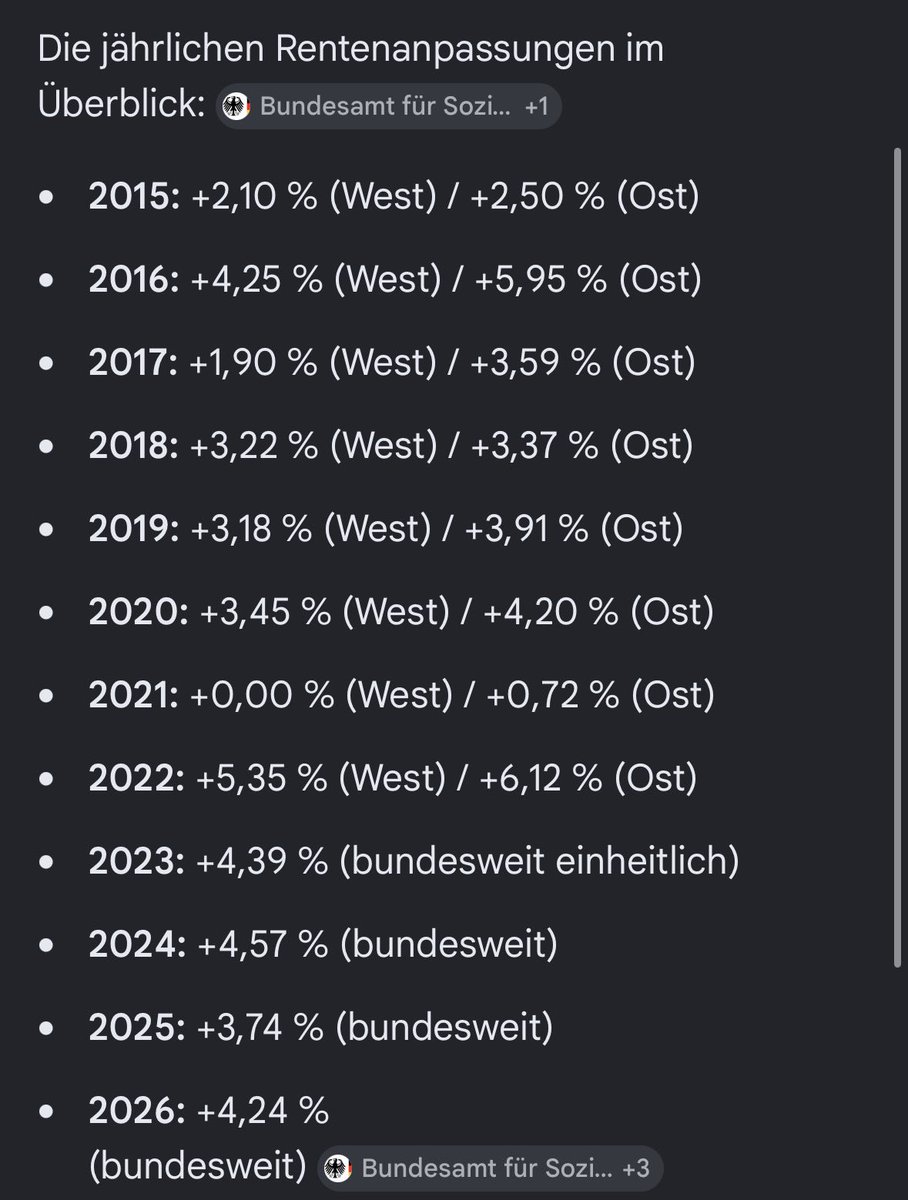
Nein. Bereits vor 40 Jahren wurde die demographische Alterung präzise prognostiziert.
1985 von der UN prognostizierter Altenquotient für Deutschland für 2024: 36,7%. Tatsächlicher Wert laut Destatis in 2024: 36,9%.
Definition: (Alte 65 und älter) / (Personen 15 bis 64).
Und .../
Remember this when some underemployed guy from Kansas logs onto twitter and argues against taxing the wealthy
Or when someone making $250K/year launches a 7-part thread about how logistically impossible taxing the wealthy would be
These numbers are disgusting & dangerous
In fact this chart massively understates the difference, because it includes U.S. gun deaths from SUICIDE, which greatly outnumber U.S. gun deaths from HOMICIDE.
European refusal of AC is much deadlier than America's embrace of guns.
Good Morning from Germany, where the road to socialism is paved with ever-rising govt consumption. Since 1999, state consumption is up 63%, while GDP has risen only 31% and capital investment a meagre 16%. The public sector keeps expanding, but the investment base is stagnating. Germany is becoming less of a market economy and more of a state-led redistribution machine.
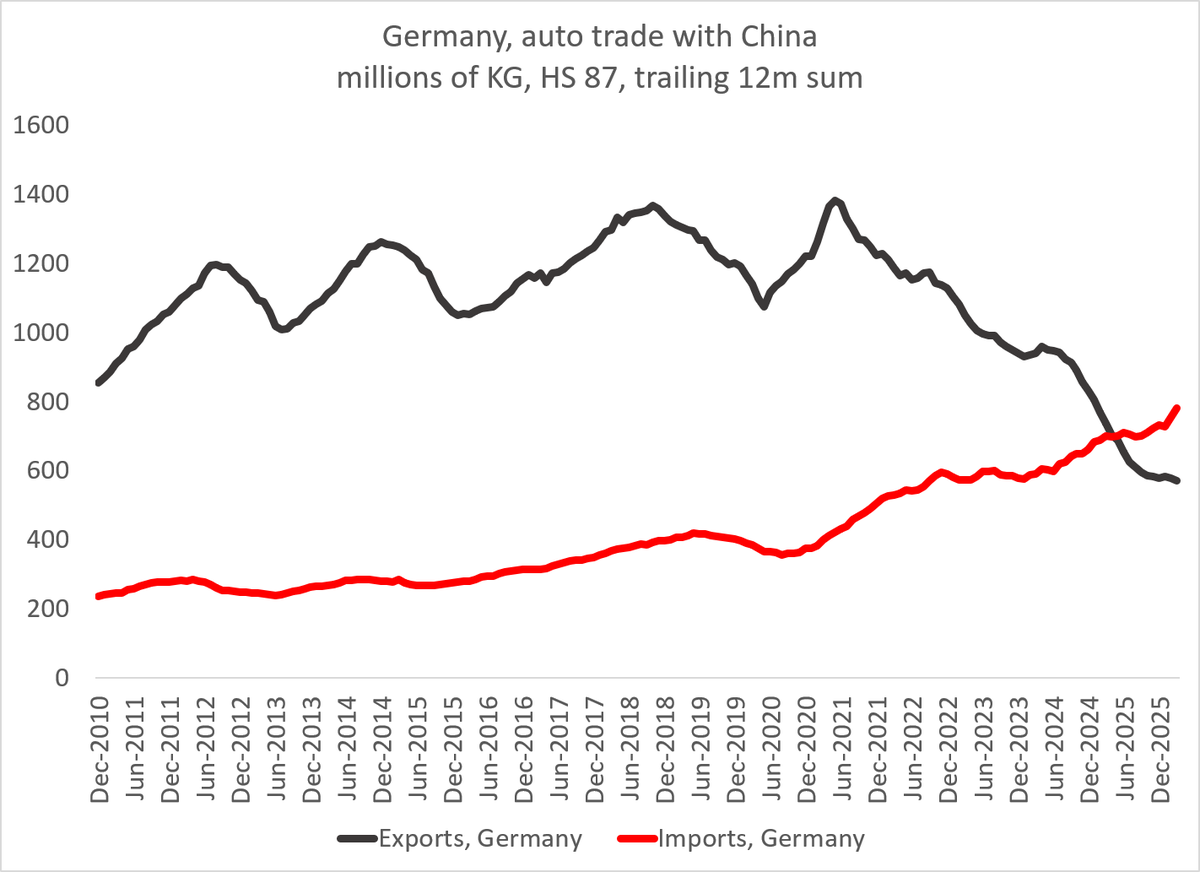
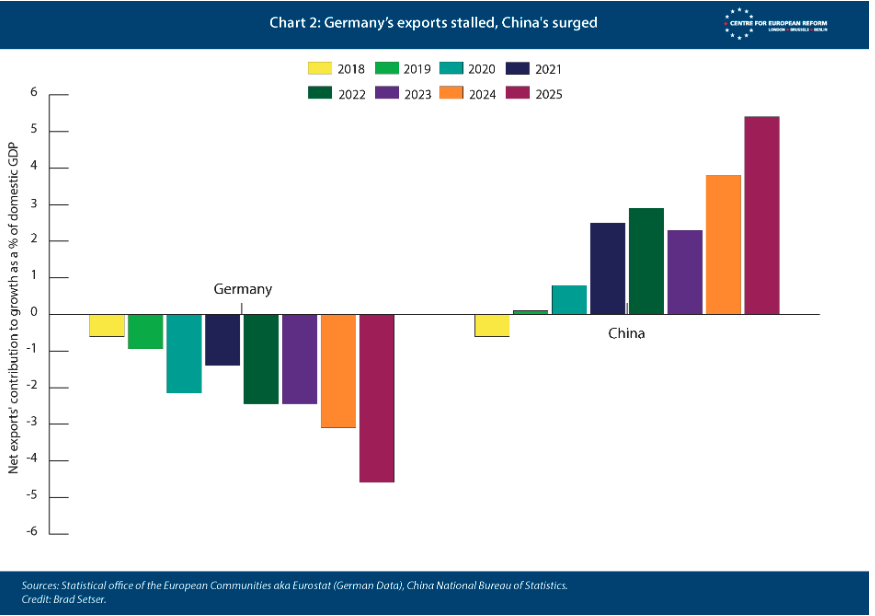
Germany is the epicentre of the China Shock 2.0 reverberating in global markets
In a new paper, @Brad_Setser and I show the shock is a key driver of Germany’s economic malaise. And it's accelerating
Berlin needs to stop admiring the problem, and join efforts to fight back
1/
I'm German.
Germany's ENTIRE AI data center capacity is less than 1/2 of just one site being built in Texas.
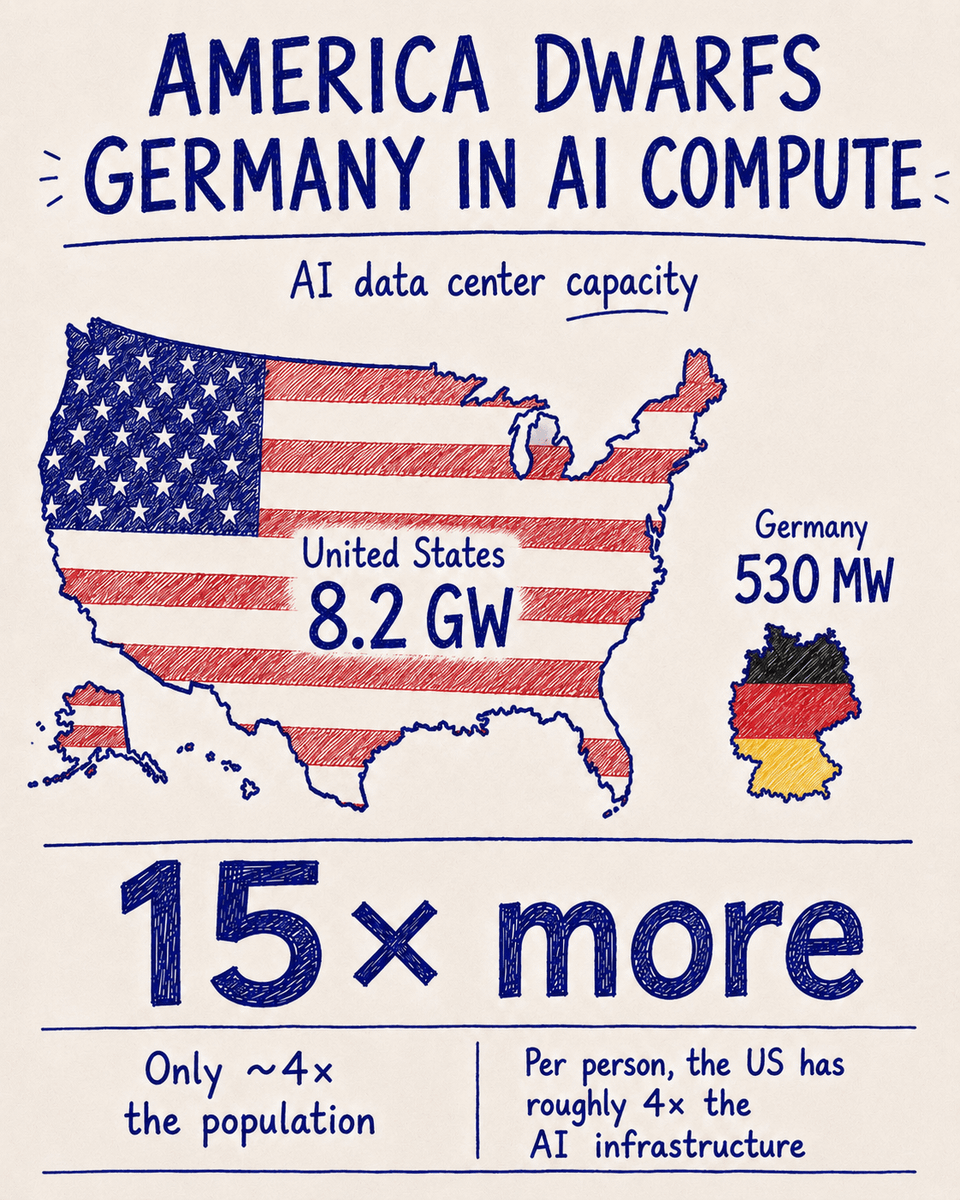
We have 530 megawatts of AI data center capacity in the entire country.
The US has 8.2 gigawatts. That's 15x more compute on a country with only 4x the people.
Per German, the US has roughly 4x the AI infrastructure.
One university computer at MIT is 4x faster than Germany's most important commercial AI facility.
The obvious reaction here is "so what, German companies can just rent compute from AWS."
But that's the same logic Germany applied to Russian gas for two decades.
Roughly 70% of German enterprise AI today runs on American cloud providers like AWS, Microsoft, and Google. Which means it runs under American law.
Every AI tool running in German hospitals, courts, ministries, banks, and factories sits on a foreign platform.
Here's why this can actually become problematic. Imagine these scenarios:
> The next GPU generation launches and American companies get access first because they own the data centers. German firms wait 12 months and pay 2-3x more for what's left.
> A frontier AI model gets released and US export controls block it from being deployed in Germany. SAP and Siemens watch American competitors integrate it for a year before they can.
> And in the worst case, a US president decides to use AI access as leverage in a trade dispute. German companies get cut off from the models their American competitors are still running.
All of them are compounding problems that will negatively impact the German economy (and everyone's standard of living/jobs etc).
None of this is hypothetical.
> The US pulled Starlink as leverage with Ukraine in March 2025
> Chip exports to China have been throttled for three years
> And the CLOUD Act lets the US demand any data stored by American cloud providers (even when the customer is a German company and the servers are physically in Germany).
Germany doesn't have an answer for any of those scenarios today because the infrastructure that would make those answers possible isn't built yet.
Now look at why this is actually happening on the ground.
In the last 3 months Germany rejected 3 AI data center projects in a row:
> Groß-Gerau, February: Vantage Data Centers, €2.5 billion, 174 MW. Voted down 18-14 by the local council
> Maintal: EdgeConnex, €1 billion, 170 MW. Blocked over a backup gas generator the developer needed because grid connections in Germany take 7-10 years and a data center is built in 2
> Freyenstein, Brandenburg, April: 700 MW AI campus. Killed by protests before construction
€3.5 billion in AI infrastructure turned away in one quarter.
And the situation is more urgent than it looks because compute is getting harder to access, not easier.
NVIDIA's Blackwell GPUs are already allocated through the second half of 2027. The American hyperscalers locked in the bulk of new production with forward orders placed in 2025. TSMC's advanced packaging lines (the actual bottleneck) are sold out through 2026.
Germany has no hyperscaler of its own. That means German industry sits at the back of the queue, and the gap compounds every quarter that goes by.
Where Germany is falling short right now comes down to three things:
> Public backlash, because the case for what AI data centers actually do for a country has never been made to the people voting on them
> Industrial electricity at €0.16-0.18 per kWh vs about $0.08 in Texas. For a 1 GW campus that's $700-900 million extra per year just for power
> Grid connections taking 7-10 years for large facilities when the data center itself is built in 2. No serious operator runs on math where the wait is longer than the build
And the first one is the biggest. Electricity policy and grid timelines are fixable. Public consent isn't, until someone makes the case that this infrastructure isn't nice-to-have. It's the foundation everything else runs on.
The average person only feels the downside (noise, rising electricity cost, terror attack vector)
We have a big messaging and marketing problem around data centers and why they are critical for everyone's future.
Germany still has the foundation to win this if it moves now.
Germany adopted its first national data center strategy in March 2026. 28 concrete measures, annual progress reports, doubling overall capacity and quadrupling AI capacity by 2030. The plan exists.
The Industriestrompreis launched on January 1st of this year. It targets 5 cents per kWh for half of an industrial user's annual consumption. If data centers get cleanly pulled into that framework, the electricity cost gap with Texas gets significantly closer.
Deutsche Telekom turned on 10,000 NVIDIA Blackwell GPUs in Munich in Q1. One facility increased Germany's available AI compute by roughly 50% overnight.
And the demand is already domestic. SAP, Siemens, BMW, BASF. The German industrial anchors that benefit most from AI are German companies. The customers are at home, the infrastructure should be at home too.
And this is the thing that most people forget.
Germany won the second industrial revolution. By 1900 German chemical output had passed Britain's, Siemens was wiring the world, and BASF and Bayer were inventing industries that didn't exist before they built them.
The companies that came out of those decisions are still the largest employers in Germany 130 years later.
Germany sat out the third industrial revolution, the software one, and that was survivable because software didn't run factories.
But AI runs factories. It runs hospitals, logistics, courts, and financial markets. This one is infrastructure in the same category as railways and chemical plants.
The plan is written and the money is ready.
The only question left is whether the country will let it get built.
There's a lot of work left to do, but I'm staying optimistic.
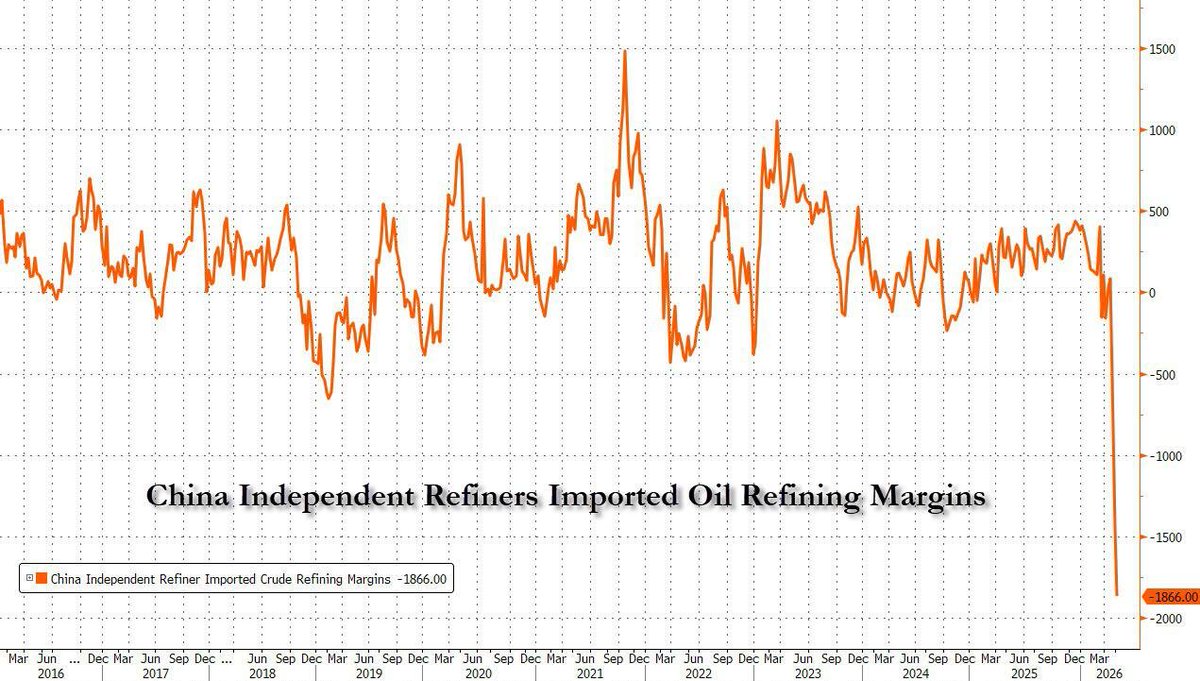
فجأة، يتم إغلاق مضيق هرمز، وتتوقف صادرات قطر و الإمارات من الغاز المسال إلى آسيا، وتقوم الولايات المتحدة بزيادة صادراتها من الغاز المسال لتصل إلى أعلى مستوى لها تاريخيا... ويتم تحويل شحنات عديد من أوروبا لآسيا لبيعها بأسعار أعلى....
وفجأة يتم الانتهاء من محطتي غاز مسال في الوقت نفسه، واحدة على الساحل الغربي للمكسيك، الموصولة بخط أنابيب غاز من تكساس، وهكذا يتم تصدير الغاز من تكساس، الولاية الجنوبية الشرقية، من الغرب... إلى آسيا للتعويض عن الغاز المسال القطري والإماراتي....
يا أخي إيران أغلقت مضيق هرمز لأنها تريد أن تفيد أميركا بقطع الإمدادات عن الصين وتوسيع أسواق الغاز المسال الأميركي! صح؟
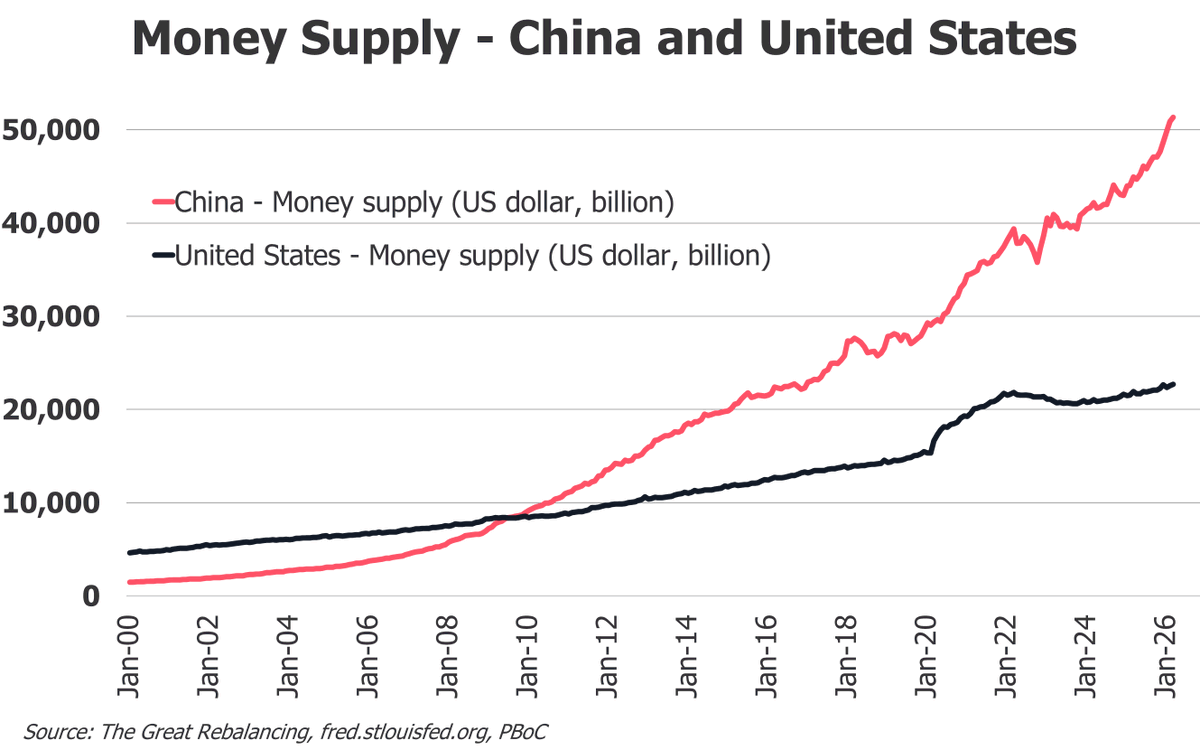
This is such a bizarre, and at the same time, obvious chart.
If you think money printing is an issue in the United States, have a look at China.
Its money supply, measured in dollars, is more than twice that of the United States.
The implications are as straightforward as triggering.
How do you think China gets its 5% annual GDP growth? Productivity gains? Hard work?
Most of that comes from growth financed through debt.
Are you wondering if China will buy more gold to try to get rid of the US dollar?
The single option it has is to buy loads more, only to keep up with the unprecedented money printing. If China wants to increase trust in the Yuan, gold purchases must actually outpace money printing.
Our economic system, whether in the US, the Eurozone, or China, runs on debt financed by new money printed out of thin air.
There is nothing illogical about that. The chart tells it all.
This day (April 16) in 1948, the British withdrew from Safed & 100s of Arabs immediately attacked the city’s ancient Jewish community.
The Arab commander cabled the Arab Liberation Army: “Our morale is very high, the young people are enthusiastic, we’re going to massacre them."
The outnumbered Jews chose to stay and fight rather than flee; and, along with a small garrison of Haganah fighters, they managed to repel the attack.
The Arab assault was part of the “civil war” portion of the 1948 War that was launched the moment the UN voted to partition Mandate Palestine into a Jewish state and an Arab state on November 29, 1947.
From day one, the Arabs rejected any Jewish state on any part of the Land.
In fact, on this same day (April 16, 1948), as Arab armies massed on the borders to invade the day the British Mandate ended, Jamal Husseini - acting chairman of the Arab Higher Committee - told the UN Security Council: “The representative of the Jewish Agency told us yesterday that they were not the attackers, that the Arabs had begun the fighting. We did not deny this. We told the whole world that we were going to fight.”
And “fight” they did. The Arabs answered the UN vote with immediate terror: buses ambushed, passengers shot, the Jewish market in Jerusalem stormed with Arabs armed with knives and axes, entire convoys wiped out on the roads with no prisoners taken and corpses mutilated. Jewish civilians were dying at a rate of more than fifty per week.
By March 1948, the Arabs were winning the “battle for the roads” and had the Jewish population on the verge of strangulation and, in Jewish Jerusalem, starvation.
This is where the wildly misunderstood Plan Dalet came into effect. It was a desperate military counter-offensive to reopen supply lines and prevent total annihilation. It was never a “blueprint for expulsion” as propagandists like to claim. The real ethnic cleansing intent came expressly and proudly from the Arabs whose war cry was literally: Itbah al Yahoud! — “Slaughter the Jews!”
On May 14, 1948, Israel declared independence. The next day, five Arab armies invaded with the explicit goal of wiping the Jewish state off the map before it could even breathe.
They failed.
That failure is what Arabs originally called the "Nakba" — “the catastrophe.” Its original use had exactly nothing to do with “refugees,” but was meant to give a word to the humiliating Arab failure to destroy the wildly outnumbered Jews and prevent Israel from being born.
In reality, the vast majority of local Arabs fled before Israeli forces arrived, urged on by their own leaders who promised a quick victory and return. Those who stayed, by the way, became full citizens of Israel with equal rights; and they make up more than 20% of Israel's population today.
Perhaps most importantly, there would NEVER have been a single refugee had the Arabs accepted the UN partition and/or chosen not to invade with genocidal intent.
Like so many anti-Israel narratives that reverse cause and effect today, the “Nakba” narrative inverts aggressor and victim. It erases the fact that the Jews were fighting for survival against a war of annihilation explicitly declared by the Arabs from day one.
What are some other ways cause and effect is reversed in modern anti-Israel discourse? Let me know your thoughts below.
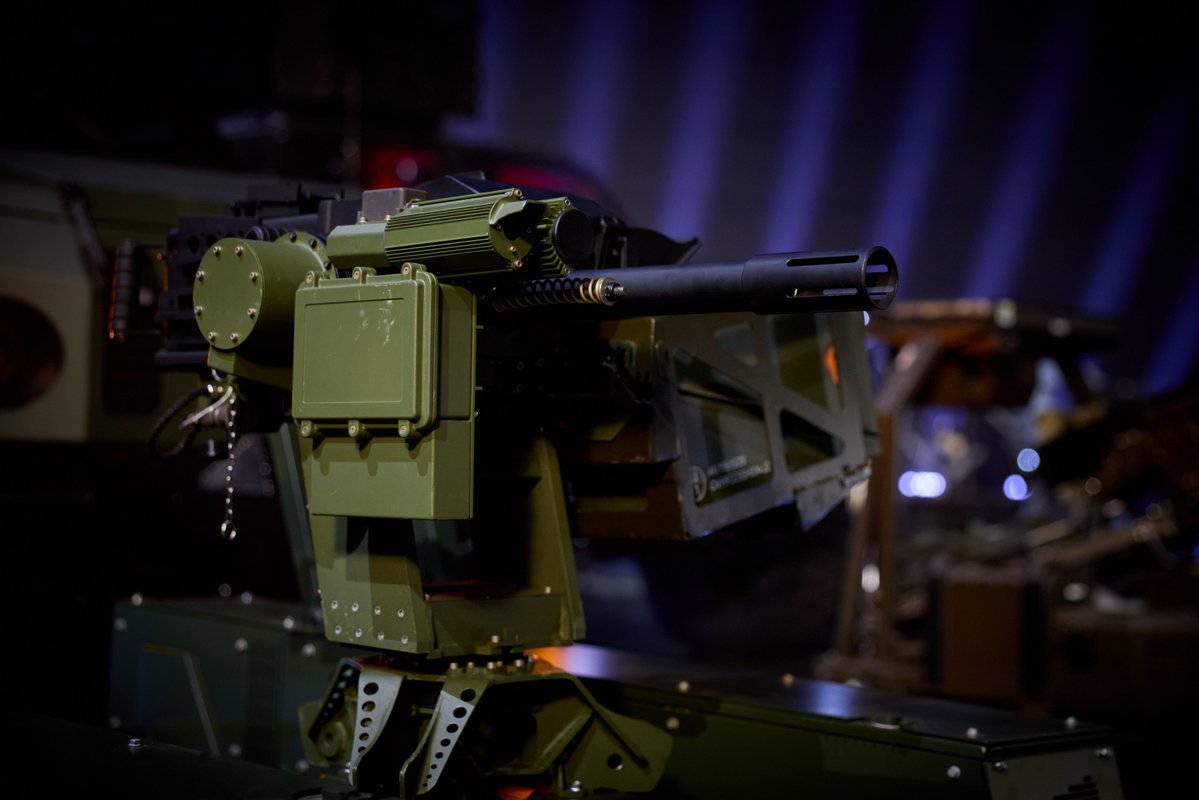
The future is already on the front line – and Ukraine is building it. These are our ground robotic systems. For the first time in the history of this war, an enemy position was taken exclusively by unmanned platforms – ground systems and drones. The occupiers surrendered, and the operation was carried out without infantry and without losses on our side.
Ratel, TerMIT, Ardal, Rys, Zmiy, Protector, Volia, and our other ground robotic systems have already carried out more than 22,000 missions on the front in just three months. In other words, lives were saved more than 22,000 times when a robot went into the most dangerous areas instead of a warrior. This is about high technology protecting the highest value – human life.
From the congratulatory address to the workers of Ukraine’s defense-industrial complex (2/3).
🟥والله أريد أن أفهم.....
1⃣ أكبر مسفيد من إغلاق مضيق هرمز هو الولايات المتحدة. لماذا تريد إيران أن تقدم هذه الخدمات التي لاتقدر بثمن على مدى عقود قادمة للولايات المتحدة؟
2⃣ إغلاق مضيق هرمز يعني عدم وصول النفط والغاز المسال للصين، ومنذ يومين، أوقفت إيران ناقلة غاز مسال قطرية متجهة للصين، لماذا تريد إيران معاقبة حليفتها؟
3⃣ الطائرات الإسرائيلية التي تقصف الأهداف الإيرانية تطير بوقود من نفط أذربيجاني عن طريق تركيا وقازاخستاني عن طريق روسيا، وإيران ماعندها مشكلة مع أي من هذه الدول الأربعة! ،
𝗩𝗗𝗛: 𝗧𝗛𝗘 𝗦𝗜𝗚𝗡𝗔𝗟𝗦 𝗔𝗥𝗘 𝗔𝗟𝗟 𝗣𝗢𝗜𝗡𝗧𝗜𝗡𝗚 𝗧𝗛𝗘 𝗦𝗔𝗠𝗘 𝗗𝗜𝗥𝗘𝗖𝗧𝗜𝗢𝗡.
Victor Davis Hanson has spent fifty years studying how wars end. When he says the tide is turning, it's worth listening to why.
His argument isn't based on what the Pentagon is saying. It's based on how everyone else is behaving.
𝗧𝗵𝗲 𝗘𝘂𝗿𝗼𝗽𝗲𝗮𝗻𝘀. VDH's rule: Europeans never agree to go anywhere near a conflict unless they think the winning side has already been determined. They didn't help in the early days. Now they're starting to move. That movement is not idealism. It's a calculation. They've looked at the battlefield and decided which way this ends.
𝗧𝗵𝗲 𝗚𝘂𝗹𝗳 𝗽𝗲𝘁𝗿𝗼-𝗻𝗮𝘁𝗶𝗼𝗻𝘀. The Saudis, the Emiratis, the Qataris — these governments have survived for generations by reading the regional climate with precision. When they expel Iranian military attachés, when they intercept Iranian missiles over their own capitals and say nothing about American strikes, when the UAE reaffirms its $1.4 trillion investment commitment to the United States mid-war — they are not making ideological statements. They are placing bets. And they are betting on the United States.
𝗔𝗹 𝗝𝗮𝘇𝗲𝗲𝗿𝗮. This is the one that should stop you cold. Al Jazeera — the Qatari state media network, historically critical of American military action, the network Tucker Carlson and the anti-war right love to cite against Israel — is now calling the U.S. bombing campaign brilliant and effective, and saying it has been underestimated. When the media outlet of a nation that hosts both the largest American air base in the Middle East and a Hamas political office starts praising American military effectiveness, the message is unmistakable: 𝘵𝘩𝘦𝘺 𝘵𝘩𝘪𝘯𝘬 𝘸𝘦'𝘳𝘦 𝘨𝘰𝘪𝘯𝘨 𝘵𝘰 𝘸𝘪𝘯.
𝗧𝗵𝗲 𝗺𝗶𝗹𝗶𝘁𝗮𝗿𝘆 𝘀𝗶𝗴𝗻𝗮𝗹. A-10 Warthogs and Apache helicopter gunships are now flying strike missions in Iranian airspace at will. VDH's point: you only deploy those aircraft when there is effectively no air defense left to threaten them. They are slow, low-flying, close-support platforms. Their presence confirms what the Pentagon has been claiming — Iran has no meaningful air defense remaining.
Iran's strategy now is rope-a-dope. Run out the clock. Wait for American public opinion to shift. Hope the midterms create political pressure on Trump to stop. It is the only play they have left.
VDH's conclusion: if Trump sees it through — and he believes he will — the regime falls. Not in years. 𝗣𝗿𝗲𝘁𝘁𝘆 𝘀𝗼𝗼𝗻.
𝗪𝗮𝘁𝗰𝗵 𝘄𝗵𝗮𝘁 𝗽𝗲𝗼𝗽𝗹𝗲 𝗱𝗼, 𝗻𝗼𝘁 𝘄𝗵𝗮𝘁 𝘁𝗵𝗲𝘆 𝘀𝗮𝘆. 𝗘𝘃𝗲𝗿𝘆𝗼𝗻𝗲 𝘄𝗶𝘁𝗵 𝘀𝗸𝗶𝗻 𝗶𝗻 𝘁𝗵𝗲 𝗴𝗮𝗺𝗲 𝗶𝘀 𝗯𝗲𝘁𝘁𝗶𝗻𝗴 𝗼𝗻 𝗔𝗺𝗲𝗿𝗶𝗰𝗮.